
Mammals (Cattle)
Water buffalo
Water Buffalo
Classification and scientific name: Bubalus bubalis
Sources checked:
A large body, curved horns and relatively sparse hair are characteristic, with differences between river and swamp forms
Water buffalo are domesticated animals of the Bubalus lineage, with river and swamp forms distinguished. They are different animals from American bison and African buffalo. A large body, curved horns and relatively sparse hair are characteristic, with differences between river and swamp forms.
Origins and distribution
South Asia, Southeast Asia and livestock-raising regions
- Water buffalo
- South Asia, Southeast Asia and livestock-raising regions
Reference photograph
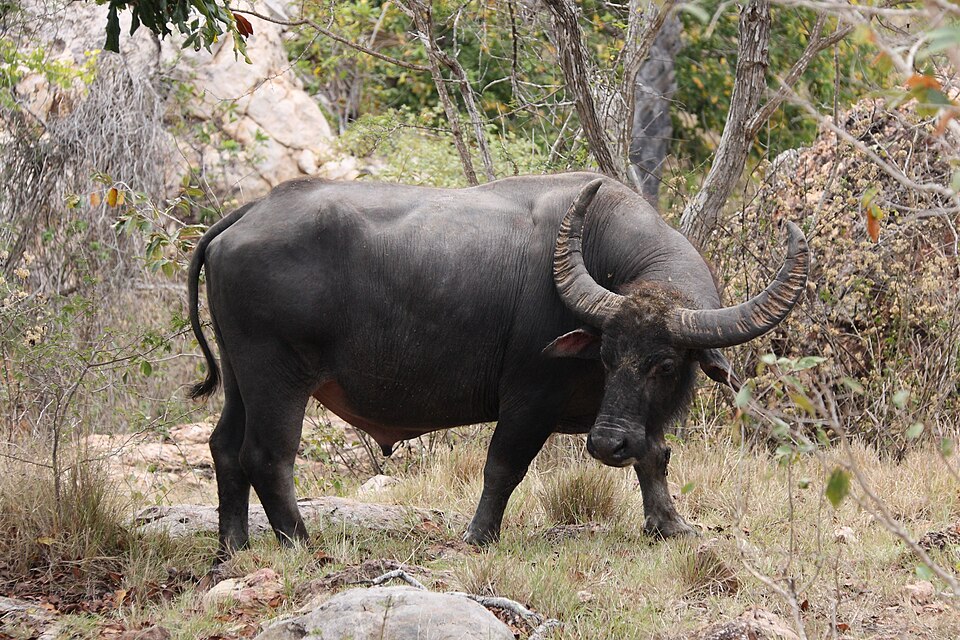
Reference photograph of Water buffalo. Examine this individual’s color and form alongside the identification descriptions in the text.
Source: Alexander Vasenin · Original material · CC BY-SA 3.0
1. Classification, origins and habitat
Water buffalo are domesticated animals of the Bubalus lineage, with river and swamp forms distinguished. They are different animals from American bison and African buffalo.
The name water buffalo includes livestock populations such as river and swamp forms; these animals belong to a different genus from domestic cattle. Treating African buffalo or American bison as the same animal because English uses buffalo for them confuses both classification and ways of life.
2. Appearance and identification
A large body, curved horns and relatively sparse hair are characteristic, with differences between river and swamp forms.
Long horns curve sideways and backward from the head, with shapes varying among populations. Observe dark skin, sparse hair and a broad muzzle together. Color and hair texture can look different when wet and dry, but that alone does not establish different species.
Horn, head and body proportions can differ between river and swamp buffalo. The representative photograph on this page illustrates one example within a broad grouping, not an identical form for every buffalo. A dark coat or waterside background alone cannot establish lineage.
3. Behavior and way of life
The animals are used for milk production and agricultural work. Using water or mud relates to avoiding heat and cooling the body.
Consider water-based cooling behavior separately from livestock uses in farm work and milk production. A bathing scene does not show an entire day’s life. Do not generalize river and swamp forms’ uses and temperaments from a single appearance.
4. Observation, conservation and care
Bathing behavior does not mean every buffalo must remain in water all the time. Provide feed, shade and water suited to lineage and use.
Consider ways to cool the body, shade, water and dry resting areas together. The presence of water does not remove concerns about water quality, ground conditions or hygiene. Even domesticated animals have large horns and strength, requiring routes that safely separate them from people.
Evidence and references
- Animal Diversity Web — University of Michigan — Water buffalo
Classification, origins, appearance, ecology or uses of the breed
- Defra — Cattle welfare guidance on behavior, feeding and environment
General principles of feed, water, rest and handling. A United Kingdom source, not guidance on Korean legislation.