
Mammals (Cattle)
Zebu
Zebu
Classification and scientific name: Bos indicus
Sources checked:
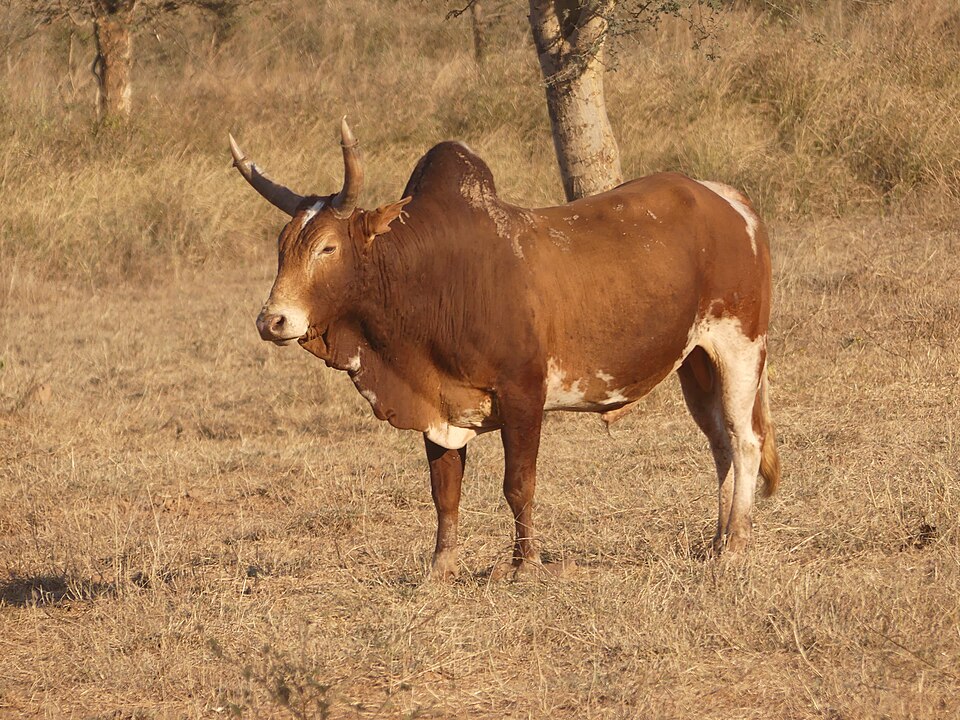
A hump near the shoulders, loose skin beneath the neck and relatively large ears are typical.
Zebu refers to groups of humped domestic cattle of South Asian ancestry. Many breeds, including Brahman and Nelore, draw on this ancestry, so the term differs from one specific breed name. A hump near the shoulders, loose skin beneath the neck and relatively large ears are typical. Size and coat color vary by breed.
Origins and distribution
Domesticated and dispersed from South Asia
- Zebu
- Domesticated and dispersed from South Asia
Reference photograph
Reference photograph of Zebu. Compare the color and form of the individual shown with the identification notes in the text.
Source: A. J. T. Johnsingh, WWF-India and NCF · Original material · CC BY-SA 4.0
1. Classification, origins and habitat
Zebu refers to groups of humped domestic cattle of South Asian ancestry. Many breeds, including Brahman and Nelore, draw on this ancestry, so the term differs from one specific breed name.
Zebu is a broad grouping of South Asian humped cattle containing multiple registered breeds. Brahman and Nelore are related lineages, not synonyms for the same name. Separating the distribution of zebu overall from a specific breed’s modern improvement history reduces confusion over place names.
2. Appearance and identification
A hump near the shoulders, loose skin beneath the neck and relatively large ears are typical. Size and coat color vary by breed.
The hump over the shoulders and skin beneath the neck are important features, but size, ears and coat color vary widely. A small hump in a young animal or female does not establish that it lacks zebu ancestry. A representative photograph is one example of a large group, not a portrayal of all its diversity.
3. Behavior and way of life
Zebu cattle are widely used in tropical and subtropical farming and livestock production. Classification as zebu alone cannot predict every individual’s temperament or production traits.
Uses include farm labor, milk and meat, depending on region and breed. Physiological features related to hot environments should be read in the context of evolution and breeding. Do not combine production figures from different zebu breeds into one supposed average performance.
4. Observation, conservation and care
When reading material, first check whether it concerns all zebu or one registered breed. Comparisons of heat tolerance also need matched sex, production stage and environmental conditions.
Compare water, shade, parasite management and feeding conditions alongside the living environment. Climate adaptation does not mean management is unnecessary. Prefer the recorded precise breed name when available; otherwise make clear that the description concerns a representative zebu-type animal.
Evidence and references
- Oklahoma State University — Zebu
Classification, origins, appearance, ecology or uses of the breed
- Defra — Cattle behavior, feed and environmental welfare guidance
General principles for feed, water, rest and handling. This is UK material, not guidance on Korean law.