
Other Mammals
Fennec fox
Fennec Fox
Classification and scientific name: Vulpes zerda
Sources checked:
Large ears and sandy fur accompany the fennec fox's dryland life
It is a small member of the dog family found in North African deserts and neighboring dry regions.
Origins and distribution
North African deserts and neighboring dry regions
- Dog family
- Large ears
- Nocturnal
- Burrow life
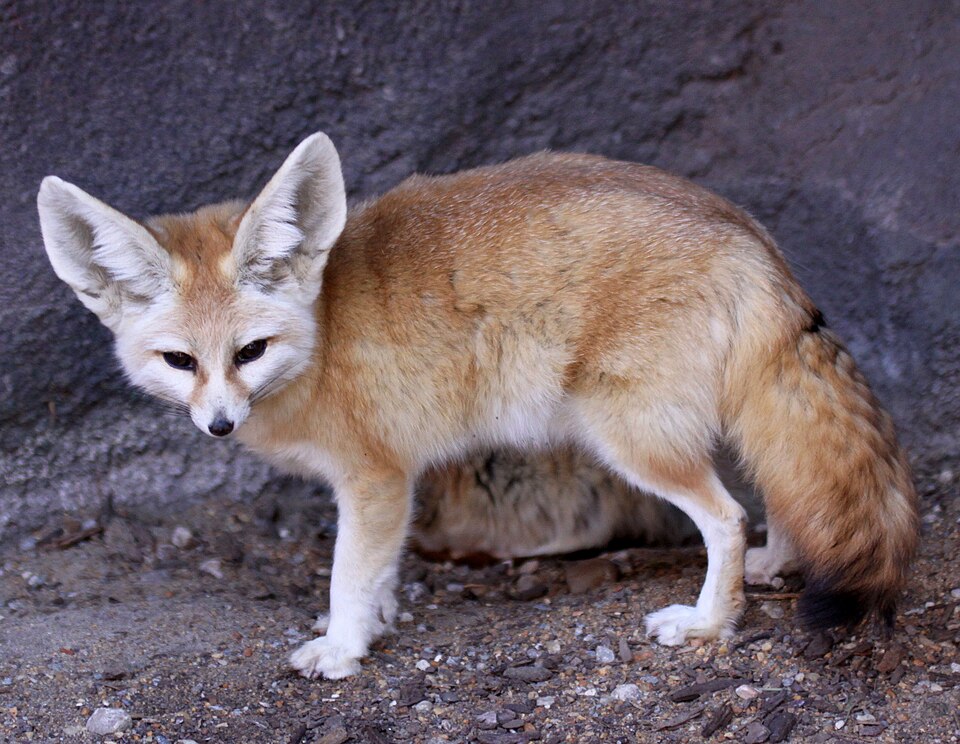
Reference photograph
Reference photograph of a fennec fox. Compare the individual's color and form with the identification notes in the text.
Source: Drew Avery · Original material · CC BY 2.0
1. Classification, origins and habitat
The fennec fox is a small member of the dog family found in North African deserts and neighboring dry regions. Not every desert fox belongs to this species; distinguish its distribution from those of red foxes and other desert-adapted foxes. It uses sand, sparse vegetation, ground for foraging and burrows for rest together. Hot daytime ground and changing nighttime temperatures influence its activity. Photographs on sand dunes are familiar, but it does not always rest in exposed places. An approachable appearance in captive photographs does not establish that it adapts easily to a home like a dog or cat. Examine its wild life separately from issues of trade and captivity.
2. Appearance and identification
Very large ears relative to its body, pale sandy fur and a slender snout are characteristic. The ears play roles in detecting sounds and regulating heat; they are not simply ornaments. Fur on the soles is connected with movement over hot sand. The tail is fairly bushy and can have a dark-looking tip. Young and adults have different proportions, so do not turn the ear size in one photograph into a fixed measurement. Bright lighting can make the fur appear white, but this does not make it the same species as an Arctic fox. Checking ears, body color, photographic location and the source's scientific name together helps avoid substituting photographs of another small fox.
3. Behavior and way of life
It is mainly active in darkness and uses varied resources, including small animals, insects and plant foods. Large ears and a sense of smell help it investigate its surroundings, and it digs for food and constructs burrows. Obtaining moisture from food does not mean that it needs no water whatsoever. Family relationships and burrow-centered life occur, but not every individual lives together in one place at all times. A photograph of an animal curled up asleep by day may show rest that helps it avoid heat. Interpret a captive individual's response to people alongside experience and surrounding conditions, rather than as a wild tendency to seek contact.
4. Observation, conservation and care
The fennec fox's environment includes food, soil for digging burrows and places to escape temperature extremes. Popularity arising from its small size and large ears can expose it to capture and trade, so do not introduce it casually as a pet. Even when discussing captive animals, consider nocturnal activity, digging, social relationships and the possibility of escape. During wild observation, do not block burrow entrances or attract animals with food; watch from the prescribed distance. Match image descriptions with the confirmed species and captive or wild setting, without exaggerating dryland adaptations into an unlimited ability to survive without water. Describing appearance alongside actual living conditions helps explain the animal.
Evidence and references
- Animal Diversity Web — Vulpes zerda
Classification, distribution, appearance, diet and reproductive behavior
- San Diego Zoo — Fennec fox
Fennec fox ears, feet, diet and dryland life