
Dinosaurs
Corythosaurus
Corythosaurus
Classification and scientific name: Corythosaurus
Sources checked:
Comparing a helmet-like crest with related hadrosaurs
Corythosaurus was a crested hadrosaur interpreted as feeding on plants.
Origins and distribution
Late Cretaceous North America
- Corythosaurus
- Extinct animal studied through fossils
- Distinguishing reconstruction from evidence
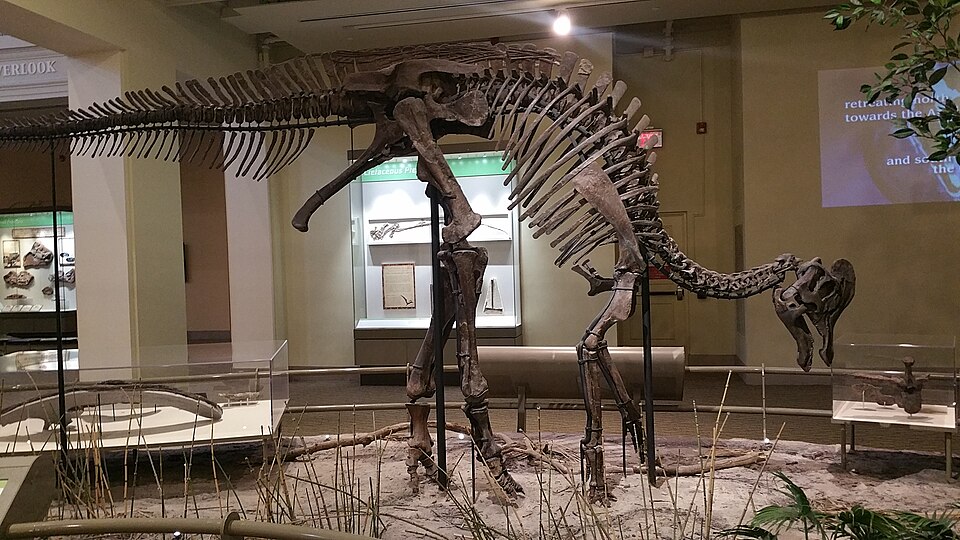
Fossil or skeletal specimen
Corythosaurus fossil and skeletal exhibition material. Displays may include replicated or supplemented parts; this is not a photograph of a living individual.
Source: James Tiffin Jr. · Original material: Carnegie_Corythosaurus.jpg · CC BY-SA 2.0
1. Classification, discovery and geological context
Corythosaurus was a hadrosaur with a head crest. It is interpreted as having used plant foods.
This Late Cretaceous North American hadrosaur takes its name from a crest resembling an ancient helmet. It was related to Parasaurolophus, but the crest shape is conspicuously different. Separating appearance comparisons borrowing living birds' names from actual classification helps reveal differences between the dinosaurs. Crests can also vary with species and growth stage within the genus.
2. Appearance and identification
A rounded, helmet-like crest, broad snout and large torso are characteristic.
Observe the rounded crest in side view alongside the broad snout and forelimb-to-hind-limb proportions. The crest is developed skull anatomy rather than a separate helmet placed on the head. Internal air passages make its function difficult to determine from outward shape alone. A small crest in a young individual and a large adult crest should not automatically be declared entirely different animals.
3. Evidence for ecological interpretations
Internal crest structure is used to investigate sound and signalling functions. A crest alone does not establish horn-based combat.
Jaws and teeth show traits of a herbivorous dinosaur processing plants. Possible sound and visual signals are studied through crest structure and functional models. Specific call pitches and group communication scenes are not established by actual recordings. A helmet-like appearance alone cannot justify applying the behaviour of horn-clashing mammals directly.
4. Limits of the fossil record and reconstructions
Comparing crests with other dinosaurs in the group helps explain classification. Distinguish it from dinosaurs covered with hard armour.
Side-by-side hadrosaur skulls reveal elongated, rounded and small crests. First establish whether an image is a fossil, skeleton or scientific reconstruction. Colours and postures on this page are not photographic records from life. Separating what shows skeletal anatomy from reconstructed skin and behavioural scenes makes observation more accurate.
Evidence and references
- Natural History Museum — Corythosaurus
Classification, origin, appearance and ecology
- UC Museum of Paleontology — Ornithischian dinosaurs
Distinctions among ornithopod, ceratopsian, stegosaur and ankylosaur lineages