
Dinosaurs
Iguanodon
Iguanodon
Classification and scientific name: Iguanodon bernissartensis
Sources checked:
A thumb spike and reconstruction history reveal how herbivorous dinosaurs are studied
Iguanodon is an ornithopod important in early dinosaur research, with older reconstructions subsequently revised.
Origins and distribution
Early Cretaceous Europe and other regions
- Iguanodon bernissartensis
- Extinct animal studied through fossils
- Distinguishing reconstruction from evidence
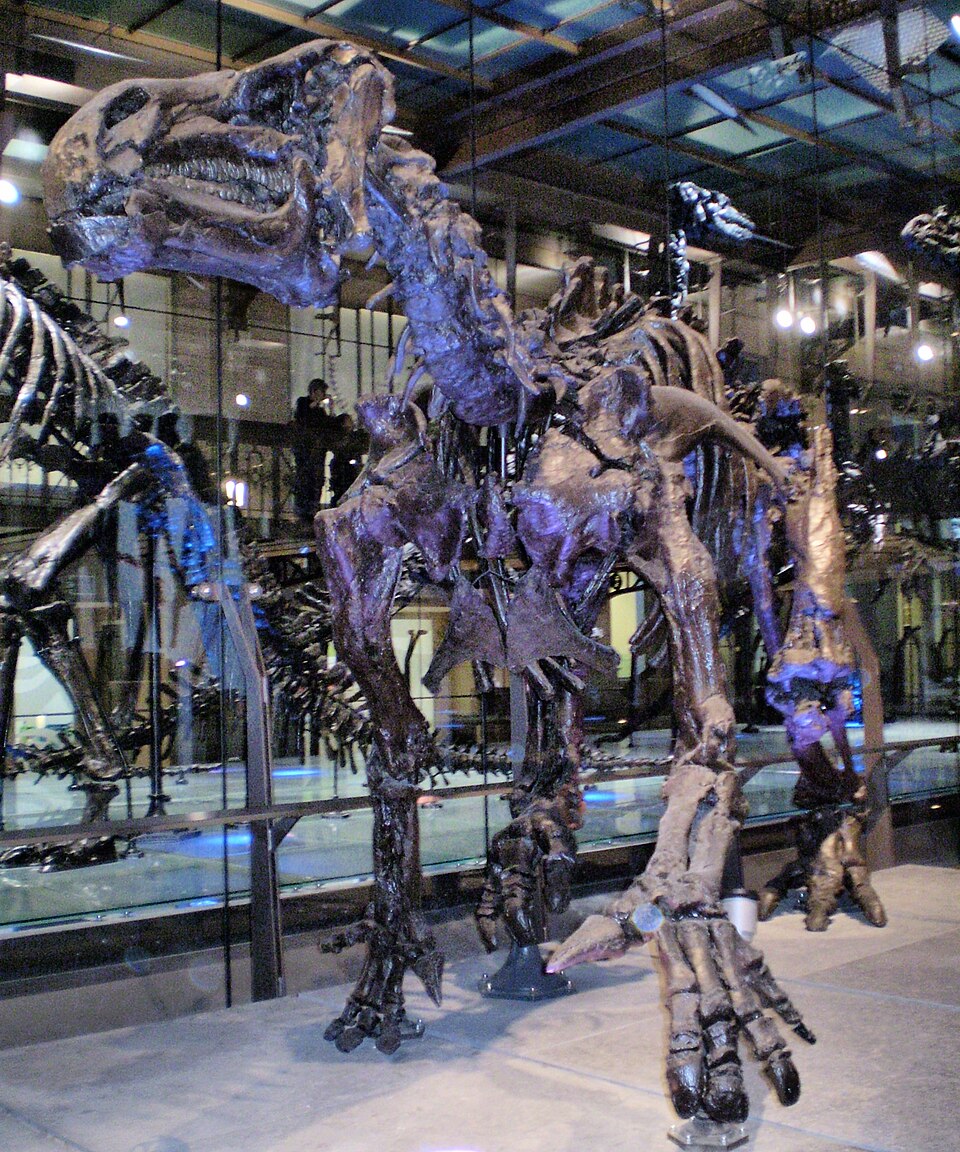
Fossil or skeletal specimen
Iguanodon fossil and skeletal exhibition material. Displays may include replicated or supplemented parts; this is not a photograph of a living individual.
Source: Ben2 · Original material: Iguanodon_de_Bernissart_IRSNB_01.JPG · CC BY-SA 3.0
Modification notice from the source: cropped
1. Classification, discovery and geological context
Iguanodon was a herbivorous ornithopod dinosaur. It is an important name in early dinosaur research, and its older reconstructions were subsequently revised.
Research centres on Early Cretaceous European fossils. This page focuses on Iguanodon bernissartensis, well known from the Bernissart specimens in Belgium. As one of the animals named while dinosaurs were first becoming recognised as a group, it is represented by surviving old models. Some fossils once grouped broadly under its name were later assigned to other genera.
2. Appearance and identification
A pointed thumb spike, plant-processing teeth and sturdy limbs are characteristic.
The thumb spike is famous for having been mistakenly placed as a nasal horn in early reconstructions. More comparative skeletons revealed that it belonged to the hand. Consider the remaining fingers, the weight-supporting hand, strong hind limbs and extended tail together. Older, excessively upright exhibits leaning on the tail can also be compared with subsequently revised postures.
3. Evidence for ecological interpretations
Anatomy is used to interpret both quadrupedal and bipedal movement. Several possible functions of the thumb spike are discussed.
The bill and teeth inside the cheeks have a form associated with cropping and processing plants. Hands and limbs inform study of four-legged and two-legged movement, rather than one posture maintained throughout life. Defence and other thumb-spike functions have been proposed, but were not directly observed. Teeth resembling an iguana's do not establish identical food and behaviour.
4. Limits of the fossil record and reconstructions
Comparing old and modern reconstructions shows how fossil interpretation changes. Do not classify Iguanodon with carnivorous theropods or sauropods.
Compare the fossils consulted by old reconstructions and modern skeletons rather than simply which looks more dramatic. Museum specimen names help distinguish other animals historically called Iguanodon. Fossil photographs and whole-body reconstructions communicate information differently. This page identifies material grounded in bones and research, rather than actual photographic records of an extinct animal's colours and behaviour.
Evidence and references
- Natural History Museum — Iguanodon
Classification, origin, appearance and ecology
- UC Museum of Paleontology — Ornithischian dinosaurs
Distinctions among ornithopod, ceratopsian, stegosaur and ankylosaur lineages