
Dinosaurs
Dilophosaurus
Dilophosaurus
Classification and scientific name: Dilophosaurus wetherilli
Sources checked:
Two crests distinguish an Early Jurassic theropod from fictional film features
Dilophosaurus was named for the crests on its head.
Origins and distribution
Early Jurassic North America
- Dilophosaurus wetherilli
- Extinct animal studied through fossils
- Distinguishing reconstruction from evidence
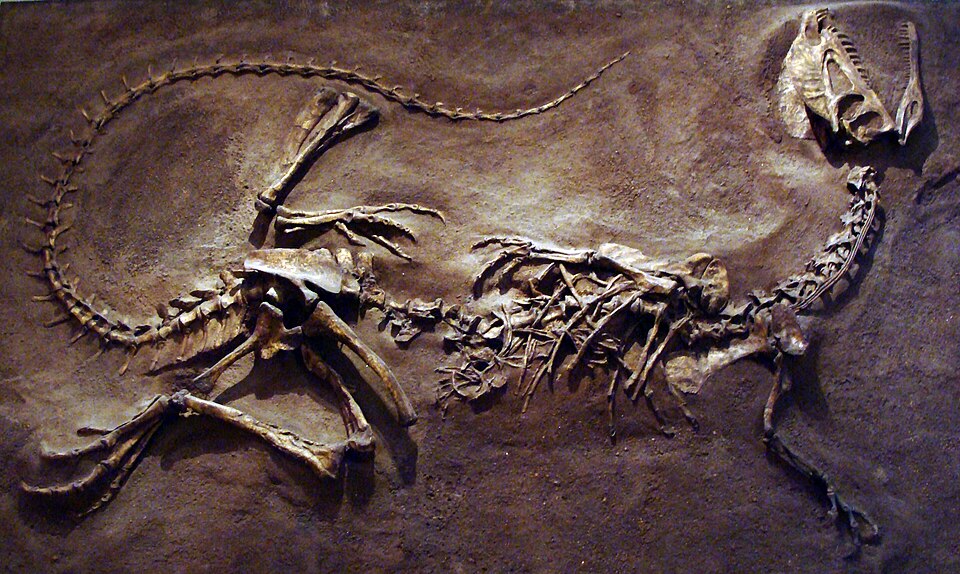
Fossil or skeletal specimen
Dilophosaurus fossil and skeletal exhibition material. Displays may include replicated or supplemented parts; this is not a photograph of a living individual.
Source: Eduard Solà · Original material: DilophosaurusROM1.JPG · CC BY-SA 3.0
Modification notice from the source: Crop and contrast, for visibility.
1. Classification, discovery and geological context
Dilophosaurus was an Early Jurassic theropod. Its name refers to its head crests.
Skeletons discovered in Early Jurassic North American sediments form the basis of research. Dilophosaurus is well known in dinosaur research history for excavated specimens and changes in reconstruction. A timeline places it even earlier than the Late Jurassic Allosaurus. Discoverers' records help explain the condition in which the skeleton lay underground.
2. Appearance and identification
Two thin crests on the head, a long neck and a bipedal body are characteristic. The expanding neck frill shown in films is not a fossil-established feature.
The two crests associated with its name sit side by side on the skull. Their thin structure calls for considering signalling and other functions rather than declaring them heavy striking weapons. Body proportions are those of a theropod larger than the small lizard-like film depiction. If a reconstruction shows an expanded neck frill or venom projection, first check whether these are fictional additions rather than traits established by the skeleton.
3. Evidence for ecological interpretations
Dilophosaurus is interpreted as carnivorous. Venom-spitting behaviour and the small film body should not be described as scientifically established facts.
Teeth, jaws and body structure are used to investigate carnivorous life. Food handling and prey size must be explained within the limits of preserved evidence and functional models. A possibility of recognising one another through crest shape differs from having filmed actual mating behaviour. Rather than reducing behaviour to a single word such as friendly or fierce, examine the connections between particular structures and functions.
4. Limits of the fossil record and reconstructions
Reconstruction uses body and skull fossils, and interpretations can change with new research. Distinguish skeletal traits from popular-culture inventions.
With displays and reference images, consult material explaining discovery and reconstruction evidence, such as UCMP specimen accounts. No video establishes the skin colour and sounds of a living individual. This page shows fossils, skeletons or scientific reconstructions. Film venom-spraying scenes do not justify descriptions of danger or keeping conditions, nor should they be mixed with information on living frilled lizards.
Evidence and references
- Natural History Museum — Dilophosaurus
Classification, origin, appearance and ecology
- UC Museum of Paleontology — Theropod dinosaurs
Theropod skeletal comparisons and evolutionary relationships with birds