
Dinosaurs
Velociraptor
Velociraptor
Classification and scientific name: Velociraptor mongoliensis
Sources checked:
A small feathered dinosaur whose actual skeleton differs from its film image
Velociraptor was a dromaeosaurid theropod of Late Cretaceous East Asia; Mongolian fossils are important research material, and this page focuses on Velociraptor mongoliensis.
Origins and distribution
Late Cretaceous Mongolia and East Asia
- Velociraptor mongoliensis
- Extinct animal studied through fossils
- Distinguishing reconstruction from evidence
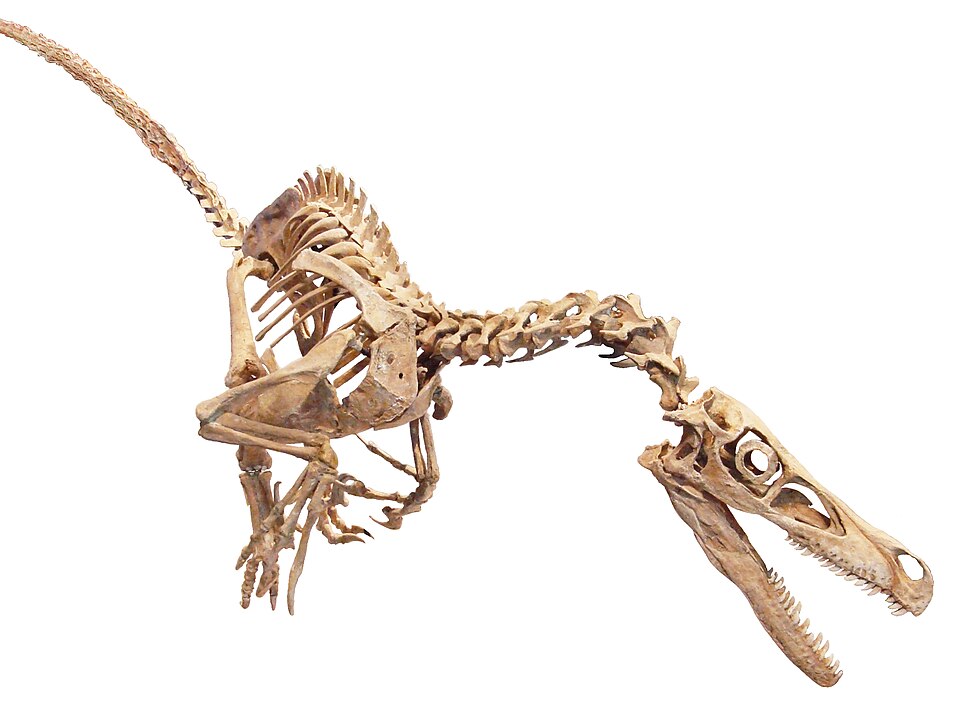
Fossil or skeletal specimen
Velociraptor fossil and skeletal exhibition material. Displays may include replicated or supplemented parts; this is not a photograph of a living individual.
Source: Eduard Solà Vázquez · Original material: Velociraptor_skeleton_white_background.jpg · CC BY 3.0
1. Classification, discovery and geological context
Velociraptor was a dromaeosaurid theropod of Late Cretaceous East Asia. Mongolian fossils are important research material, and this page focuses on Velociraptor mongoliensis. Its actual fossil build differs considerably from the larger-than-human animal shown in popular films. The similar-looking Deinonychus belongs to a separate genus and lived in a different place and time. Checking scientific names and specimen provenance rather than choosing images by a familiar dinosaur name helps keep film settings separate from scientific material.
2. Appearance and identification
A small theropod body, long tail, grasping forelimbs and a strongly curved claw on the second toe of each hind foot are characteristic. Feather-attachment traces on forearm bones and information from close relatives provide important evidence for feathered reconstructions. Its close relationship with birds is explained by comparing multiple skeletal and feather features. Toothed jaws and a long bony tail differ from modern birds. In skeletal models, examine palm orientation and tail posture; in life reconstructions, distinguish the evidence behind feathers and soft tissues.
3. Evidence for ecological interpretations
Sharp teeth and claws show the form of a predator using animal foods. The intertwined fossil of Velociraptor and Protoceratops provides valuable material for studying actual bodily contact, but does not mean that every hunt looked like that. Interpretations of the large claw's use require other anatomical features too; a single claw cannot establish an exact attacking movement. Film behaviour involving groups dividing roles like people lacks sufficient direct evidence. Behavioural explanations combine what fossils show with what is inferred.
4. Limits of the fossil record and reconstructions
Fossil localities are dry today, but their ancient environments must be assessed separately through sedimentary layers and associated organisms. Images of extinct animals show skeletons, fossils or reconstructions, never photographs of living individuals. Evidence for feathers differs from knowledge of their exact colours. Checking a specimen's scientific name, locality and status as an original fossil or replica makes it easier to locate the text's evidence in an image. Do not use another dromaeosaur's illustration as Velociraptor's actual appearance without explanation.
Evidence and references
- Natural History Museum — Velociraptor
The genus's discovery regions, age, skeleton and interpretations of diet
- Natural History Museum — Vicious Velociraptor
Actual build, evidence for feathers and differences from film reconstructions