
Dinosaurs
Spinosaurus
Spinosaurus
Classification and scientific name: Spinosaurus aegyptiacus
Sources checked:
A theropod with a long snout and tall back spines, studied for life near water
Spinosaurus was a large North African theropod of the Cretaceous, investigated through fossils from Egypt, Morocco and elsewhere; this page covers Spinosaurus aegyptiacus.
Origins and distribution
Cretaceous North Africa
- Spinosaurus aegyptiacus
- Extinct animal studied through fossils
- Distinguishing reconstruction from evidence
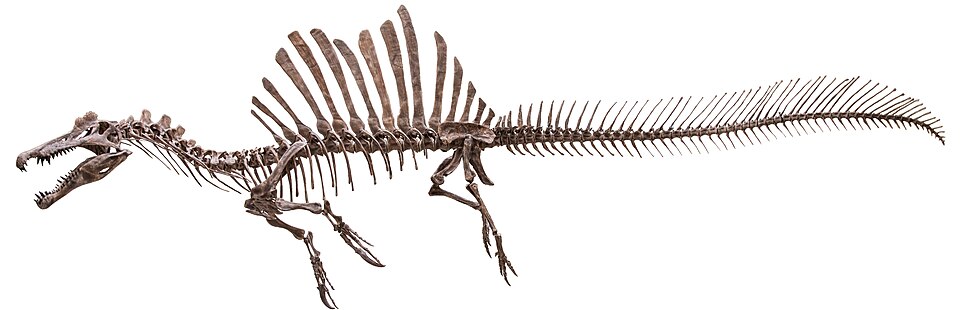
Fossil or skeletal specimen
Spinosaurus fossil and skeletal exhibition material. Displays may include replicated or supplemented parts; this is not a photograph of a living individual.
Source: 3blindMies · Original material: FSAC-KK-11888.jpg · CC BY-SA 4.0
1. Classification, discovery and geological context
Spinosaurus was a large North African theropod of the Cretaceous. It is investigated through fossils from Egypt, Morocco and elsewhere, and this page covers Spinosaurus aegyptiacus. Loss of the original specimen and subsequent fossil discoveries greatly affected reconstruction of its body. Differences in hind limbs and tail between older and newer pictures may reflect new evidence and interpretations. Reconstructions from different periods should not be presented side by side as equally established appearances.
2. Appearance and identification
A long, low snout, conical teeth and tall projections from the back vertebrae are characteristic. The back spines are reconstructed as supporting a skin sail, and body proportions and tail shape are also used to investigate its way of life. Comparing them with Tyrannosaurus's thick, deep jaws helps explain differences in food-handling structures. The known skeleton does not include every part of one complete individual, so whole-body reconstruction requires comparison and supplementation. Distinguish skin colours, stripes and sail decoration in illustrations from information provided directly by fossil bones.
3. Evidence for ecological interpretations
The snout, teeth and evidence associated with waterside environments support feeding that included fish. However, evidence is insufficient to conclude that it ate only fish or never left the water. Studies using bone density, tail models, buoyancy and other approaches investigate how well it swam and whether it pursued prey by diving. Conclusions can differ with method, so a particular hunting scene should not be described as an established observation. Read the broad classification of theropod carnivory separately from specific hypotheses of underwater behaviour.
4. Limits of the fossil record and reconstructions
Fish, other reptiles and surrounding sediments associated with the fossils provide clues to ancient rivers and waterside habitats. Today's North African deserts should not be projected directly onto Cretaceous environments. For museum displays and reconstruction images, check which specimens and period of research they reflect. Suggestions that the sail regulated temperature or served as a signal also involve interpretation. Visual materials on this page are identified as fossils or scientific reconstructions, rather than photographs of living animals, preserving the distinction between reconstruction and direct evidence.
Evidence and references
- Natural History Museum — Spinosaurus
The genus's discovery regions, age, skeleton and interpretations of diet
- Natural History Museum — Spinosaurus and Baryonyx may have hunted fish underwater
Aquatic-life hypotheses and new skeletal evidence