
Dinosaurs
Gallimimus
Gallimimus
Classification and scientific name: Gallimimus bullatus
Sources checked:
A Mongolian dinosaur with an ostrich-like outline and toothless bill
Gallimimus was an ornithomimid theropod; the lineage name theropod does not mean every species was carnivorous.
Origins and distribution
Late Cretaceous Asia
- Gallimimus bullatus
- Extinct animal studied through fossils
- Distinguishing reconstruction from evidence
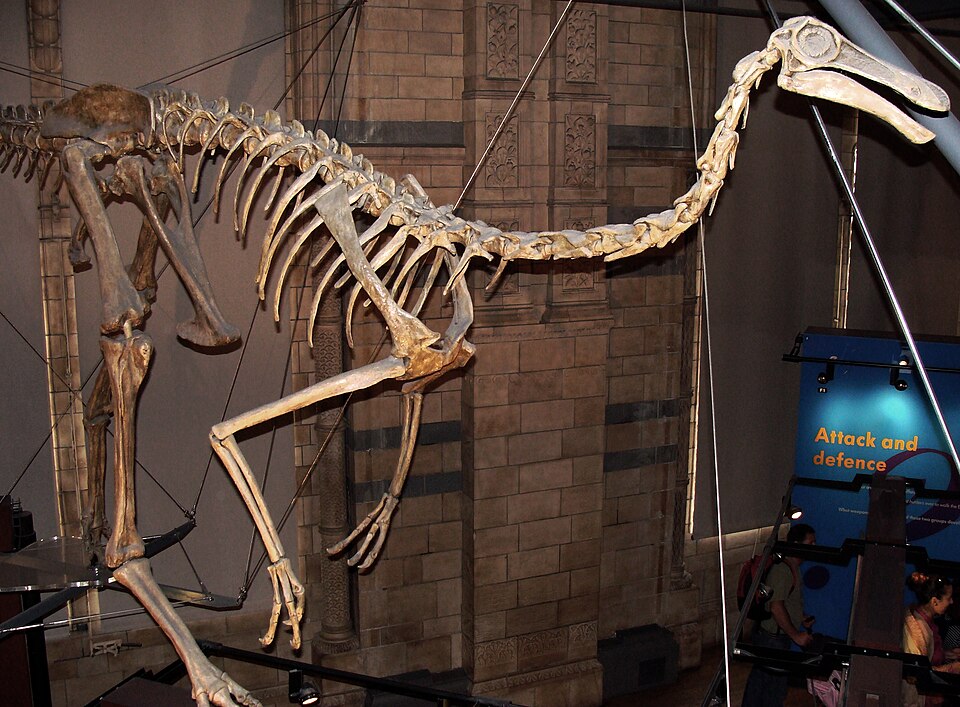
Fossil or skeletal specimen
Gallimimus fossil and skeletal exhibition material. Displays may include replicated or supplemented parts; this is not a photograph of a living individual.
Source: Fernando Losada Rodríguez · Original material: Gallimimus_bullatus.001_-_Natural_History_Museum_of_London.JPG · CC BY-SA 4.0
Modification notice from the source: Painted out dust, better contrast.
1. Classification, discovery and geological context
Gallimimus was an ostrich-like ornithomimid theropod. The lineage name theropod does not mean every species was carnivorous.
This ornithomimid is known from Late Cretaceous Mongolian strata. Its appearance is often compared with an ostrich, but this does not put it in the same genus or make it a direct ancestor of the same modern species. Associated animals in Mongolian strata provide material for investigating ancient feeding relationships and ecology. Gallimimus illustrates the diversity of food use and body structure within theropods.
2. Appearance and identification
A small head, long neck, long hind limbs and a toothless bill are characteristic.
The small head, large eye region, toothless bill, elongated neck and long slender legs stand out. Comparing head weight and body proportions with a carnivorous theropod's large jaws helps reveal differences. A lack of teeth does not mean food was not processed at all; the keratinous bill covering also needs separate consideration in reconstruction. If feathers appear in an illustration, check the scope of supporting evidence too.
3. Evidence for ecological interpretations
Dietary interpretations include plant feeding and omnivory. Long legs can support inferences of rapid movement, but no maximum speed was directly measured.
Several interpretations of feeding with a toothless bill require cautious explanation of possible plant and small-animal use. Long hind limbs provide clues to locomotor ability, rather than an actual measurement of a particular top speed. A reconstruction of a fleeing group illustrates a possible scene; it is not a direct photographic record of group size or habitual social organisation.
4. Limits of the fossil record and reconstructions
Mongolian fossils are used to study body structure and environment. Distinguish a bird-like appearance comparison from actual behaviour of modern birds.
When choosing Gallimimus images, use fossils or scientific reconstructions identified to the correct genus rather than substituting an ostrich photograph. In a skeleton, examine how the small skull and long hind limbs connect in one body. Also distinguish the locality's current desert from its ancient Cretaceous environment. Footprints, bones and strata are different forms of evidence whose combined interpretation improves understanding of life.
Evidence and references
- Natural History Museum — Gallimimus
Classification, origin, appearance and ecology
- UC Museum of Paleontology — Theropod dinosaurs
Theropod skeletal comparisons and evolutionary relationships with birds