
Dinosaurs
Oviraptor
Oviraptor
Classification and scientific name: Oviraptor philoceratops
Sources checked:
The name egg thief is separate from the interpretation of nesting fossils
Oviraptor was an oviraptorosaur theropod; its name does not establish egg-stealing behaviour.
Origins and distribution
Late Cretaceous Asia
- Oviraptor philoceratops
- Extinct animal studied through fossils
- Distinguishing reconstruction from evidence
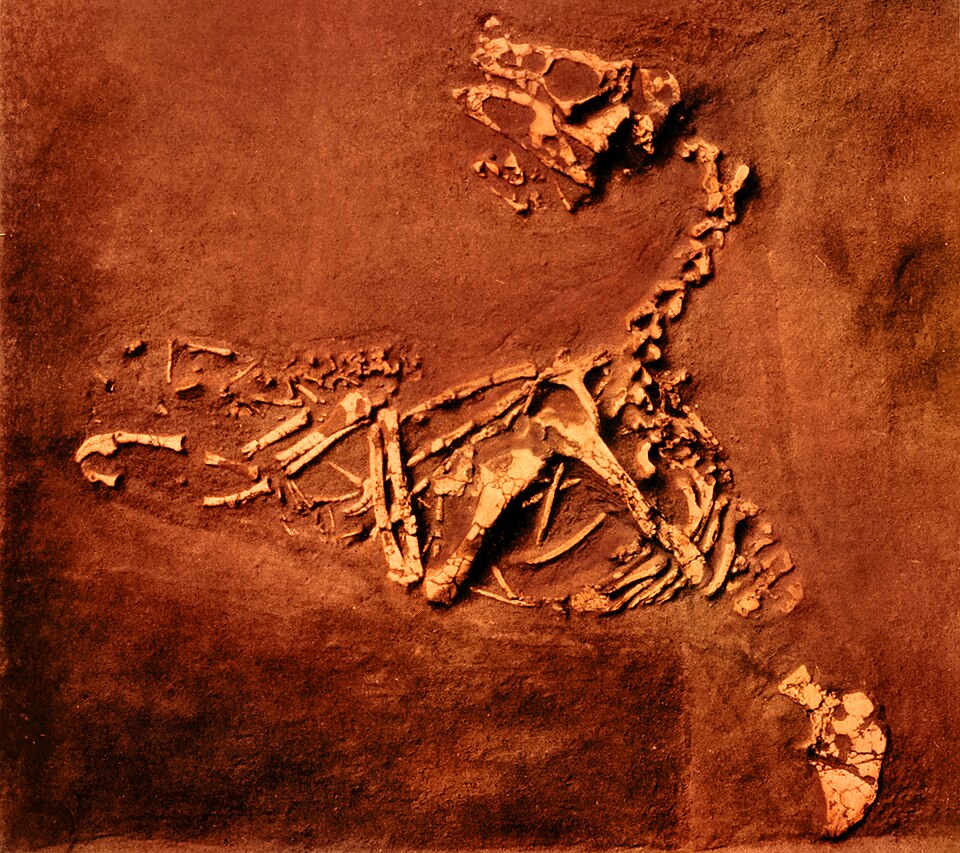
Fossil or skeletal specimen
Oviraptor fossil and skeletal exhibition material. Displays may include replicated or supplemented parts; this is not a photograph of a living individual.
Source: Internet Archive Book Images · Original material: Oviraptor_holotype.jpg · Public domain
A.M.N.H. photographs
Internet Archive Book Images · The dinosaur book : the ruling reptiles and their relatives (1951)
1. Classification, discovery and geological context
Oviraptor was an oviraptorosaur theropod. The meaning egg thief does not establish that egg stealing was observed.
This oviraptorosaur is known from Late Cretaceous Mongolian strata. An early interpretation connecting the first skeleton with eggs is reflected in the name, while subsequent research changed views of the relationship between nests and dinosaurs. Naming history and present ecological interpretations can differ. Check broader oviraptorosaur specimens separately from direct evidence for this genus.
2. Appearance and identification
Short toothless, beak-like jaws, a head crest and a bipedal body are characteristic.
The beak-like jaws differ from rows of sharp teeth in other theropods. Preservation and comparison with related genera affect reconstruction of the skull crest. Check whether every elaborate crest shape in a display or drawing is established by a complete skull of the particular species. Considering arms, hands and the bipedal skeleton together also explains traits of theropods closely related to birds.
3. Evidence for ecological interpretations
Oviraptorosaur nests and egg fossils are used to study reproduction and incubation. Discoveries in related lineages should not all become direct evidence for one particular species.
Oviraptorosaur fossils positioned around eggs are important for research on incubation and breeding behaviour. However, evidence from other genera should not all be converted into behaviour of one Oviraptor species. Diet with toothless jaws is also interpreted by comparing several forms of evidence. A name containing thief does not scientifically justify portraying an animal as eating only stolen eggs or having a deceitful personality.
4. Limits of the fossil record and reconstructions
Diet and behaviour around nests have several interpretations. Read the naming history alongside interpretations revised through later fossil research.
In nest photographs, first distinguish whether the egg arrangement and body position belong to an actual specimen or a reconstructed display. Differences between original fossils and replicas explain what can be directly seen, rather than simply ranking their value. Reconstructions of feathers, skin colours and egg-guarding postures also involve inference. This page is designed for reading images through fossil evidence rather than as photographs of living animals.
Evidence and references
- Natural History Museum — Oviraptor
Classification, origin, appearance and ecology
- UC Museum of Paleontology — Theropod dinosaurs
Theropod skeletal comparisons and evolutionary relationships with birds