
Amphibians
Glass frog
Glass Frog
Classification and scientific name: Hyalinobatrachium fleischmanni
Sources checked:
A translucent belly and eggs on leaves above water: distinguish the representative species
Glass frog covers many species; this entry uses Hyalinobatrachium fleischmanni as its example.
Origins and distribution
Central America and surrounding tropical areas
- Hyalinobatrachium fleischmanni
- Central America and nearby tropical areas
- Observing species-specific ecology
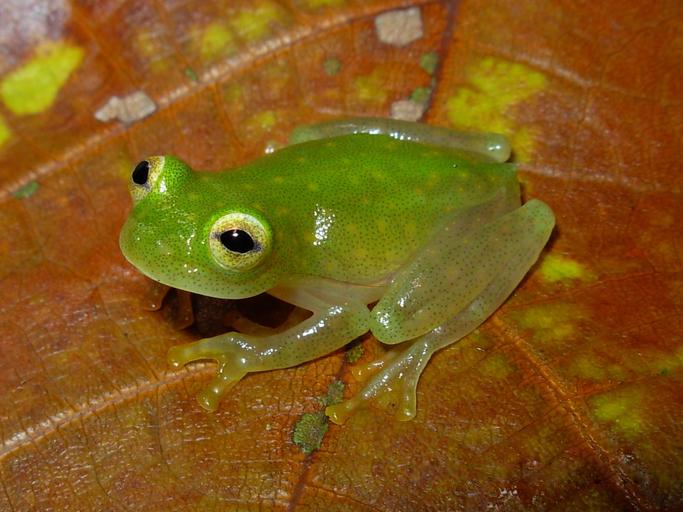
Reference photograph
Reference photograph of a glass frog. Compare its colours and form with the identification details in the text.
Source: Mauricio Rivera Correa · Original material: Hyalinobatrachium_fleischmanni01a.jpg · CC BY-SA 2.5
Modification notice from the source: lossles removal of watermark
1. Classification, origins and habitat
Glass frog covers many species. This entry uses Hyalinobatrachium fleischmanni as its example.
Glass frogs include several genera and species, with Fleischmann's glass frog as the representative here. Do not turn transparency results from another glass frog into facts all established for this species. Egg care, range and anatomical details can differ, making the exact scientific name especially important.
2. Appearance and identification
A small body and translucent belly skin are characteristic. The entire body is not always completely transparent.
The back looks green, while thin translucent ventral skin connects with the name. Structures visible through the belly differ from a wholly transparent body. Examine fingers, small proportions and eye positions together. Light, background and direction affect apparent transparency, so one image's impression should not be generalised.
3. Behavior and way of life
Glass frogs use small arthropods on trees and leaves. Breeding involving eggs on leaves above water is known.
Male calls and behaviour near leaves are important social signals even in a small body. Eggs are laid on vegetation above water, with hatched larvae dropping into it. An egg-bearing leaf is breeding space rather than mere background. Compare egg-care methods and degree among glass frogs only after checking the species in each source.
4. Observation, conservation and care
Leaves and water around streams matter for breeding. Glass frogs are frogs rather than tailed salamanders.
Waterside leaves and stems connect with water suitable for larvae. Breaking leaves for photographs can damage eggs and their microenvironment together. Do not shine strong light through bellies or turn animals onto hands to demonstrate transparency. Match images and text to the representative rather than combining other glass frogs' traits to suit an attractive photograph.
Evidence and references
- Animal Diversity Web — University of Michigan — Hyalinobatrachium fleischmanni
Classification, origin, appearance and ecology
- American Museum of Natural History — Hyalinobatrachium fleischmanni
Current scientific names, synonyms, natural distribution and taxonomic research