
Amphibians
Pacman frog (horned frog)
Pacman Frog
Classification and scientific name: Ceratophrys ornata
Sources checked:
Distinguishing a trade nickname from Argentine horned frog ecology
Pacman frog covers several horned frogs and captive lines; this page uses Ceratophrys ornata as its representative.
Origins and distribution
South America, including Argentina and Uruguay
- Ceratophrys ornata
- South America, including Argentina and Uruguay
- Observing species-specific ecology
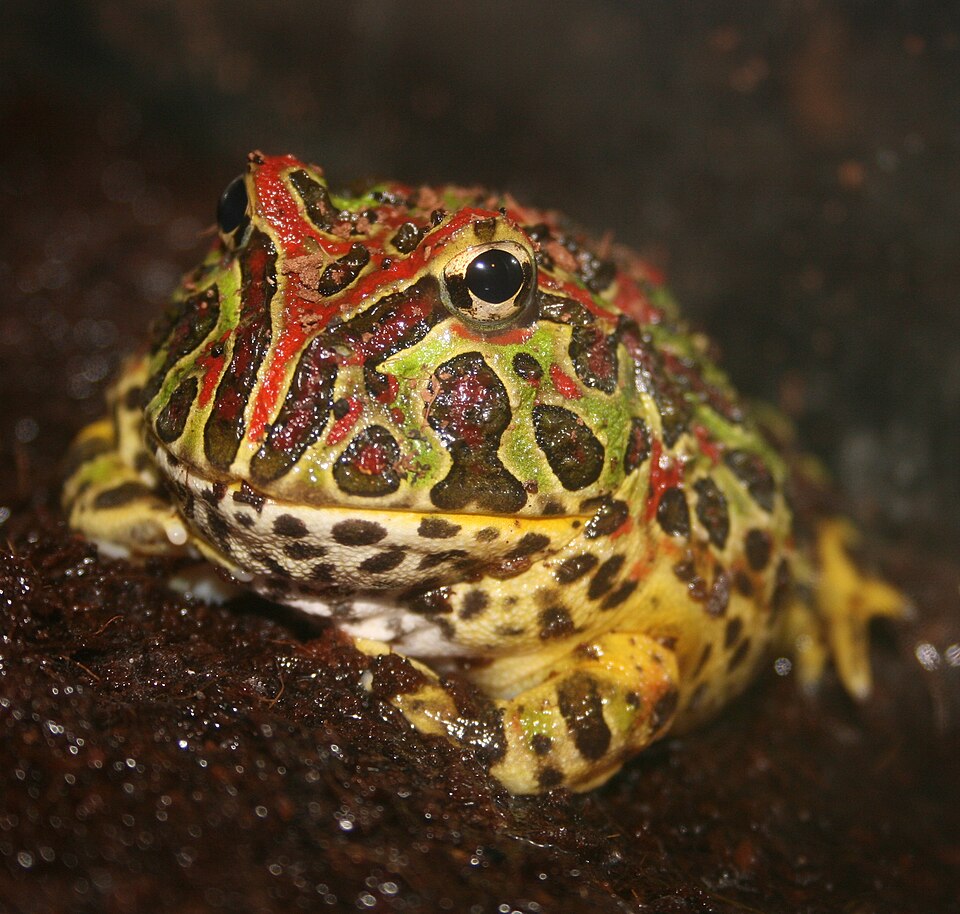
Reference photograph
Reference photograph of a Pacman frog (horned frog). Compare its colours and form with the identification details in the text.
Source: Melanie Mae Bryan from Greensboro, NC, USA · Original material: Mr_Wiggles_7-20-07_(870844637).jpg · CC BY 2.0
1. Classification, origins and habitat
Pacman frog is used for several horned frogs and captive lines. This page uses the Argentine horned frog, Ceratophrys ornata, as its representative. It is known from South American grasslands and seasonal water environments, with range and appearance distinguished from relatives such as C. cranwelli. Resemblance to a game character describes an impression of the large mouth, not every colour line occurring naturally as the same species.
2. Appearance and identification
A broad head, very large mouth, rounded body, relatively short limbs and projections above the eyes stand out. Green-to-brown patterns help conceal the outline on the ground. Yellow and other bright captive lines should be distinguished from typical wild forms. A large mouth does not make swallowing every visible object safe. Consider head-to-body proportions, eye projections and skin patterns together in photographs.
3. Behavior and way of life
This ambush predator hides its body in the ground and waits for passing prey. It uses small animals, with the broad mouth and jaws related to capture. Long stillness may be waiting or rest rather than a lazy temperament. Do not combine related horned frogs' breeding or larval behaviours as direct observations of this species. Moving fingers like food to provoke contact differs from ecological observation.
4. Observation, conservation and care
Ground where adults hide and seasonal water for breeding form different parts of the life cycle. Dryness and rainfall affect behaviour and breeding, but one fixed humidity instruction cannot explain the original environment. If a photographed species is unconfirmed, the Pacman nickname alone does not establish a match with this entry's representative. Distinguishing wild observation from captive-video conditions improves interpretation of patterns and behaviour.
Evidence and references
- American Museum of Natural History — Sit-and-wait Predator
Argentine horned frog appearance and ambush predation
- American Museum of Natural History — Ceratophrys ornata
Current scientific names, synonyms, natural distribution and taxonomic research