
Amphibians
Leopard frog
Leopard Frog
Classification and scientific name: Lithobates pipiens
Sources checked:
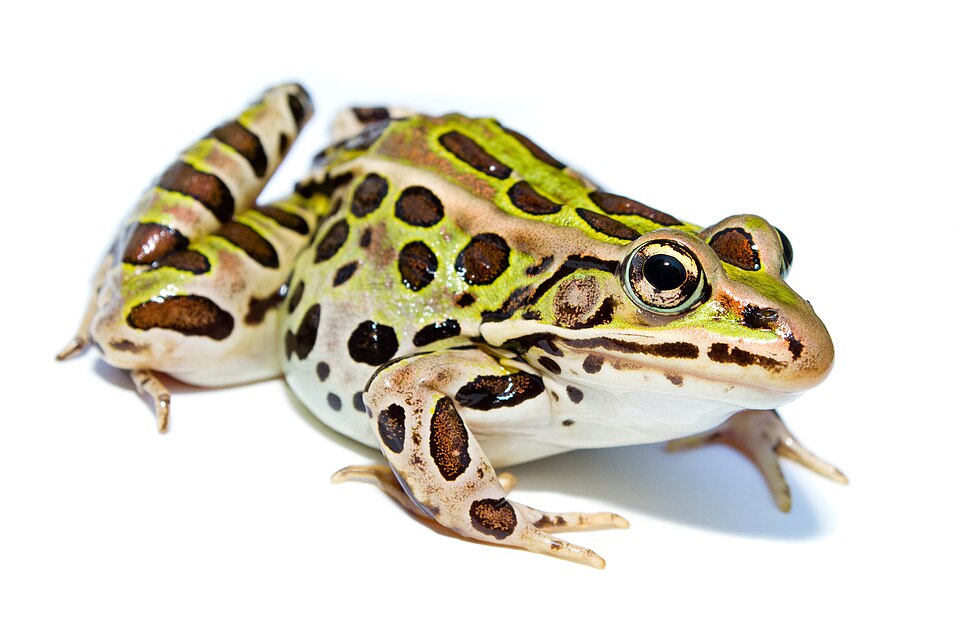
Dark spots and pale dorsal ridges: the northern leopard frog is the representative
Leopard frog names several relatives; this page uses the northern species, also found under the old name Rana pipiens.
Origins and distribution
North America
- Lithobates pipiens
- North America
- Observing species-specific ecology
Reference photograph
Reference photograph of a leopard frog. Compare its colours and form with the identification details in the text.
Source: Brian Gratwicke · Original material: Lithobates_pipiens.jpg · CC BY 2.0
Lithobates pipiens · brian.gratwicke / 5898747773 · Brian Gratwicke
1. Classification, origins and habitat
Leopard frog names several close species. This page describes the northern leopard frog, also found under the older scientific name Rana pipiens.
The name covers several close North American frogs. Restrict this page to the northern species rather than combining southern distributions and maximum sizes of other leopard frogs. Compare regional populations too when connecting old Rana pipiens research with current genus names.
2. Appearance and identification
Dark spots on a green or brown background and pale dorsal ridges are characteristic.
Observe rounded dark spots, pale borders and ridges along the sides together. Green and brown individuals occur without identical spot counts or arrangement. Leopard compares markings rather than implying a relationship with the mammal. Young, adults and aquatic larvae differ in form, making photographic developmental stages important.
3. Behavior and way of life
Leopard frogs catch small animals on ground and watersides and breed in water. Spot number alone does not establish age.
They use small invertebrates and other prey on land and beside water and gather in water to breed. Strong jumping hind limbs and swimming feet connect with movement between land and water. Dense breeding gatherings and dispersed periods offer different observation conditions. Predation should not be reduced to a human-like judgement of greedy appetite.
4. Observation, conservation and care
Wetlands, nearby grasslands and winter aquatic habitat matter. Do not combine other leopard frogs' ranges and sizes into universal figures.
Shallow breeding water, surrounding summer grasslands and aquatic overwintering conditions can connect across the year. One small-pond photograph cannot explain the entire annual habitat. Record natural movement rather than relocating or catching wild animals for photographs. If a source gives only the general leopard frog name, check scientific identity and locality before connecting it with this page.
Evidence and references
- Animal Diversity Web — University of Michigan — Lithobates pipiens
Classification, origin, appearance and ecology
- American Museum of Natural History — Lithobates pipiens
Current scientific names, synonyms, natural distribution and taxonomic research