
Amphibians
Midwife toad
Midwife Toad
Classification and scientific name: Alytes obstetricans
Sources checked:
Males carry egg strings: a name connected with breeding behaviour
Midwife toads belong to Alytes; this page describes the European Alytes obstetricans.
Origins and distribution
Europe
- Alytes obstetricans
- Europe
- Observing species-specific ecology
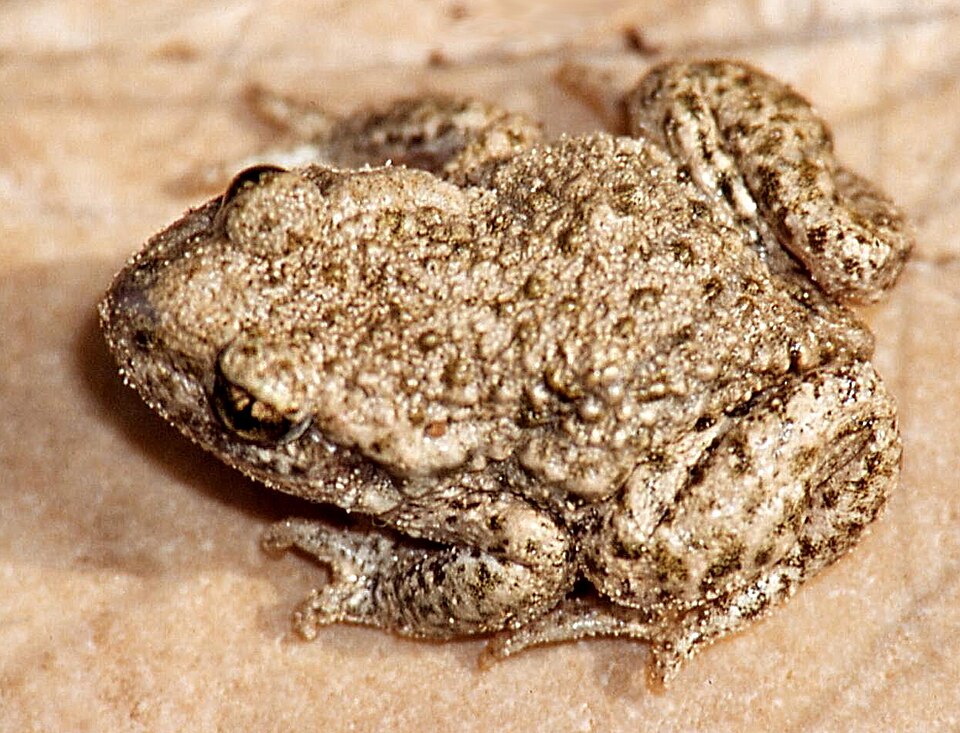
Reference photograph
Reference photograph of a midwife toad. Compare its colours and form with the identification details in the text.
Source: Christian Fischer · Original material: AlytesObstet.jpg · CC BY-SA 3.0
Modification notice from the source: little improvement
1. Classification, origins and habitat
Midwife toads are frogs of Alytes. This page describes Europe's Alytes obstetricans.
It uses the common midwife toad as its representative without combining distributions of close Alytes species. Midwife compares a male's egg carrying with a human role rather than assigning that role literally. Toad alone does not classify it in the same genus as Bufo.
2. Appearance and identification
A small body, rough skin and relatively short limbs are characteristic. Appearance alone does not make it a breed of an ordinary toad.
Observe small proportions, short legs, rough skin and eyes. A photograph of egg strings around hind limbs shows a male in a particular breeding condition, rather than every individual always carrying eggs. Eggless females and young also belong to the species. Another male's egg count alone cannot establish age or health.
3. Behavior and way of life
Males carry egg strings around the hind limbs and take them to water for hatching.
A male carries egg strings around its hind legs and moves them into water when hatching approaches. Separating female laying, male transport and aquatic larvae clarifies a life cycle different from more typical frogs. Observe the actual sequence of carrying and development rather than assigning human family emotions.
4. Observation, conservation and care
Terrestrial cover and water for larvae are both necessary. Distinguish male egg protection from the female's laying role.
Land crevices and shelter connect with water suitable for larval development. Carrying eggs on land does not complete reproduction without water. Do not pull legs or unwind strings to inspect eggs; compare stages through photographs and records. Confirming the same Alytes species in text and images avoids mixing close relatives' ecology.
Evidence and references
- Animal Diversity Web — University of Michigan — Alytes obstetricans
Classification, origin, appearance and ecology
- American Museum of Natural History — Alytes obstetricans
Current scientific names, synonyms, natural distribution and taxonomic research