
Amphibians
Tomato frog
Tomato Frog
Classification and scientific name: Dyscophus antongilii
Sources checked:
A rounded red Malagasy frog with defensive skin secretions
The tomato frog is an anuran amphibian distinct from similarly named close Dyscophus species.
Origins and distribution
Madagascar
- Dyscophus antongilii
- Madagascar
- Observing species-specific ecology
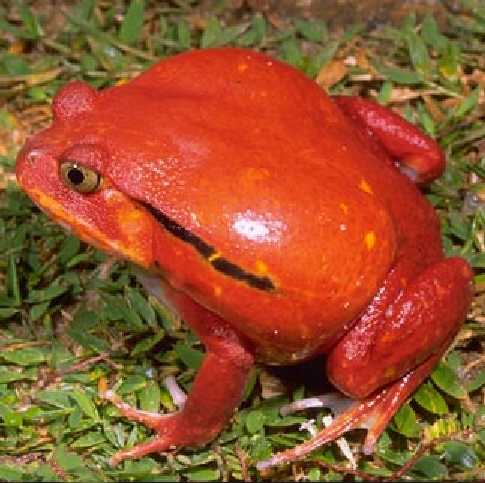
Reference photograph
Reference photograph of a tomato frog. Compare its colours and form with the identification details in the text.
Source: Franco Andreone · Original material: Dyscophus_antongilii02.jpg · CC BY-SA 2.5
Franco Andreone · Wikipedia:Autorizzazioni ottenute/Franco Andreone
1. Classification, origins and habitat
The tomato frog is a Malagasy anuran amphibian. Distinguish it from similarly named close Dyscophus species.
This entry covers Dyscophus antongilii among Madagascar's tomato frogs. Similar-coloured D. guineti also shares the common name, so consider scientific name and image provenance together. A red animal in captive footage differs from information about wild distribution. One area's sighting should not define habitat across the whole island.
2. Appearance and identification
A rounded orange-to-red body is characteristic, with size and colour varying by sex and growth stage.
Females, males and young can differ in colour and build. A mature red female may be representative without every individual showing the same red. Observe broad rounded proportions, eye and mouth positions and skin surface together. Distinguish threatened inflation from ordinary appearance.
3. Behavior and way of life
Tomato frogs wait on the ground for small animals. When threatened, they can inflate the body and use skin secretions.
They mainly wait for small prey to approach on the ground. Skin secretions and inflation connect with defence rather than a fierce temperament or special emotional bond. Breeding water and aquatic larvae differ from adult terrestrial life. Red appearance alone cannot establish the strength of toxicity or safety.
4. Observation, conservation and care
Tomato frogs use humid lowlands and breeding water. Bright colour should not become special pet suitability or a toxicity ranking.
Humid lowland ground, water and cover matter together. Hiding underground out of sight during daylight is part of life, rather than laziness. Avoid pressing animals to inflate them or induce skin secretions for photographs. Resemblance to a tomato explains appearance, not actual food or origin.
Evidence and references
- Animal Diversity Web — University of Michigan — Dyscophus antongilii
Classification, origin, appearance and ecology
- American Museum of Natural History — Dyscophus antongilii
Current scientific names, synonyms, natural distribution and taxonomic research