
Amphibians
Wood frog
Wood Frog
Classification and scientific name: Lithobates sylvaticus
Sources checked:
A dark eye mask and winter physiology should be understood separately
The North American wood frog is also called Rana sylvatica in some sources and is distinct from salamanders.
Origins and distribution
North America
- Lithobates sylvaticus
- North America
- Observing species-specific ecology
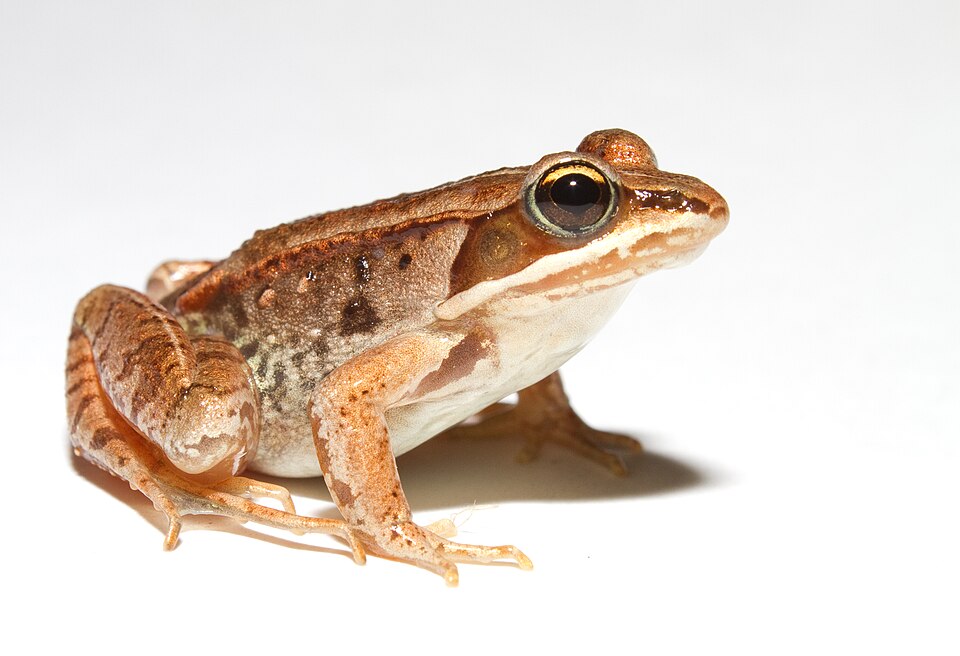
Reference photograph
Reference photograph of a wood frog. Compare its colours and form with the identification details in the text.
Source: Brian Gratwicke · Original material: Lithobates_sylvaticus_(Woodfrog).jpg · CC BY 2.0
Lithobates sylvaticus (Woodfrog) · brian.gratwicke / 5899261066 · Brian Gratwicke
1. Classification, origins and habitat
The wood frog is a North American frog. Some sources use the scientific name Rana sylvatica; distinguish it from salamanders.
It uses North American forests and seasonal breeding water, distinct from a general Korean expression for tree-associated frogs. Wood does not make it a tree frog spending every moment on high branches. When comparing older genus names, connect Rana sylvatica with this species to establish identity.
2. Appearance and identification
A brown-toned body and dark mask behind the eyes are representative. Colours can differ by breeding season and region.
Observe the dark mask extending behind the eyes, brown-to-pinkish body and ridges along both dorsal sides. Colour can vary with season and individual. The mask matters, but similar frogs' ranges and anatomy should also be considered. A motionless winter photograph alone does not establish death or disease.
3. Behavior and way of life
Wood frogs live on forest ground and breed in seasonal water. Physiological adaptations to freezing have been studied.
They use small prey on forest ground and breed in early-season waters. Freeze tolerance is researched through physiological changes involving body water and sugars. It does not mean the entire body freezes and thaws unharmed at any temperature. Conditions depend on experimental temperature, duration and body part, so avoid exaggerating this into unlimited ability.
4. Observation, conservation and care
Freezing adaptations do not mean survival at every temperature and duration. Distinguish seasonal wild changes from experimental conditions.
Winter shelter within leaf litter connects with temporary breeding waters. Pool duration matters because drying before tadpoles develop can affect the life cycle. Putting a frog in a refrigerator to experience freezing adaptation is not ecological observation. Explain seasonal observations separately from research conditions and match species through photographed markings and scientific names.
Evidence and references
- Animal Diversity Web — University of Michigan — Lithobates sylvaticus
Classification, origin, appearance and ecology
- American Museum of Natural History — Lithobates sylvaticus
Current scientific names, synonyms, natural distribution and taxonomic research