
Amphibians
Alpine newt
Alpine Newt
Classification and scientific name: Ichthyosaura alpestris
Sources checked:
Breeding colours and seasonal life: Alpine does not mean mountaintops alone
The Alpine newt is a European salamander, called Triturus alpestris in older sources.
Origins and distribution
Europe
- Ichthyosaura alpestris
- Europe
- Observing species-specific ecology
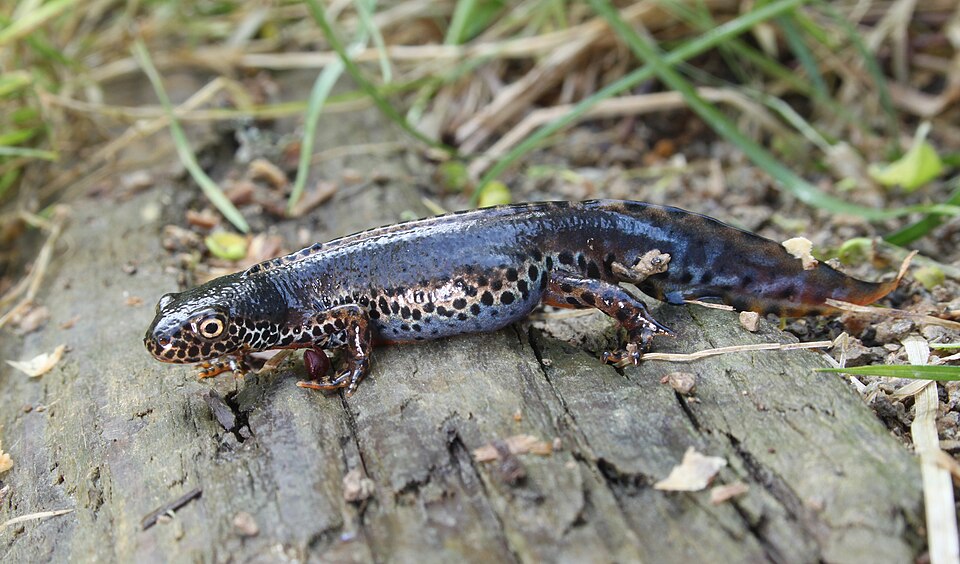
Reference photograph
Reference photograph of an Alpine newt. Compare its colours and form with the identification details in the text.
Source: Holger Krisp · Original material: Ichthyosaura alpestris Bergmolch.jpg · CC BY 3.0
1. Classification, origins and habitat
The Alpine newt is a European salamander. Older sources use Triturus alpestris.
It occurs across several European regions, rather than only high mountain summits as Alpine might suggest. Connect former Triturus alpestris sources with current Ichthyosaura alpestris. Distinguish introduced populations from the native range and check classification of related populations to understand regional accounts accurately.
2. Appearance and identification
An orange belly contrasts with a dark back. Breeding males and females differ in appearance.
Observe orange underneath, blue-grey or brown above, and breeding male ornamentation. A vivid aquatic breeding male is not the standard for females and non-breeding animals. Differences between back and belly photographs can reflect viewing direction and season. Skin colour alone cannot reliably establish a different newt species.
3. Behavior and way of life
Alpine newts move between aquatic and terrestrial stages and eat small invertebrates. Attachment of eggs to aquatic leaves and other surfaces is known.
Courtship and egg attachment occur underwater. Egg-laying adults, aquatic larvae and later terrestrial stages use different environments. Small-invertebrate feeding also differs with stage and conditions. Do not apply the life of basking reptiles directly to every newt.
4. Observation, conservation and care
Alpine newts use connected breeding waters and terrestrial shelter. Distinguishing seasonal appearances and older names helps source comparisons.
Consider breeding water with nearby leaf litter and cover. Even plentiful underwater photographs leave habitat explanations incomplete if seasonal adult movement is omitted. Avoid turning animals over to inspect bellies or holding them for long periods. Photographs identifying old and current names alongside breeding appearances clarify several forms of the same species.
Evidence and references
- Froglife — Ichthyosaura alpestris
Classification, origin, appearance and ecology
- American Museum of Natural History — Ichthyosaura alpestris
Current scientific names, synonyms, natural distribution and taxonomic research