
Amphibians
Mudpuppy
Mudpuppy
Classification and scientific name: Necturus maculosus
Sources checked:
Adults retain external gills throughout an aquatic life
The mudpuppy is a salamander living in water throughout life; adult external gills do not mean it is still young.
Origins and distribution
North America
- Necturus maculosus
- North America
- Observing species-specific ecology
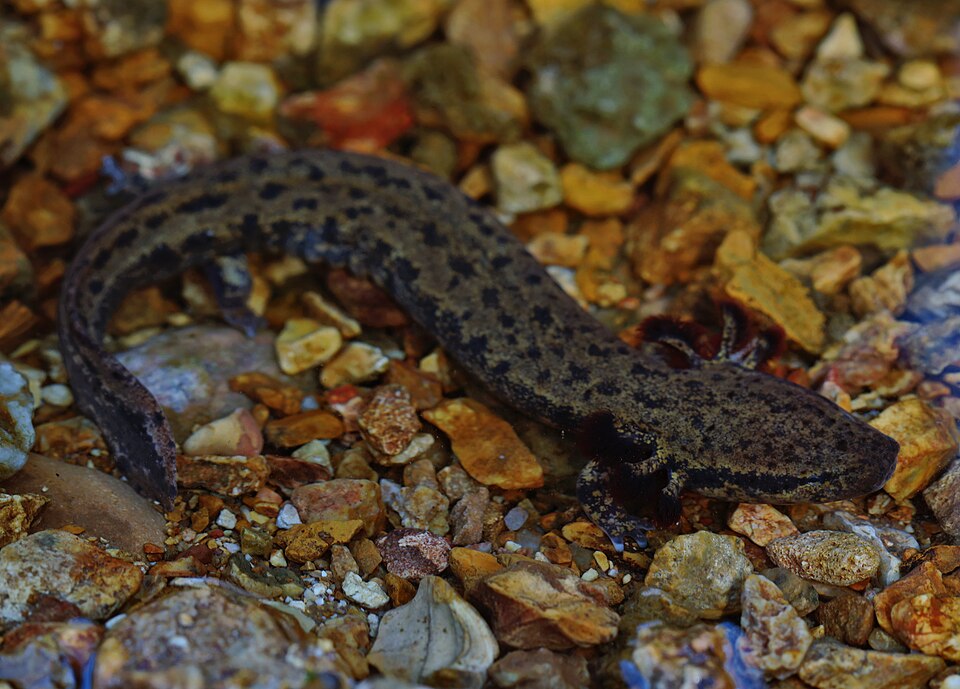
Reference photograph
Reference photograph of a mudpuppy. Compare its colours and form with the identification details in the text.
Source: Peter Paplanus · Original material: Gefleckter_Furchenmolch_(Necturus_maculosus),_Seitenansicht.jpg · CC BY 2.0
1. Classification, origins and habitat
The mudpuppy is a salamander living in water throughout life. Adult external gills do not mean it is still young.
It inhabits North American lakes and rivers; puppy in its English name does not make it a mammal. External gills resemble an axolotl's, but genus and origin differ. Check scientific names and ranges together so photographs of similar-featured animals are not substituted for each other.
2. Appearance and identification
Reddish external gills beside the head, four limbs and a tail are characteristic. Colour and spots vary among individuals.
Observe feathery-looking gills, a broad head and spotted body. Toes and tail shape also allow comparison with axolotls and other aquatic salamanders. Gill appearance can change with water quality and oxygen, so one photographed gill size cannot establish age. Adults retain external gills.
3. Behavior and way of life
Mudpuppies eat small aquatic animals and use cover beneath rocks and objects. Gill appearance may vary with water conditions.
They use small bottom invertebrates and other foods and rest beneath stones and objects. Activity in murky or dark water means that low visibility does not establish absence. The general idea that every salamander must move ashore as an adult does not apply. Gills and reproductive maturity are separate criteria.
4. Observation, conservation and care
Lake and river water quality and bottom shelters matter. Classify mudpuppies separately from frogs and limbless amphibians.
Bottom shelter, water quality and connections among lakes and rivers are important. Aquatic life does not make management identical to fish. Do not lift animals from water or touch external gills for photographs. Confirm Necturus maculosus when connecting eggs, young and adults, avoiding mixed photographs of similar larvae.
Evidence and references
- Animal Diversity Web — University of Michigan — Necturus maculosus
Classification, origin, appearance and ecology
- American Museum of Natural History — Necturus maculosus
Current scientific names, synonyms, natural distribution and taxonomic research