
Other Mammals
Armadillo
Armadillo
Classification and scientific name: Dasypus novemcinctus
Sources checked:
The nine-banded armadillo is adapted to digging and searching by smell
Armadillos are American mammals well known for the hard plates in their skin.
Origins and distribution
Various parts of the Americas
- Cingulata
- Bony plates
- Digging
- Nine-banded armadillo
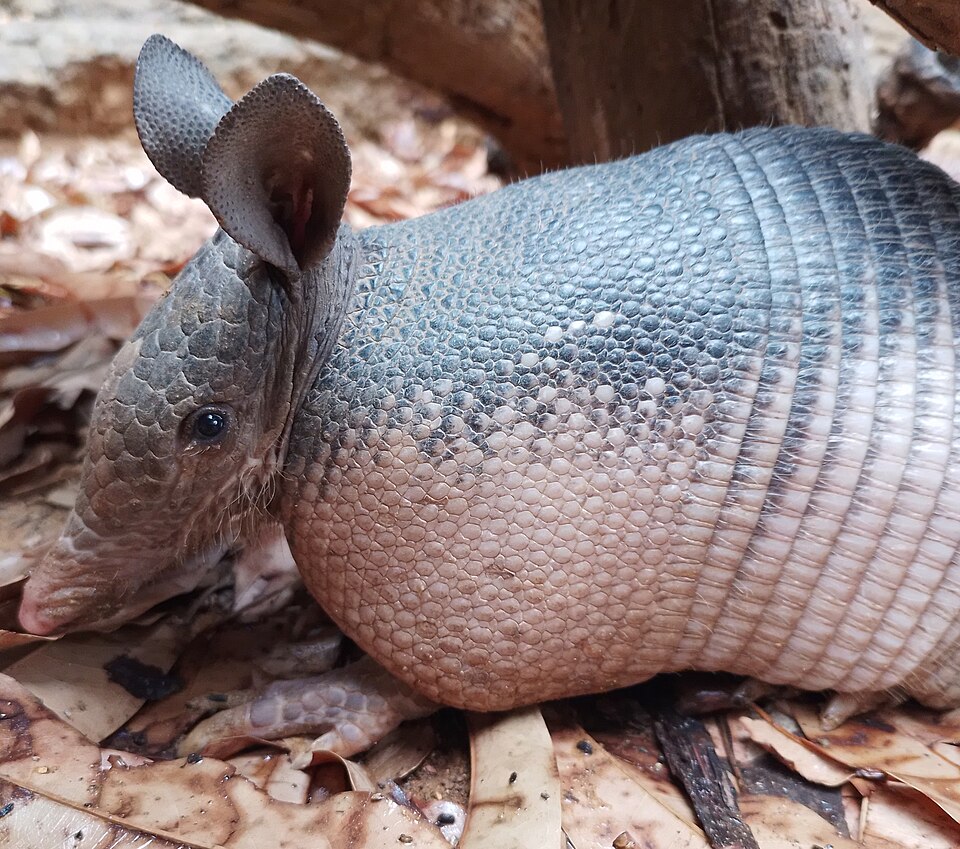
Reference photograph
Reference photograph of an armadillo. Compare the individual's color and form with the identification notes in the text.
Source: Aramburu Carlos · Original material · CC BY 4.0
1. Classification, origins and habitat
Armadillos are American mammals well known for the hard plates in their skin. This page uses the nine-banded armadillo, Dasypus novemcinctus, as its representative. Recent taxonomic research and regional distinctions can change the scope of a scientific name formerly used broadly, so check the date of distribution information. It forages in varied environments, including forests and grasslands, and uses burrows for shelter. Despite the name nine-banded, the number of bands alone cannot establish the species of every individual. It is important not to describe the famous ability of three-banded armadillos to roll into a ball as this species' general defense.
2. Appearance and identification
Bony plates cover the head and back, with movable bands along the trunk. It has long ears, a pointed snout, a long tail and claws used for digging. The armor-like plates protect its body but are not an impenetrable shield against vehicles or large predators. The underside does not have the same hard covering as the back. When watching it dig, observe how it uses both its forefeet and snout. Bands and ears offer clues for comparison with other armadillos, but accurate identification also requires the photograph's location and source. Do not describe a crouched individual in a photograph as one rolled completely into a ball.
3. Behavior and way of life
It digs and sniffs for food, chiefly insects and other small invertebrates. Activity times can change with temperature and local conditions, while burrows offer refuge from heat, cold and danger. Individuals generally move alone, with contact associated with breeding and young. The nine-banded armadillo is known for producing several genetically identical young in one litter, but this should not be generalized to all armadillos. When threatened it may run or retreat into a burrow rather than relying only on its armor. A single photograph of a crouched animal does not establish its activity level or temperament.
4. Observation, conservation and care
Consider food organisms, soil suitable for digging and vegetation that provides cover when examining its habitat. Digging can bring it into conflict with farms or gardens, but check local management guidance before catching and relocating wildlife. Its armor does not protect it from collisions on roads. Do not handle wild individuals, attract them with food or disturb burrow entrances. State the species and photographic location in image descriptions, without transferring another armadillo's ball-rolling behavior to it. Health and human-contact issues should be addressed through situation-specific official guidance rather than exaggerated fear or assurances of safety.
Evidence and references
- Animal Diversity Web — Dasypus novemcinctus
Classification, distribution, appearance, diet and reproductive behavior
- San Diego Zoo — Armadillo
Armadillo armor, diet, burrows and differences among species