
Other Mammals
Beaver
Beaver
Classification and scientific name: Castor canadensis
Sources checked:
The North American beaver eats wood and reshapes waterways
This page describes Castor canadensis, the North American beaver, and distinguishes it from the Eurasian beaver.
Origins and distribution
North America
- Rodent
- Dams
- Wetlands
- North American beaver
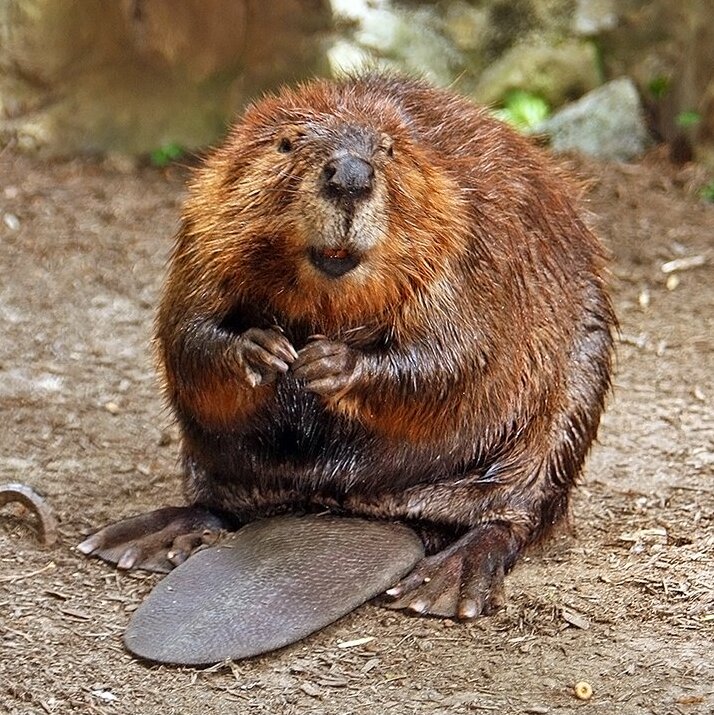
Reference photograph
Reference photograph of a beaver. Compare the individual's color and form with the identification notes in the text.
Source: Steve from Washington, DC, USA · Original material · CC BY-SA 2.0
1. Classification, origins and habitat
This page describes Castor canadensis, the North American beaver, and distinguishes it from the Eurasian beaver. Although the two species have similar ways of life, their native distributions, reintroductions and conservation histories differ. It uses trees and water in rivers, lakes and wetlands, influencing its surroundings by constructing dams and lodges. Not every beaver builds a dam of the same height in every location. Water depth, flow and bank structure affect whether it uses a burrow or builds a different structure. Because it can conflict with human waterways and farmland while also creating wetlands used by other organisms, an account should not emphasize only one side of its value.
2. Appearance and identification
It has large incisors, a stocky body, webbed hindfeet and a broad, flat tail. Incisor color reflects the composition of the surface; yellow or orange coloration is not by itself evidence of tooth decay. The forefeet grasp and handle branches, while the hindfeet assist swimming. The tail contributes to movement in water, balance and warning behavior; describing it simply as a shovel for spreading mud is inaccurate. Dense fur and grooming behavior are parts of its semiaquatic life. A head above the water can be confused with an otter's, so check the tail, body form and original source together.
3. Behavior and way of life
It eats plant foods, including bark, branches, leaves and aquatic plants. Its diet differs from that of fish-catching otters. Beavers live in family groups and gather wood, branches and mud to build lodges and dams. Impounding water can alter the depth available for safe swimming and access to food. Slapping the water with the tail when threatened can convey information to other individuals. Gnawing through trees is connected with obtaining both food and construction materials. Building does not mean that it plans every future engineering outcome as a person might; distinguish observable behavior from interpretation.
4. Observation, conservation and care
Beaver-created wetlands alter water, vegetation and habitat for other animals, making them useful examples of ecological interactions. Where roads and farmland flood, wildlife protection and infrastructure management need to be considered together. Follow local management guidance rather than dismantling dams or lodges yourself. Avoid approaching lodges or leaving food to attract animals during observation. Retain the North American beaver's scope in image descriptions, and do not combine Eurasian reintroductions into the history of the same population. Viewing the surrounding water depth, trees and food-transport routes alongside a dam photograph gives a fuller understanding of the behavior's actual context.
Evidence and references
- Animal Diversity Web — Castor canadensis
Classification, distribution, appearance, diet and reproductive behavior
- Smithsonian — Beaver
The beaver's tail, incisors, family life and dam structures