
Other Mammals
Polar bear
Polar Bear
Classification and scientific name: Ursus maritimus
Sources checked:
An Arctic bear that finds food on the frozen sea
The polar bear is a marine mammal with broad paws and thick insulation. As important as its white-looking fur is a way of life that depends on sea ice for hunting and travel.
Origins and distribution
The Arctic Ocean and surrounding sea ice and coasts
- Arctic sea ice
- Seal hunting
- Solitary life
- Strong swimmer
Reference photograph
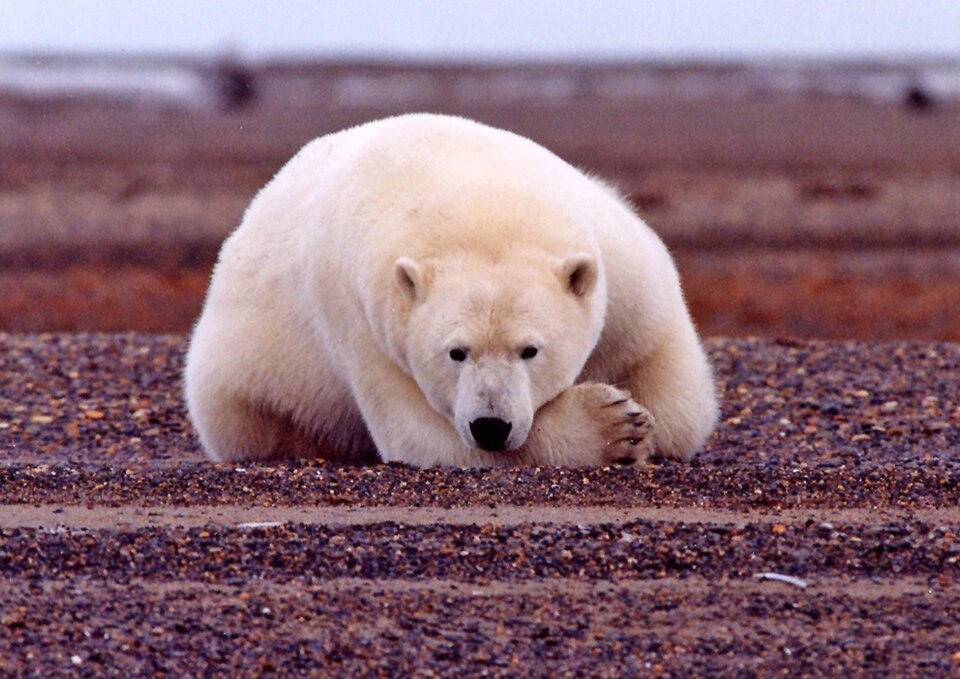
A polar bear photographed in the Arctic National Wildlife Refuge, Alaska, United States. Its small ears, black nose and broad forepaws are visible.
Source: Susanne Miller / USFWS · Original material · CC BY 2.0
1. Classification, origins and habitat
The polar bear is a mammal in the bear family, and its scientific name, Ursus maritimus, reflects a life closely connected with the sea. It occurs in seas and coastal areas around the North Pole, living in Arctic parts of Canada, Greenland, Norway, Russia and the United States. It is not an Antarctic animal, so a natural scene in which it lives on the same ice floe as penguins does not occur. When locating its home on a map, consider not only the extent of land but also where seawater freezes and thaws. Ice is a hunting platform and travel route, providing the places where bears encounter seals.
Ice conditions differ among Arctic regions. Where sea ice retreats substantially in summer, bears may remain on the coast waiting for it to form again. Areas with ice between islands and those where ice moves away from shore differ in travel routes and the timing of access to food. Describing every polar bear as doing the same thing in the same month therefore obscures actual ecology. Seeing a bear on land does not by itself establish abnormal behavior. Understanding a scene requires the photographic location, season and changes in nearby sea ice together.
Although a close relative of the brown bear, it is a distinct species heavily dependent on food obtained at sea. Populations spread across the Arctic experience different food and ice conditions, and their status is not uniform. Researchers examine body condition, movement and reproductive success as well as numbers. Long-term U.S. Geological Survey research connects these measures to investigate responses to environmental change. An encyclopedia account is more accurate when it presents populations living under different conditions in multiple seas and coastal areas, rather than imagining the whole world as one scene.
2. Appearance and identification
Pale fur is an initial identification clue, but color alone is insufficient to distinguish it from other bears. Consider the neck that extends relatively far from the body, the comparatively small head, short rounded ears and broad paws together. In profile, it lacks the conspicuous muscular shoulder hump of a brown bear. The fur commonly looks white, but its structure is not coated in white pigment; lighting and coat condition can make it look cream or yellowish. Photographic color temperature, shade and wetness change its appearance, so a bear that is not pure white is not automatically a different species.
The skin beneath the fur is black, and guard hairs, dense underfur and subcutaneous fat protect the body in cold conditions. Fat is more than an insulating coat: it is also stored energy for periods when food is difficult to obtain. The same individual's outline can therefore change with adequate feeding or a long time without food. Adult males are generally larger than females, but photographs alone seldom establish sex and age accurately. A crouched posture or wet coat can also change the apparent build substantially. Avoid exaggerated numerical estimates when a photograph lacks a surrounding size reference.
The broad forepaws provide propulsion in water, while the hindlegs help steer. Small bumps and fur on the soles relate to walking on slippery ice. When a polar bear walks, its bear-like gait uses the soles rather than just the toes. In ice photographs, compare paws and neck proportions; in swimming photographs, examine the head above water and movements of the forelimbs. Strong swimming ability does not mean limitless swimming. Crossing long distances in water still requires energy, and a reduction in travel ice cannot be explained solely through physical adaptations.
3. Behavior and way of life
Polar bear behavior is better understood in terms of food and energy than the familiar personalities of pets. They generally live alone, with males and females meeting during breeding and mothers accompanying young. Several may gather around a large food source without forming a stable group. Some individuals retreat from other bears, while others defend food or cubs. Before calling bears in the same photograph family or friends, check their distance from one another, the presence of food and whether there are cubs.
Seals, including ringed and bearded seals, are the main prey. Polar bears hunt by waiting near holes seals use to breathe or approaching prey on the ice. Long periods of waiting and rest are parts of this hunting method rather than signs of insufficient activity. A sensitive sense of smell also provides information about food and surroundings. Scenes of bears eating bird eggs or plants on land are known, but they do not demonstrate an adequate replacement for the usual diet. Fat-rich food obtained on the ice is particularly important as a source of energy that can last over extended periods.
Reproducing females care for very young cubs in maternity dens. Not all polar bears enter dens and sleep in the same way through winter; distinguish pregnant females' birth and overwintering from other individuals' winter activity. Cubs born in the snow depend on their mother's milk and protection. After emerging, they continue accompanying her for a long time, learning hunting areas and ways of moving. Cubs following their mother's tracks show a learning process as well as an appealing appearance. Maternal protection is important at this stage, so approaching to provoke a response conflicts with the purpose of observation. Watching natural travel and rest from a distance helps explain this relationship.
When eating seals, bears sometimes use the skin and fat first. Remains can feed other polar bears or scavengers such as Arctic foxes, so one hunt can provide more than a single hunter's meal. Polar bears also use whale and other carcasses; pursuing live prey and eating already-dead animals are both parts of their ecology. A food-web diagram can show connections between carcasses and other animals as well as a link between polar bears and seals. However, bears gathered at a carcass do not establish the usual proportion of their food obtained by hunting. Distinguishing what food was observed from how it was acquired provides a more specific understanding than simply portraying a powerful hunter.
4. Observation, conservation and care
Polar bear conservation centers on the conditions that sustain life on the ice. Earlier thaw and later ice formation can shorten hunting periods and lengthen waits on land in some regions. The issue is more than the disappearance of a cold surface: platforms for encountering seals and the schedule for securing food also change. Even where swimming or searching for other foods is possible, weigh the costs of those activities against the energy gained. Conservation research examines body fat, activity and reproductive outcomes because visible movement alone does not reveal the conditions for survival.
When reading research, first check where and when the work took place. Changes in movement in one sea do not occur at the same rate throughout the Arctic. Information such as where maternity dens are built, when bears reach shore and how many cubs survive becomes meaningful through long-term collection. A photograph of a thin bear does not establish a single cause, while a photograph of a fat bear does not show that threats to the entire species have disappeared. Remember the difference between one scene as an observation and a population outlook assessed from multiple years and individuals.
Coexistence with Arctic residents also matters. Polar bears have long been connected with Indigenous communities' cultures and lives, and encounters on the coast require attention to both people's safety and bears' survival. Travelers should follow local guidance and viewing distances without baiting bears or blocking their routes. In areas with maternity dens, remember life stages that may not be visible above the snow. Everyday engagement can connect with collective efforts to reduce greenhouse-gas emissions and support reliable research and conservation. Understanding a polar bear begins with admiring its pale fur and expands to the relationships among ice, food and people.
Evidence and references
- U.S. Fish & Wildlife Service — Polar Bear
Arctic distribution, classification as a marine mammal, main prey, reproduction and maternity dens
- Animal Diversity Web — Ursus maritimus
Comparison of bear body forms, solitary life, senses, hunting and food use
- San Diego Zoo Wildlife Alliance — Polar Bear
Functions of fur and fat, paws and swimming, winter activity and energy storage
- Polar Bears International — About Polar Bears
Sea-ice dependence, cub learning, climate change and coexistence with local communities
- U.S. Geological Survey — Polar Bear Research
Long-term population research, health, energy, movement, maternity-den studies and regional differences
- U.S. Geological Survey — Changing Arctic Ecosystems
Differences in sea-ice environments, loss of hunting platforms and conservation outlook