
Other Mammals
Red fox
Red Fox
Classification and scientific name: Vulpes vulpes
Sources checked:
The red fox uses woodland, grassland and urban environments
It is a wild member of the dog family that uses varied habitats across the Northern Hemisphere.
Origins and distribution
Widespread in the Northern Hemisphere; introduced on some continents
- Dog family
- Omnivore
- Long tail
- Adaptability
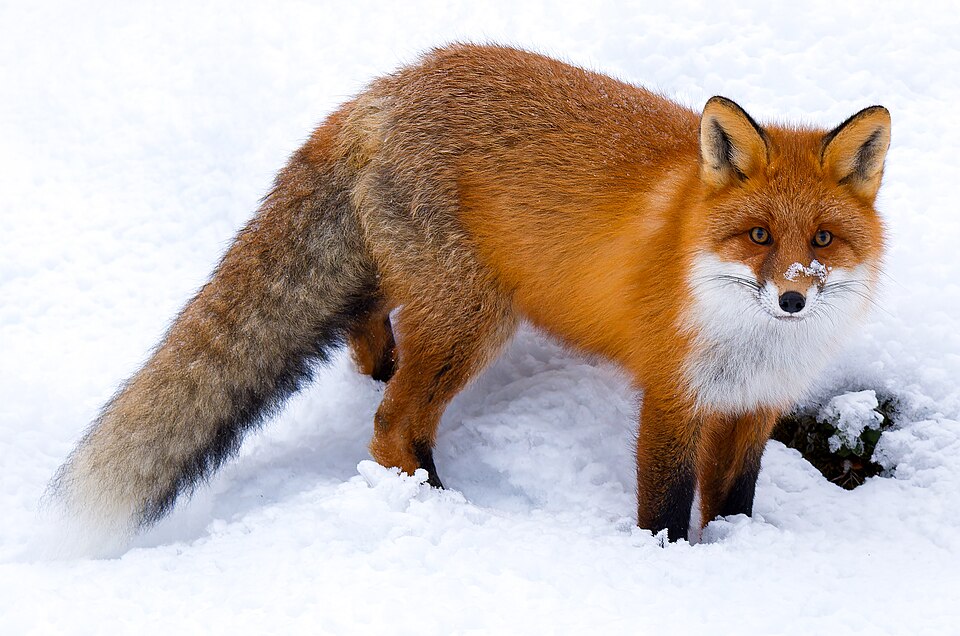
Reference photograph
Reference photograph of a red fox. Compare the individual's color and form with the identification notes in the text.
Source: ClaudiaTen · Original material · CC BY-SA 4.0
1. Classification, origins and habitat
The red fox is a wild member of the dog family that uses varied habitats across the Northern Hemisphere. Its living spaces range from woodland edges and grassland to farmland and cities. Areas where people introduced it, such as Australia, must be distinguished from its native distribution. Food, activity times and conservation issues vary by region, so a broad distribution does not mean that it is common everywhere. Although it belongs to the same family as pet dogs, it does not have the same living requirements as domesticated dogs. Photographs from zoos or captive facilities can show circumstances different from the wary distance maintained by wild foxes; state the photographic setting as well.
2. Appearance and identification
A pointed snout, large ears and a long, bushy tail are characteristic. Reddish-brown fur is familiar, but dark color forms and pale variants also occur, and coat fullness changes with the seasons. The tail tip is often pale and the lower legs dark, although individuals vary. It is a different species from the large-eared fennec fox or the Arctic fox with its small, rounded ears. Photographs of a thick winter coat and a summer coat can look very different even within the same species. Interpret ear and tail positions in the behavioral context; a seemingly smiling face does not establish that contact with people is comfortable for the animal.
3. Behavior and way of life
It uses varied foods, including small mammals, birds, insects and fruit, according to local conditions. Pouncing on rodents and caching food can be observed. Solitary foraging by adults occurs alongside family relationships during reproduction, so do not describe it as living completely alone at all times. Sounds and scent marks help individuals communicate. Urban foxes may move to avoid human activity or use available food resources, but this does not make them tame like pets. Waste and feeding can change their routes and distance from people; distinguish these situations from natural relationships in the wild.
4. Observation, conservation and care
Do not approach dens or young, or use food to draw foxes into view. Where urban foxes occur, securing waste and pet food can help reduce unnecessary contact. Effects on native organisms and management in introduced areas are separate topics and should not be given the same conclusions as the species' role in its native range. Match coat color with the species identification, without calling every white-coated fox an Arctic fox. Actual population status must be based on regional surveys; a friendly individual at a particular captive facility is not evidence of the entire species' temperament.
Evidence and references
- Animal Diversity Web — Vulpes vulpes
Classification, distribution, appearance, diet and reproductive behavior
- Woodland Trust — Red fox
Red fox appearance, diet, reproduction and life around people