
Dinosaurs
Pteranodon
Pteranodon
Classification and scientific name: Pteranodon
Sources checked:
A coastal pterosaur with a toothless bill and wing membranes
Pteranodon was a pterosaur rather than a dinosaur; distinguish these flying reptiles of the same era from a type of dinosaur.
Origins and distribution
Late Cretaceous North America
- Pteranodon
- Extinct animal studied through fossils
- Distinguishing reconstruction from evidence
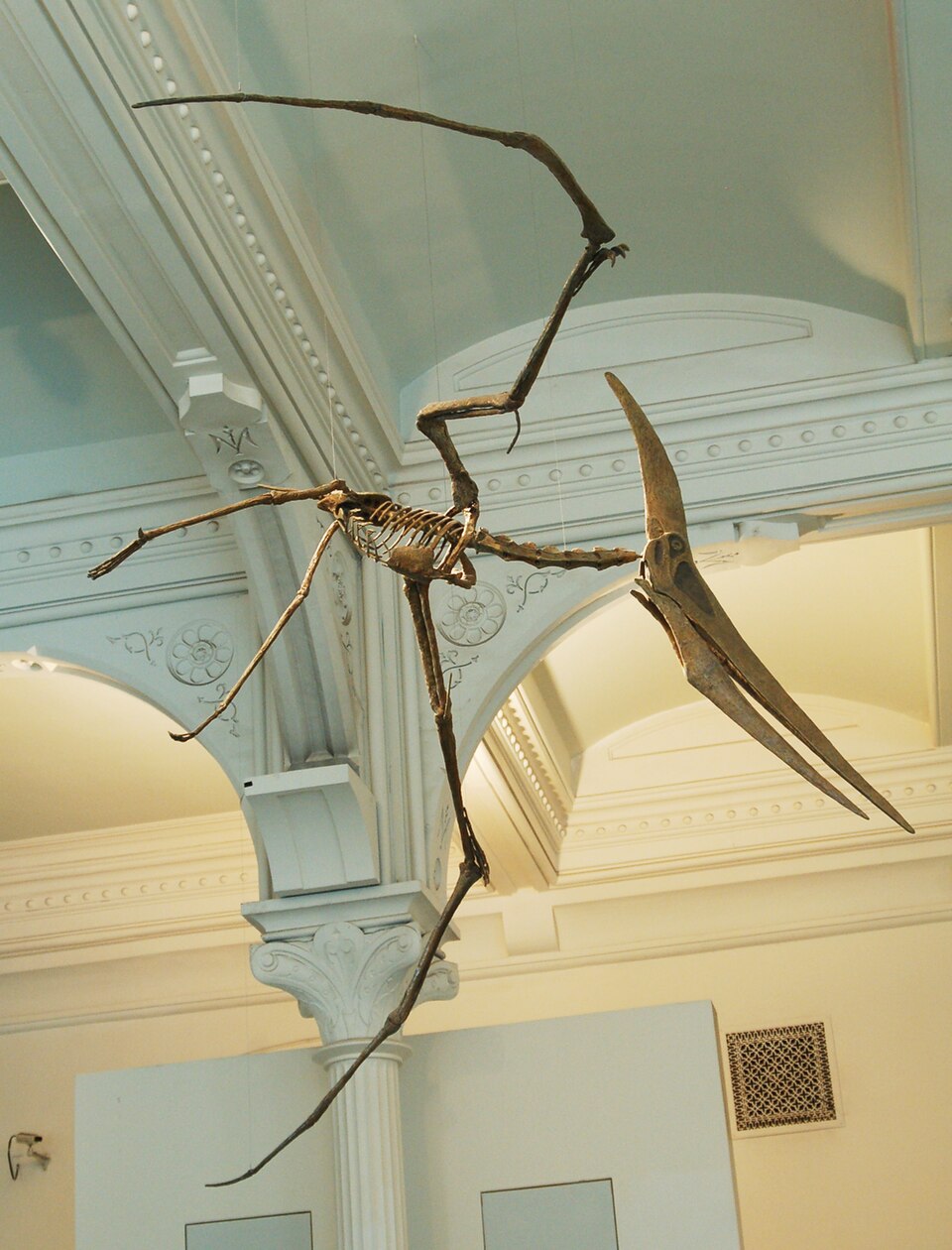
Fossil or skeletal specimen
Pteranodon fossil and skeletal exhibition material. Displays may include replicated or supplemented parts; this is not a photograph of a living individual.
Source: Matt Martyniuk · Original material: Pteranodon_amnh_martyniuk.jpg · CC BY 3.0
Photo credit Matt Martyniuk henteeth.com
1. Classification, discovery and geological context
Pteranodon was a pterosaur rather than a dinosaur. Flying reptiles that lived alongside dinosaurs should be distinguished from a type of dinosaur.
Pteranodon names a genus, distinct from the popular habit of grouping dinosaurs and pterosaurs together. Its fossil-bearing North American Cretaceous strata record a time with an extensive inland sea. Bones found inland today can therefore come from ancient marine sediments. Differences between small and large specimens provide material for studying species, sex and growth stages; size alone should not determine a name.
2. Appearance and identification
Pteranodon had a long bill, a head crest and wing membranes supported by elongated fingers of the forelimbs. Known Pteranodon jaws lack teeth.
In a spread wing, the elongated fourth finger supports the skin membrane. This differs from the support system of a feathered bird wing or a bat wing with several extended fingers. Crest size and shape vary among specimens and cannot simply be established as a steering rudder. The outline of wing membranes not preserved in an exhibited skeleton can vary among reconstructions.
3. Evidence for ecological interpretations
Flight and feeding in marine environments are interpreted as related parts of its life. Specific flight and landing methods involve inference from fossils and biomechanics.
The bill, feeding traces and marine sedimentary evidence are used to investigate fish feeding. Comparisons with living seabirds help explain functions, but do not prove identical diving or water landings. Flapping flight and gliding on air currents are studied together. A single reconstruction cannot establish habitual flight posture or group size.
4. Limits of the fossil record and reconstructions
Pteranodon fossils occur in deposits associated with North America's ancient inland sea. Consider its pterosaur lineage and discovery environment rather than applying dinosaur categories of carnivory and herbivory.
Coastal and marine ecology must be read alongside the process by which bones were buried. Broken bones transported by water or the accumulation of remains from several organisms can change the meaning of a discovery site. Reference images depict fossils, skeletons or reconstructions based on them, never photographic records of living pterosaurs. Wing-membrane colours and bill patterns should not be described as directly observed.
Evidence and references
- UC Museum of Paleontology — Pteranodon
Classification, origin, appearance and ecology
- American Museum of Natural History — Pteranodon longiceps
Pteranodon fossil-bearing strata, crest, toothless bill and food