
Dinosaurs
Quetzalcoatlus
Quetzalcoatlus
Classification and scientific name: Quetzalcoatlus
Sources checked:
A giant azhdarchid pterosaur with a long neck and bill
Quetzalcoatlus is known as a large flying animal, rather than a sauropod dinosaur.
Origins and distribution
Late Cretaceous North America
- Quetzalcoatlus
- Extinct animal studied through fossils
- Distinguishing reconstruction from evidence
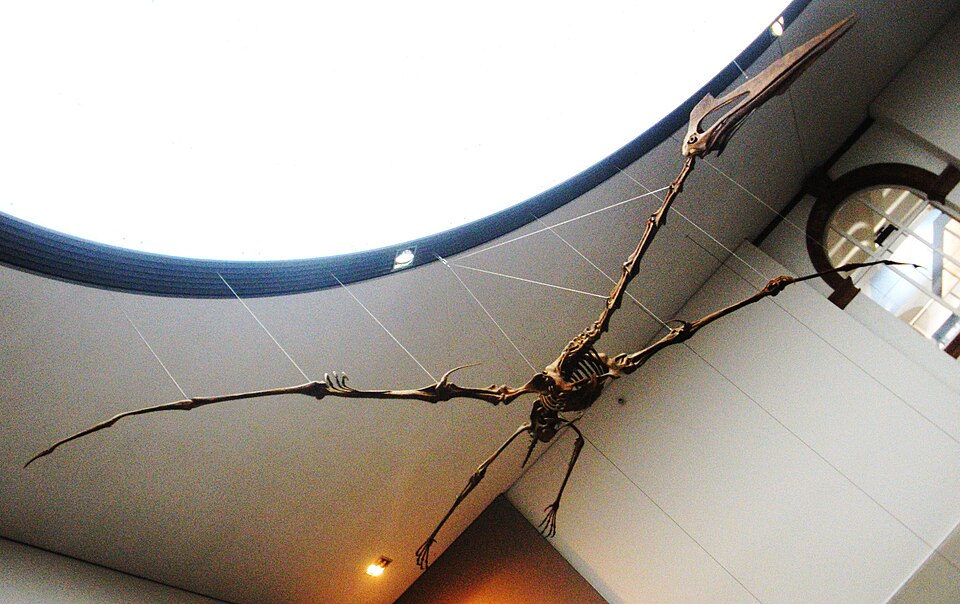
Fossil or skeletal specimen
Quetzalcoatlus fossil and skeletal exhibition material. Displays may include replicated or supplemented parts; this is not a photograph of a living individual.
Source: Ghedoghedo · Original material: Quetzalcoatlus_northropi.jpg · CC BY-SA 3.0
1. Classification, discovery and geological context
Quetzalcoatlus was an azhdarchid pterosaur. Although known as a large flying animal, it was not a sauropod dinosaur.
This azhdarchid is known from Late Cretaceous strata in Texas, United States. Pterosaur classification distinguishes it from types of dinosaur and modern birds. Reconstructions depend on how large species and smaller specimens are connected, making a single fixed size for the genus difficult to provide. Checking specimen types and strata allows more accurate comparisons than popular rankings of giant flying animals.
2. Appearance and identification
A long neck, long bill and forelimbs supporting wing membranes are characteristic. Build estimates differ with species and specimen.
The long neck and bill accompany forelimbs supporting large wing membranes. Elongated fingers support the wings, unlike feathered bird wings. Overall wingspan and mass are estimated through incomplete specimens and proportions. Even a reconstruction showing the tall standing body does not mean every bone was discovered complete; check the actually preserved portions.
3. Evidence for ecological interpretations
Flight and ground feeding are studied through skeletons and biomechanics. Particular top speeds and prey choices should not be presented as direct observations.
Ground walking, take-off and flight are investigated with joints, muscles and biomechanical models. A long bill alone cannot decide between catching only fish beside water and using terrestrial prey. Avoid opposite extremes declaring that a large body prevented flight or that it always moved only on air currents. Read research results alongside the specimens and assumptions used.
4. Limits of the fossil record and reconstructions
Body use on land and in flight is studied together. Compare wingspan and mass only in material identifying specimens and estimation methods.
Ancient river and floodplain environments at discovery sites suggest living possibilities different from marine pterosaurs. Compare long neck vertebrae and wing fingers in skeletal photographs and check specimen names. Distinguish fossils, models and scientific reconstructions. A flying scene on this page is reconstructed from skeletons and research rather than a photographic record of a living animal.
Evidence and references
- UC Museum of Paleontology — Quetzalcoatlus
Classification, origin, appearance and ecology
- University of Texas at Austin — World's Largest Pterosaur Leaped Aloft to Fly
Texas specimens and studies of take-off, flight and terrestrial movement