
Mammals
Browse published English profiles of mammals, with information about their origins, appearance, behavior and care.
Browse categories
Dog Breeds
Explore published English dog breed profiles. Each guide distinguishes breed history and appearance from the behavior and care needs of individual dogs.
Cats
Explore published English cat profiles. Compare breed histories, appearance and care while distinguishing individual behavior from assumptions based on breed names or coat colors.
Mammals (Cattle)
Explore classification, origins, appearance, behavior, observation and care through the published animal profiles for mammals (cattle).
Mammals (Horses)
Explore classification, origins, appearance, behavior, observation and care through the published animal profiles for mammals (horses).
Mammals (Pigs)
Explore classification, origins, appearance, behavior, observation and care through the published animal profiles for mammals (pigs).
Other Mammals
Explore classification, origins, appearance, behavior, observation and care through the published animal profiles for other mammals.
Published animal profiles
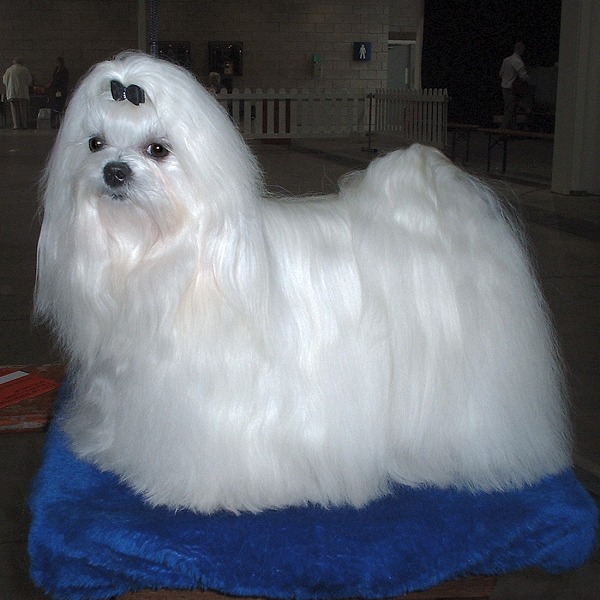
Maltese
The Maltese is a domestic dog breed associated with a long history of small companion dogs in the Mediterranean region. Its straight, long white coat and small, dark eyes and nose are characteristic features.
Read the guide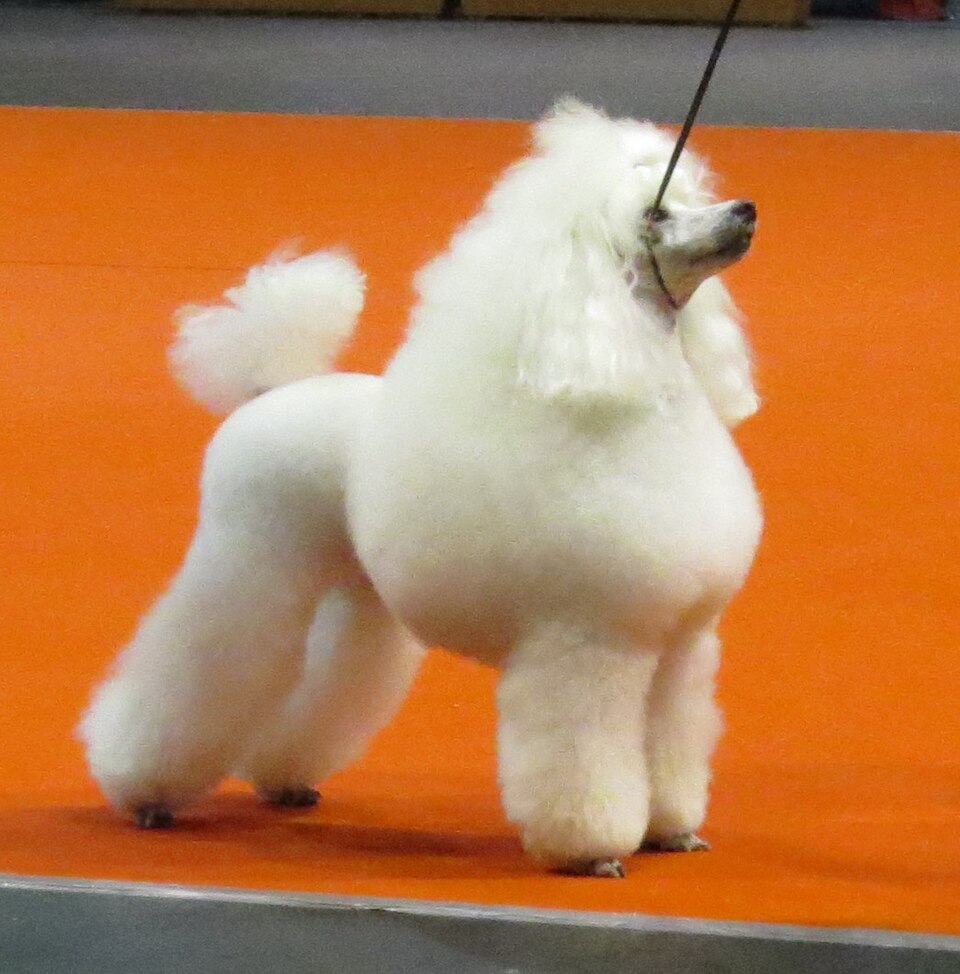
Toy Poodle
The Toy Poodle is a small size variety of the Poodle. A dense, curly coat, a relatively long muzzle and hanging ears are characteristic features.
Read the guide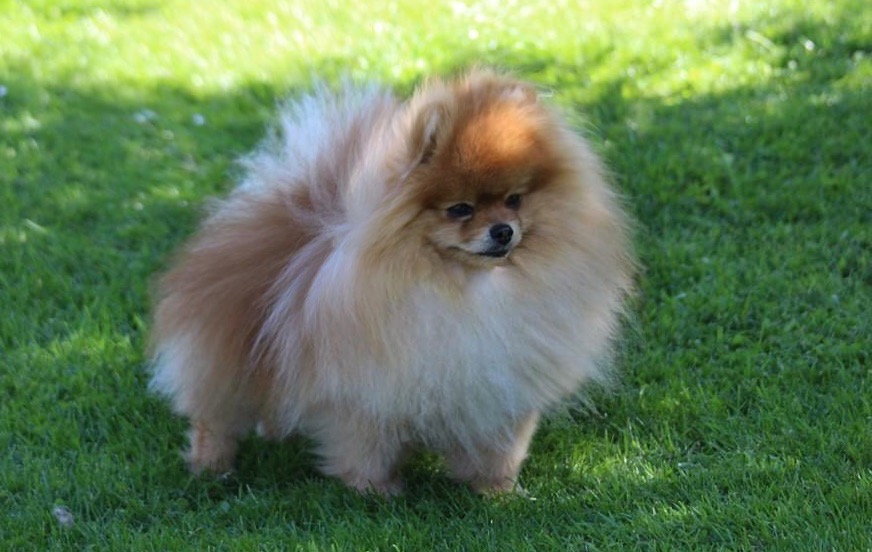
Pomeranian
The Pomeranian is a breed selected as a small companion dog from northern European Spitz ancestry. A profuse double coat, small upright ears and a tail carried over the back are characteristic features.
Read the guide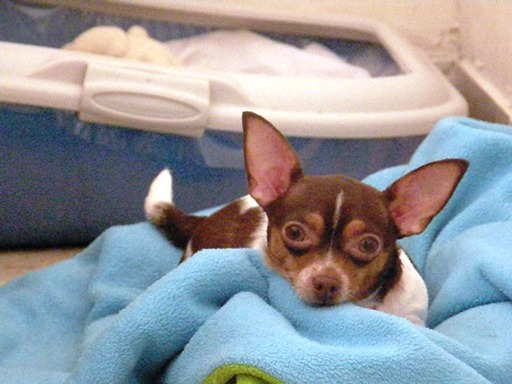
Chihuahua
The Chihuahua is a small domestic dog breed named after a place in Mexico. Large upright ears, a rounded head and relatively large eyes stand out.
Read the guide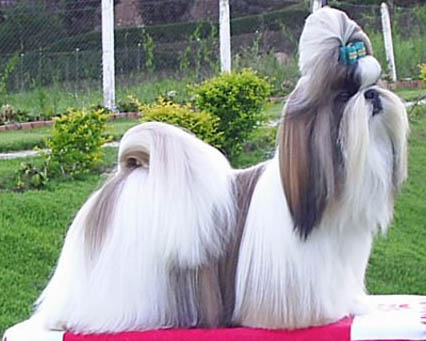
Shih Tzu
The Shih Tzu is a breed developed from small dogs of Tibetan ancestry and the companion-dog culture of the Chinese court. A short muzzle, a rounded head and long hair growing around the face are characteristic features.
Read the guide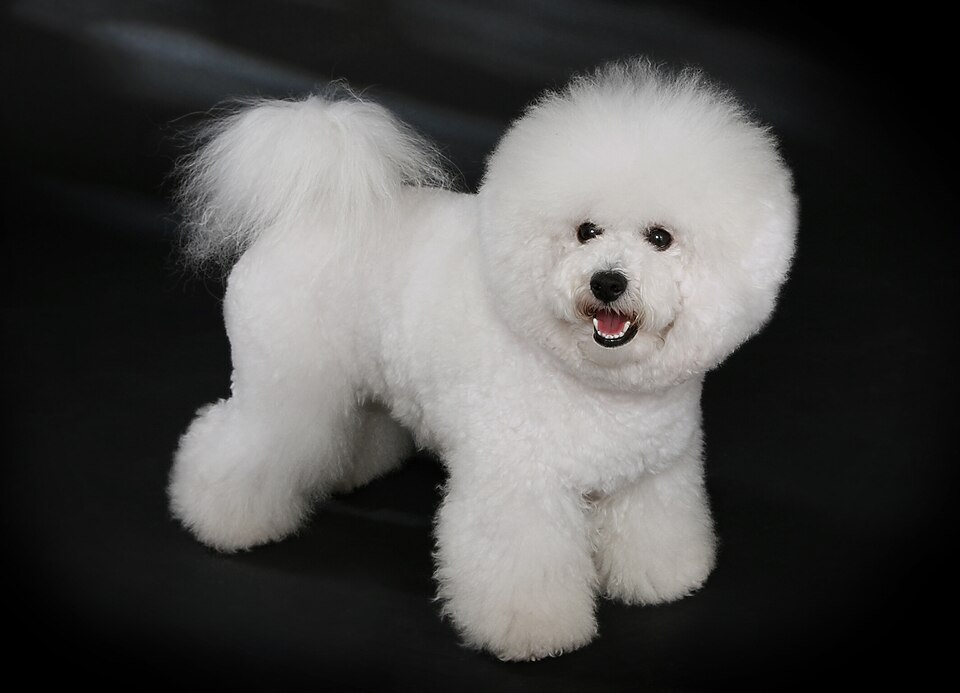
Bichon Frise
The Bichon Frise is associated with small companion-dog lines around the Mediterranean and developed into its modern breed in France and Belgium. White curly hair and a soft undercoat create a full appearance, contrasting with dark eyes and nose.
Read the guide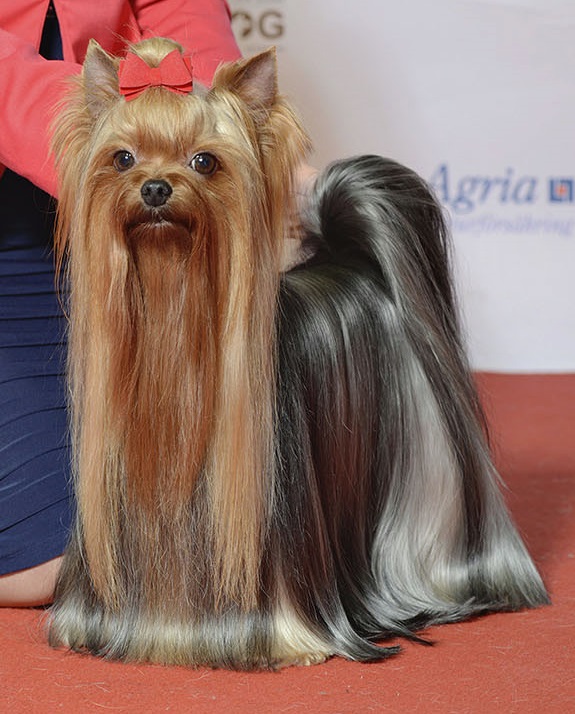
Yorkshire Terrier
The Yorkshire Terrier is associated with terrier ancestry used to catch small rodents in the industrial areas of northern Britain. Adults typically have blue-gray body hair and a tan face and legs; their color can change from the black and tan of puppyhood.
Read the guide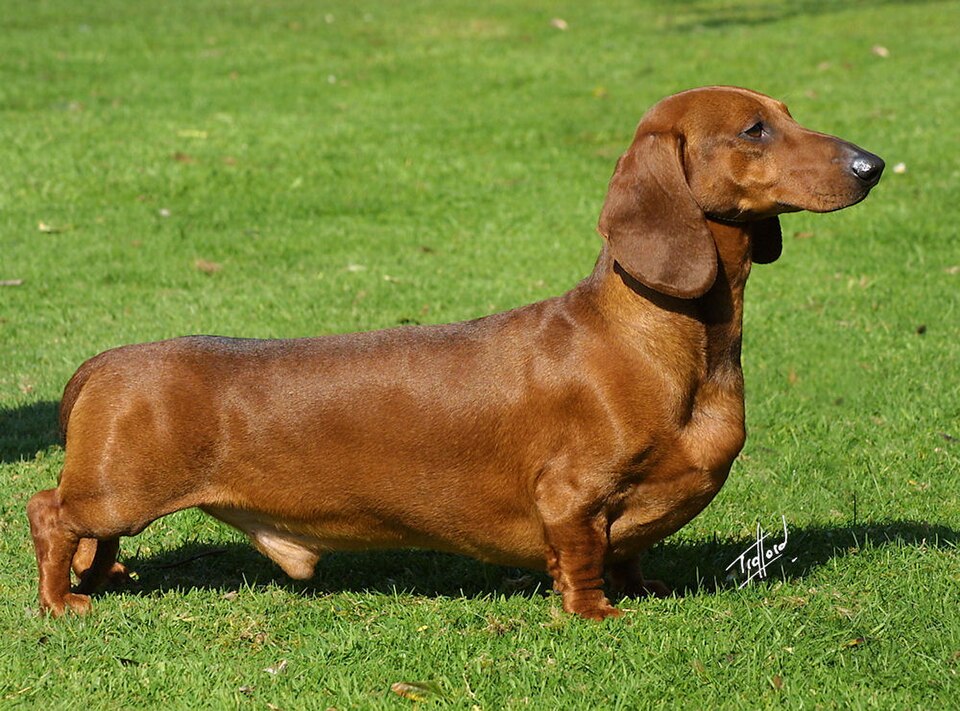
Dachshund
The Dachshund developed in Germany as a dog that helped with hunting in burrows and above ground. A long torso, short, sturdy legs and long, hanging ears stand out.
Read the guide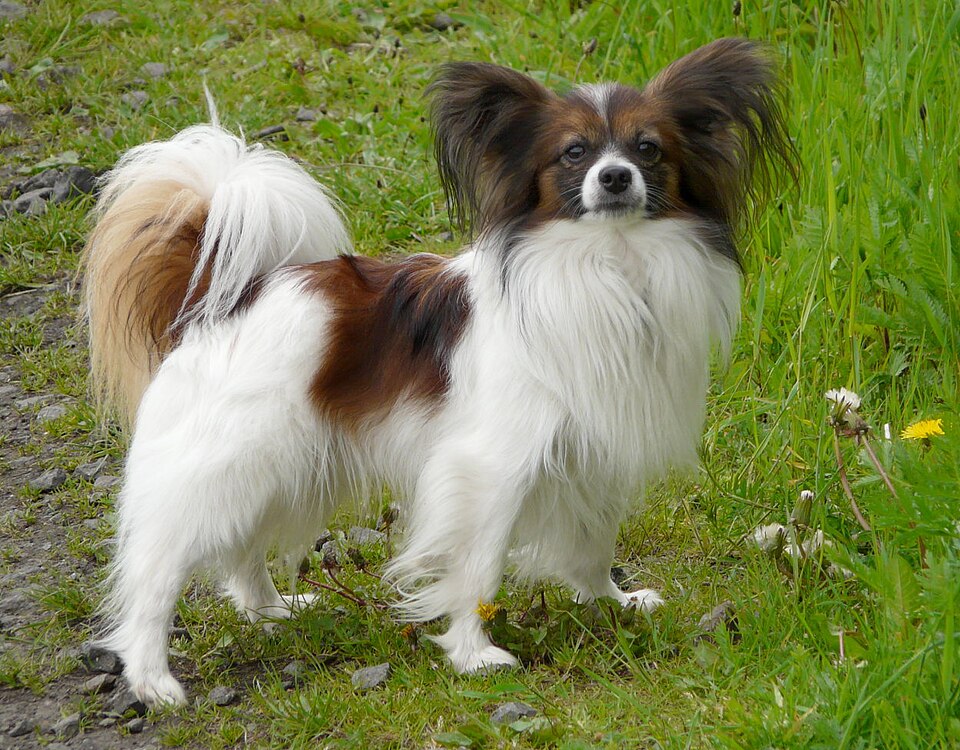
Papillon
The Papillon developed from small European companion spaniels and is introduced in connection with little dogs depicted in old paintings. Large ears spreading to the sides, long ear fringes, a small torso and a full tail are characteristic features.
Read the guide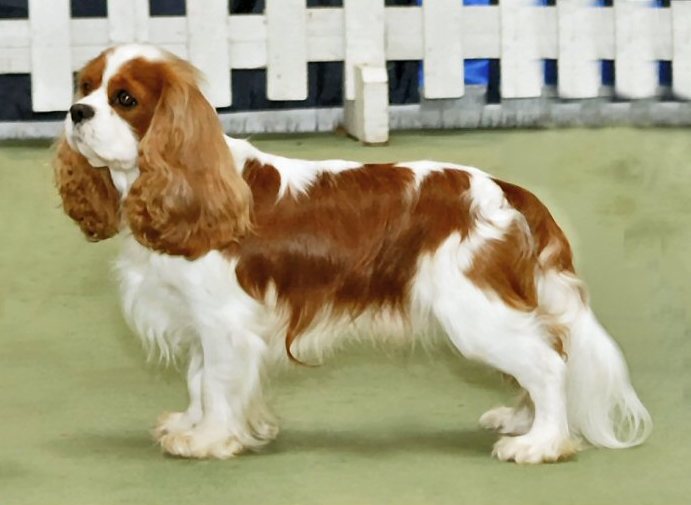
Cavalier King Charles Spaniel
The Cavalier King Charles Spaniel is connected with the history of small spaniels in the British royal household and developed through modern selection aimed at the form seen in old paintings. Long, soft ear fringes, feathering on the chest and legs, and relatively large eyes are characteristic features.
Read the guide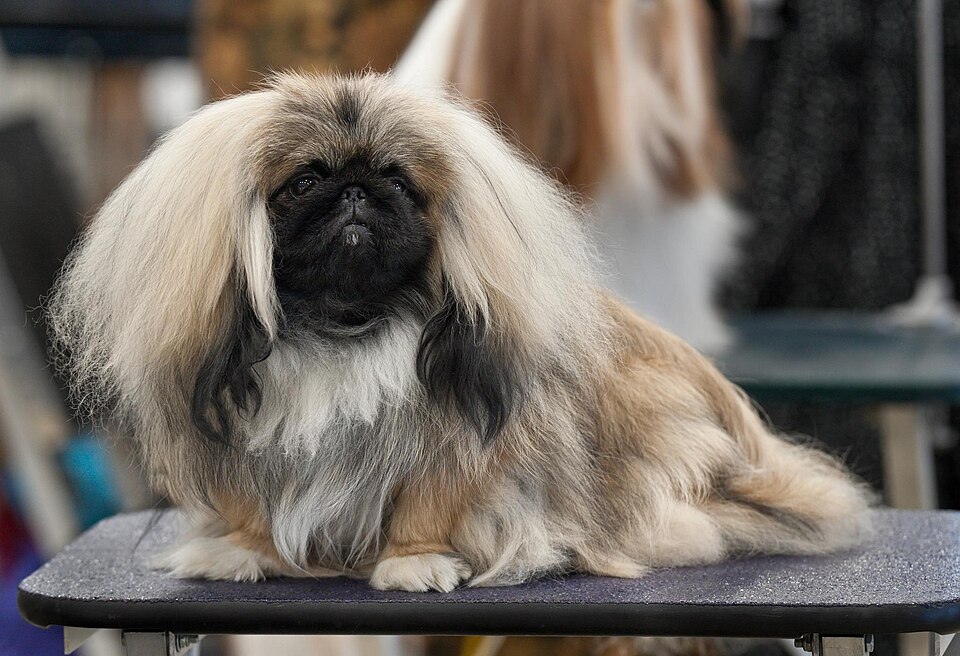
Pekingese
The Pekingese is a small dog connected with China’s court companion-dog culture. A low, compact torso, a short muzzle and broad head, and abundant hair around the neck and chest are characteristic features.
Read the guide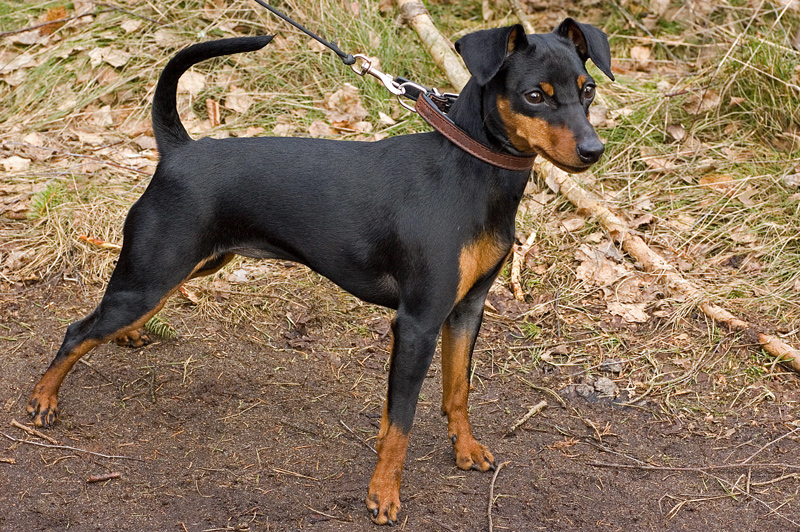
Miniature Pinscher
The Miniature Pinscher developed from small German Pinscher ancestry. A smooth, short coat, a sleek, compact body and relatively long legs are characteristic features.
Read the guide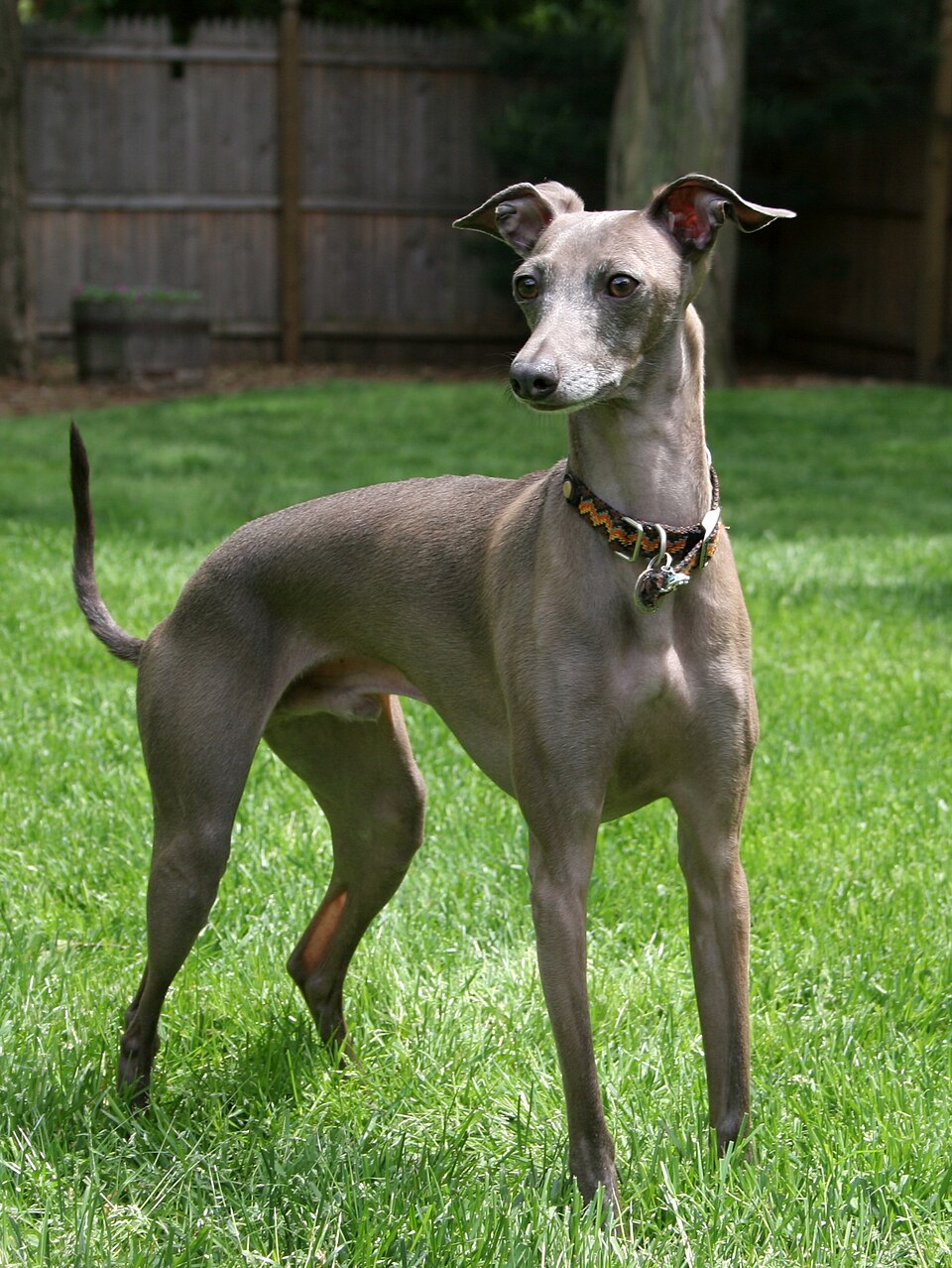
Italian Greyhound
The Italian Greyhound developed from old small sighthound ancestry and European companion-dog culture. A deep chest and tucked-up abdomen, long legs and a long, slender neck, and a short, smooth coat are characteristic features.
Read the guide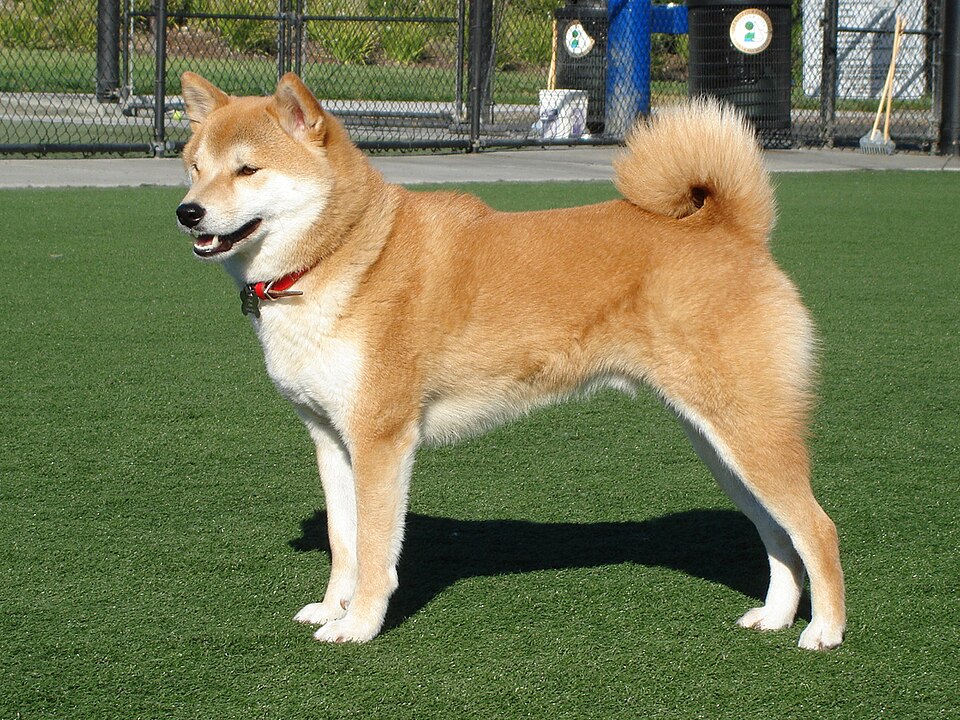
Shiba Inu
The Shiba is a native dog breed developed in Japan as a small hunting dog. Small erect triangular ears, a curled or upward-curving tail and a thick double coat are characteristic.
Read the guide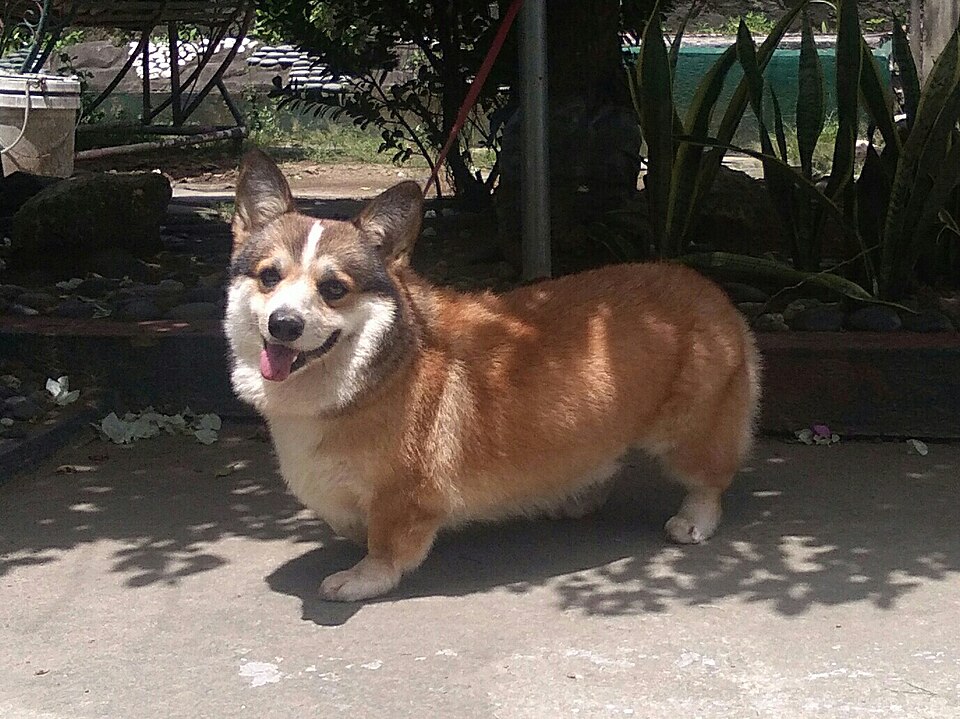
Welsh Corgi
Welsh Corgis are small herding dogs associated with moving livestock in Wales; Pembrokes and Cardigans are distinct. Short legs, a long sturdy body, relatively large upright ears and a fox-like head are characteristic.
Read the guide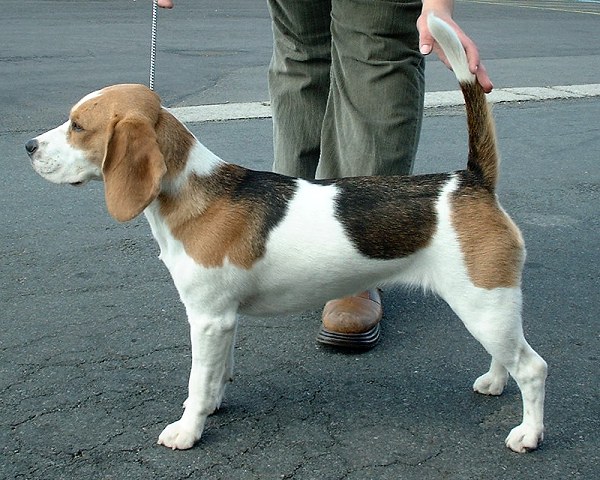
Beagle
The Beagle developed from small British hound lineages that followed scent to find quarry such as rabbits. Long hanging ears, strong legs, a balanced body and a raised tail stand out.
Read the guide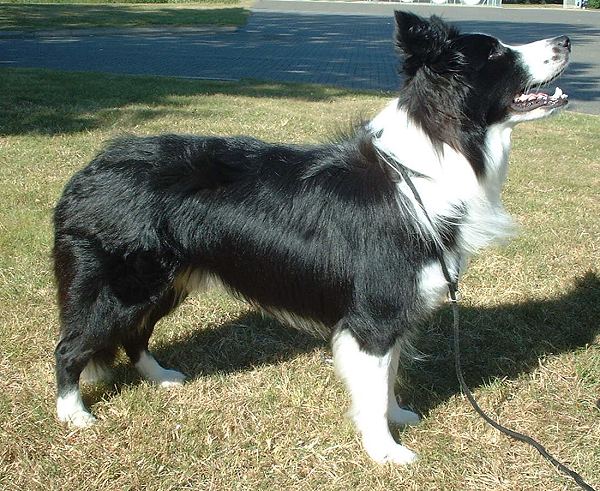
Border Collie
The Border Collie is a herding dog selected primarily for its ability to work sheep in Britain’s border region. A balanced medium-sized body, relatively long agile legs and a double coat of varying lengths are seen.
Read the guide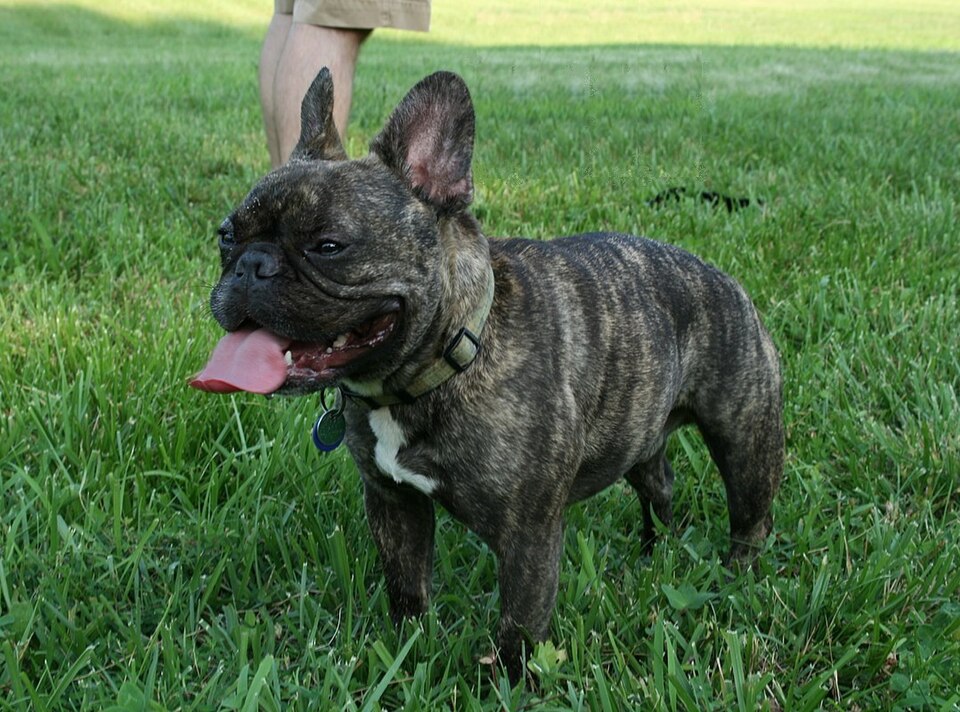
French Bulldog
The French Bulldog developed from small British bulldog lines within French companion-dog culture. Broad erect bat-shaped ears, a short muzzle and a compact muscular body are characteristic.
Read the guide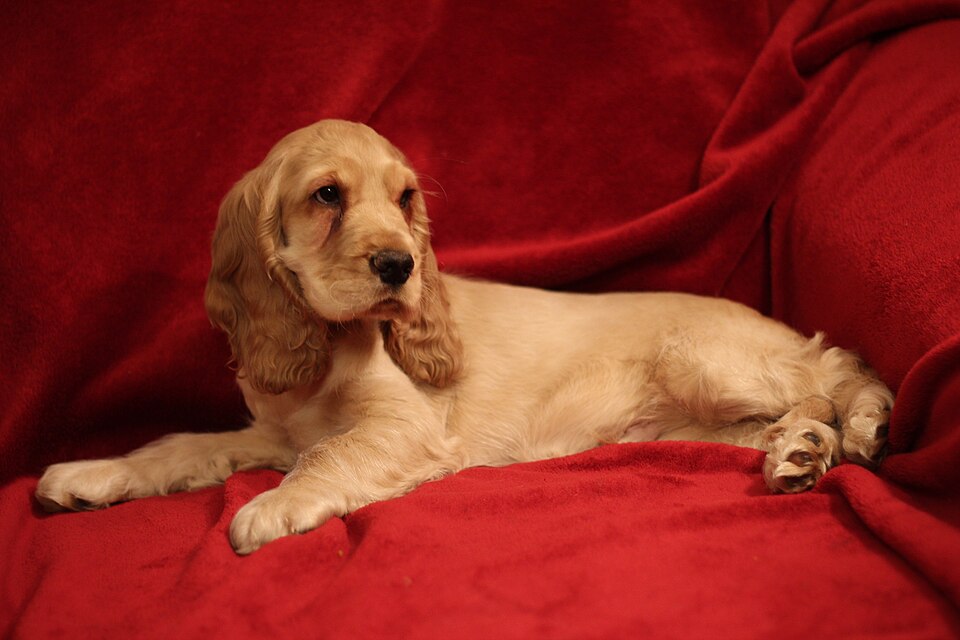
Cocker Spaniel
The Cocker Spaniel developed from spaniels that helped hunt birds, and English and American types are distinguished. Long drooping ears with soft hair, feathering on the chest, belly and legs, and a sturdy body are characteristic.
Read the guide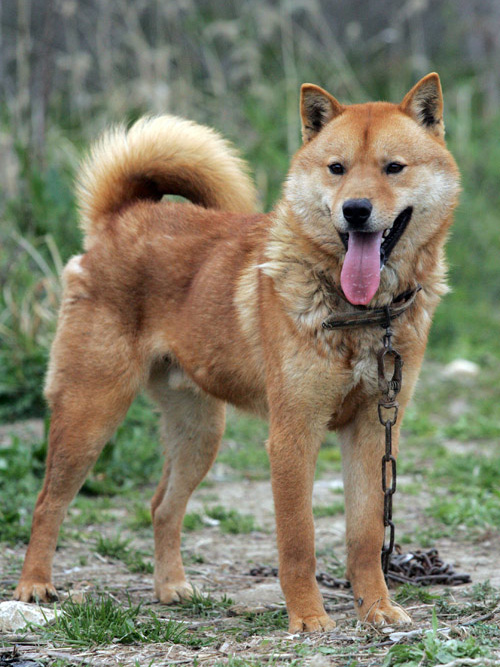
Jindo
The Jindo is a conserved and registered breed based on the indigenous dog population of Jindo in the Republic of Korea. Upright triangular ears, a firm body, a thick double coat and a raised tail are characteristic.
Read the guide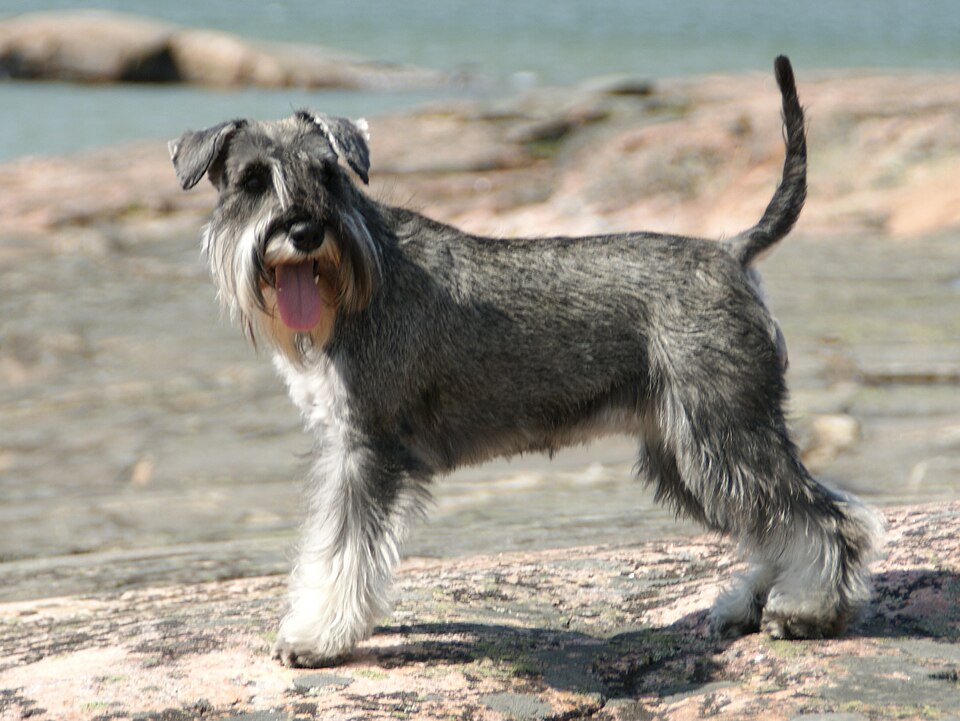
Miniature Schnauzer
This entry focuses on the Miniature Schnauzer to match the main photograph. A harsh outer coat, pronounced beard and eyebrows, and a compact, square-looking body are characteristic.
Read the guide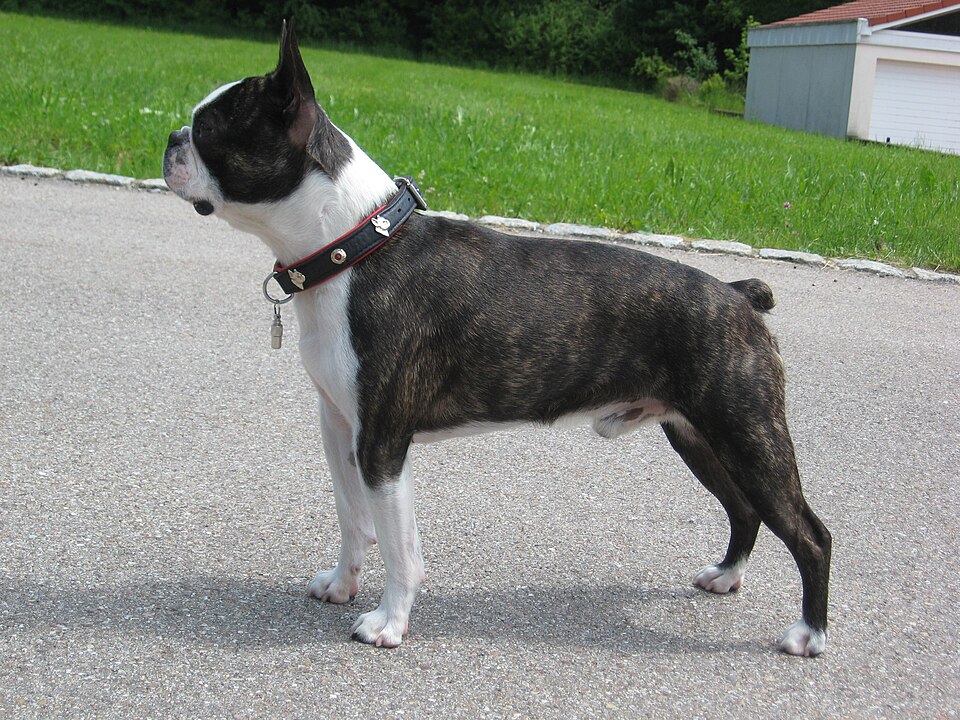
Boston Terrier
The Boston Terrier is a companion breed developed from bulldog and terrier lines in Boston in the United States. A short muzzle, square head, upright ears, short coat and white markings stand out.
Read the guide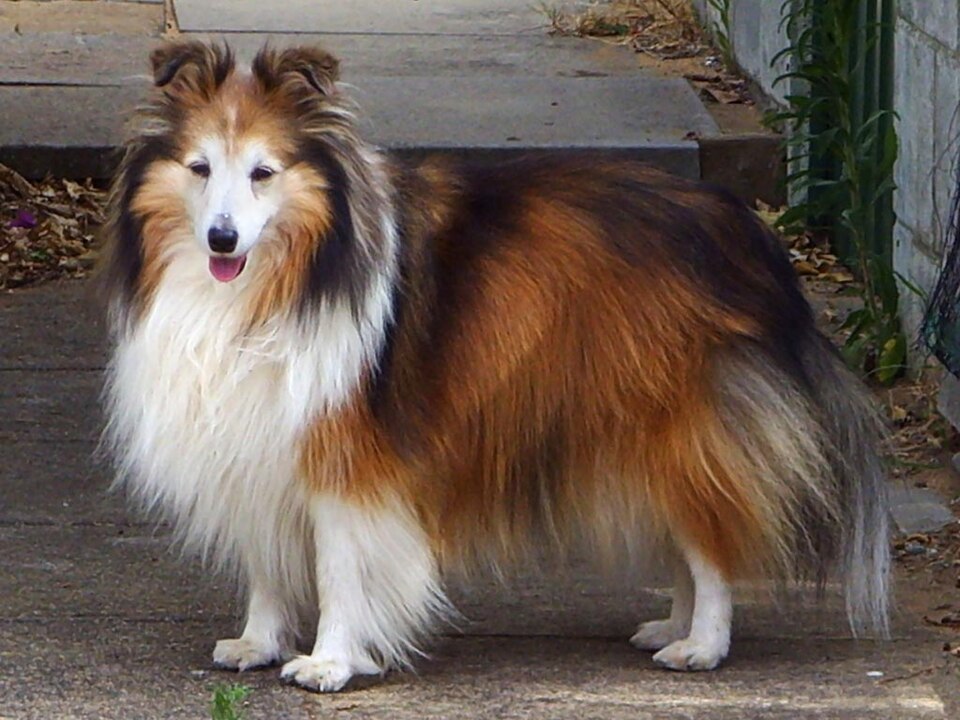
Shetland Sheepdog
The Shetland Sheepdog developed from small herding-dog lines on northern islands. A long, abundant double coat, neck mane, relatively long narrow head and ears with folded tips are characteristic.
Read the guide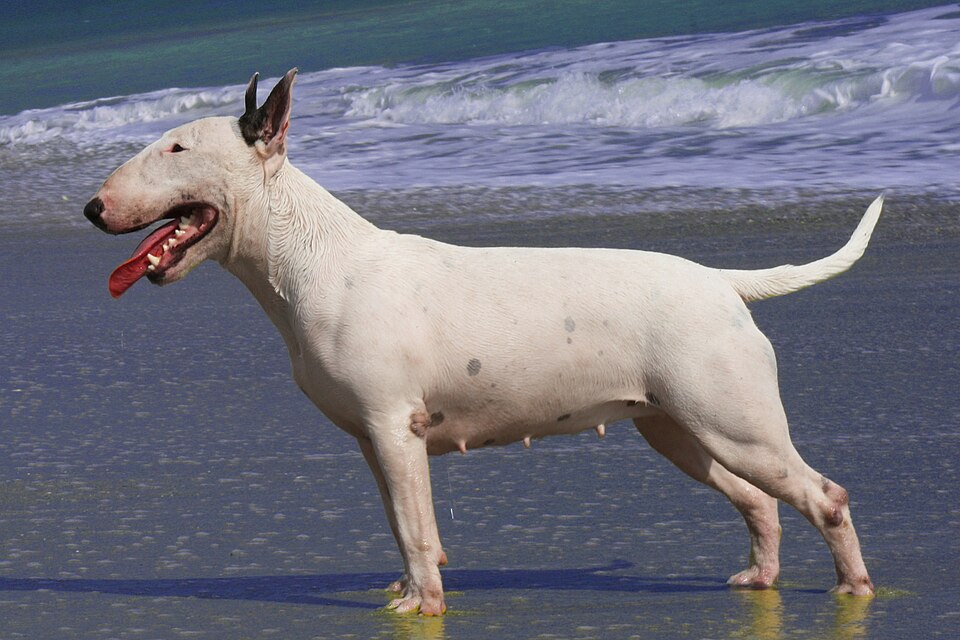
Bull Terrier
The Bull Terrier developed in Britain from bulldog and terrier lines. A long egg-shaped head with a curved profile, small upright ears, triangular-looking eyes and a muscular body are characteristic.
Read the guide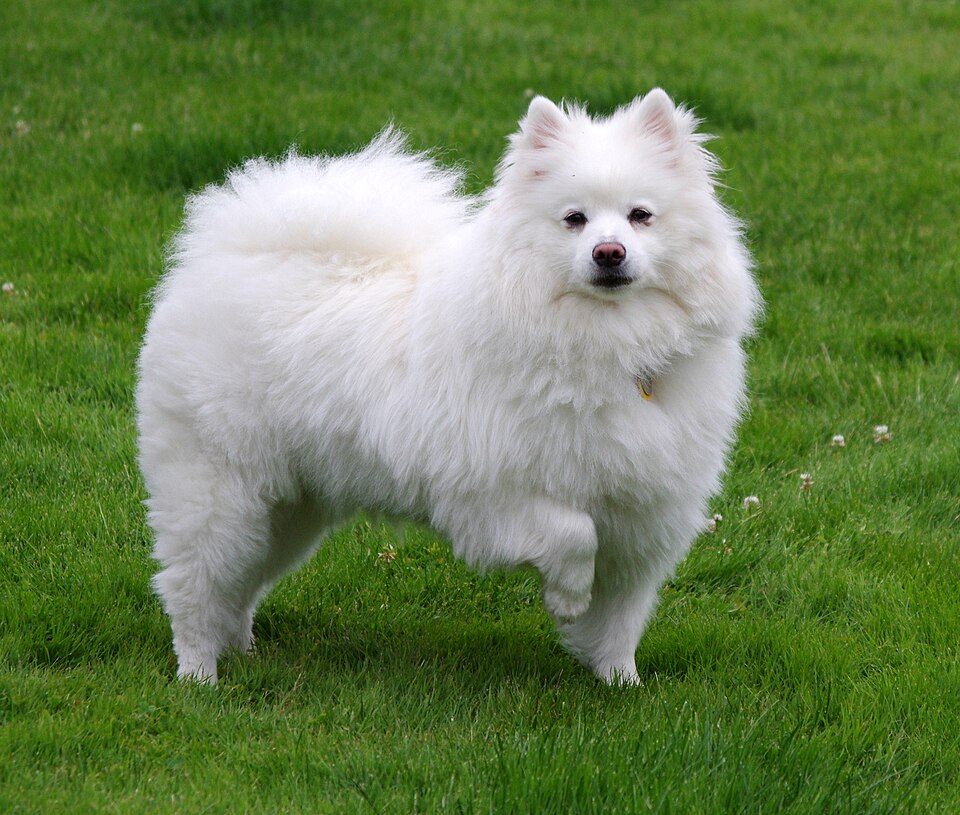
American Eskimo Dog
Despite its name, the American Eskimo Dog is not described as directly descended from the sled dogs of Indigenous Arctic peoples. An abundant white or cream double coat, small upright ears, dark eyes and nose, and a tail carried over the back are typical.
Read the guide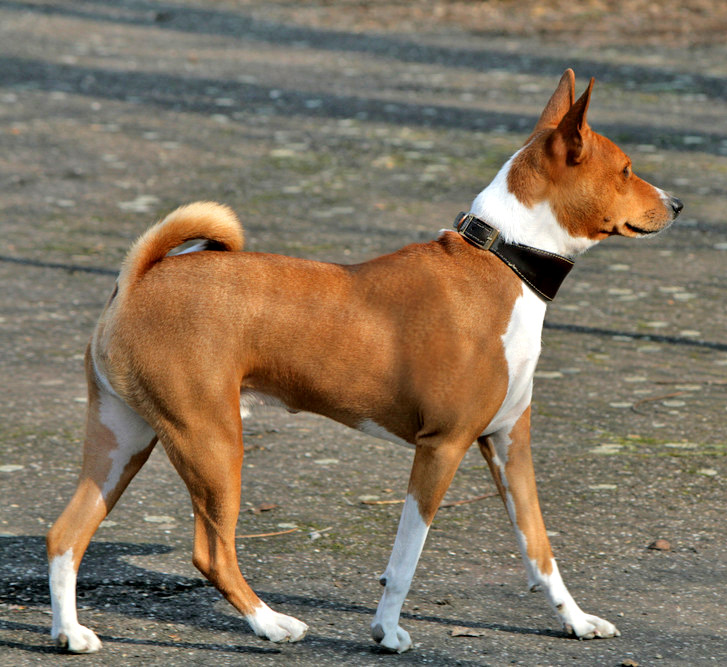
Basenji
The Basenji developed into a modern registered breed from regional hunting-dog lines in Central Africa. A short coat, compact body, upright ears, forehead wrinkles and tightly curled tail are characteristic.
Read the guide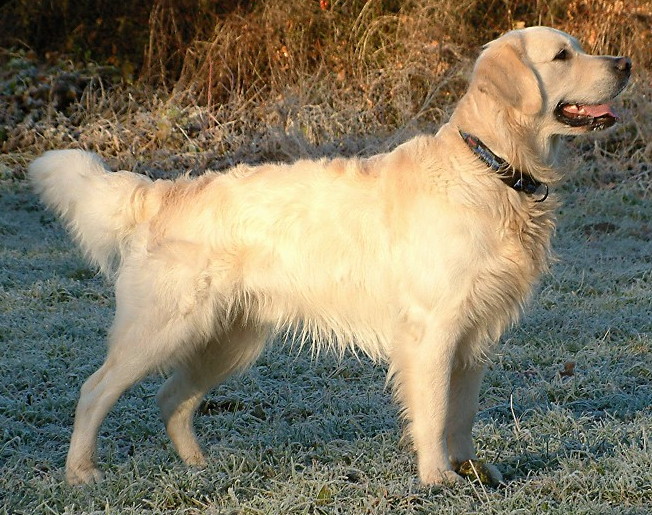
Golden Retriever
The Golden Retriever is a gundog developed in Scotland to retrieve shot birds. Long golden-toned fur, soft ears and feathering on the chest, legs and tail are characteristic.
Read the guide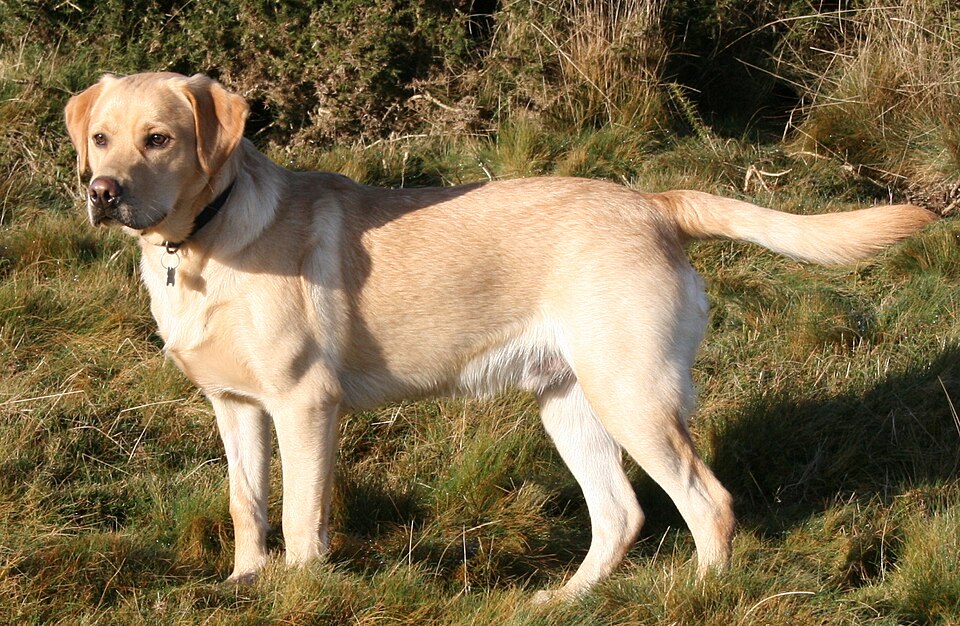
Labrador Retriever
The Labrador Retriever developed from waterside working dog lineages in Newfoundland, Canada, and selection as a gundog in Britain. A short, dense double coat, broad head and thick, tapering otter-like tail are typical.
Read the guide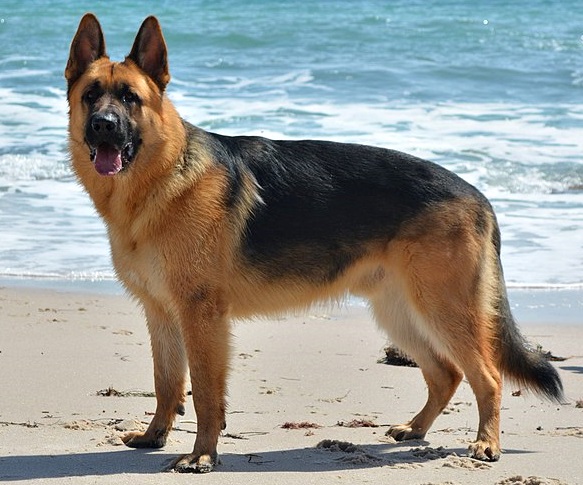
German Shepherd
The German Shepherd was selected for working ability and form from various German herding dogs. A wedge-shaped head, upright ears, long muzzle, firm body and double coat are characteristic.
Read the guide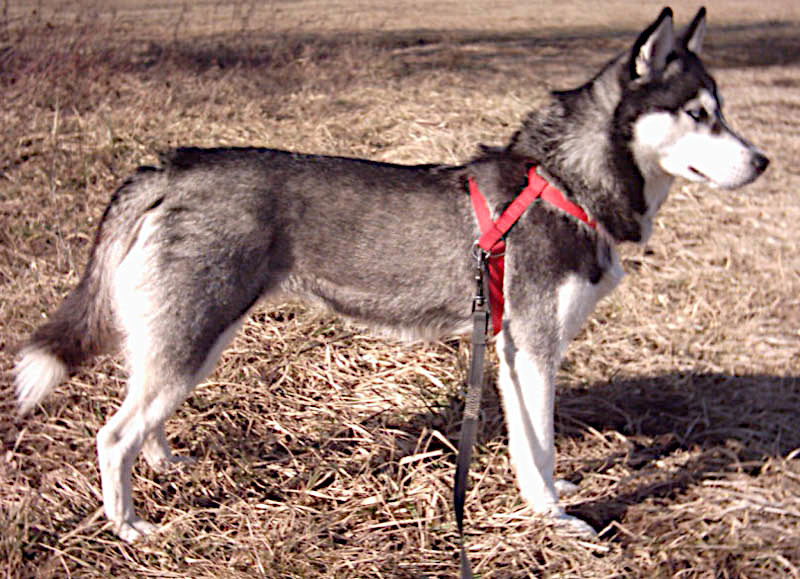
Siberian Husky
The Siberian Husky developed from Northeast Asian sled-dog lines and became associated with modern registration and racing in North America and elsewhere. A thick double coat, upright ears, balanced medium-sized body and bushy tail are characteristic.
Read the guide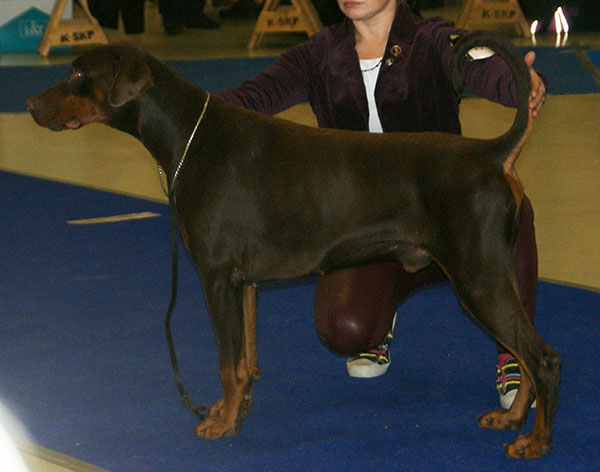
Doberman
The Doberman developed in Germany from several dog lines for guarding and protecting people. A short smooth coat, long legs, firm balanced body and wedge-shaped head are characteristic.
Read the guide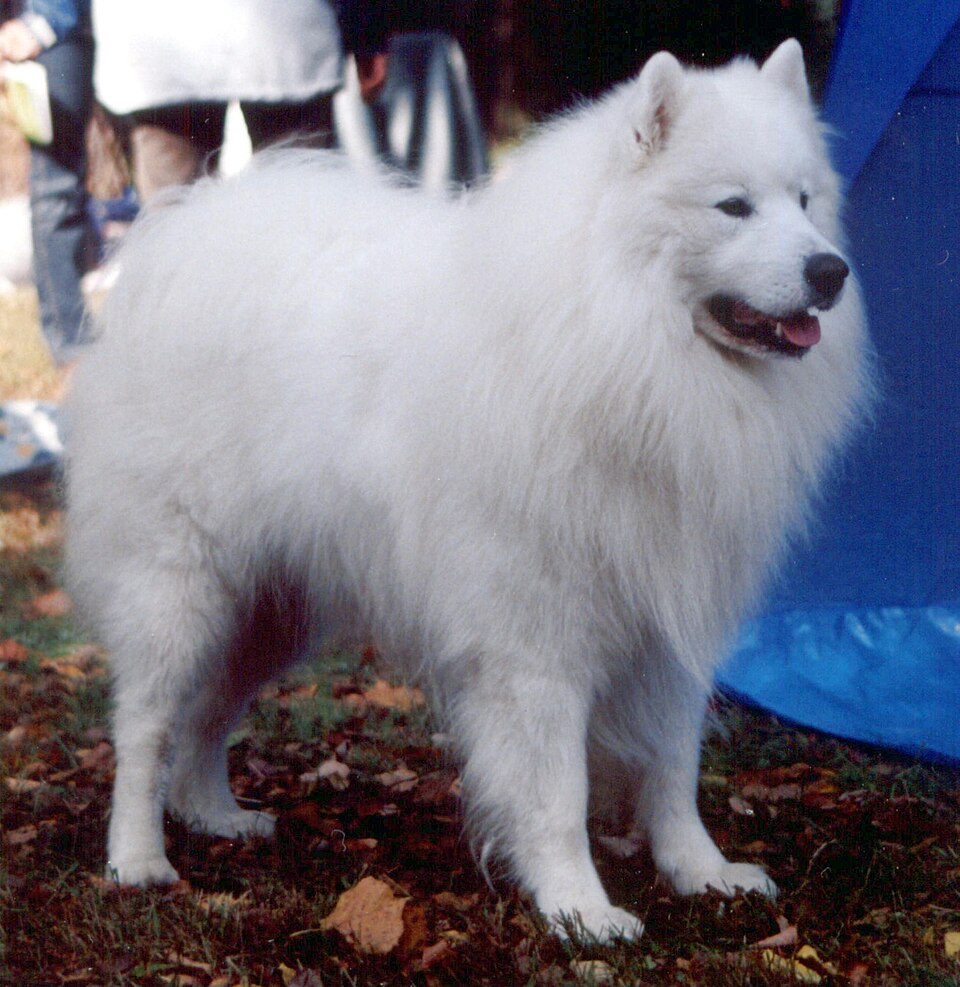
Samoyed
The Samoyed developed from working-dog lines that accompanied people of northern Siberia in travel and livestock management. An abundant double coat in white, cream or biscuit shades, small upright ears and a tail carried toward the back are characteristic.
Read the guide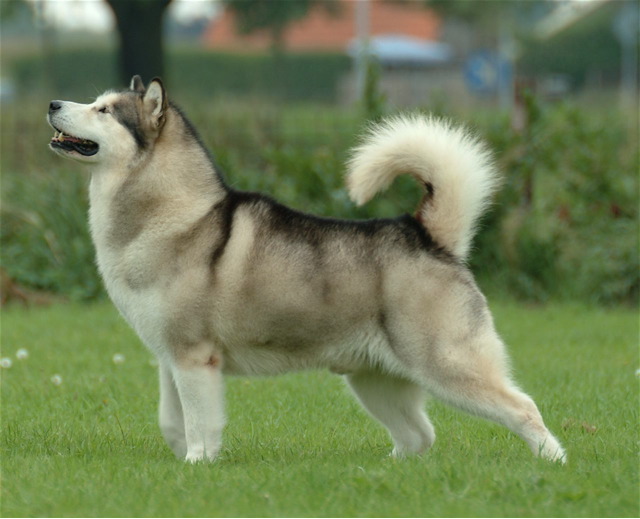
Alaskan Malamute
The Alaskan Malamute developed from sledding and transport working-dog lines associated with Indigenous communities in Alaska. Heavy bone, a broad head, upright ears, a thick double coat and a bushy tail gently carried over the back are characteristic.
Read the guide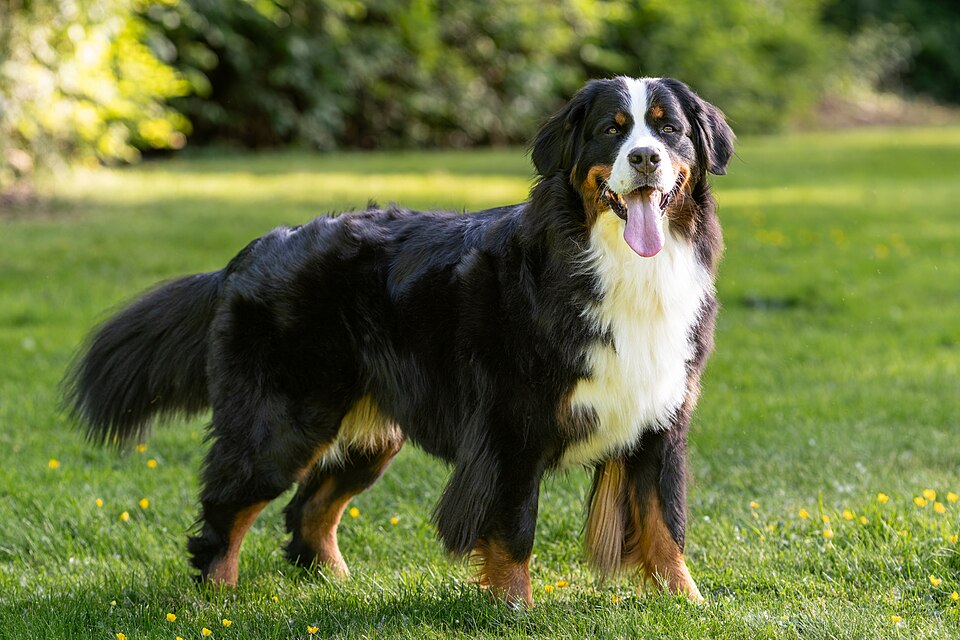
Bernese Mountain Dog
The Bernese Mountain Dog developed from farm-dog lines in Switzerland's Bern region that performed varied tasks including livestock management, guarding and hauling. A long black coat with tan and white markings, large body, broad head and hanging ears are characteristic.
Read the guide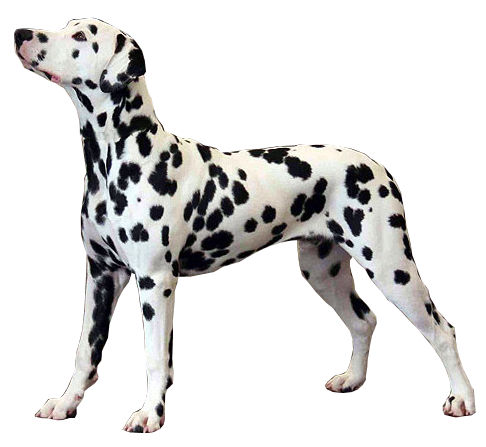
Dalmatian
The Dalmatian is linked to Europe's history of dogs traveling alongside carriages and people, and its name is associated with Dalmatia. A short white coat scattered with black or liver spots and balanced long legs are typical.
Read the guide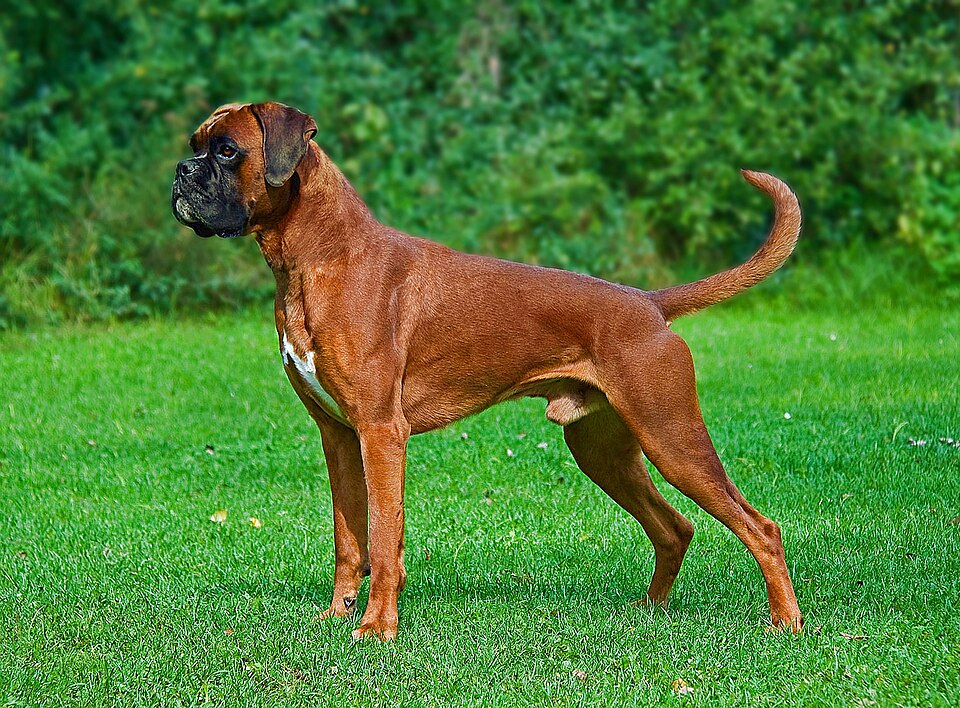
Boxer
The Boxer developed into a modern breed from German dog lines associated with hunting and guarding. A short coat, muscular body, broad head and relatively short muzzle are characteristic.
Read the guide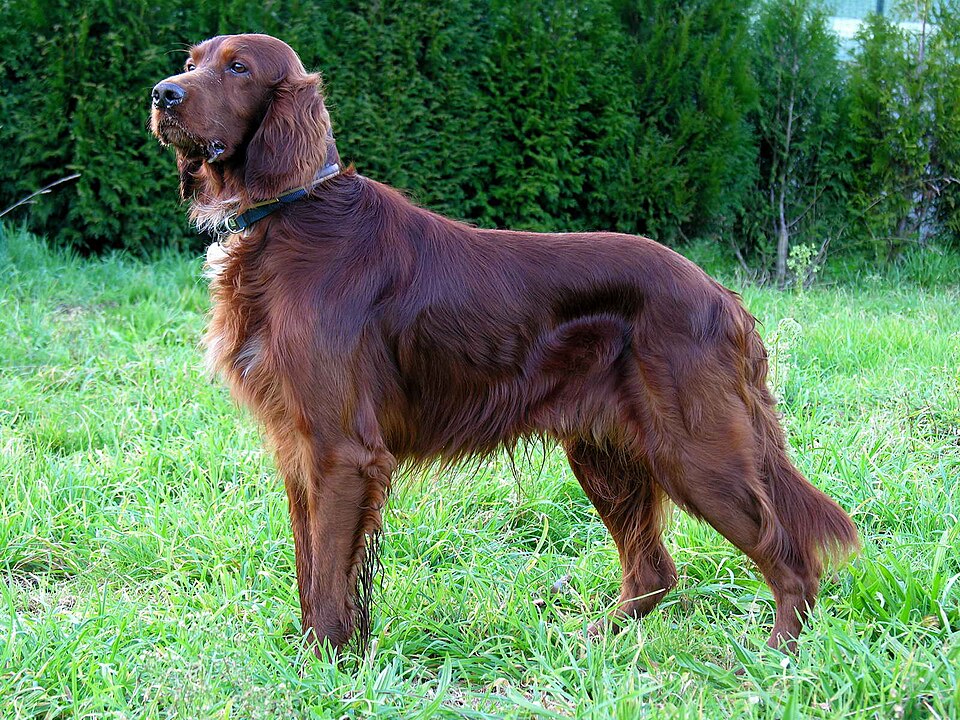
Irish Setter
The Irish Setter developed in Ireland as a hunting dog that located birds and indicated their position. A soft long coat of deep reddish brown, hanging ears, long neck and legs, and a slender body are characteristic.
Read the guide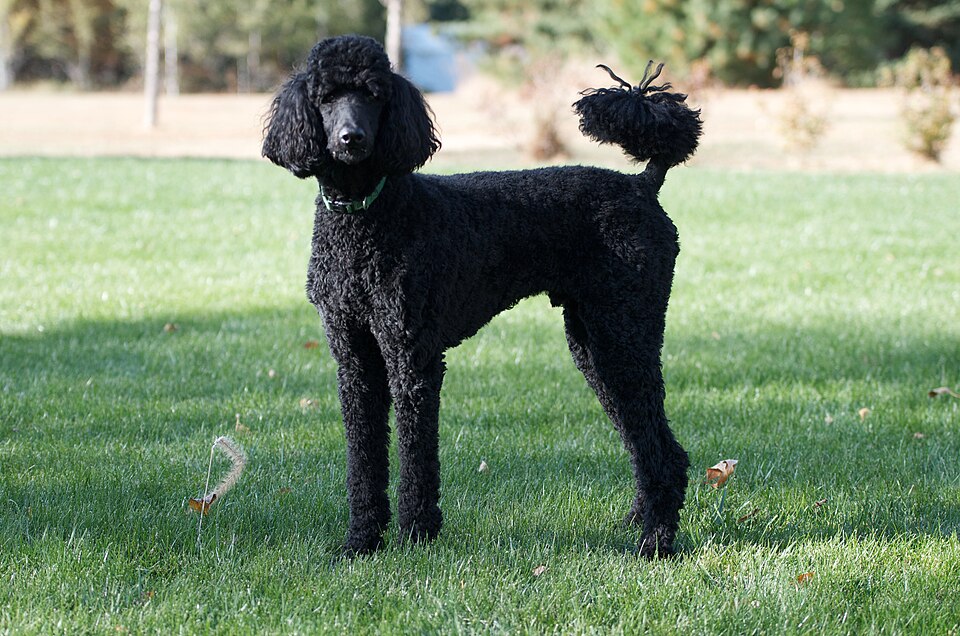
Standard Poodle
The Standard Poodle is the Poodle's large size variety and is linked to the history of dogs retrieving game from water. A dense coat that curls or can be grown in cords, a long muzzle and legs, and a balanced body are characteristic.
Read the guide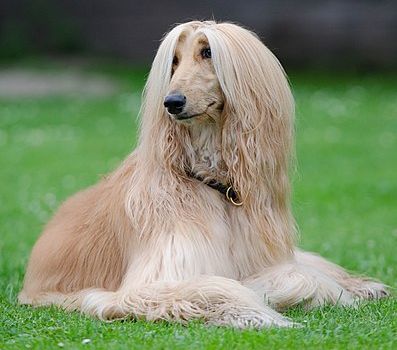
Afghan Hound
The Afghan Hound developed from sighthound lines in Afghanistan and surrounding mountainous and arid regions. A long neck and legs, streamlined body, long flowing coat and abundant hair on the crown are characteristic.
Read the guide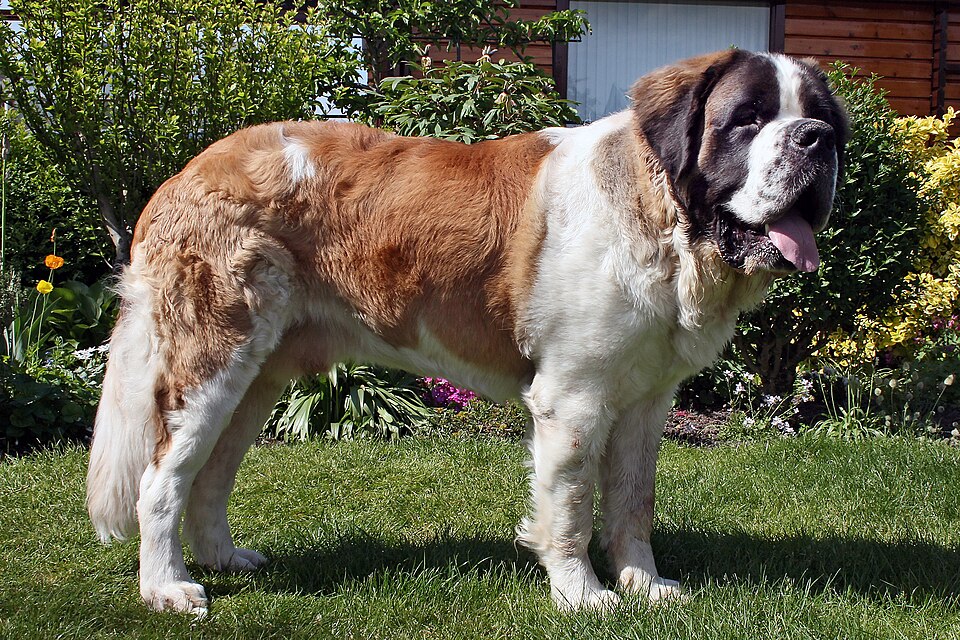
Saint Bernard
The Saint Bernard is associated with large dogs used at hospices on Alpine mountain routes. A large body, broad head, hanging ears and skin around the mouth, and white and reddish-brown markings are characteristic.
Read the guide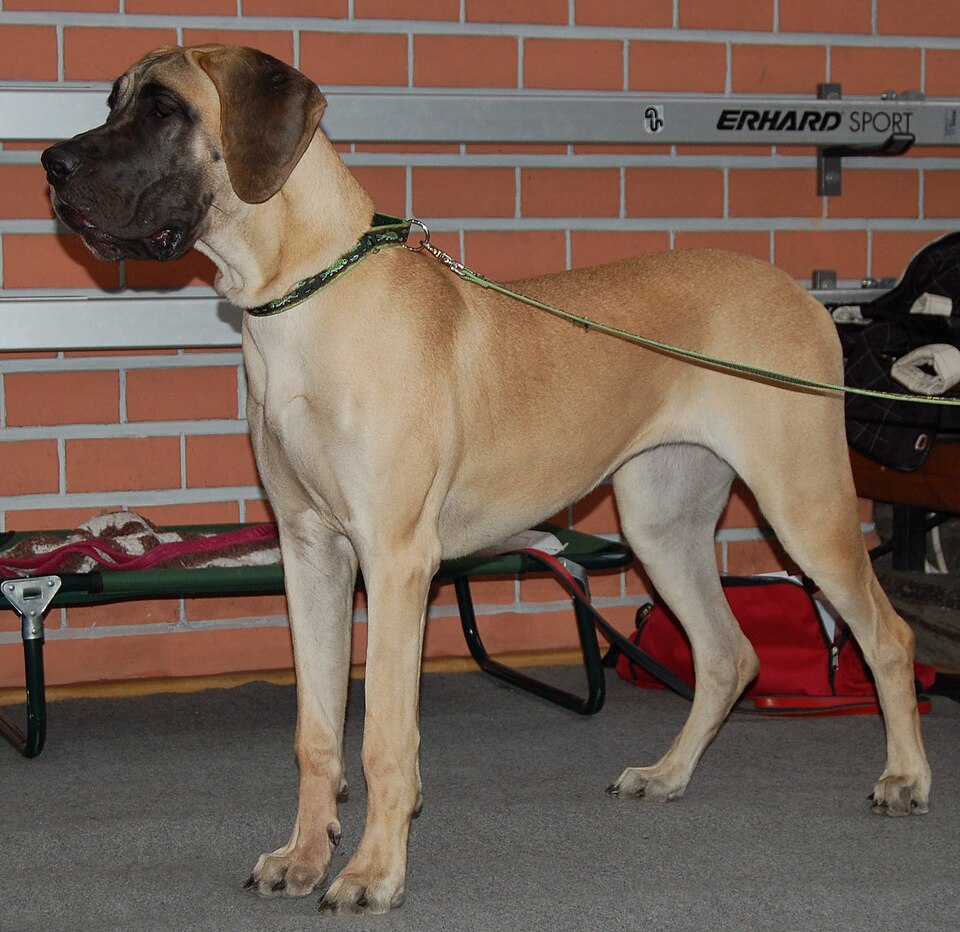
Great Dane
Although its name evokes Denmark, the Great Dane developed from Germany's history of large hunting and guarding dogs. Very long legs, great height at the withers, a deep chest, long head and short coat are characteristic.
Read the guide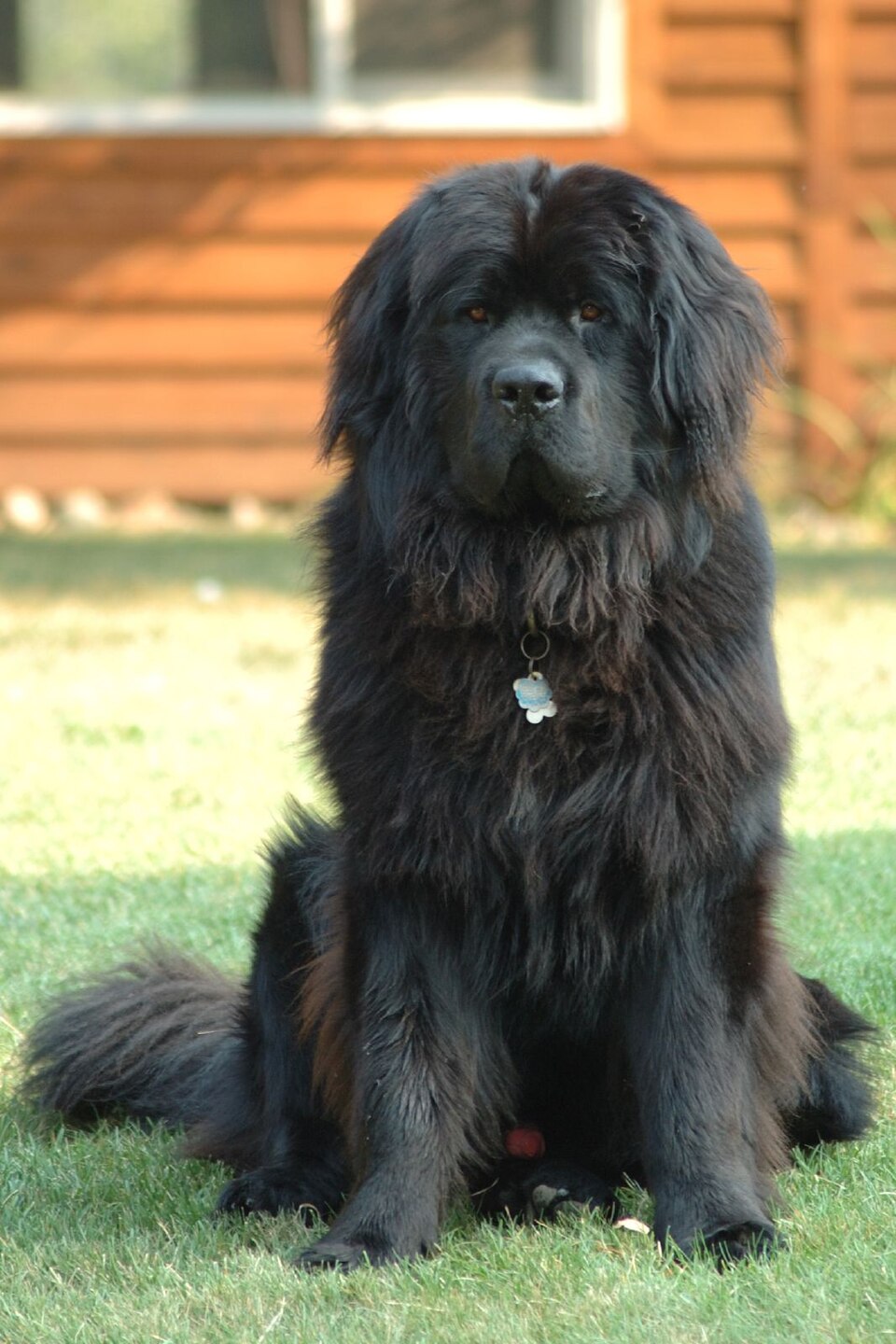
Newfoundland
The Newfoundland developed from large dog lines associated with waterside work and fishing in Newfoundland, Canada. Heavy bone, a broad head, thick double coat and bushy tail are characteristic.
Read the guide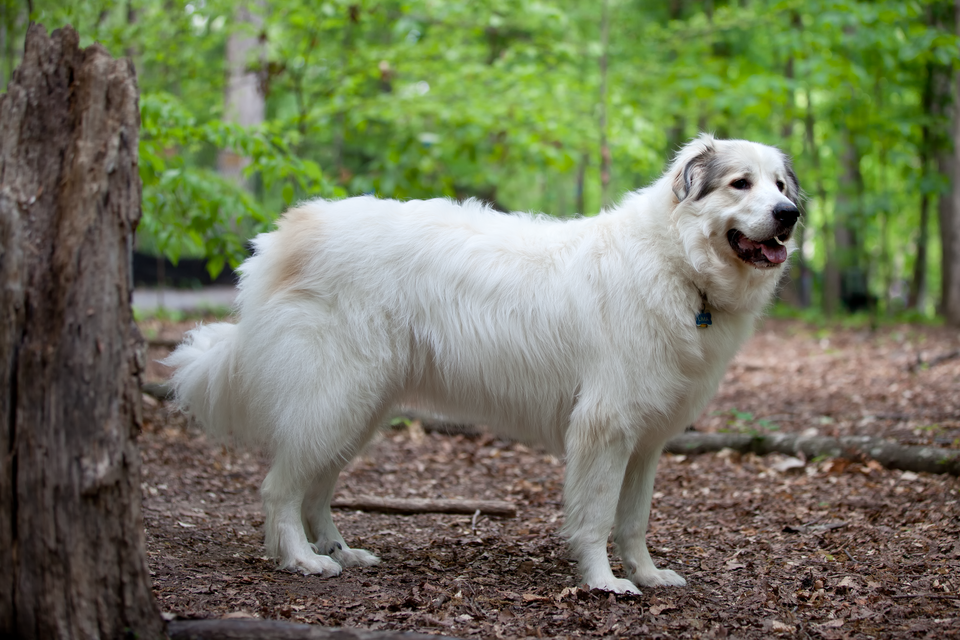
Great Pyrenees
The Great Pyrenees comes from livestock-guardian lines that stayed beside sheep flocks in the Pyrenees. A large body, thick white double coat, hanging ears and bushy tail are characteristic.
Read the guide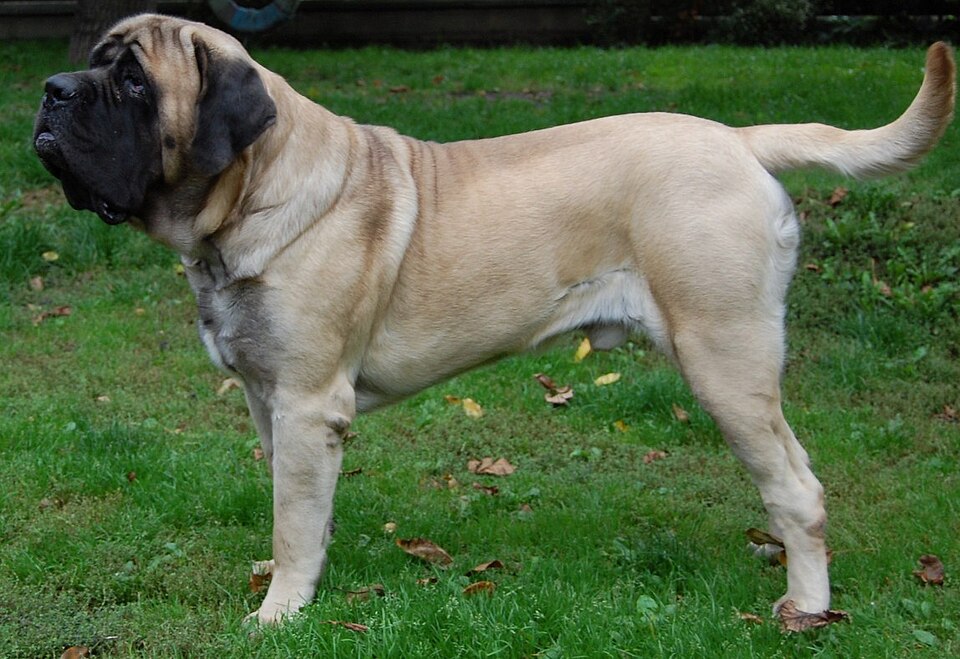
English Mastiff
The English Mastiff developed into a modern breed from Britain's large mastiff lines. A very large body, broad head, short muzzle, hanging lips and short coat are characteristic.
Read the guide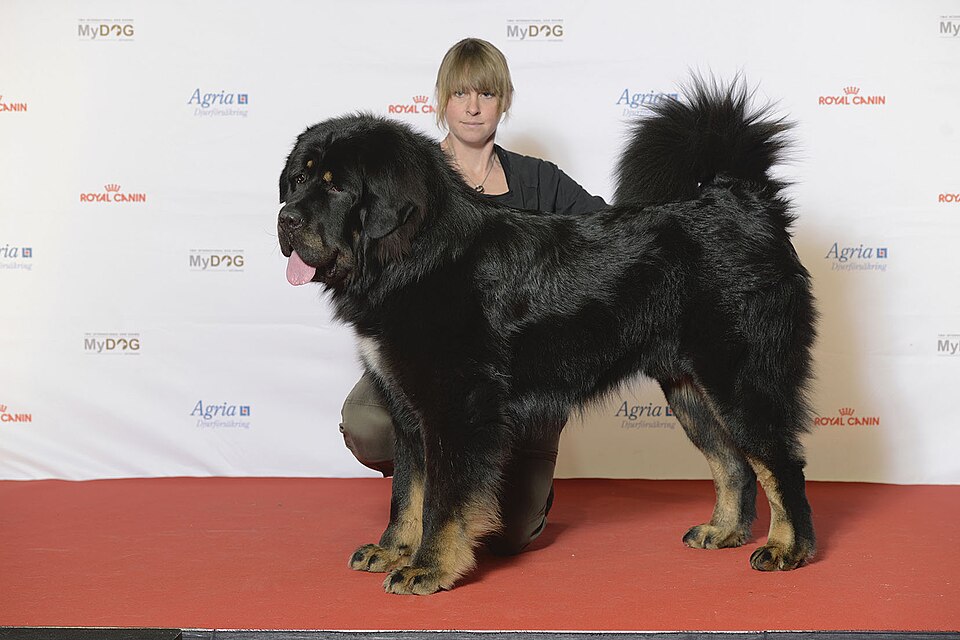
Tibetan Mastiff
The Tibetan Mastiff is associated with large dog lines that guarded livestock and homes in Tibet and neighboring high-altitude regions. A large sturdy body, broad head, thick double coat and abundant neck mane are characteristic.
Read the guide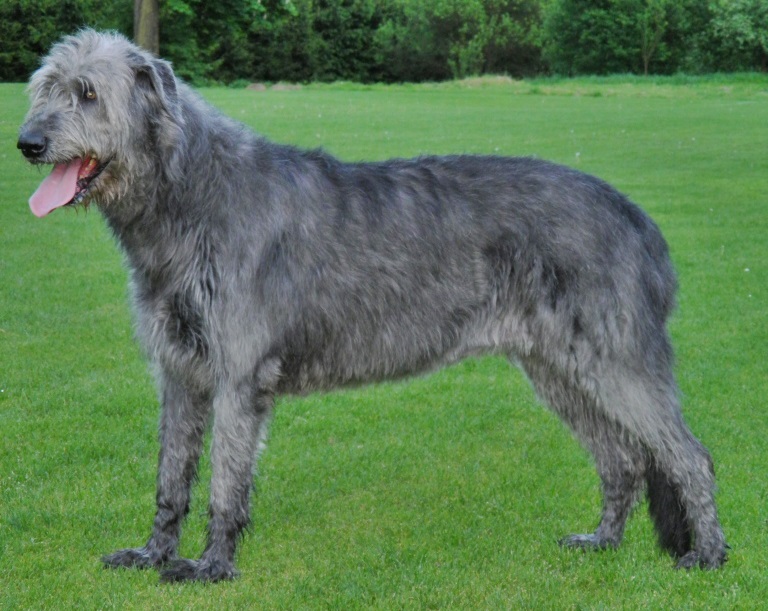
Irish Wolfhound
The Irish Wolfhound combines Ireland's history of large sighthounds with modern restoration and registration. Tall, long legs, a deep chest, relatively long head and rough coat are characteristic.
Read the guide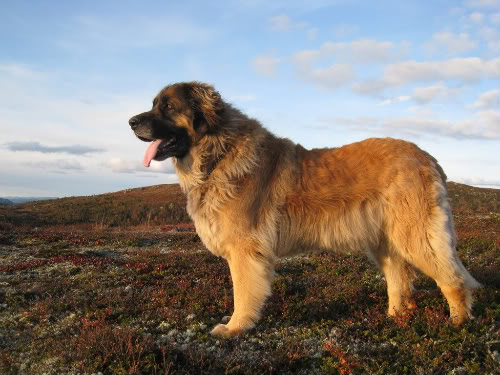
Leonberger
The Leonberger developed in Leonberg, Germany, from several large dog lines. A large body, broad head, abundant neck hair and dark facial coloring are characteristic.
Read the guide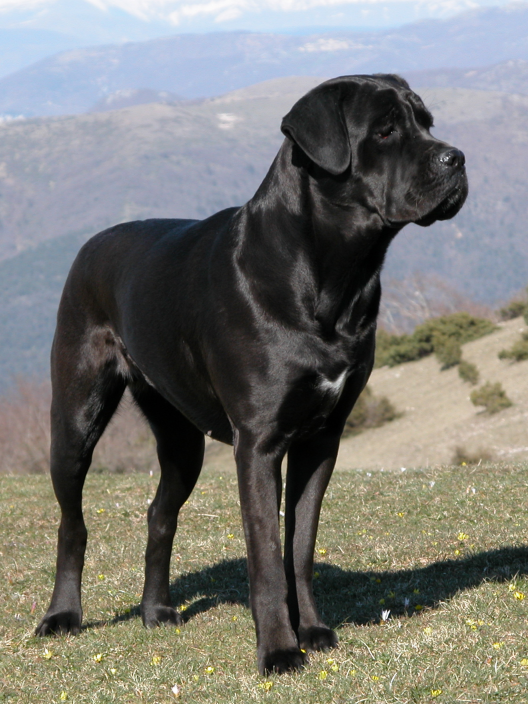
Cane Corso
The Cane Corso developed into a modern registered breed from large Italian dog lines used on farms, for guarding and in varied work. A large muscular body, broad head, relatively short muzzle and dense short coat are characteristic.
Read the guide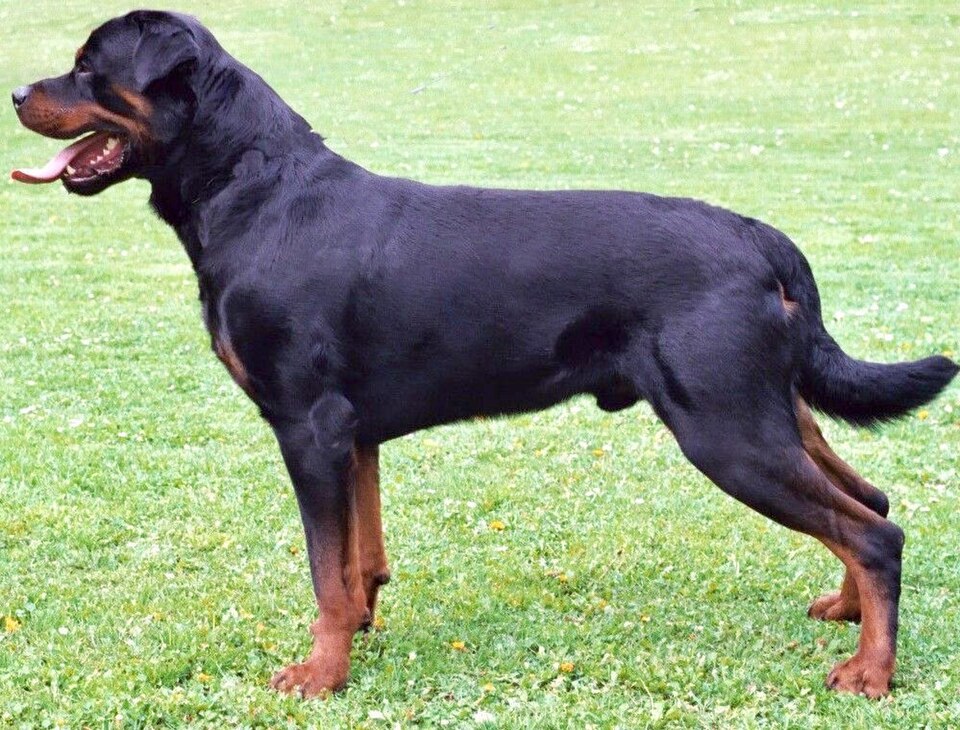
Rottweiler
The Rottweiler is associated with dogs used for livestock movement, farm work and guarding around Rottweil in Germany. Black coloring with tan markings above the eyes and on muzzle, chest and legs, a broad head and strong body are characteristic.
Read the guide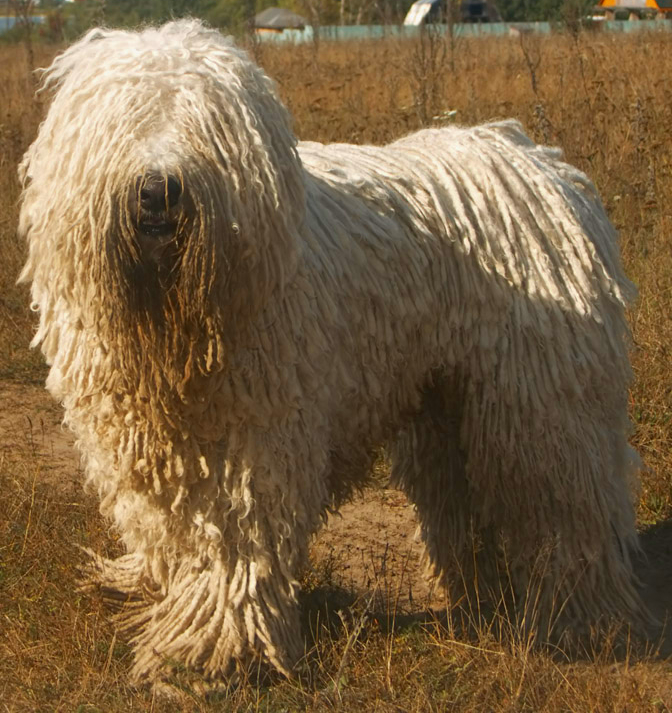
Komondor
The Komondor developed from large guardian-dog lines that stayed beside livestock flocks in Hungary. A large body and abundant white coat that separates into thick cords during growth are characteristic.
Read the guide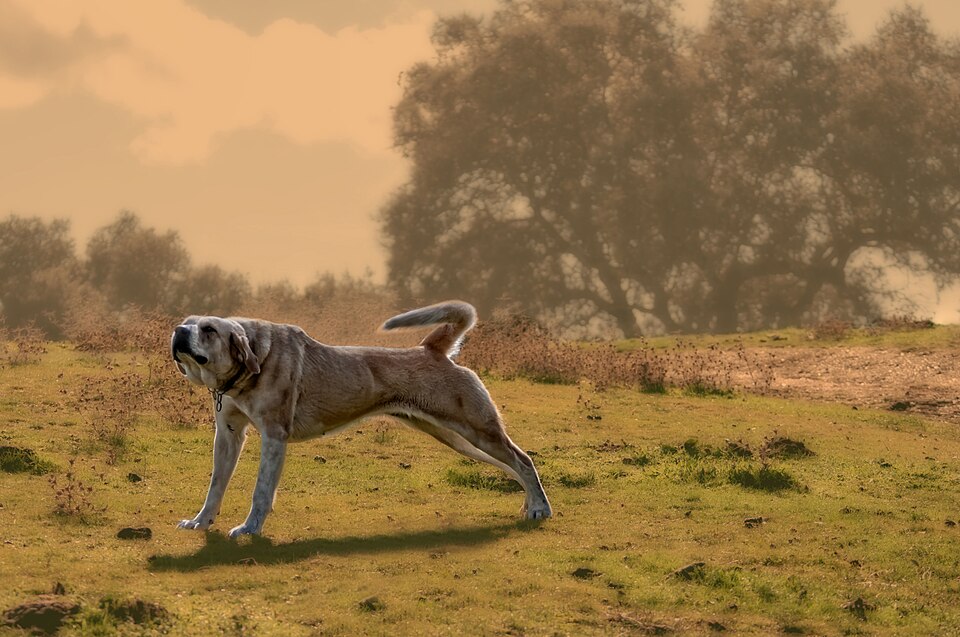
Anatolian Shepherd
The Anatolian Shepherd is a registered breed related to livestock guardian dog populations of Anatolia in Türkiye. Tall stature, a strong bone structure, a broad head, drooping ears and a thick coat are characteristic.
Read the guide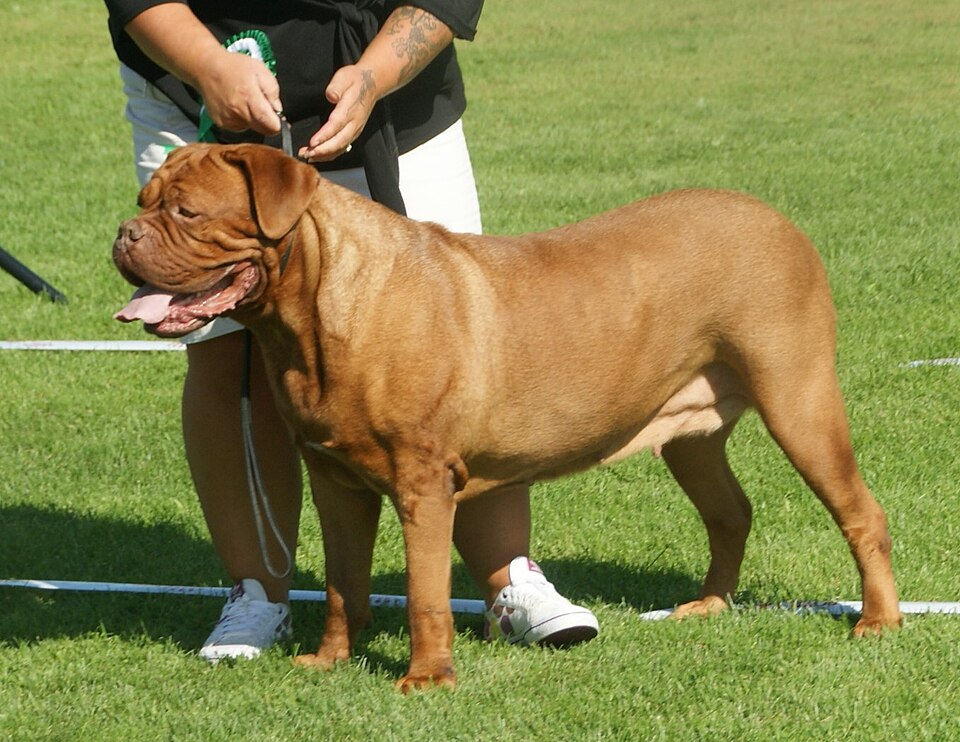
Dogue de Bordeaux
The Dogue de Bordeaux developed from large mastiff-type dog lines in and around Bordeaux, France. A broad, large head, facial wrinkles, a relatively short muzzle, drooping lips and a solid body are characteristic.
Read the guide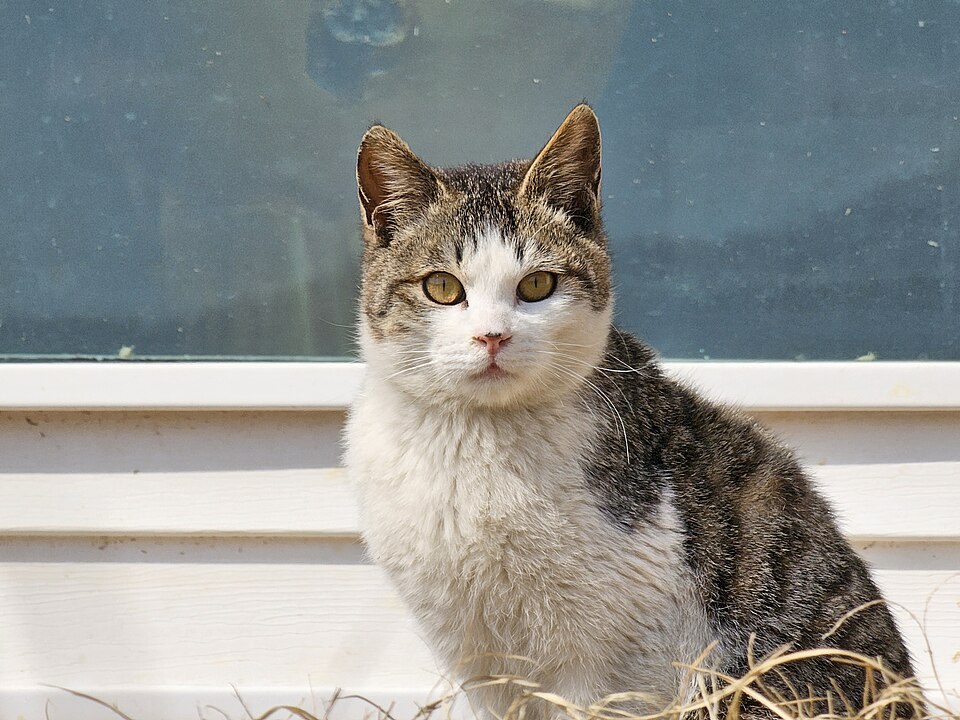
Korean Shorthair
Korean Shorthair is not the name of a single fixed pedigree breed. It is an everyday name for short-haired domestic cats in Korea. It is not one pedigree breed with particular founding animals and registration standards, nor a separate species of wild cat.
Read the guide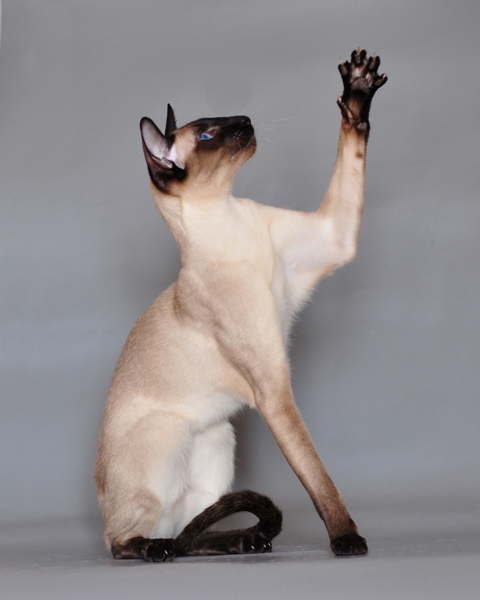
Siamese
Point markings and blue eyes: changes in color are separate from personality. The Siamese is a domestic cat breed associated with Thailand’s cat traditions, with modern standards developed through Western cat shows and registration. It helps to understand the historical name Siam alongside the present-day name Thailand.
Read the guide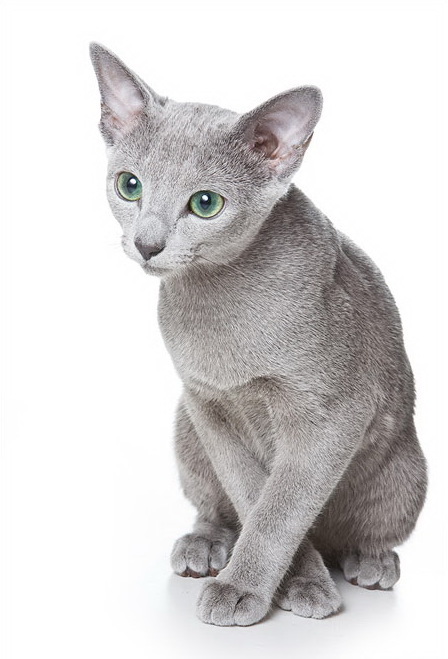
Russian Blue
Observe the silvery blue-gray double coat together with the green eyes. The Russian Blue is traditionally associated with origins in the port regions of northern Russia, and its modern breed standards were established through showing and breeding in Europe. Stories with insufficient early records should not be embellished into a confirmed royal pedigree.
Read the guide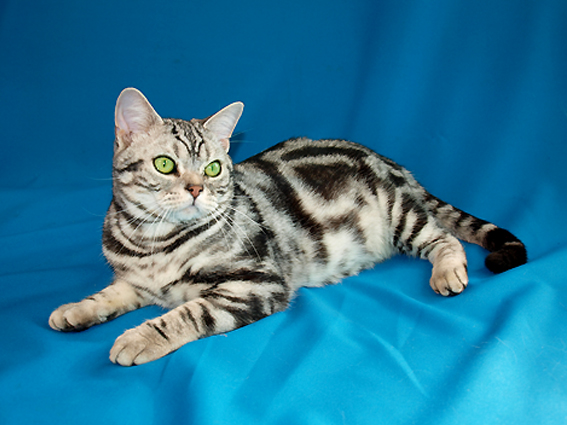
American Shorthair
A short-haired breed defined by more than just silver tabby markings. The American Shorthair developed with registration standards in connection with the history of domestic cats in North America. Stories of cats catching rodents on ships and farms explain its background, but do not mean every short-haired cat in America belongs to this pedigree breed.
Read the guide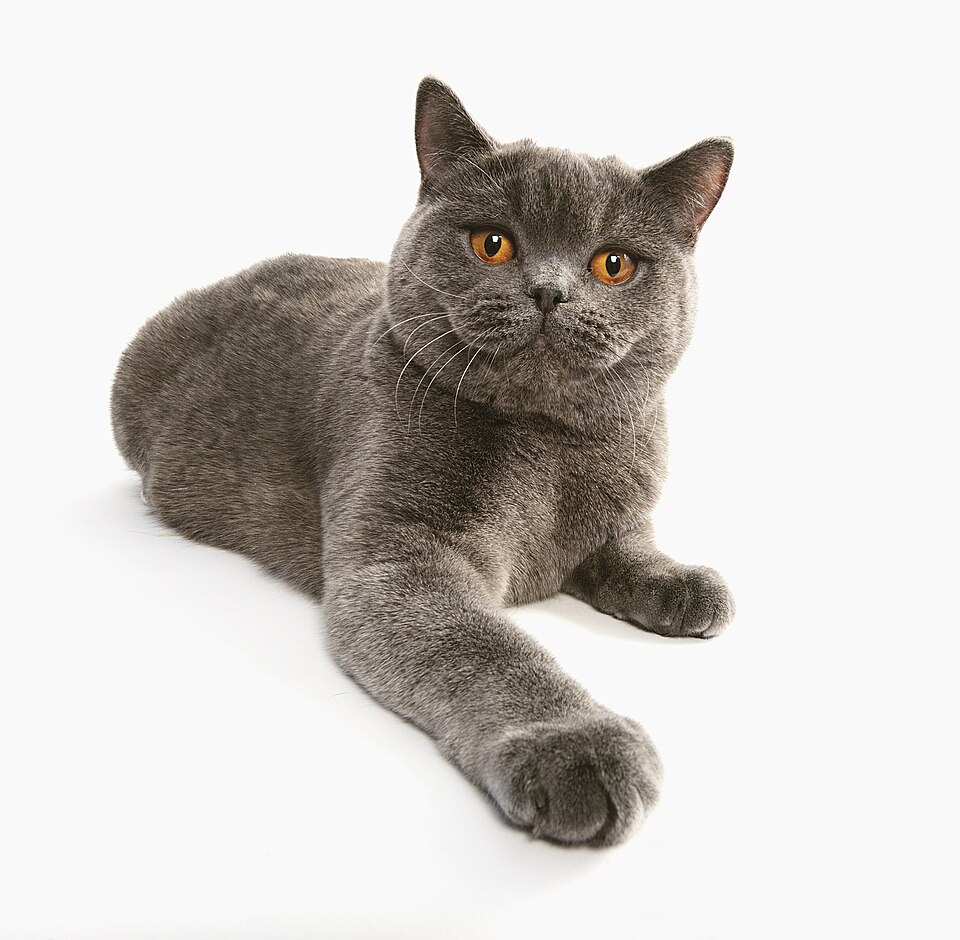
British Shorthair
Rounded contours and a dense coat: this breed comes in more than blue. The British Shorthair’s standards developed through the history of domestic cats in Britain and modern cat shows. Stories of ancient Rome or resemblances to cats in literature must be distinguished from verified pedigree records of modern individuals.
Read the guide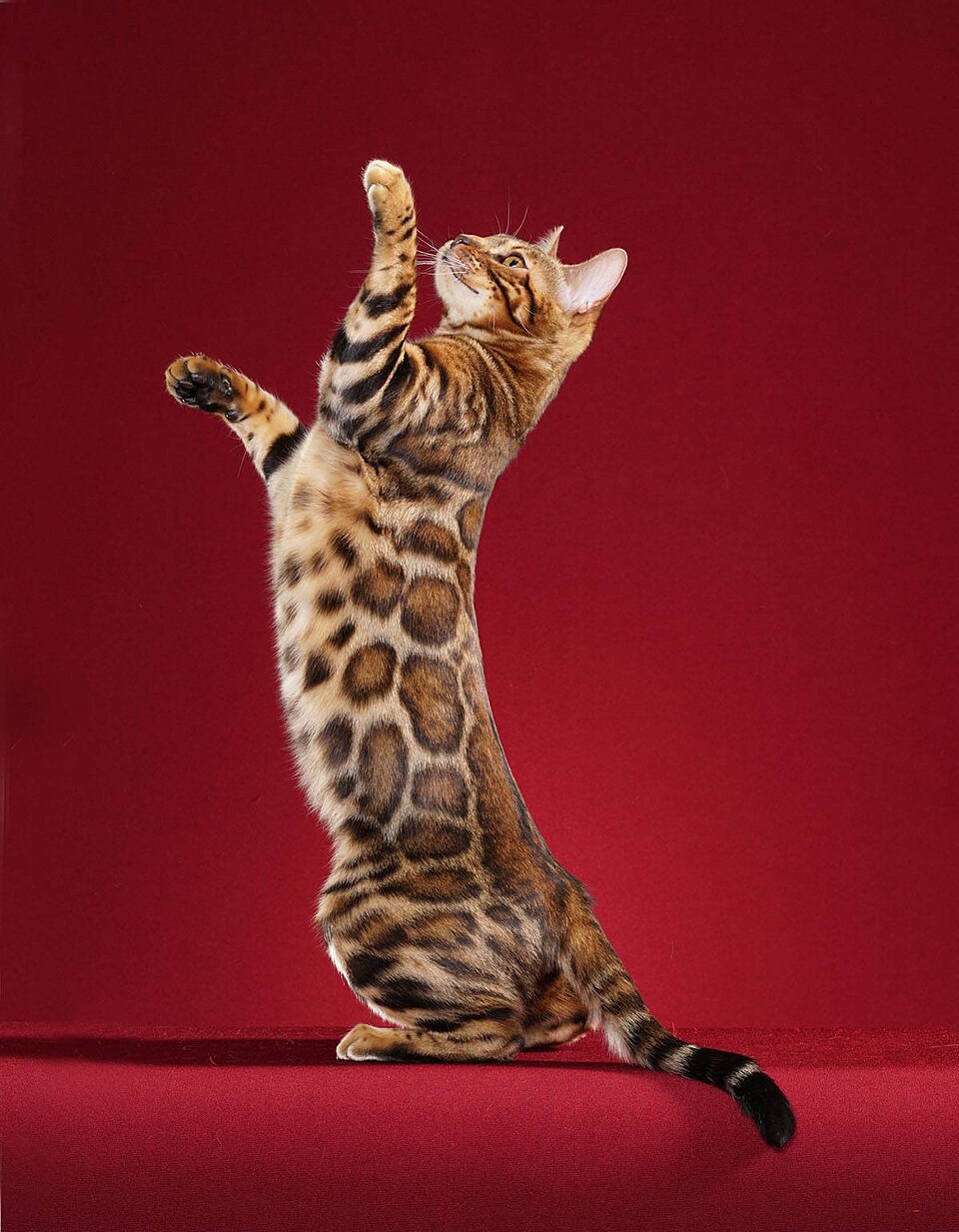
Bengal
Rosette and marbled markings and activity: a wild-looking appearance does not guarantee a temperament. The Bengal has a history of crosses between domestic cats and leopard cats, followed by the development of breeding and registration standards for it as a domestic cat. Distinguish the modern registered breed from early-generation hybrids.
Read the guide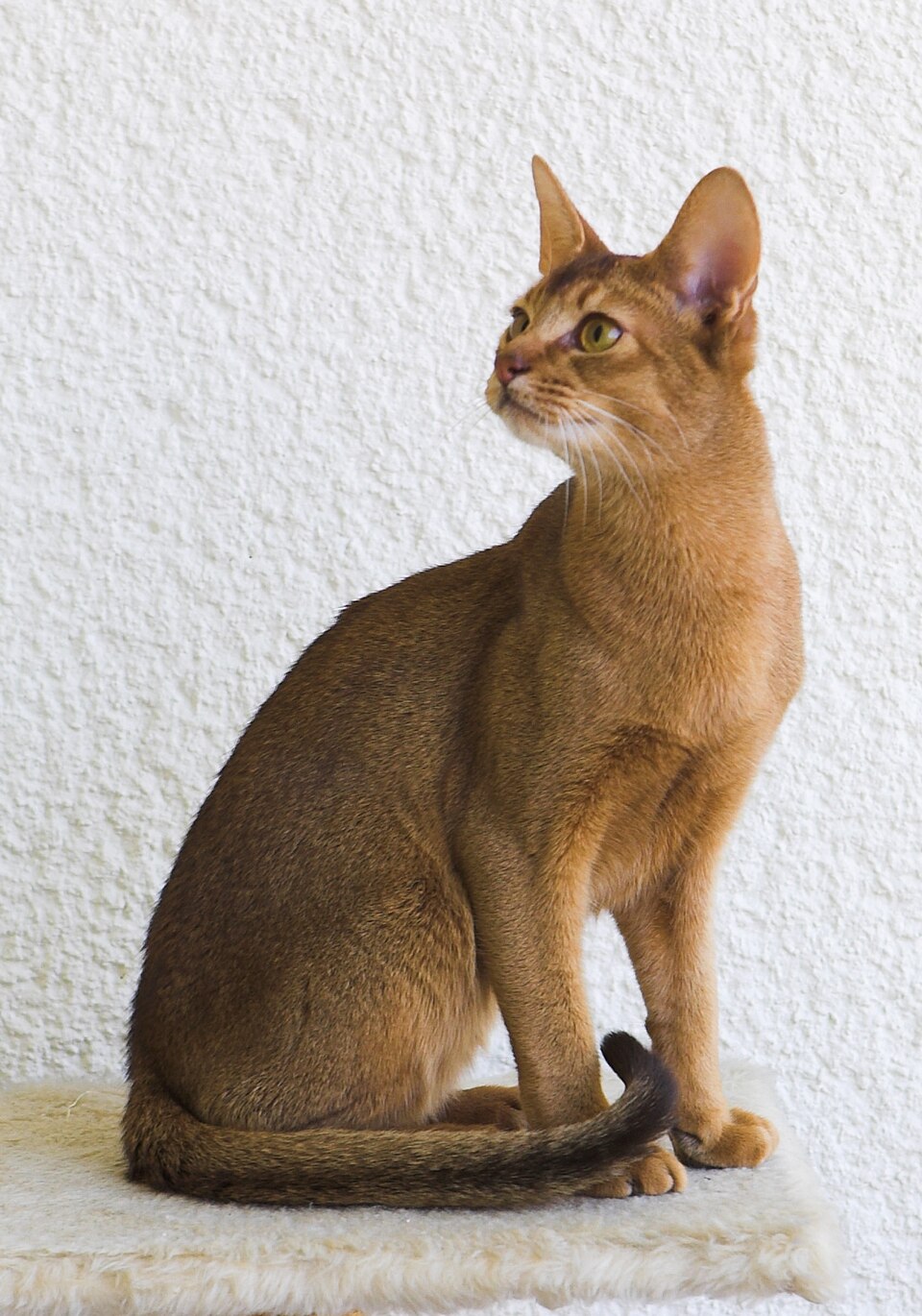
Abyssinian
A ticked coat and a sleek body are characteristic; the name alone does not establish an ancient pedigree. Although “Abyssinian” is connected with the former name Abyssinia, the precise early origins of the modern breed cannot be settled by a single country name. Breed standards developed through modern British exhibition and breeding records.
Read the guide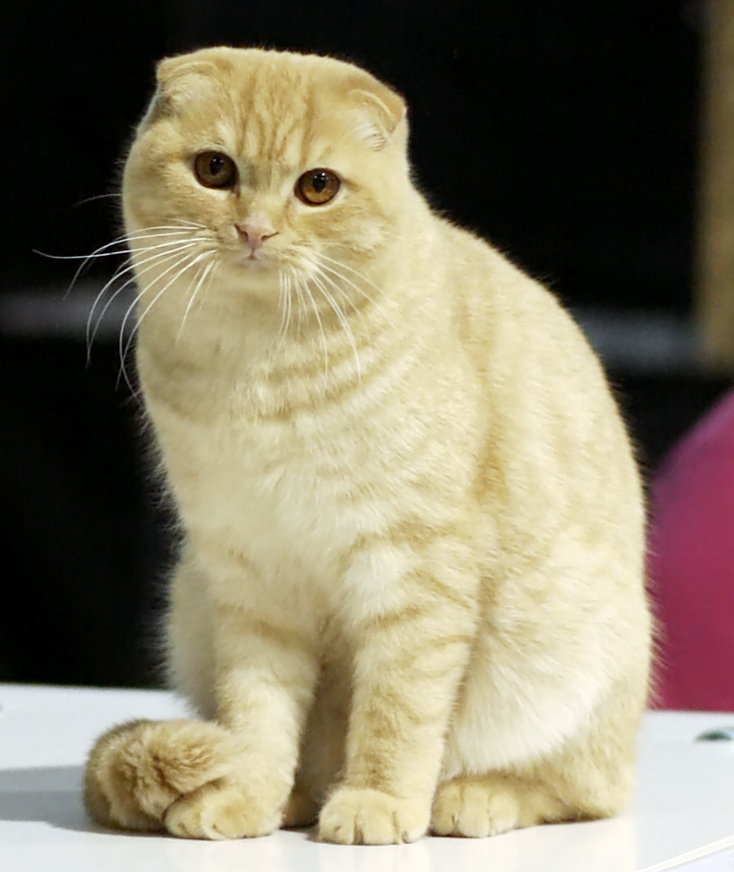
Scottish Fold
Folded ears must be discussed alongside cartilage and joint health. The Scottish Fold developed from a folded-ear trait discovered in Scotland. Ear shape is associated with a particular genetic variant, not simply decoration.
Read the guide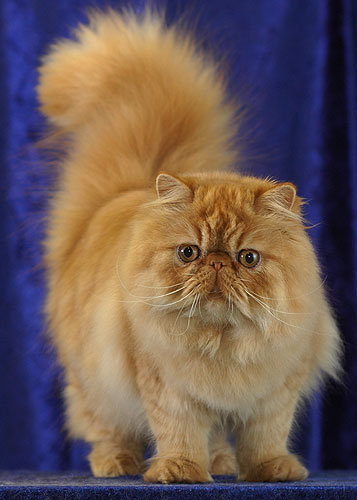
Persian
Consider the long coat and facial shape alongside grooming demands and welfare. The Persian is a domestic cat breed connecting the history of long-haired cats in West Asia with modern breed development in Europe. A name associated with ancient Persia does not mean every living individual has a direct pedigree verified by ancient records.
Read the guide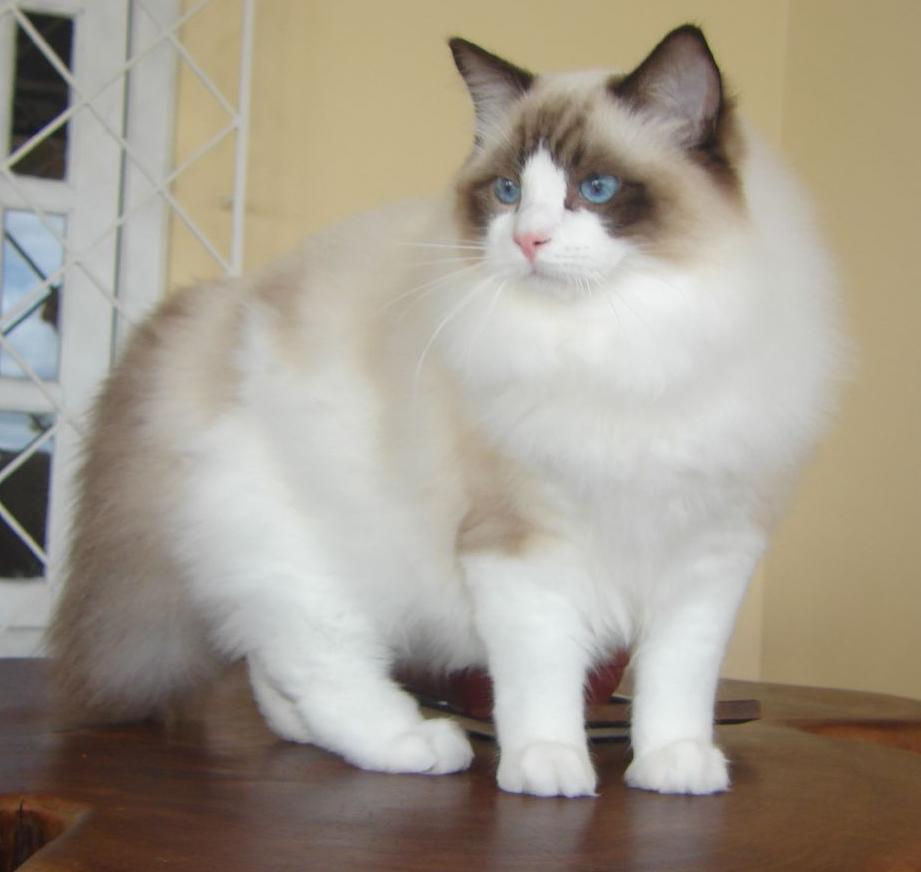
Ragdoll
Blue eyes and pointed markings: the name does not explain pain perception. The Ragdoll developed in a California breeding program, and its name refers to a cloth doll. It became widely known through the impression of relaxing when held, but this does not indicate a biological inability to feel pain or a response shared by every individual.
Read the guide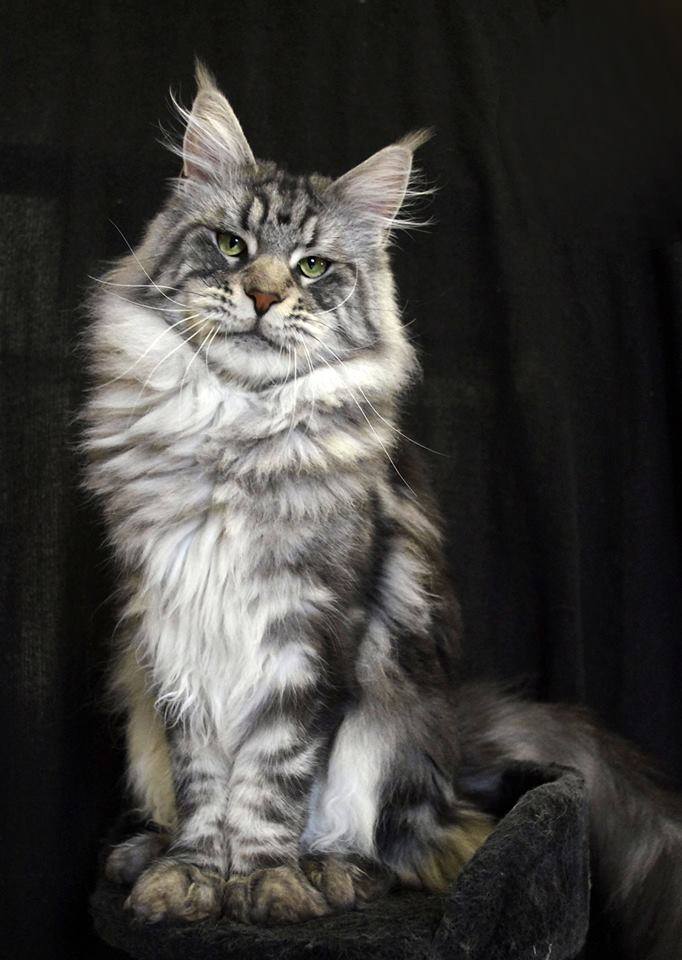
Maine Coon
Long fur and a square muzzle: distinguish raccoon-crossing legends from actual origins. The Maine Coon is associated with the domestic-cat history of New England in the United States. Its name and full striped tail have inspired stories of crossing with raccoons, but that is not a biologically verified origin.
Read the guide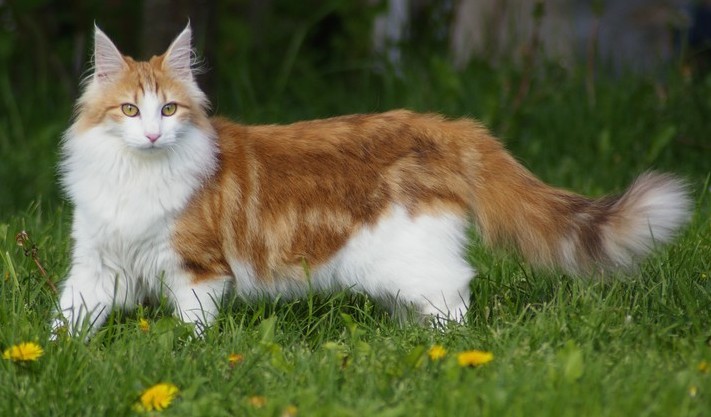
Norwegian Forest Cat
A triangular head and abundant double coat; legends are not pedigree evidence. The Norwegian Forest Cat connects Norway's cat traditions and local populations with modern conservation and registration history. Similar cats in Norse mythology and Viking stories do not mean that the direct ancestry of every present-day individual is fully documented.
Read the guide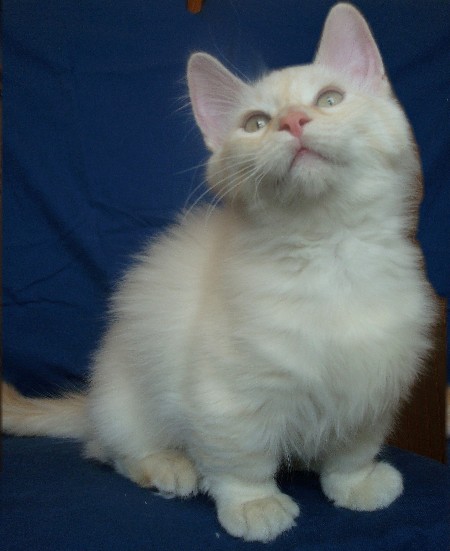
Munchkin
Consider the short-legged appearance alongside needs for movement and daily life. The Munchkin developed in the United States from short-legged traits in domestic cats. Its name relates to small characters in a story; it does not mean the cat is a separate, particularly small species.
Read the guide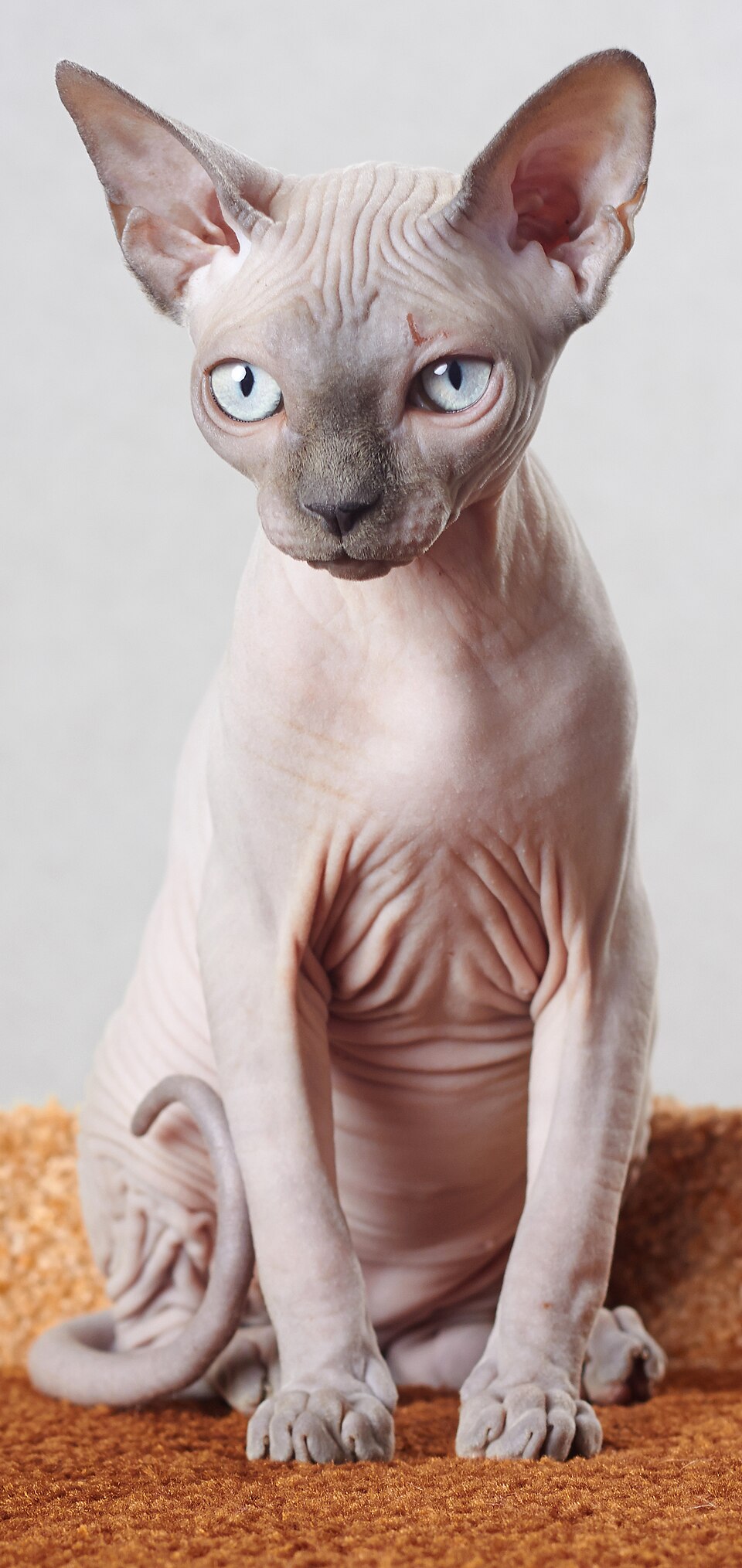
Sphynx
Sparse hair still leaves needs for skin care and temperature choice, and questions about allergies. The Sphynx developed in North America and elsewhere from sparse-haired traits in domestic cats. Although the name evokes resemblance to an Egyptian sculpture, it does not establish an unchanged breed lineage from ancient Egypt.
Read the guide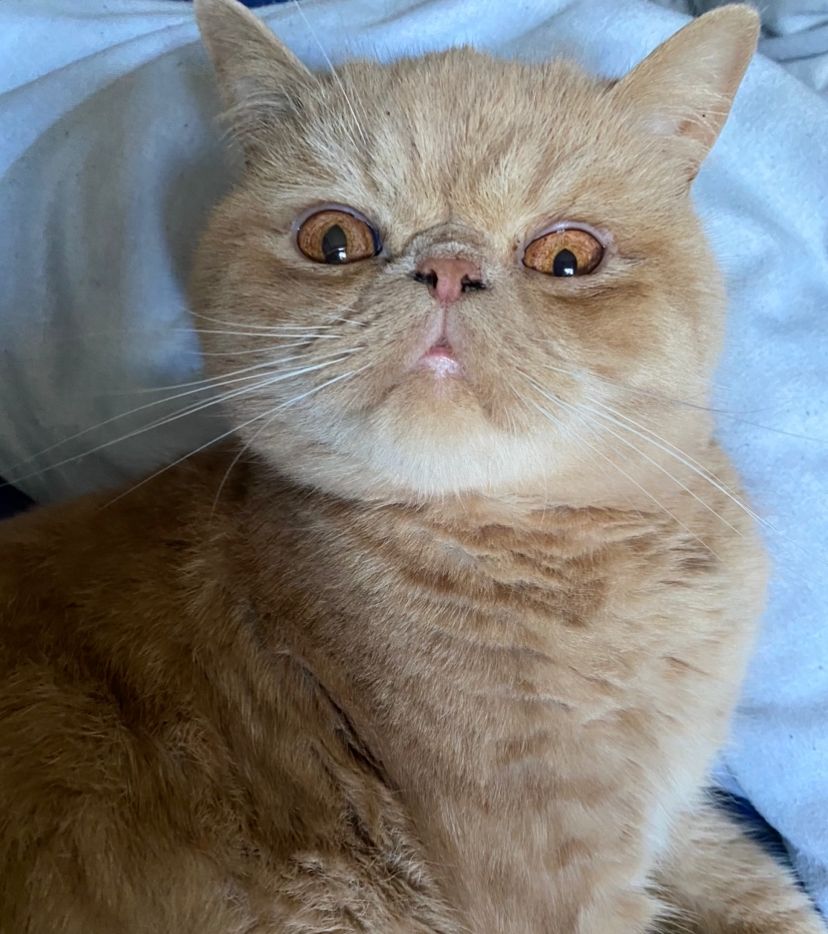
Exotic Shorthair
A convenient short coat does not remove facial and eye welfare concerns. The Exotic Shorthair developed through breeding Persians with other shorthaired breeds. Exotic does not mean a cross with a wild species.
Read the guide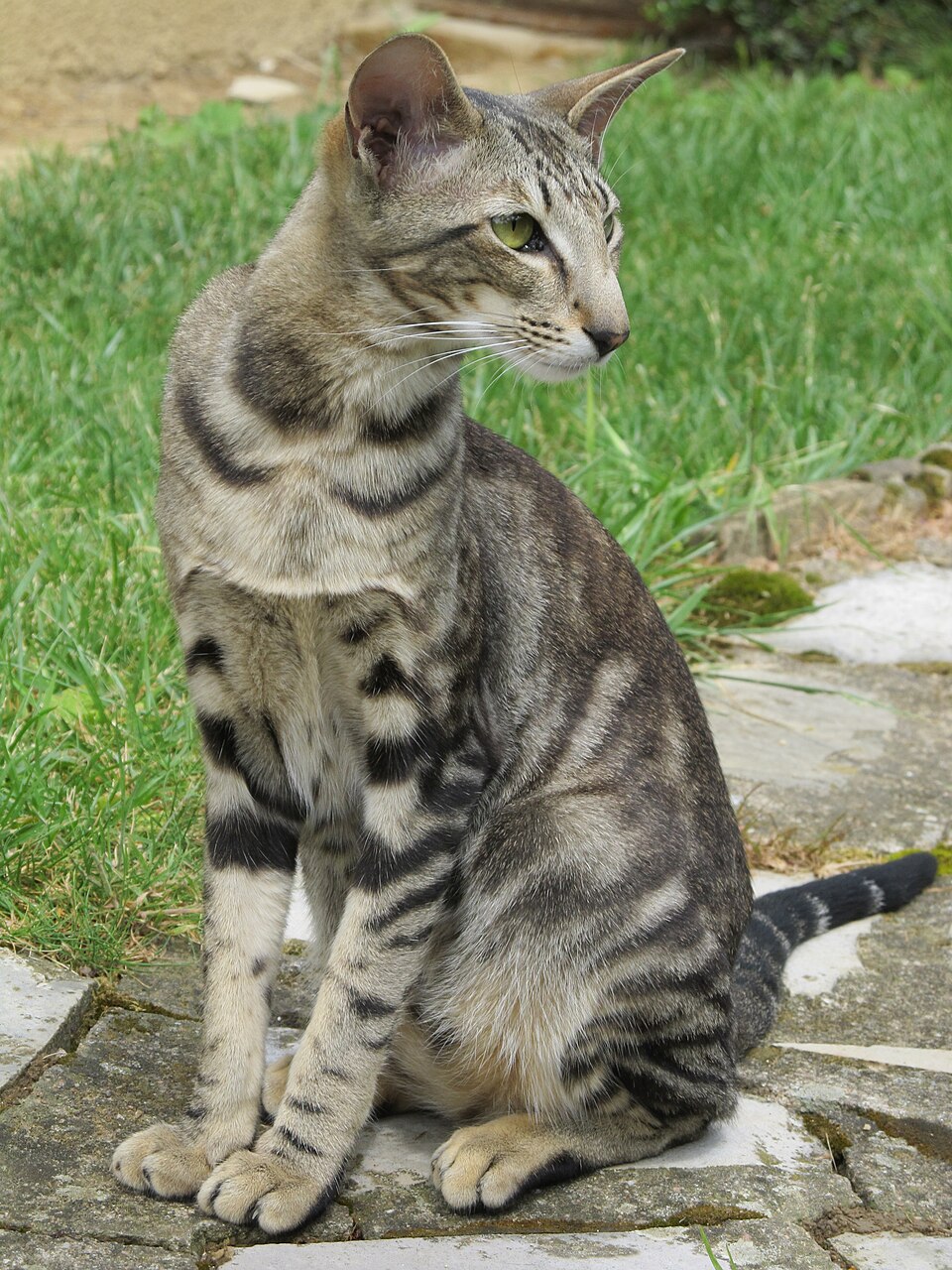
Oriental Shorthair
Slender body, large ears and many colors in a shorthaired Oriental. This domestic breed developed varied colors and patterns on a body type connected with Siamese cats. Oriental does not mean all shorthaired cats across Asia.
Read the guide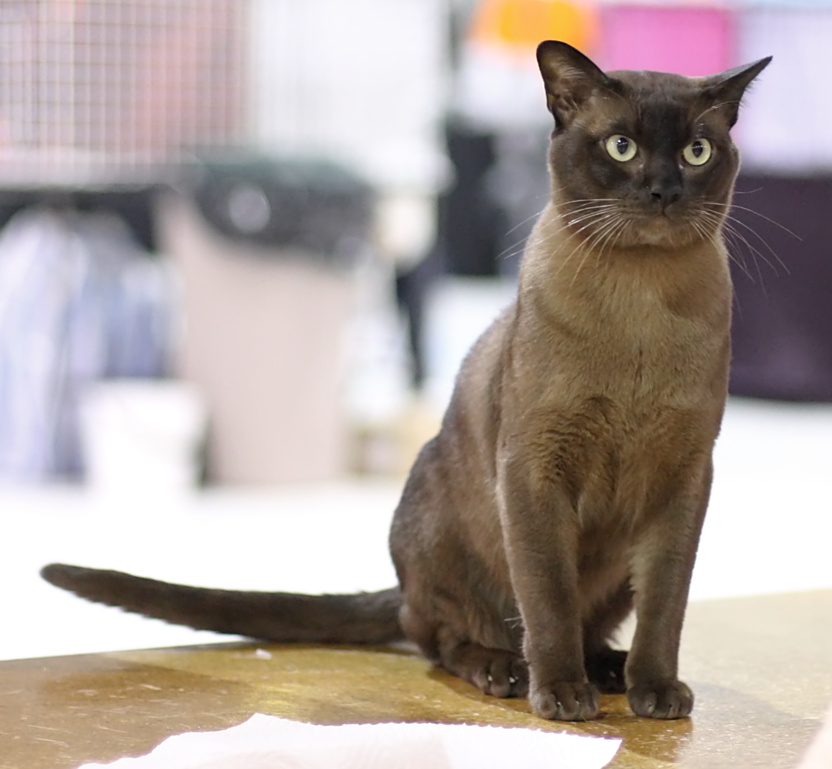
Burmese
A short, glossy coat and a solid body are characteristic; this is a different breed from the Birman. Burmese breeding standards developed in the United States and Europe from domestic cat ancestry connected with Myanmar. Despite the similar names, Burmese and Birman are separate breeds; sharing a country reference does not make their appearance and registration histories the same.
Read the guide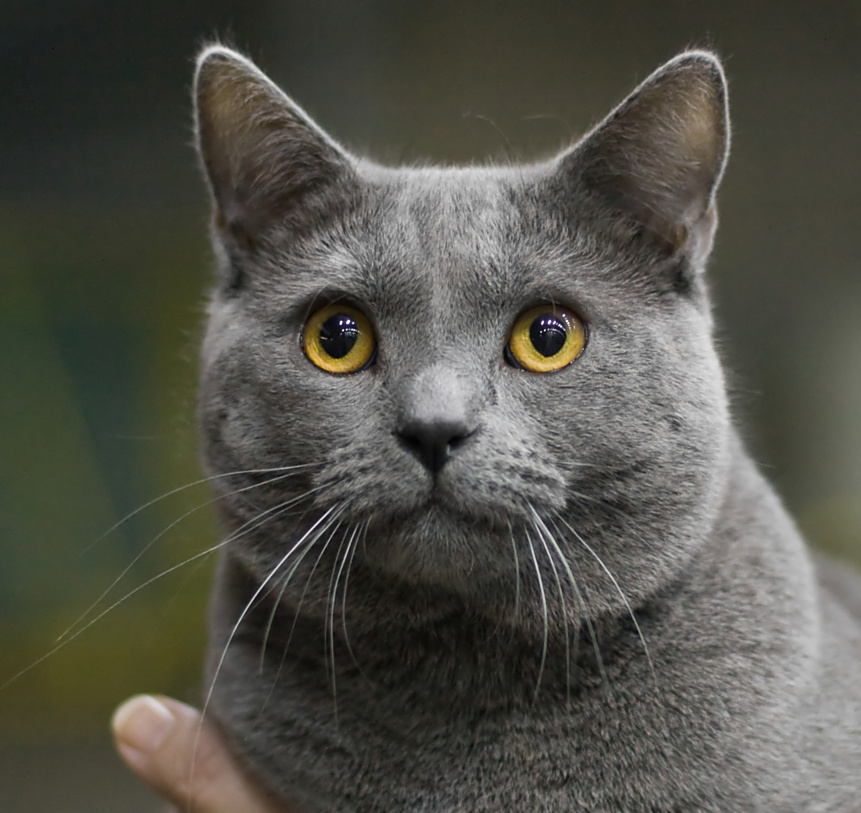
Chartreux
Thick blue-gray coat and copper eyes: distinguish tradition from records. This domestic breed is associated with France, with several traditions about its name and early history. Monastery stories do not establish the origins of every documented lineage.
Read the guide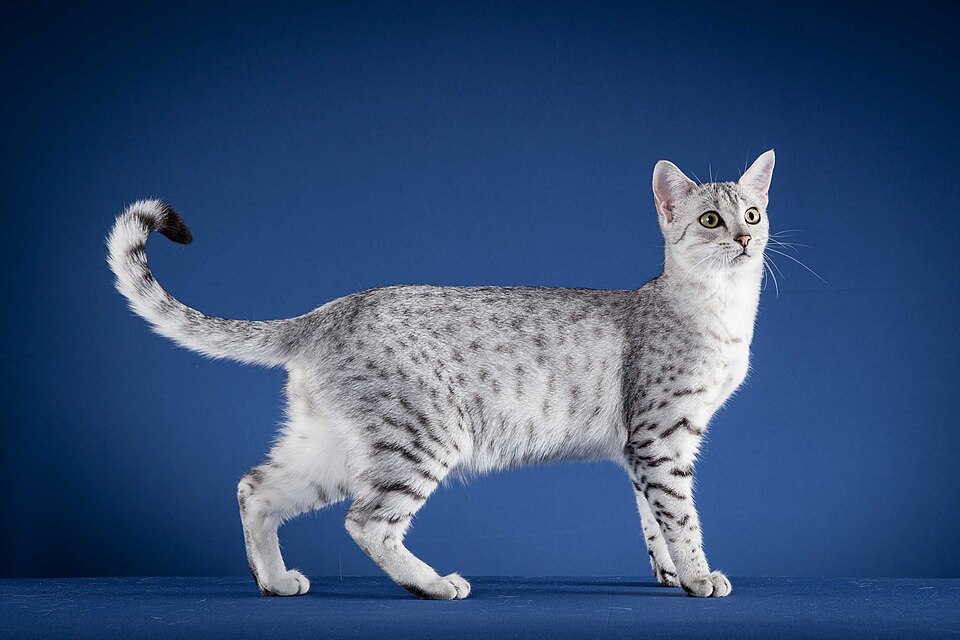
Egyptian Mau
Spots and forehead markings are characteristic; distinguish ancient wall paintings from modern pedigrees. The Egyptian Mau is a spotted breed connected with cats from Egypt, whose standards developed through modern registration and breeding. “Mau” in its name is introduced as a word related to cats.
Read the guide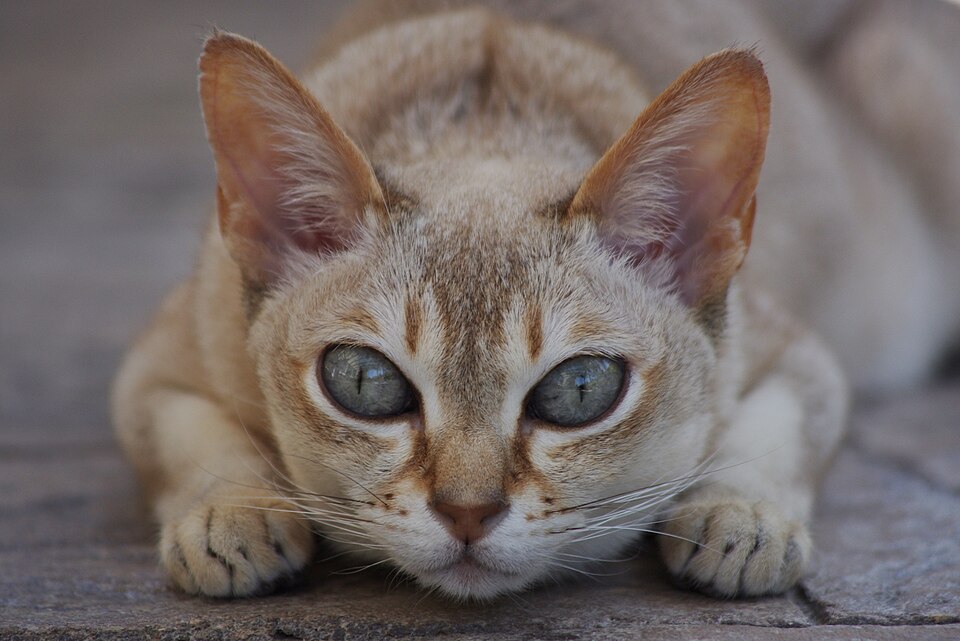
Singapura
Small build and sepia ticked coat do not exempt a cat from care. The Singapore-associated name belongs to a breed whose registration standards developed in the United States. Sources emphasize early movements and origins differently; not every Singapore street cat belongs to this lineage.
Read the guide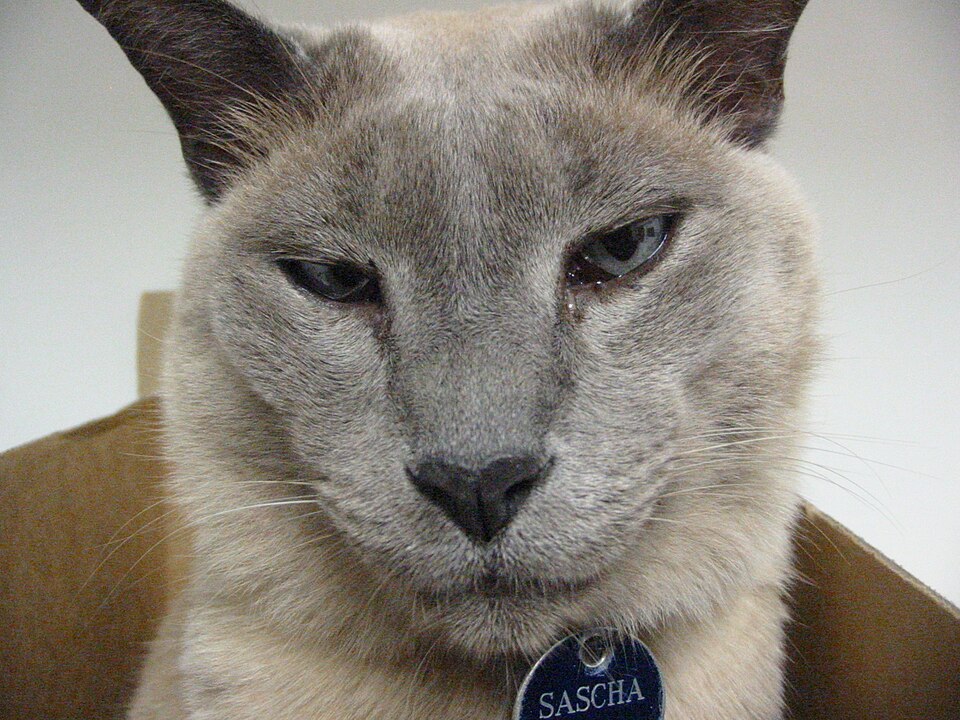
Tonkinese
Read point/body contrast alongside the range of eye and coat colors. Modern standards developed through breeding Siamese and Burmese lines. The place-associated name does not describe a separate wild species naturally arising there.
Read the guide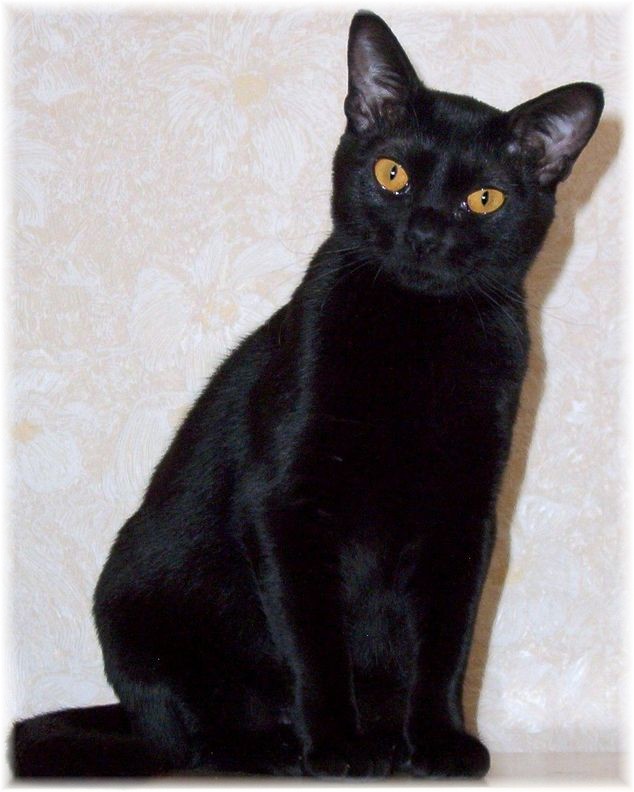
Bombay
Black fur and copper-colored eyes are characteristic; this is not a cat crossed with a black panther. The Bombay was developed in the United States using Burmese and American Shorthair ancestry, among other lines. Although named after an Indian city, it was not produced by breeding with wild black panthers captured in India.
Read the guide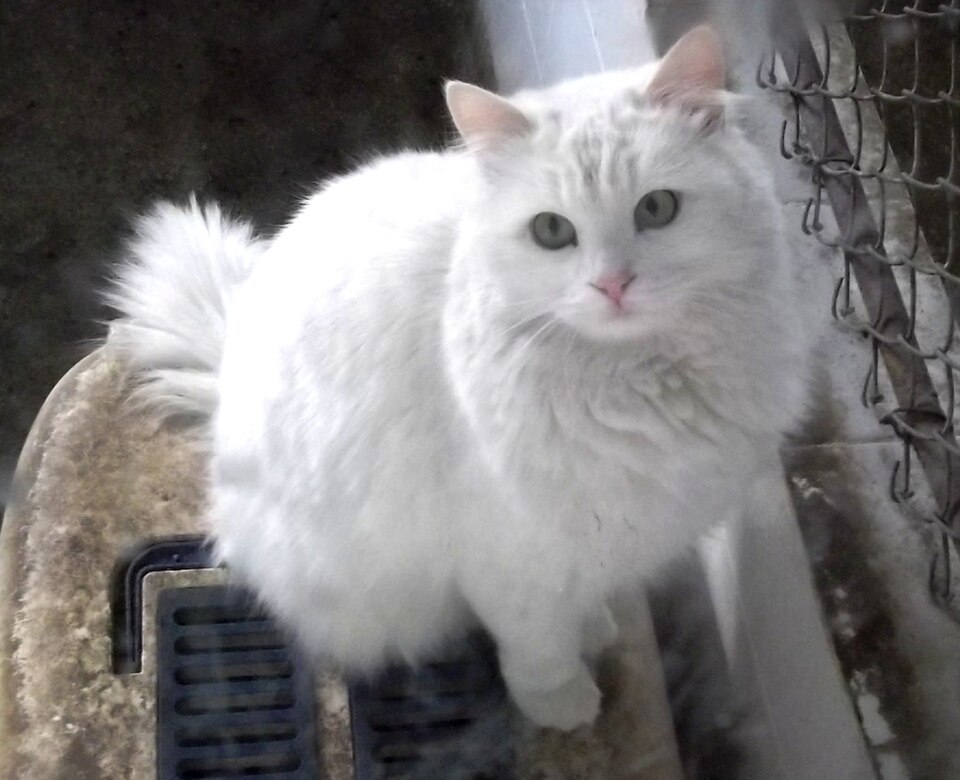
Turkish Angora
A fine body and light, long coat; this breed is not exclusively white. The Turkish Angora is connected with Türkiye's long-haired cat tradition and modern conservation and registration history. Distinguish long-haired cats that traveled to Europe from modern breed standards.
Read the guide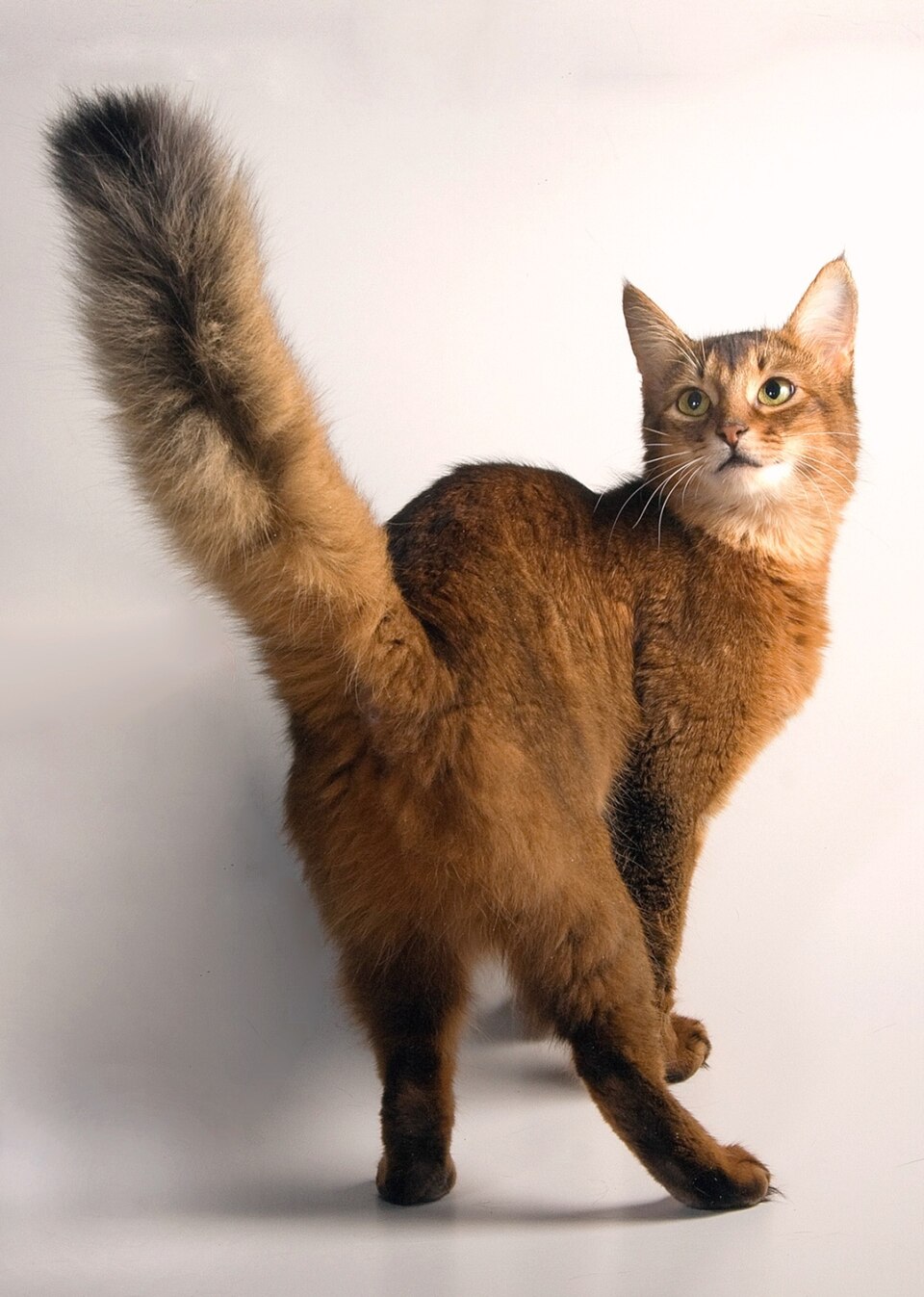
Somali
A ticked, semi-long coat and a full tail; the name does not mean a wild fox. The Somali is a domestic cat breed developed in connection with long-haired traits in Abyssinian lines. Having a country’s name does not make it a separate wild cat discovered in Somalia.
Read the guide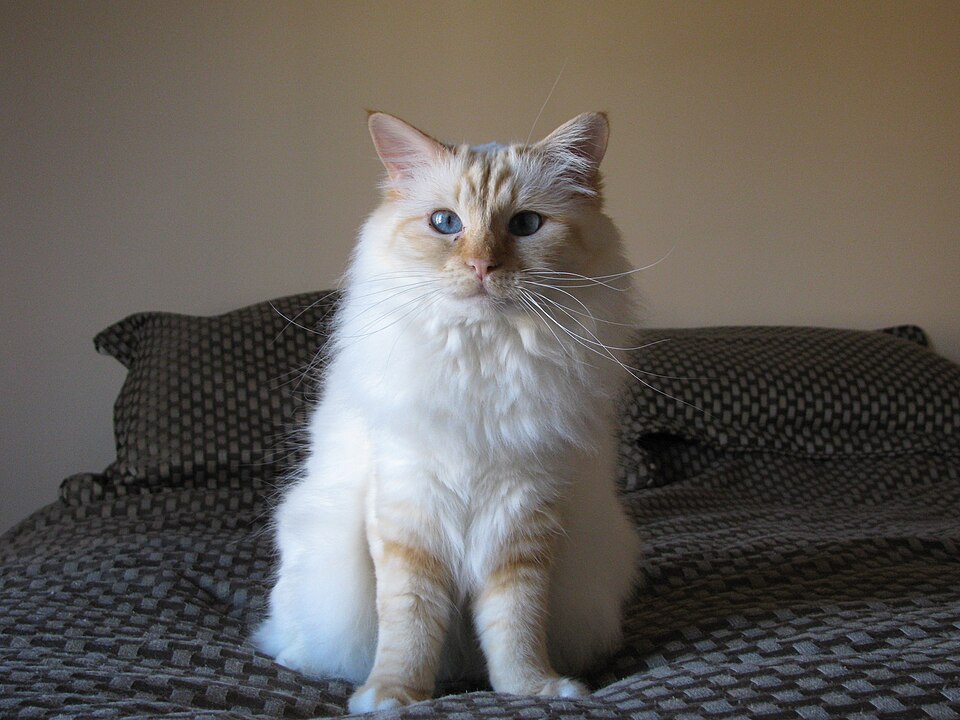
Birman
Blue eyes and white gloves distinguish this semi-long-haired breed from the Burmese. The Birman is famous for traditions linked to temples in Myanmar, but legends cannot prove every aspect of the modern breed’s origins. Breeding in France and subsequent registration records form an important part of its modern history.
Read the guide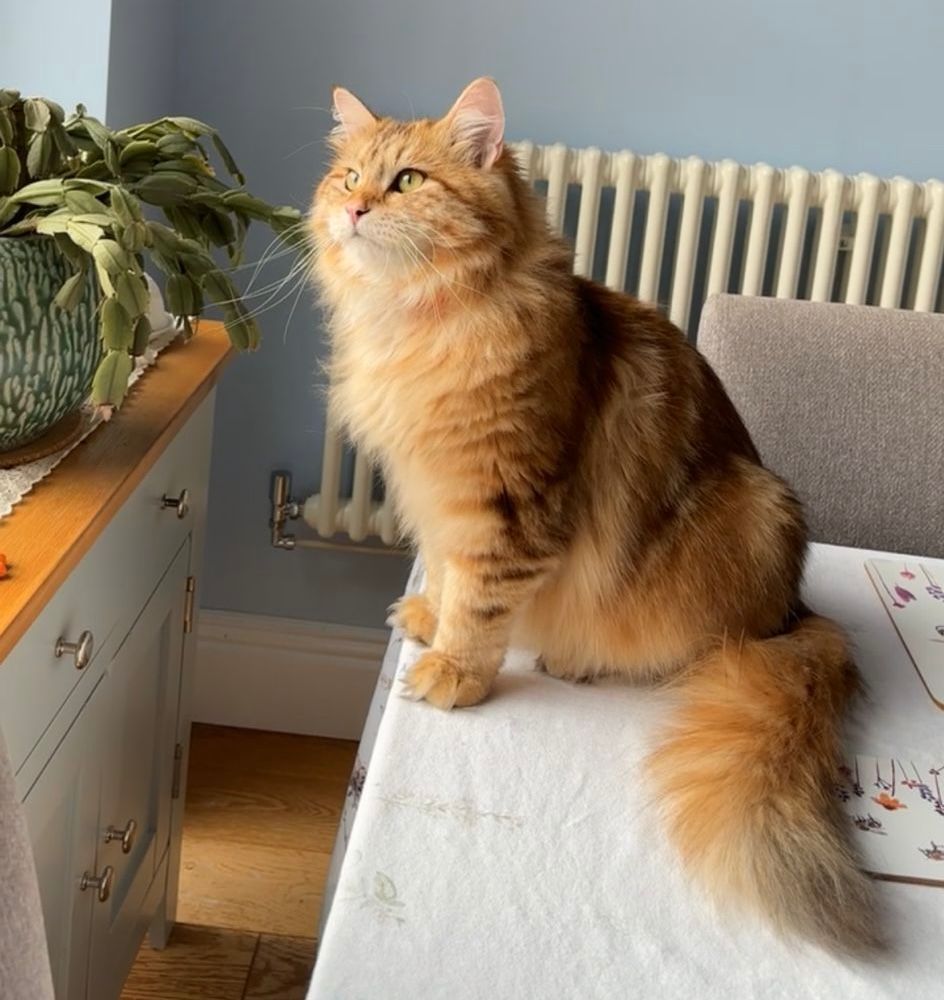
Siberian
A dense, layered coat and a solid body do not guarantee freedom from allergies. The Siberian is a domestic cat breed connecting the history of regional Russian cats with modern breed registration. Old stories and actual showing and breeding records are different kinds of evidence.
Read the guide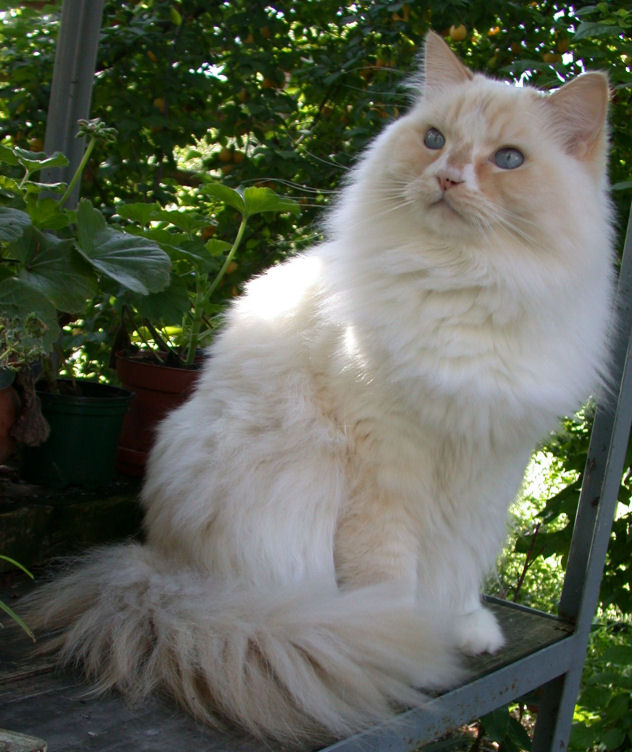
RagaMuffin
A large body and varied coat colors; check registration standards that differ from the Ragdoll’s. The RagaMuffin developed under separate standards after splitting from Ragdoll-related breeding populations in the United States. Despite similar names and a historical relationship, the two do not share the same registered name today.
Read the guide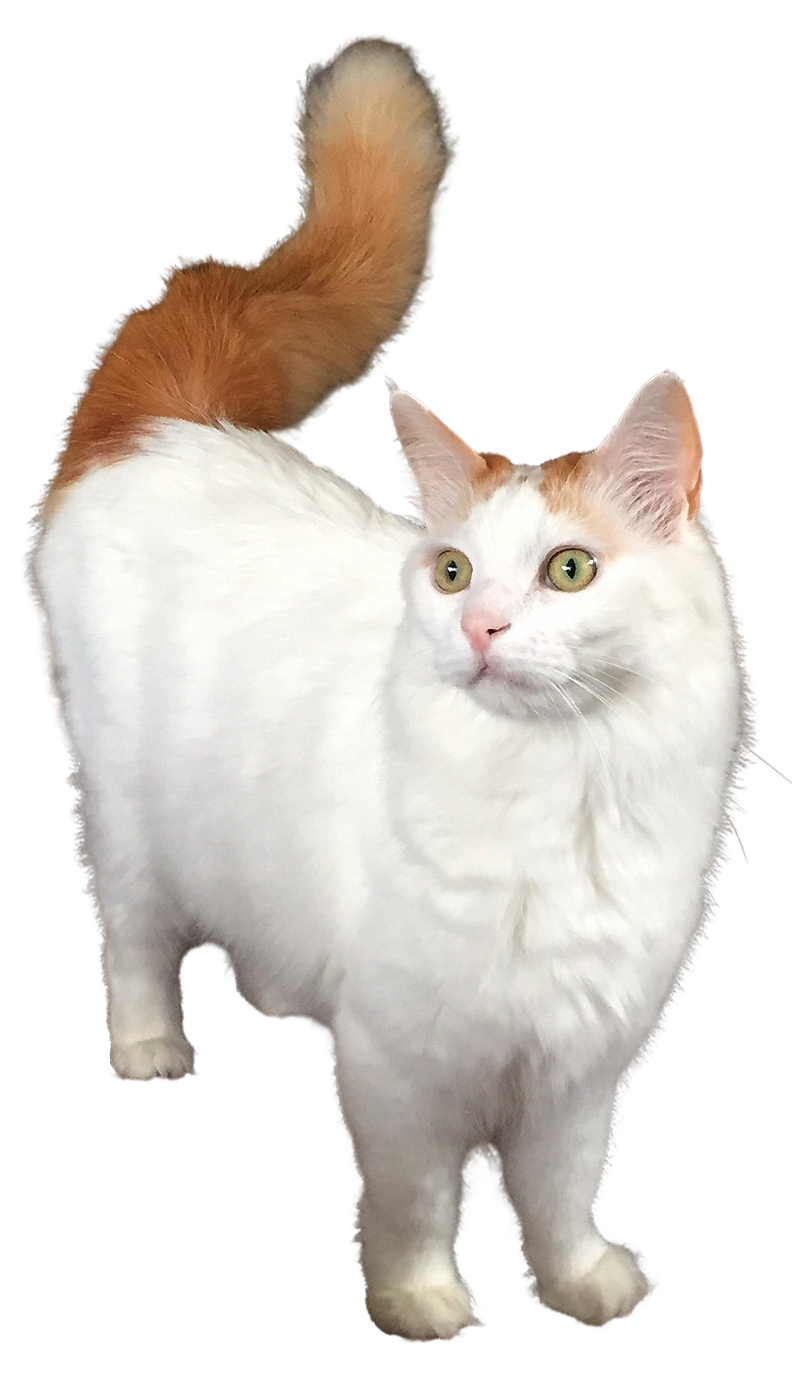
Turkish Van
A mostly white body with color on the head and tail; assess the water-loving nickname individually. The Turkish Van is a breed linked to cats from Türkiye, with modern breeding standards developed in the United Kingdom. It is separate from the Turkish Angora, which shares the same country of association.
Read the guide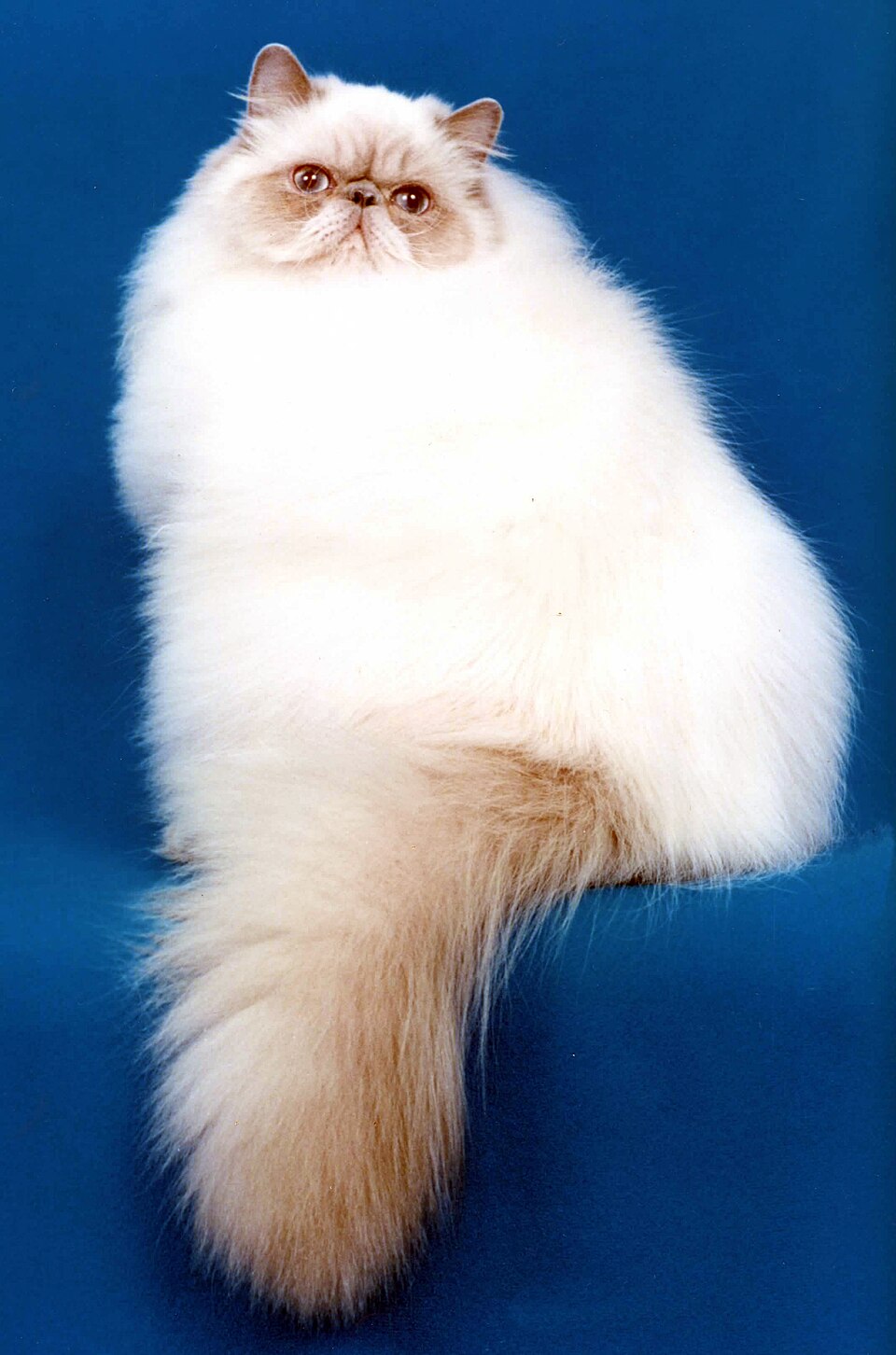
Himalayan
A long-haired cat with points and blue eyes, rather than a wild mountain species. The Himalayan developed through breeding that combined the Persian’s build and long hair with point coloration from Siamese lines. Its name does not designate a wild cat species discovered in the Himalayas.
Read the guide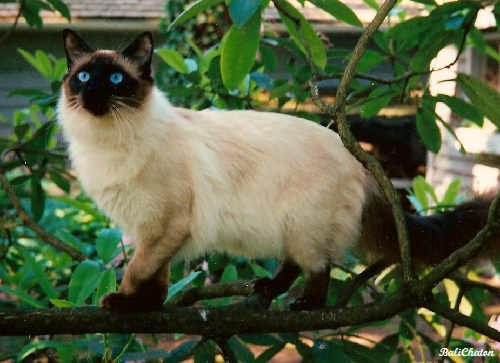
Balinese
Points and blue eyes; distinguish a dance-inspired name from the actual origin. The Balinese is a domestic cat breed developed in the United States from long-haired traits appearing in Siamese lines. Its name connects its graceful impression with Balinese dance; it does not mean a wild cat or endemic species from Bali.
Read the guide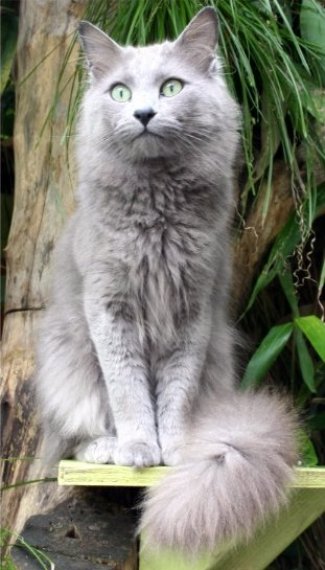
Nebelung
Silvery semi-long fur and green eyes; a distinct name from a long-haired Russian Blue. The Nebelung developed from blue-gray long-haired domestic cat lines in the United States. Its name is associated with mist-like imagery, but does not designate a German wild cat species.
Read the guide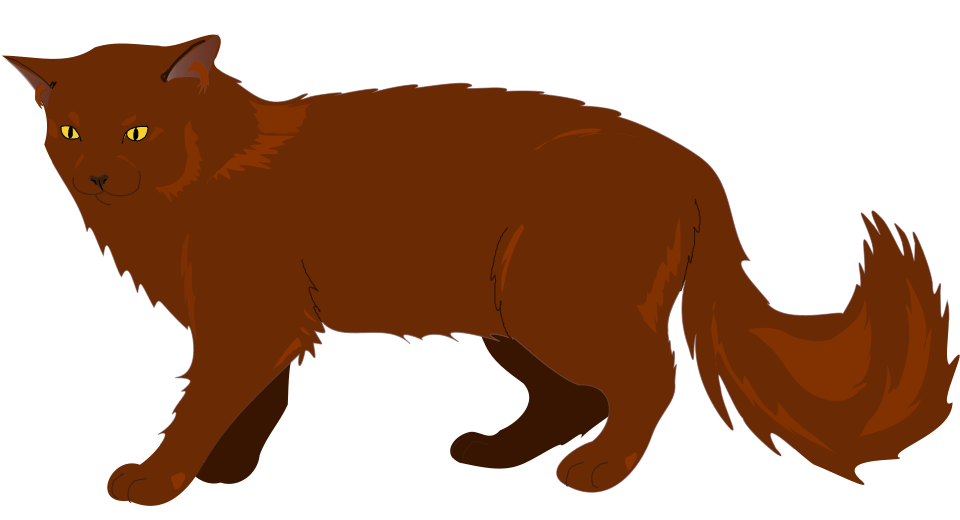
Chantilly-Tiffany
Chantilly-Tiffany through historical records and an explanatory illustration. Chantilly-Tiffany names historical breeding lines developed in North America around chocolate-colored, semi-long-haired cats. Changes in names and registration mean its scope cannot simply be equated with a typical current breed listing from a modern organization.
Read the guide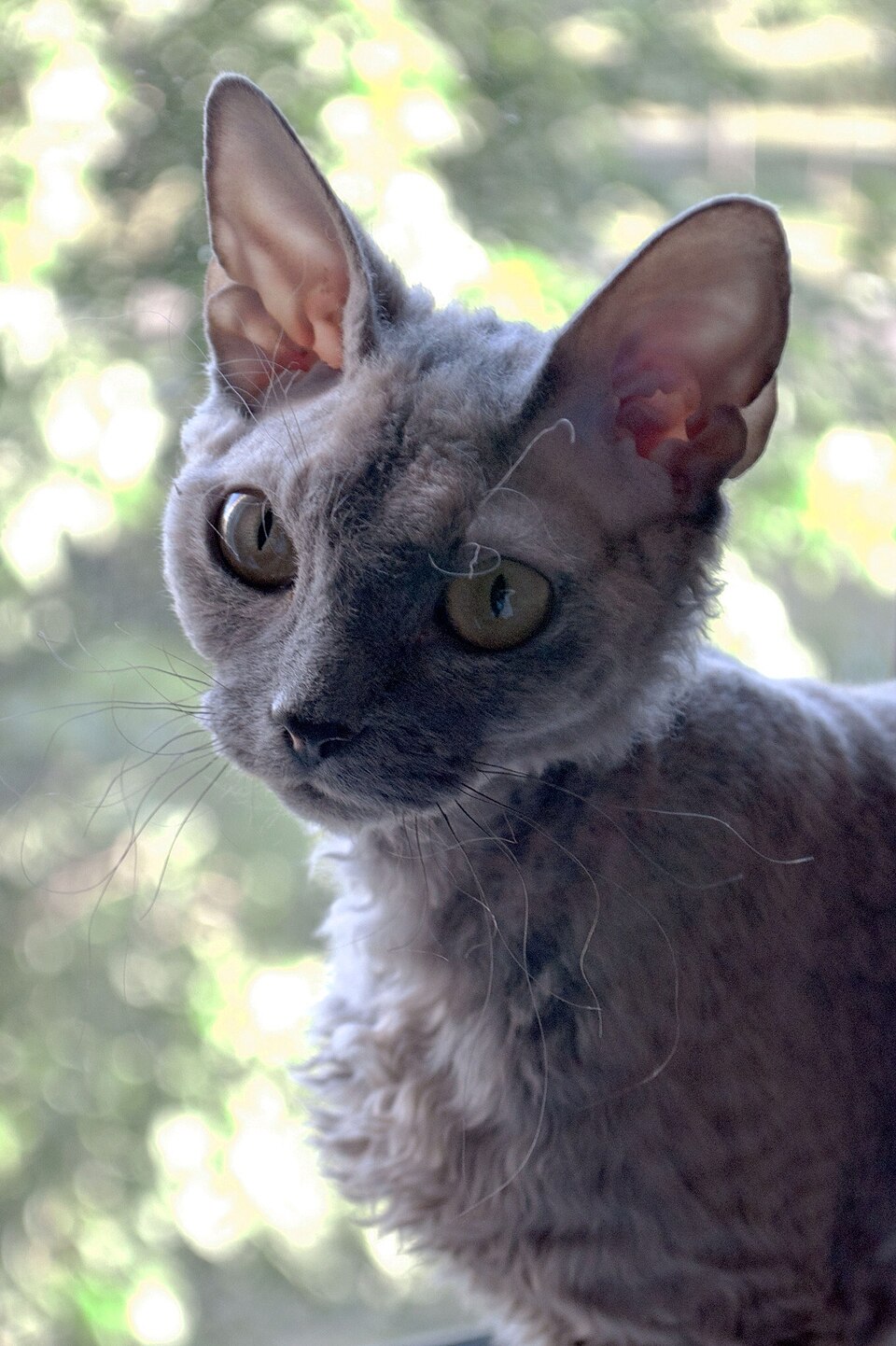
Devon Rex
Large ears and a short curly coat belong to a lineage distinct from the Cornish Rex. The Devon Rex developed from a curly-coat trait found in domestic cats in Devon in the United Kingdom. Despite resembling the Cornish Rex from a nearby region, it is not one breed with the same coat trait under a different name.
Read the guide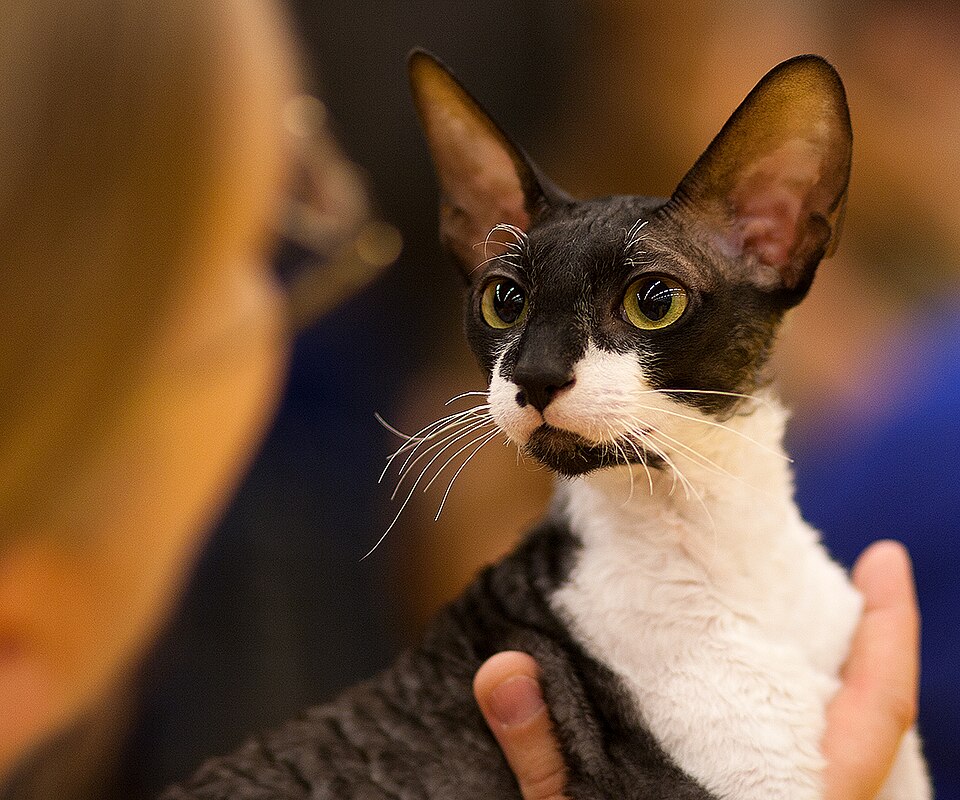
Cornish Rex
Observe the combination of a short rippled coat and a slender body. The Cornish Rex developed from curly-coated domestic cat lines found in Cornwall in the United Kingdom. Although its regional name and coat resemble the Devon Rex’s, the two have separate genetic backgrounds and breed standards.
Read the guide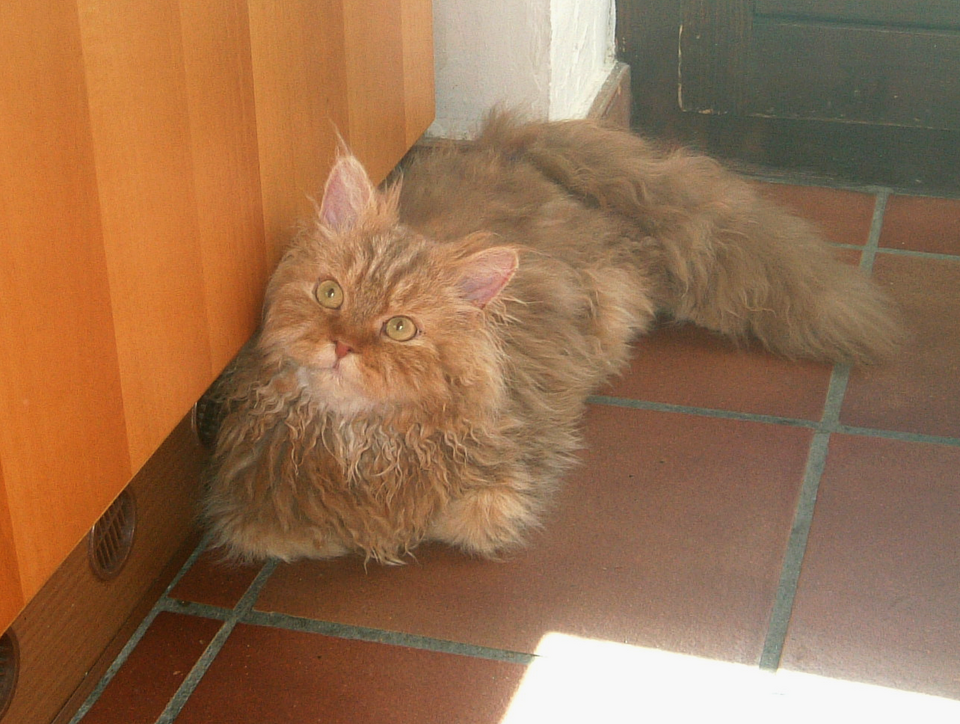
Selkirk Rex
A full curly coat and a rounded body; coat texture differs among Rex breeds. The Selkirk Rex developed from a curly-coated domestic cat found in Montana in the United States. Despite similar names, its curls do not share the same origin as those of the Devon and Cornish Rex.
Read the guide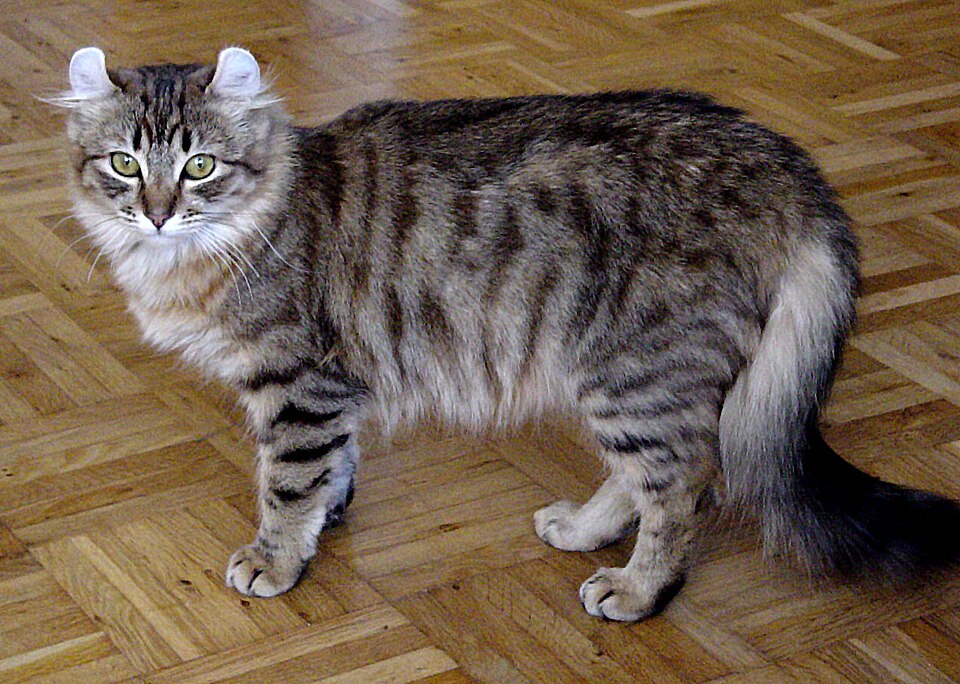
American Curl
Distinguish backward-curled ear tips from folded ears. The American Curl developed from domestic cat lines with backward-curving ears found in California in the United States. Curl in the name relates to the ear tips’ curve, a different feature from the curly coats of Rex breeds.
Read the guide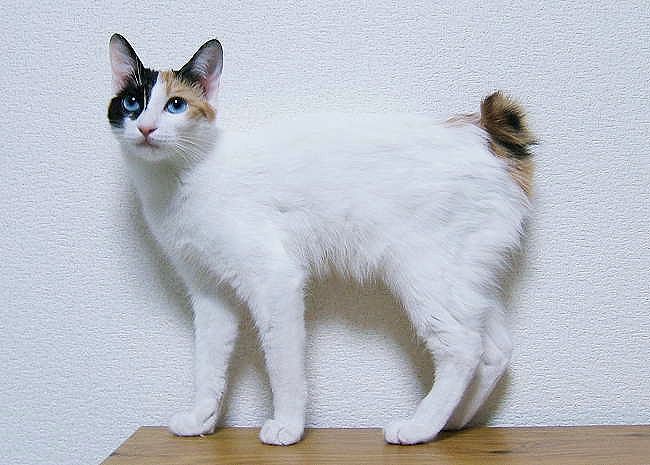
Japanese Bobtail
A rabbit-like short tail differs from the Manx’s taillessness. This breed is linked to Japan’s short-tailed domestic cats. Cats in art and culture provide historical context, but not every short-tailed cat belongs to the modern registered breed.
Read the guide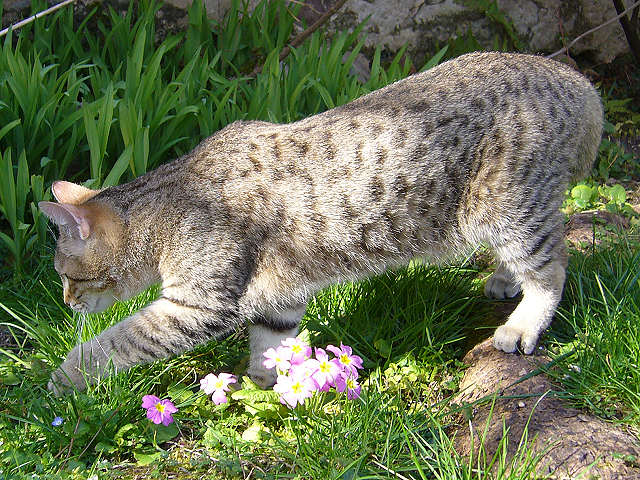
Pixie-bob
Distinguish its short tail and wild-looking form from bobcat-hybrid legends. The Pixie-bob developed from domestic cats in the northwestern United States. Stories of bobcat crosses do not establish a confirmed wild-bobcat ancestry.
Read the guide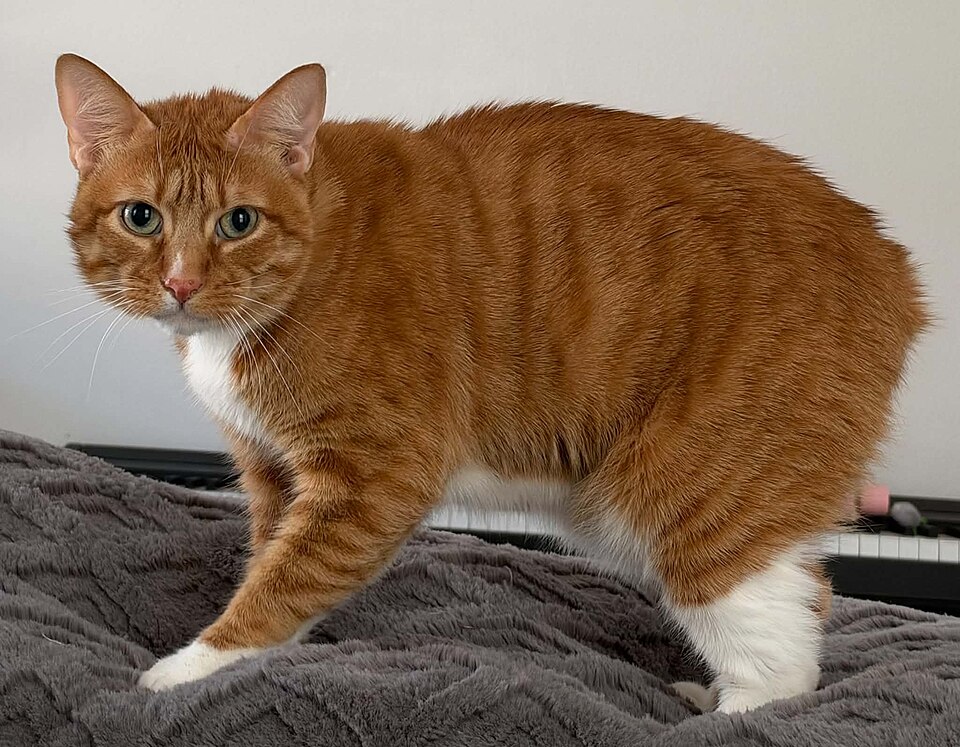
Manx
Consider tail diversity together with spinal health and daily wellbeing. The Manx is a domestic breed linked to the Isle of Man, known for short or absent tails. The tale of a tail caught in Noah’s Ark door is an interesting legend, not a biological origin.
Read the guide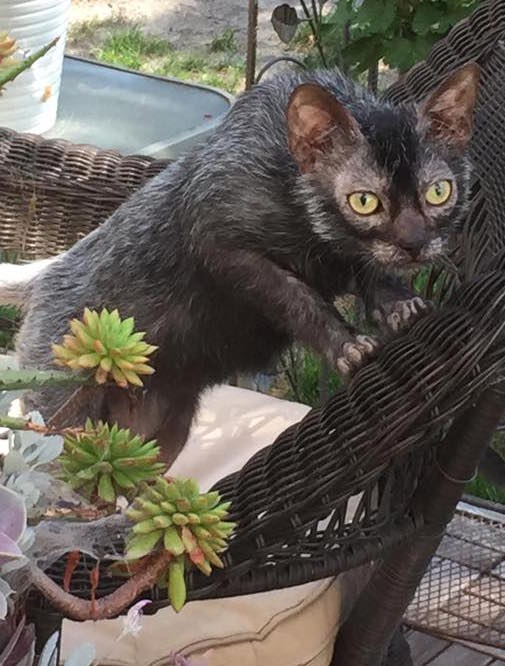
Lykoi
Distinguish the werewolf nickname from an actual domestic cat’s skin and coat structure. The Lykoi was studied and developed from an unusual coat trait appearing in non-pedigree domestic cats in the United States. Despite the werewolf-cat nickname, it is not a cross with wolves or another wild species.
Read the guide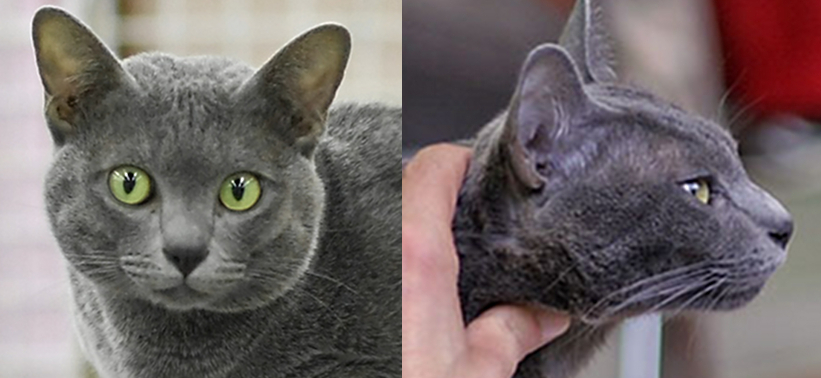
Korat
Silver hair tips and green eyes: lucky traditions are not proof of pedigree. The Korat is connected to Thai cat traditions and stories of luck and gifts. Thai cat poetry and modern registration and breeding records are different kinds of background evidence.
Read the guide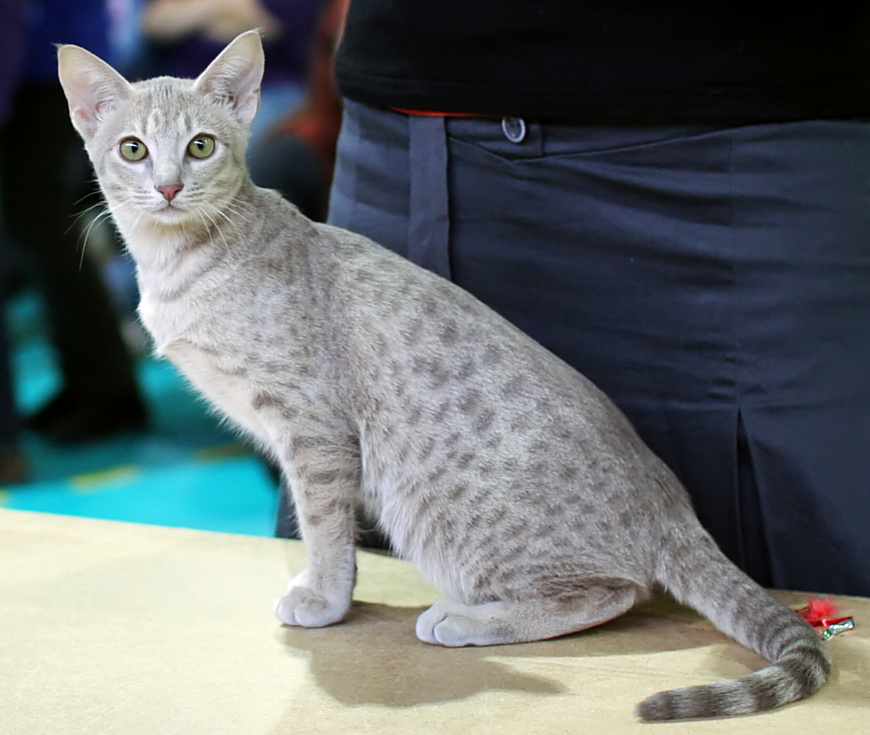
Ocicat
Ocelot-like spots and the actual origin are separate matters. The Ocicat developed in the United States through crosses involving domestic cat lines such as the Abyssinian and Siamese. Although the name and spots evoke an ocelot, it was not created by crossing with wild ocelots.
Read the guide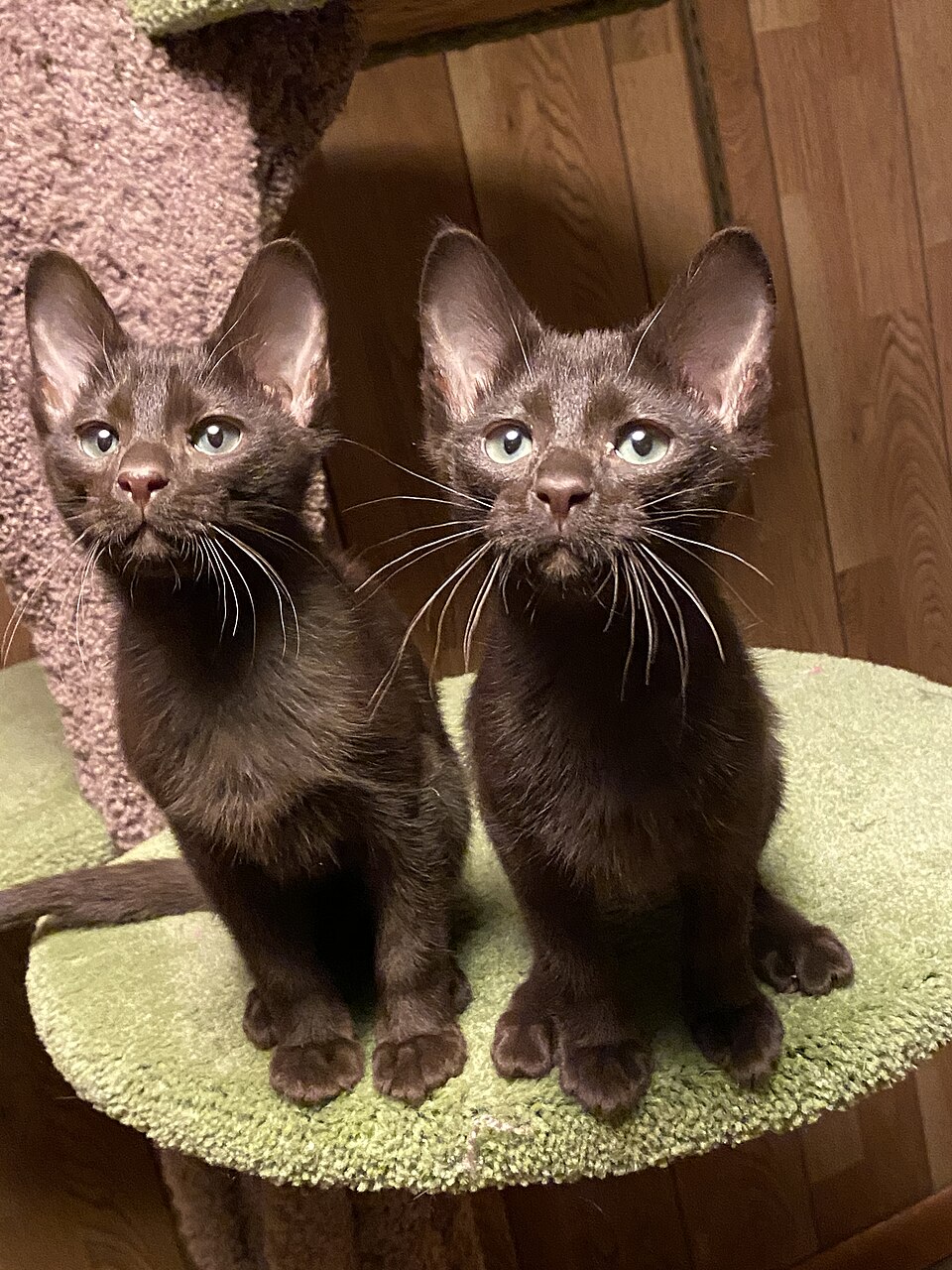
Havana Brown
Chocolate-colored fur and brown whiskers do not imply an origin in Cuba’s wild cats. The Havana Brown was developed through planned domestic-cat crosses in the United Kingdom, with separate appearance standards later established in the United States. Although its name contains a Cuban place name, the breed did not originate from Cuban wild cats.
Read the guide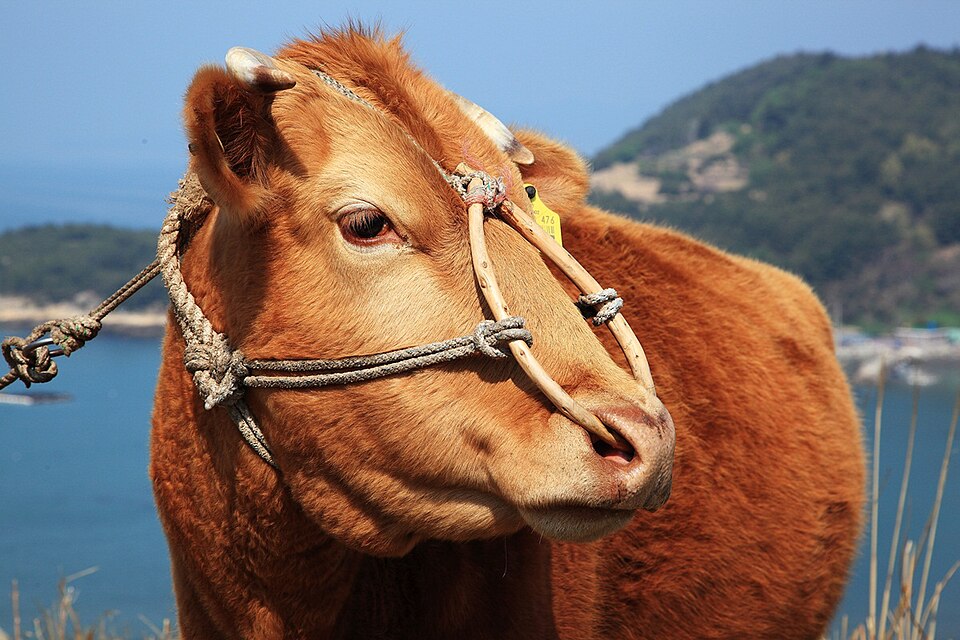
Hanwoo
Hanwoo are domestic cattle conserved and improved from native cattle long used for labor and agriculture on the Korean Peninsula. Hanwoo with a yellow-brown coat are widely recognized.
Read the guide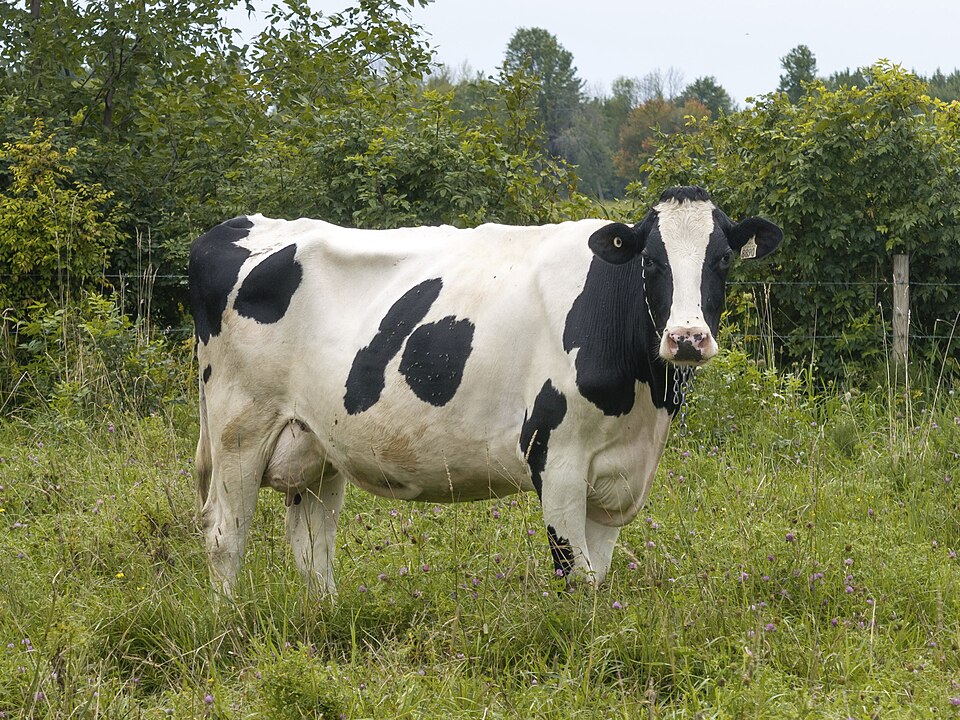
Holstein
The Holstein is a prominent dairy breed developed from cattle in the Netherlands and northern Germany. Large black-and-white patches are typical, but red-and-white Holsteins also occur.
Read the guide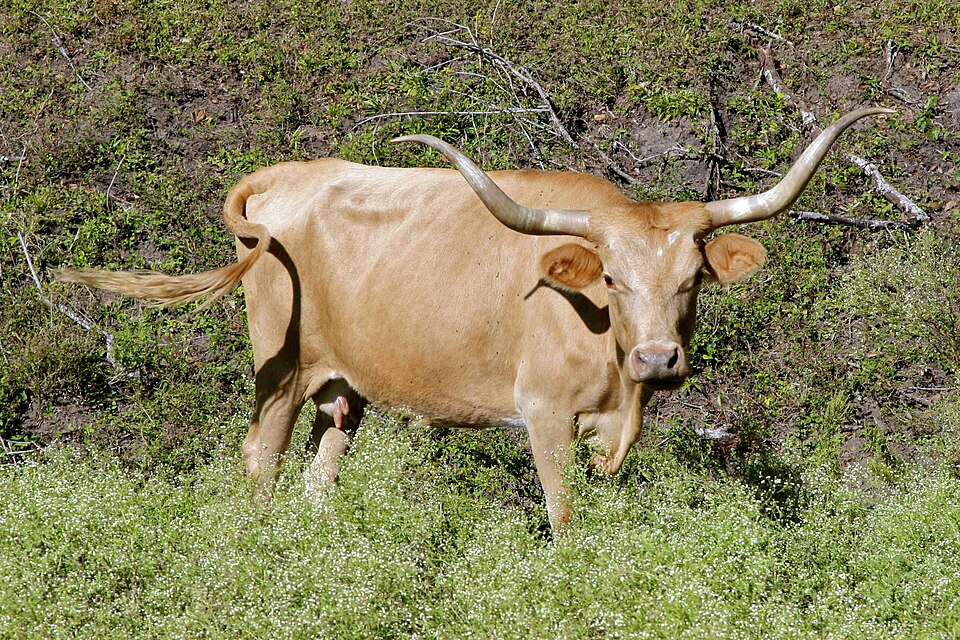
Texas Longhorn
The Texas Longhorn is a domestic cattle breed formed as various cattle populations brought to North America mixed and were selected in regional grazing environments. Long horns extending to the sides stand out, but length and direction of curvature vary greatly with individual and age.
Read the guide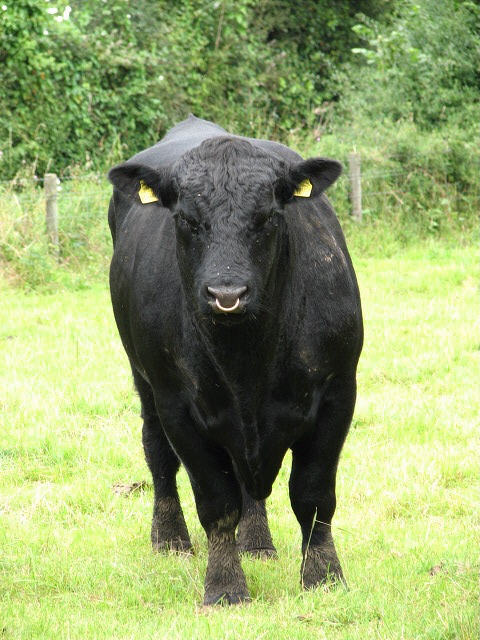
Black Angus
Black Angus are polled beef cattle lines developed in the Aberdeen and Angus regions of Scotland. A black coat, a naturally hornless head and a relatively well-filled body are typical.
Read the guide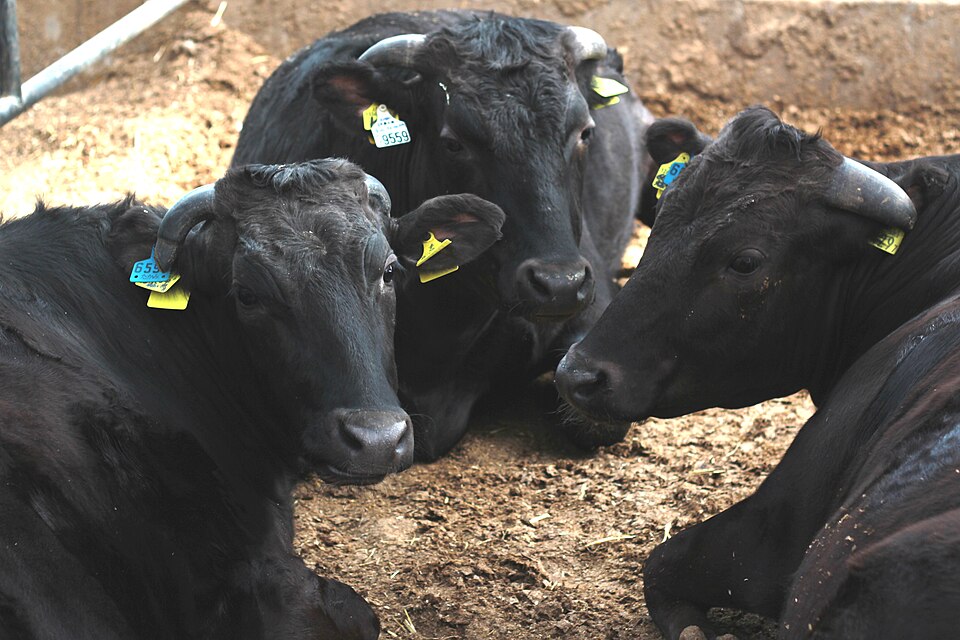
Wagyu
Wagyu refers to Japan’s Japanese Black, Japanese Brown, Japanese Shorthorn and Japanese Polled breeds and related crosses, rather than a single cattle population with one fixed coat color. The Japanese Black’s black coat is widely recognized, but brown or reddish populations also occur.
Read the guide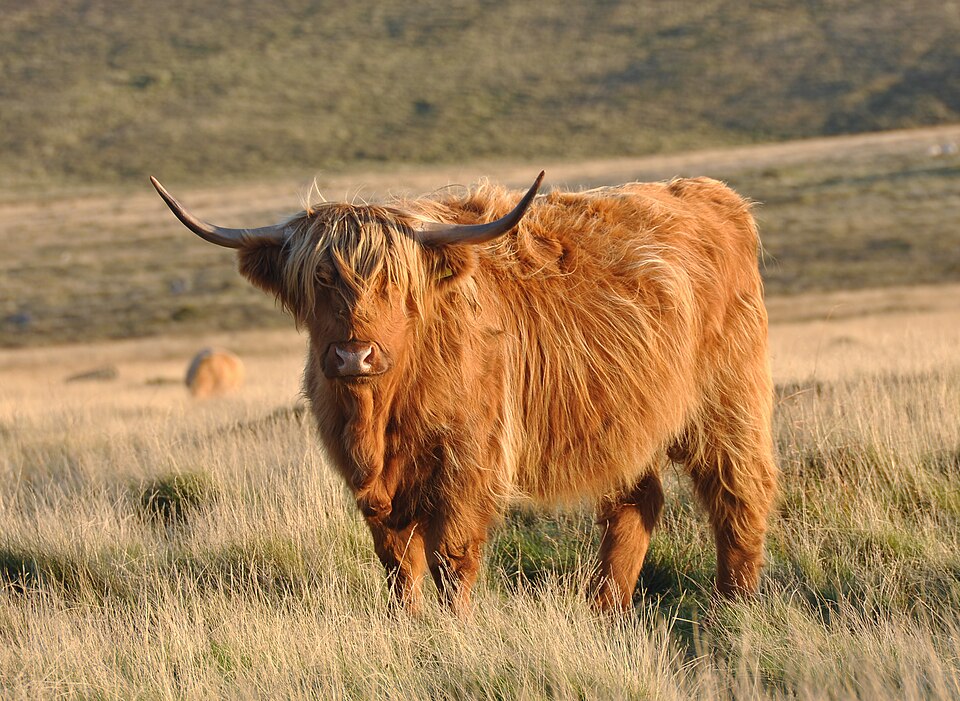
Highland cattle
Highland cattle are a traditional domestic cattle breed developed in Scotland’s uplands and western islands. Long outer hair, a thick undercoat, hair over the forehead and long horns are prominent.
Read the guide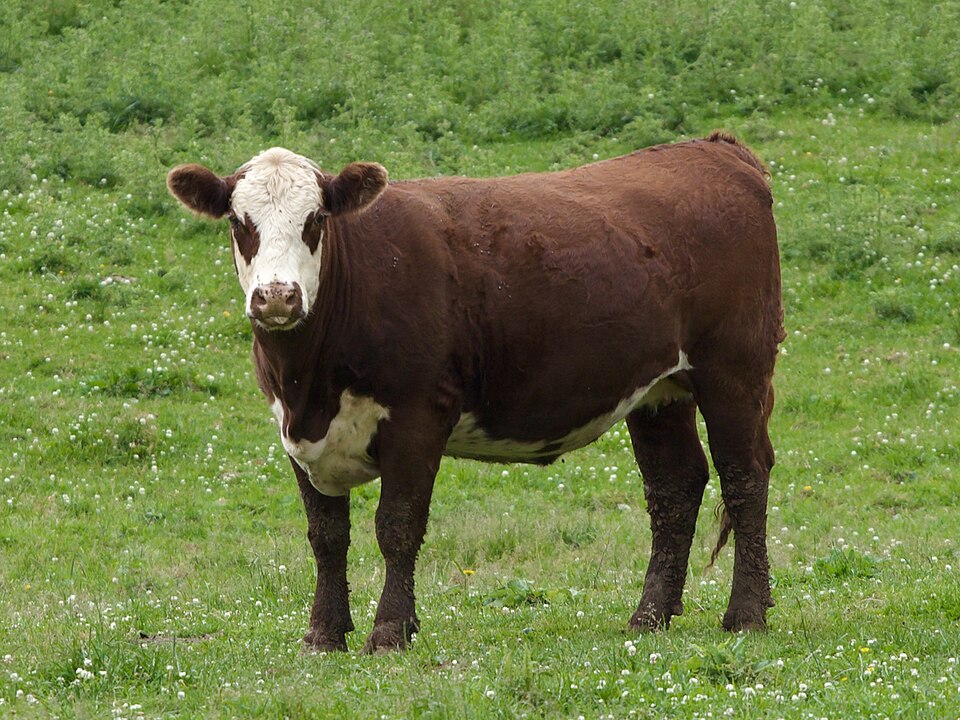
Hereford
The Hereford is a cattle breed improved for beef in the United Kingdom. Horned and polled lines are sometimes registered separately. A red body and white face are typical distinguishing features, with white also on the belly and legs.
Read the guide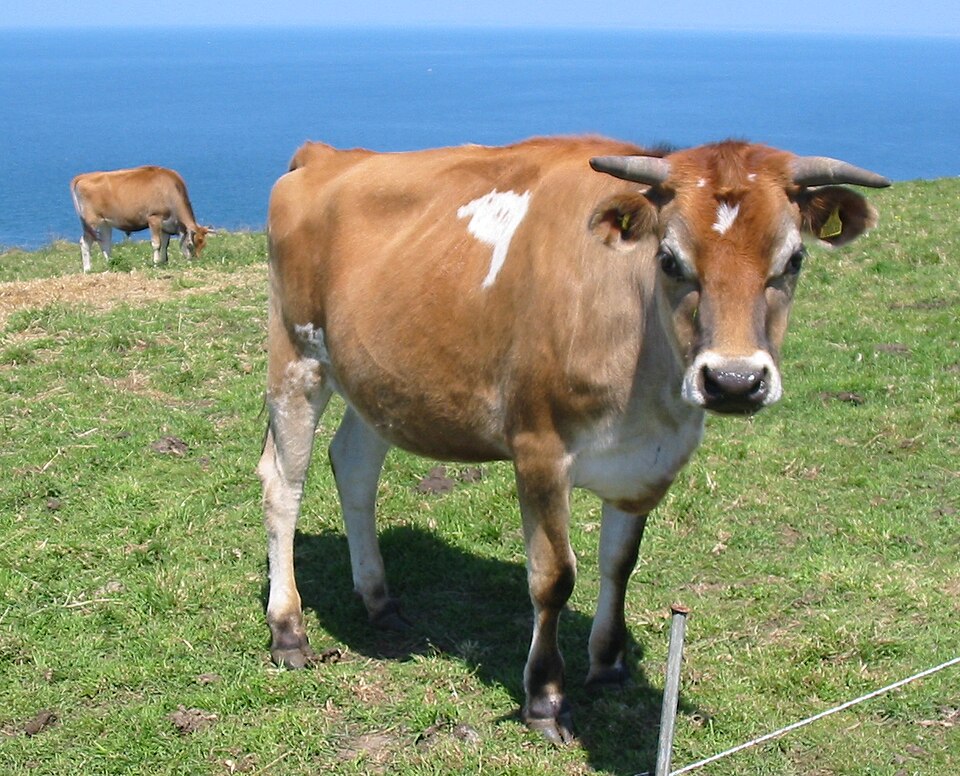
Jersey
The Jersey is a dairy cattle breed originating on Jersey in the English Channel. Dairying uses it for its build and milk-composition characteristics, which differ from those of the Holstein. A relatively small dairy breed with coats from fawn to dark brown and a pale border around the muzzle.
Read the guide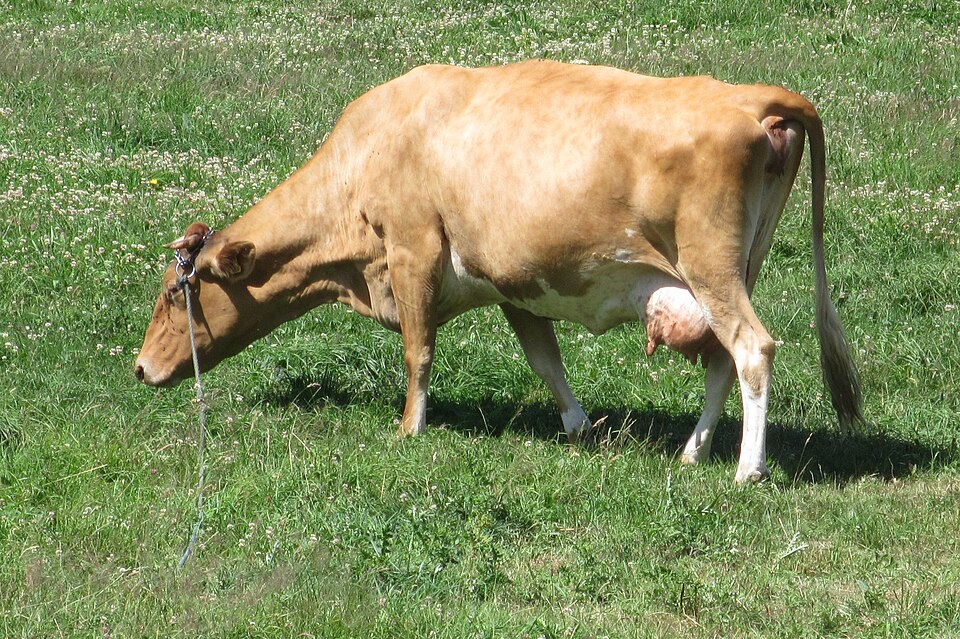
Guernsey
The Guernsey is a dairy cattle breed developed on Guernsey in the English Channel. Despite sharing an island-based naming pattern, it is a separate breed from the Jersey. Fawn-and-white markings are common, and the yellowish color of the milk is explained in relation to beta-carotene.
Read the guide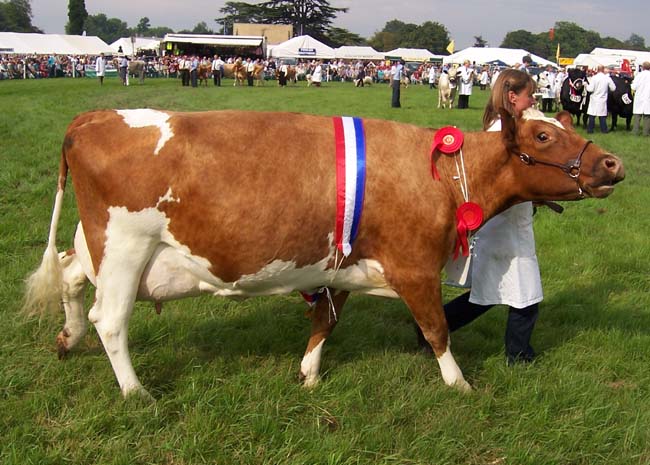
Ayrshire
The Ayrshire is a dairy breed developed in the Ayr region of Scotland. It spread to dairying in a variety of environments. Red or brown patches appear on white, and some individuals have horns.
Read the guide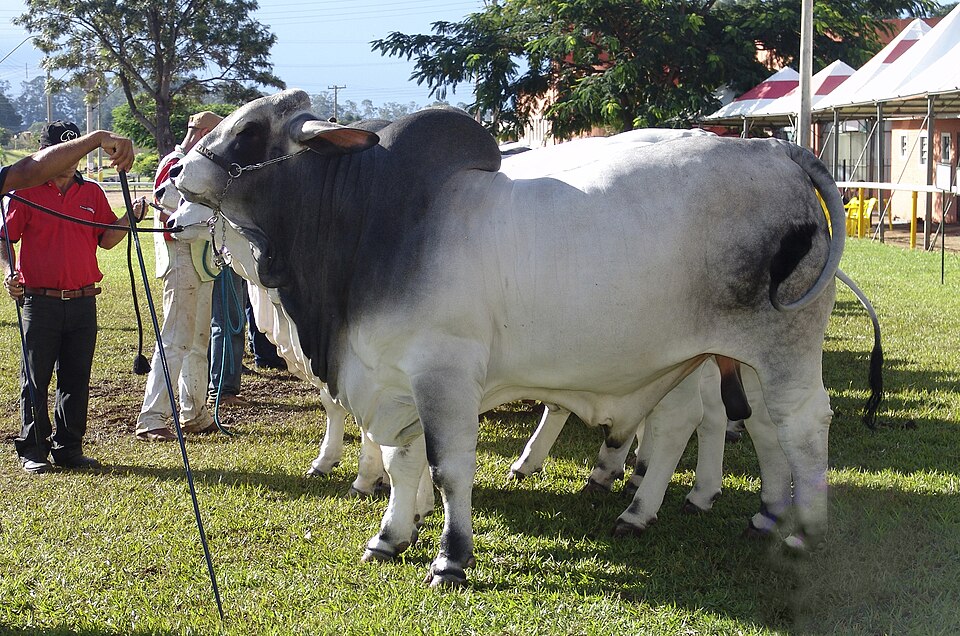
Brahman
The Brahman was improved in the United States from South Asian zebu-derived cattle. It is also widely used in crossing with European-derived beef cattle. A shoulder hump, large drooping ears and loose skin beneath the neck are characteristic.
Read the guide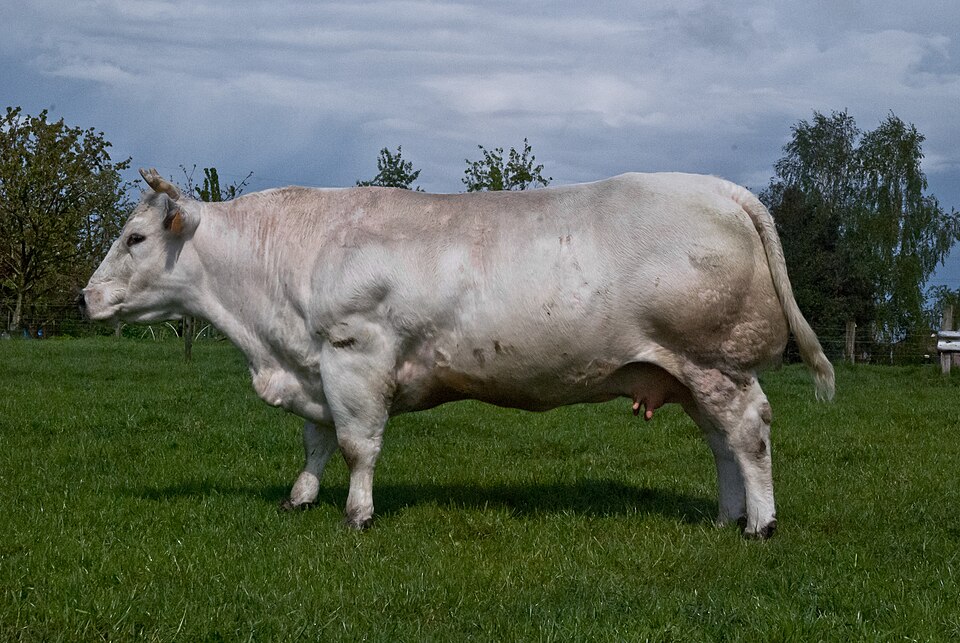
Belgian Blue
The Belgian Blue is a beef cattle breed developed in Belgium. Genetic traits related to myostatin influence muscle development. White, blue-gray mottling or black markings occur, and muscles of the hindquarters and shoulders are prominent.
Read the guide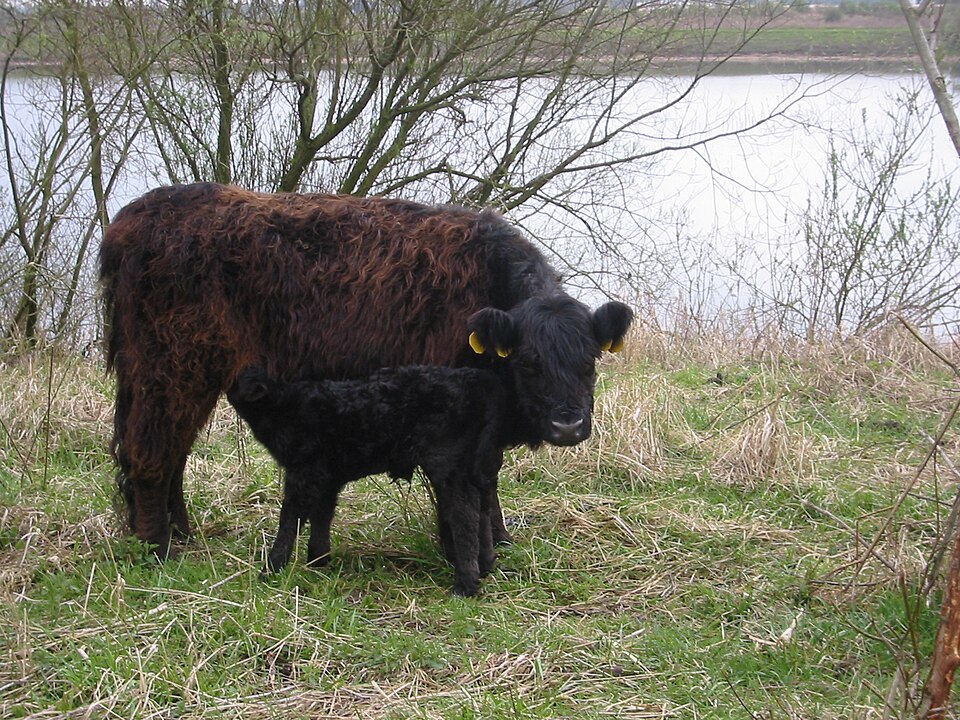
Galloway
The Galloway is a beef breed originating in southwestern Scotland. It relates to the white-belted Belted Galloway, but the registered populations are distinguished. A thick coat and a naturally hornless form are characteristic. Red or dun individuals occur as well as black.
Read the guide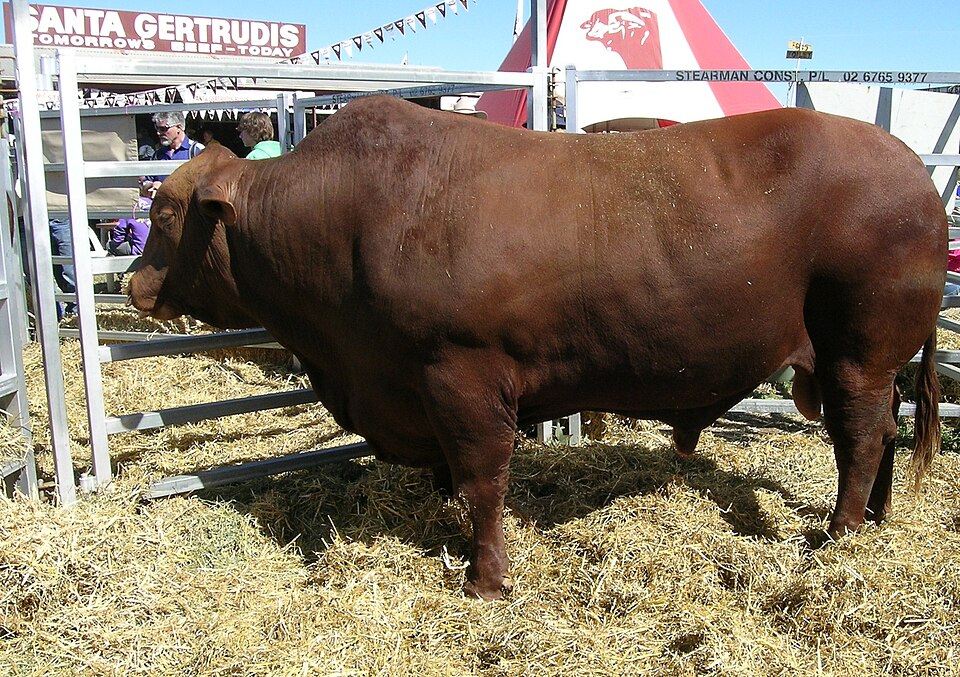
Santa Gertrudis
The Santa Gertrudis is a beef cattle breed developed at King Ranch in Texas using Shorthorn and Brahman lines. Usually red-coated, with some Brahman-derived skin and body-form features.
Read the guide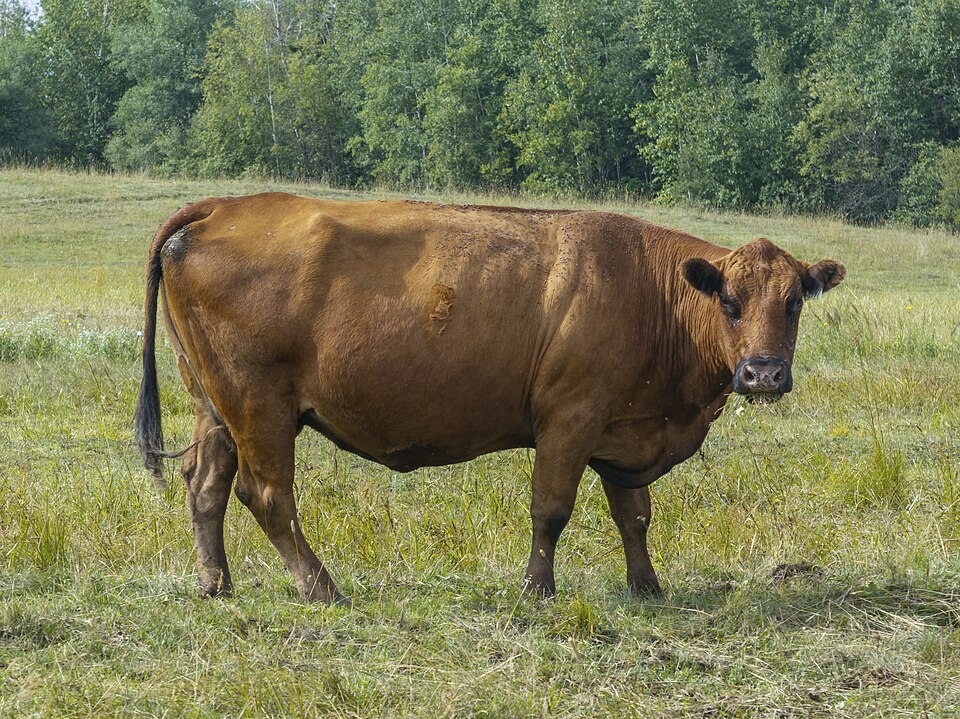
Dexter
The Dexter is a small-bodied cattle breed originating in Ireland. It was used for the dual purposes of milk and meat. A small body with black, red or dun coats. Lines differ in leg length; this does not simply mean cattle as small as calves.
Read the guide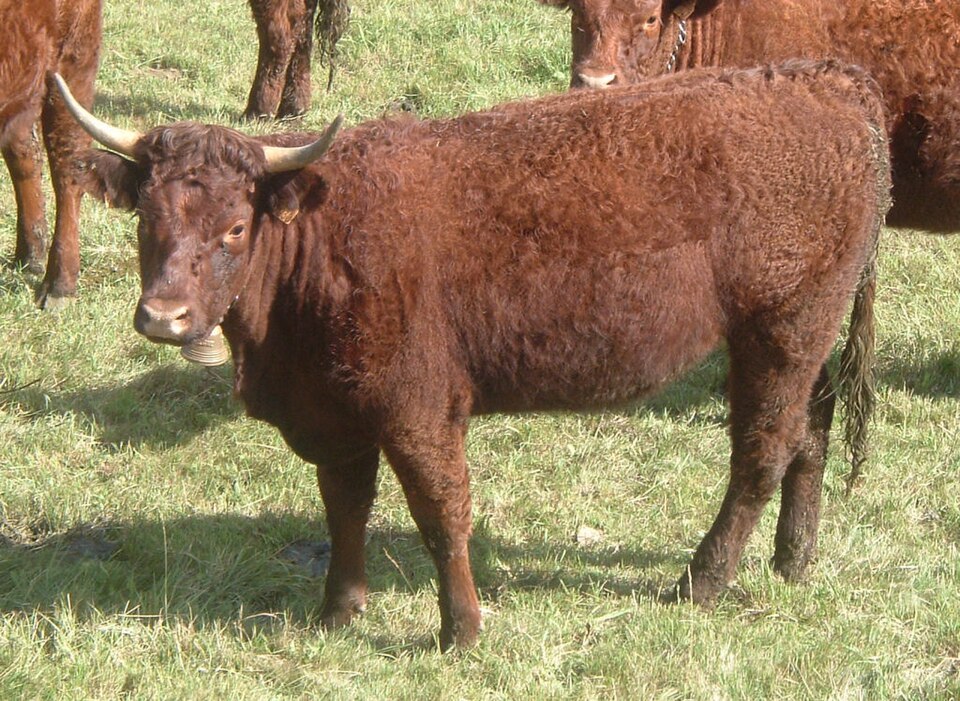
Salers
Salers cattle developed in the Auvergne region of France. Traditionally used for milk and work, they are also used for beef production. A dark reddish-brown coat and horns are typical. Black or polled lines also occur, so do not judge by coat color alone.
Read the guide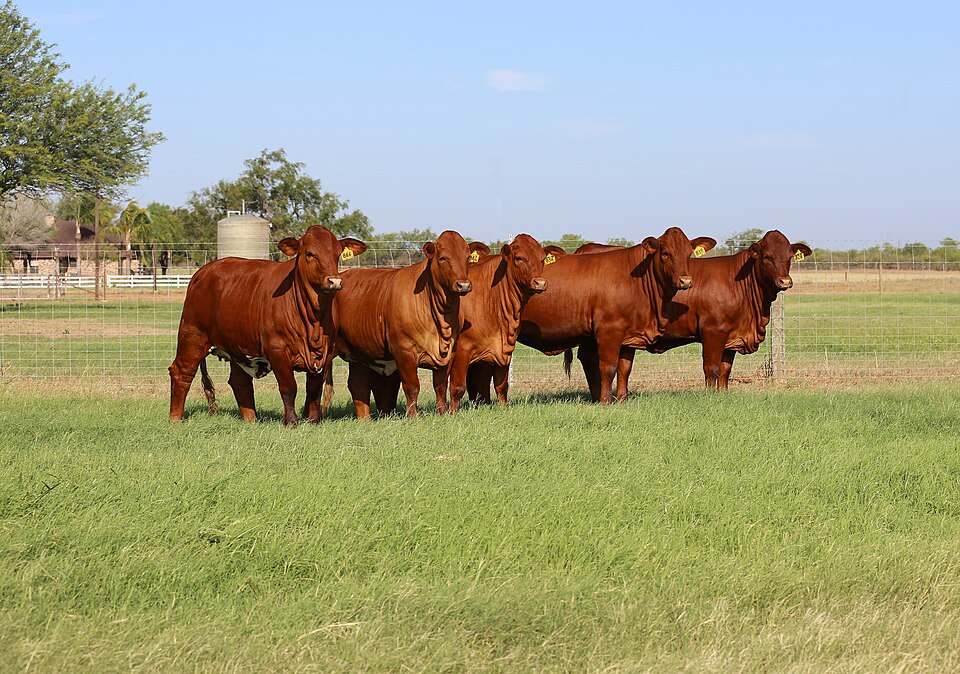
Beefmaster
The Beefmaster is a composite beef breed developed using Brahman, Hereford and Shorthorn. Selection emphasized production traits rather than one coat color. Appearance is highly variable, including red and spotted coats. The extent of a hump or hanging skin also differs.
Read the guide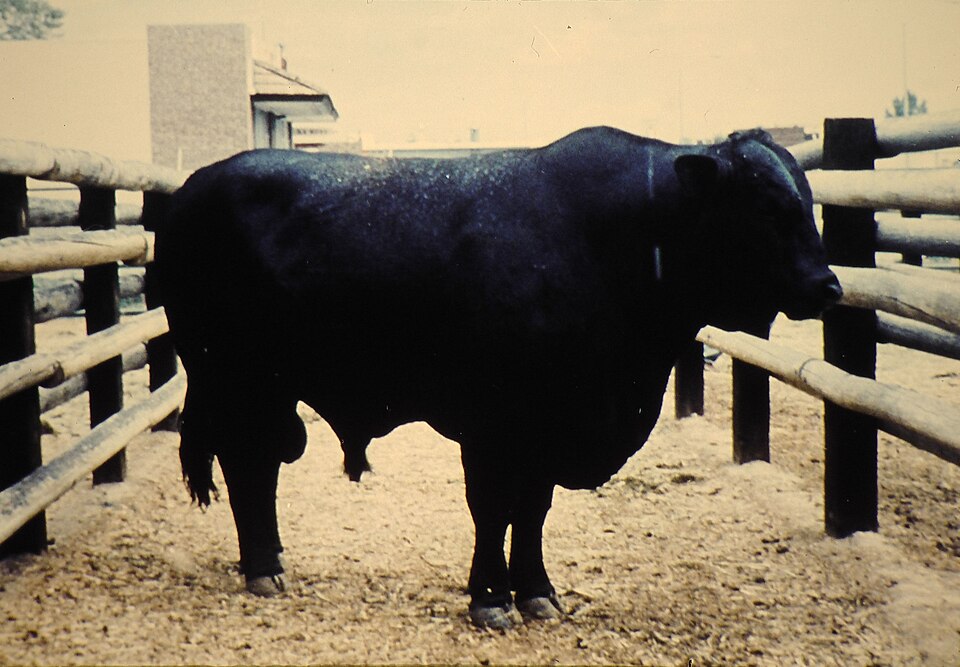
Brangus
The Brangus is a beef breed combining Brahman and Angus characteristics. Distinguish the pedigree requirements for the registered breed from ordinary crosses of the two breeds. Usually polled, commonly black-coated; Red Brangus are also described separately.
Read the guide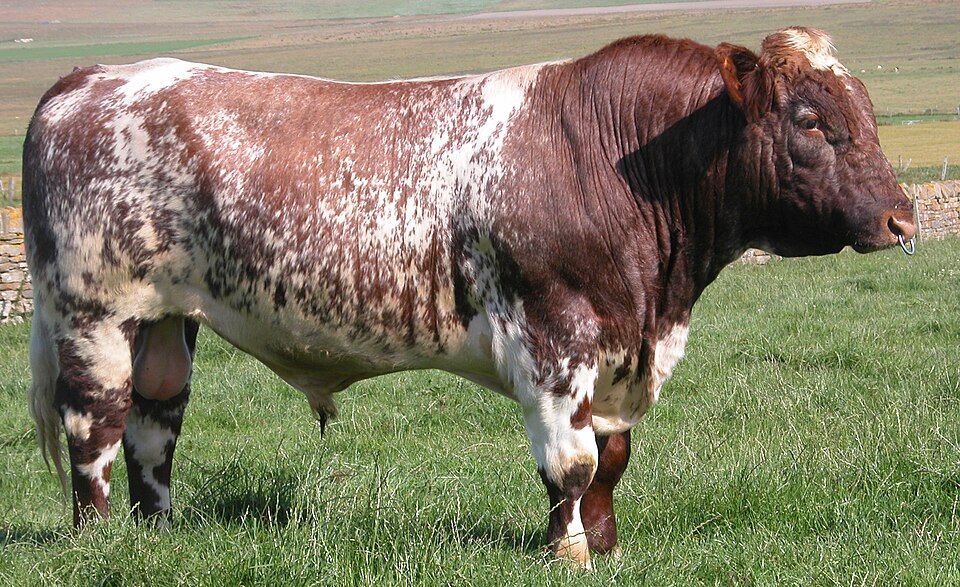
Shorthorn
The Shorthorn developed in the northeastern United Kingdom. Later improvement diverged toward beef and dairy populations. Red, white or roan coats mixing hairs of the two colors occur. The name comes from horn form, but polled lines also exist.
Read the guide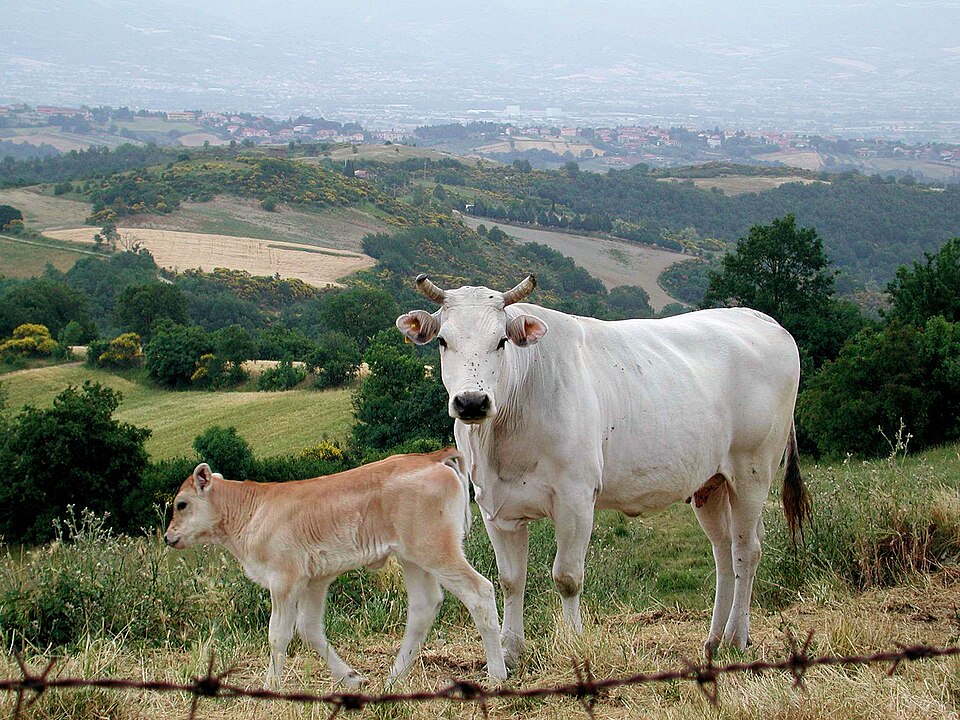
Chianina
The Chianina is a large cattle breed associated with Italy’s Chiana Valley. Its use shifted from working livestock toward beef. Adults generally have white hair and dark skin, with long legs and a large build. Young calves can differ in color from adults.
Read the guide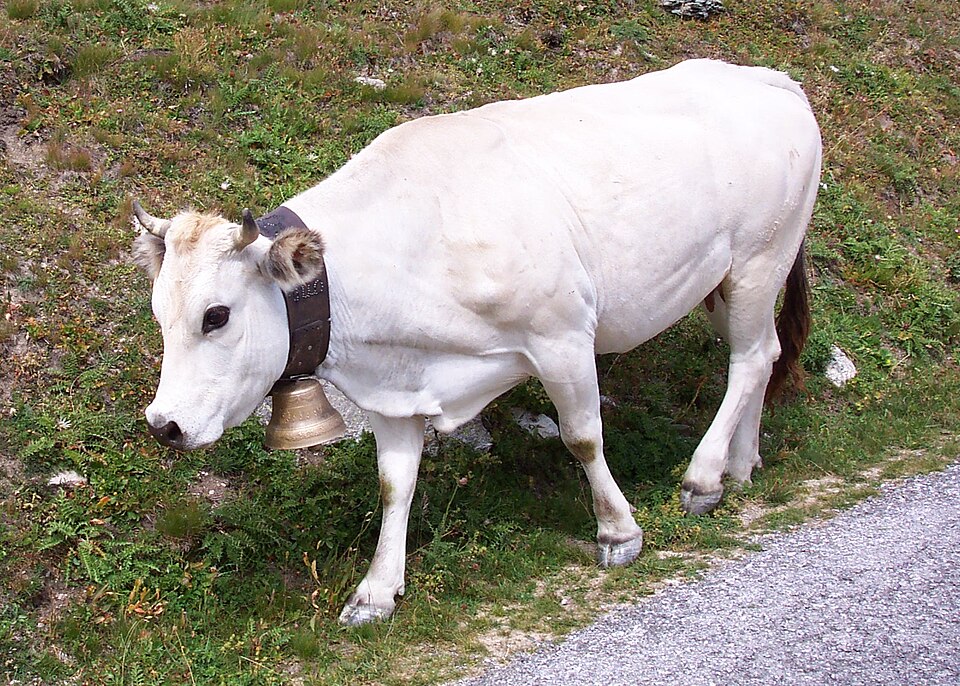
Piedmontese
The Piedmontese is a cattle breed developed in northwestern Italy. It is known for myostatin-related characteristics influencing muscle development. Adults are grayish white, while young calves may be fawn. The ratio of muscle to skeletal structure receives important attention in breed descriptions.
Read the guide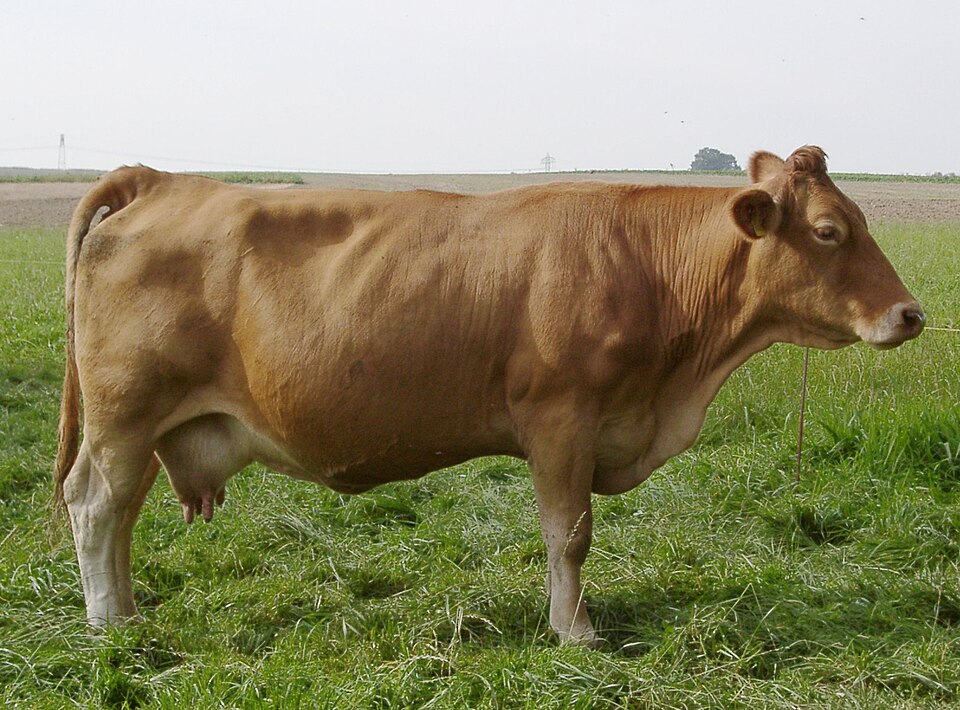
Gelbvieh
Gelbvieh developed from German cattle used for meat, milk and work. It was later widely used in beef breeding. The name means yellow cattle, with yellow-brown shades being traditional. Modern registered populations also include black-coated and polled animals.
Read the guide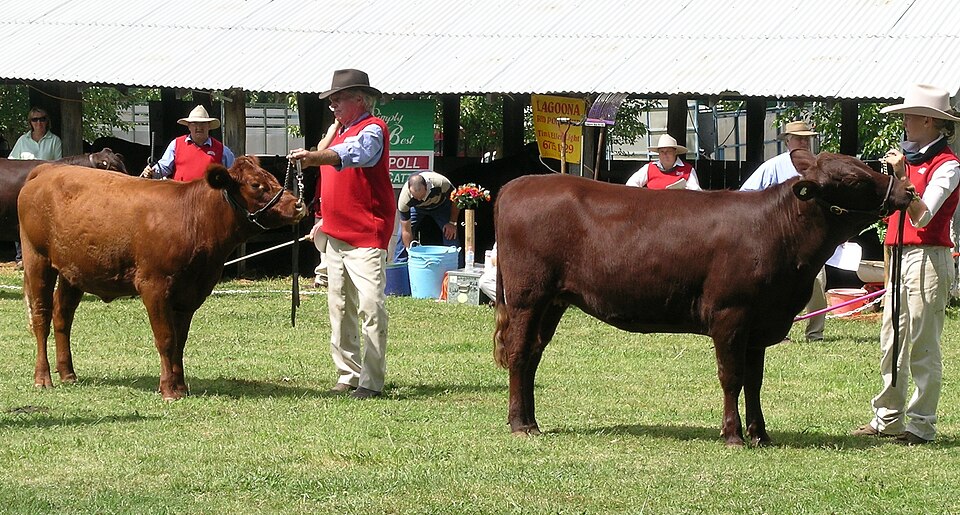
Red Poll
The Red Poll is a dual-purpose breed developed from cattle in Norfolk and Suffolk, Britain. It was used for both milk and meat production. A red coat and naturally hornless form are typical. Poll in the name relates to this hornless feature.
Read the guide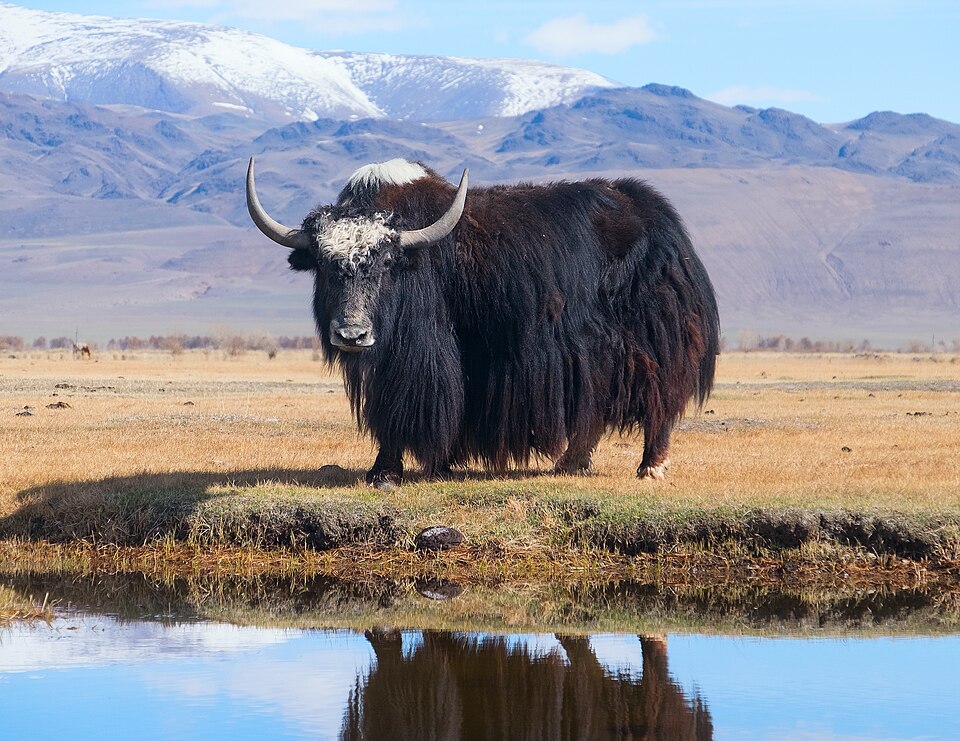
Yak
Yaks are high-altitude bovids; domestic and wild yaks are distinct. Calling them a breed of ordinary European domestic cattle is inaccurate. Long hair, a thick body, short legs and horns are characteristic. The hanging coat protects the body in cold environments.
Read the guide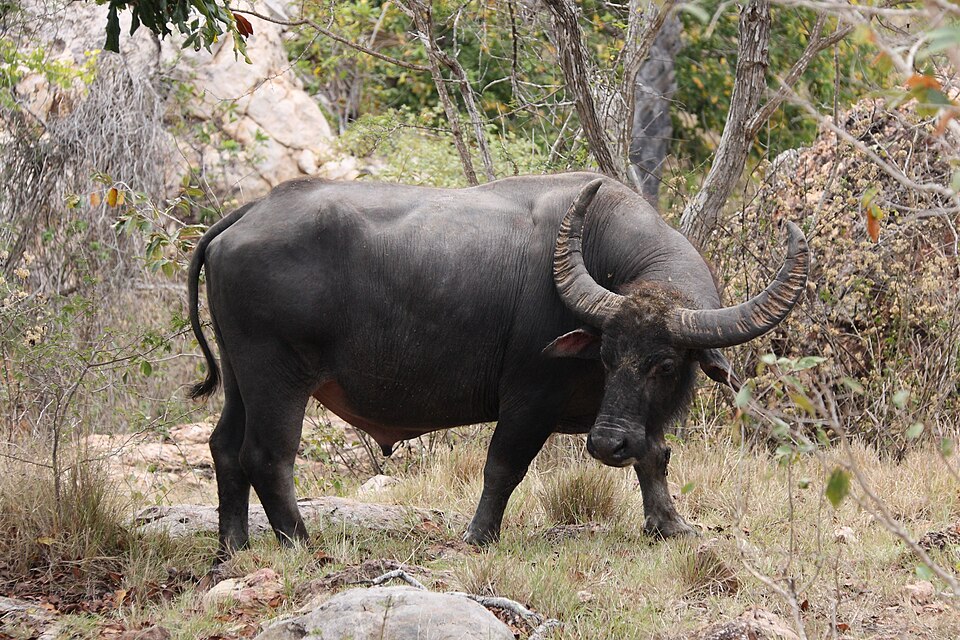
Water buffalo
Water buffalo are domesticated animals of the Bubalus lineage, with river and swamp forms distinguished. They are different animals from American bison and African buffalo. A large body, curved horns and relatively sparse hair are characteristic, with differences between river and swamp forms.
Read the guide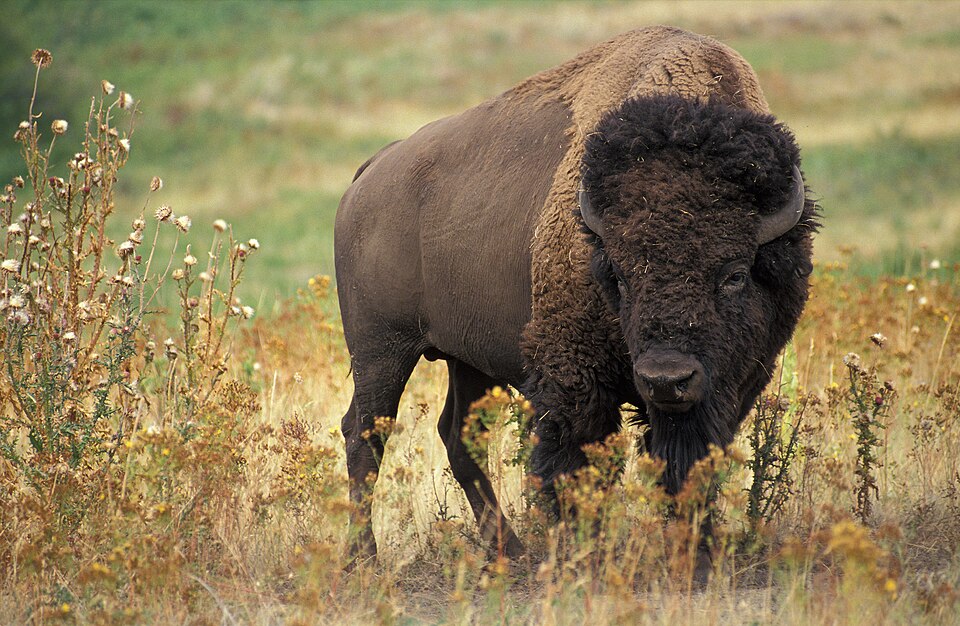
American bison
The American bison is a wild member of the cattle family from North America. It should be understood as a separate species rather than placed among domestic cattle breeds. High shoulders, thick hair on the forequarters and short curved horns are characteristic. Differences in hair and build between front and rear are conspicuous.
Read the guide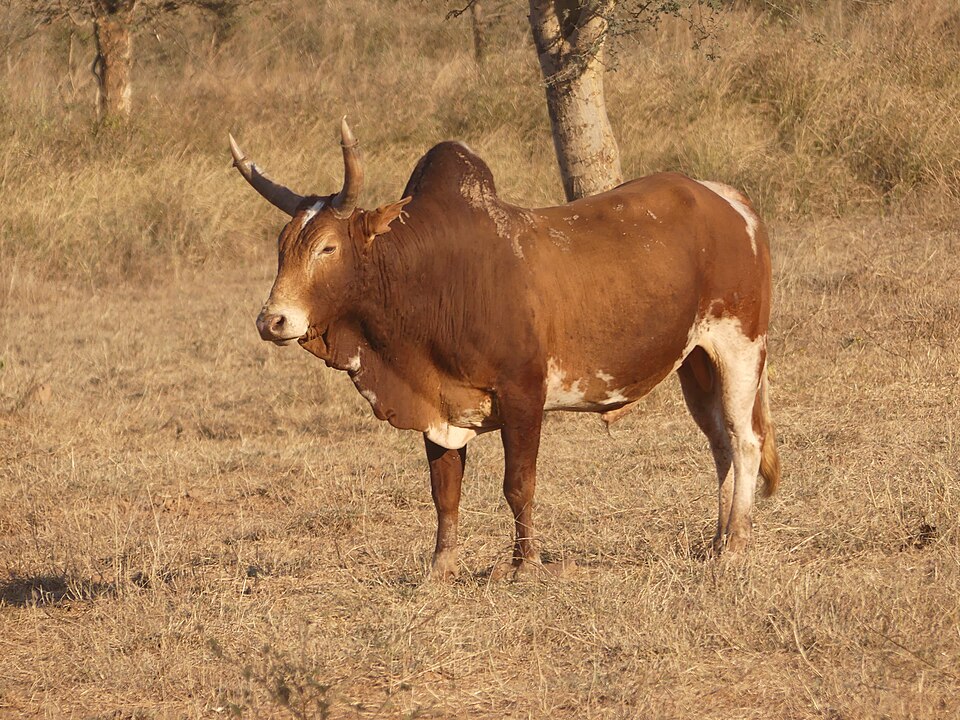
Zebu
Zebu refers to groups of humped domestic cattle of South Asian ancestry. Many breeds, including Brahman and Nelore, draw on this ancestry, so the term differs from one specific breed name. A hump near the shoulders, loose skin beneath the neck and relatively large ears are typical. Size and coat color vary by breed.
Read the guide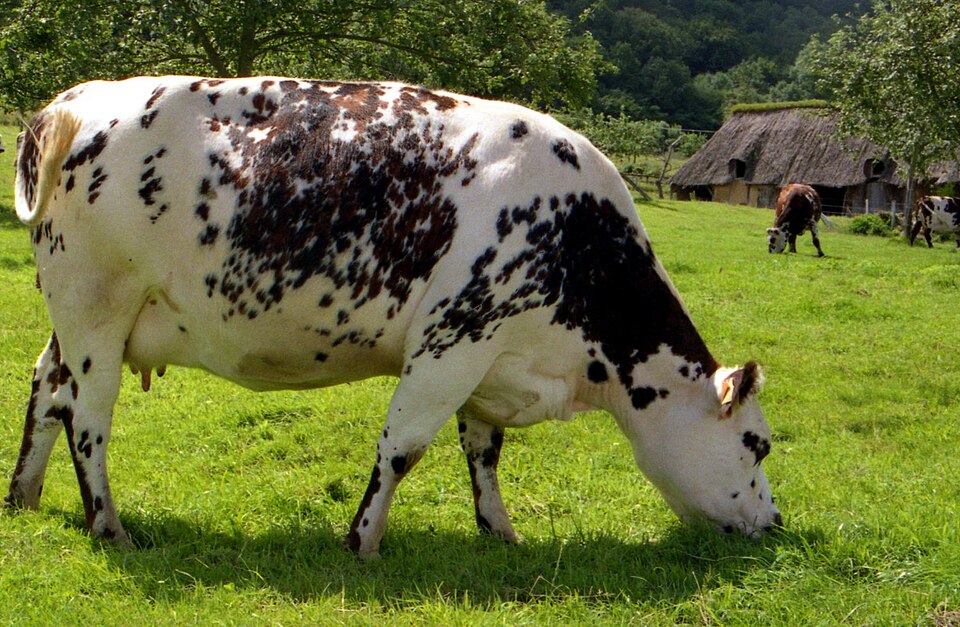
Normande
The Normande is a dual-purpose cattle breed developed in Normandy, France. Improvement has considered both dairy and meat production. Red or brown markings on white and frequently dark patches around the eyes are typical.
Read the guide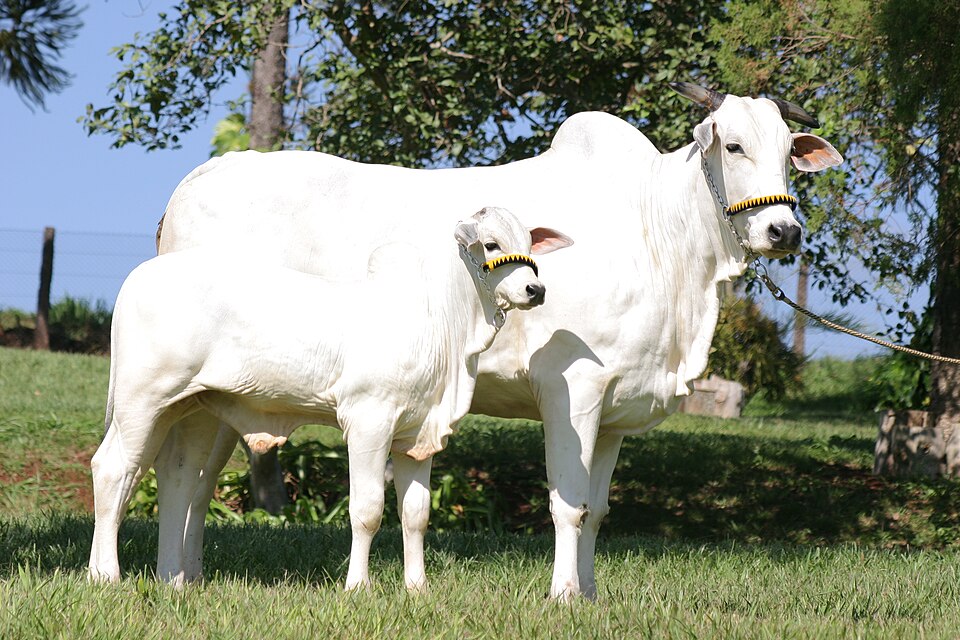
Nelore
The Nelore is zebu-derived beef cattle related to India’s Ongole cattle. It developed into an important breed in South American beef production. White or pale gray coats, a shoulder hump and skin below the neck are common. Ear shape differs from the Brahman’s.
Read the guide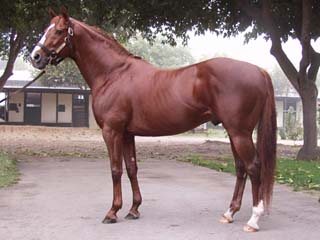
Thoroughbred
The Thoroughbred is a racehorse breed developed in the United Kingdom from Eastern-derived stallions and existing mares. Long legs, a relatively streamlined body, a long neck and defined muscles create a typical impression.
Read the guide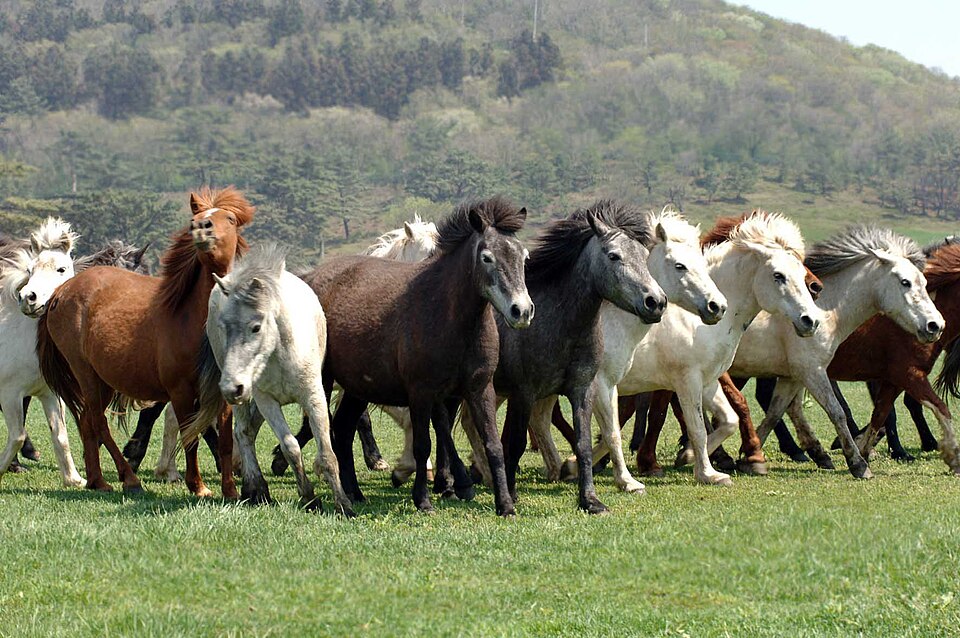
Jeju horse
Jeju horses are native equine genetic resources long used for agriculture and transport on Jeju. Compared with large racehorses, the body is smaller and compact and the legs look relatively short.
Read the guide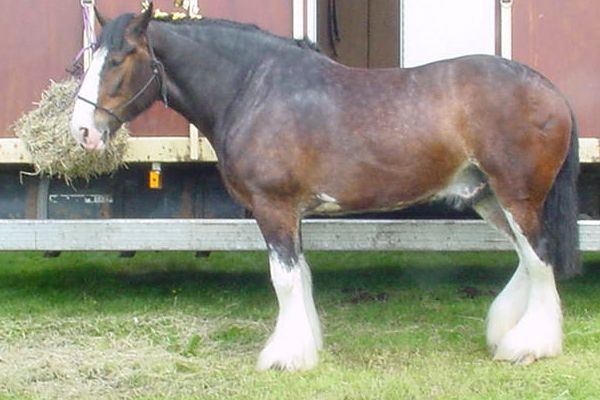
Shire
The Shire is a large draft horse breed associated with agriculture and transport in the United Kingdom. Great height at the withers, a deep body, long legs and abundant hair over the lower legs stand out.
Read the guide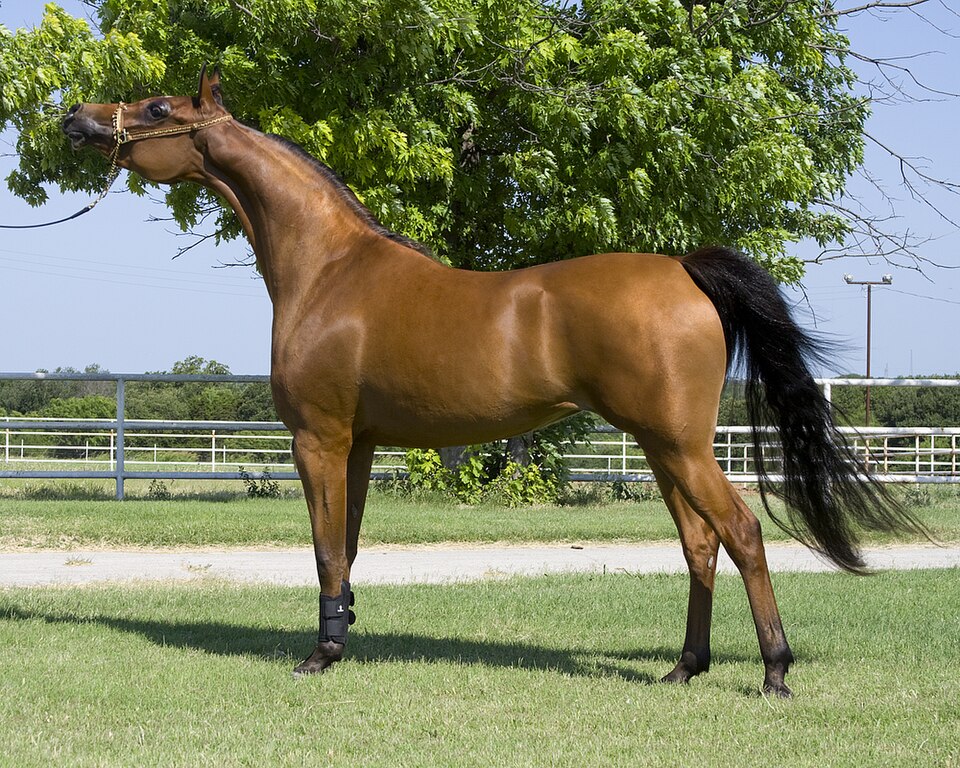
Arabian
The Arabian is deeply connected to horse breeding and movement cultures in West Asia and influenced the formation of several riding and racing breeds. A relatively small head, large eyes, an apparently concave facial profile and a high-carried tail are typical descriptions.
Read the guide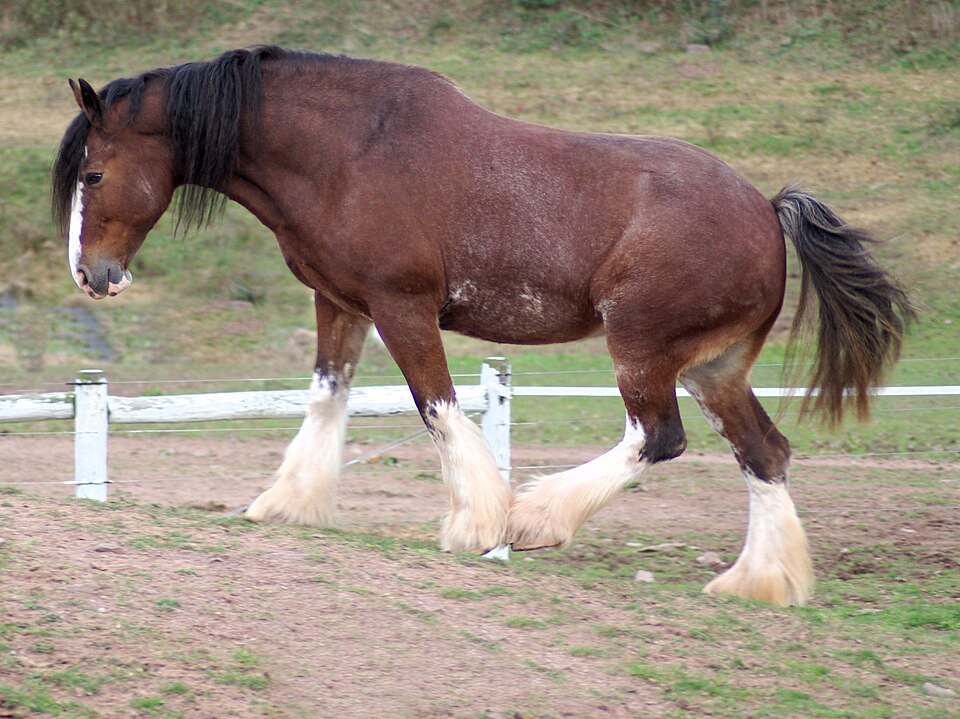
Clydesdale
The Clydesdale is a draft horse breed developed through agriculture and transport in Scotland’s Clyde Valley. A large body, long legs and abundant hair below the fetlocks are characteristic.
Read the guide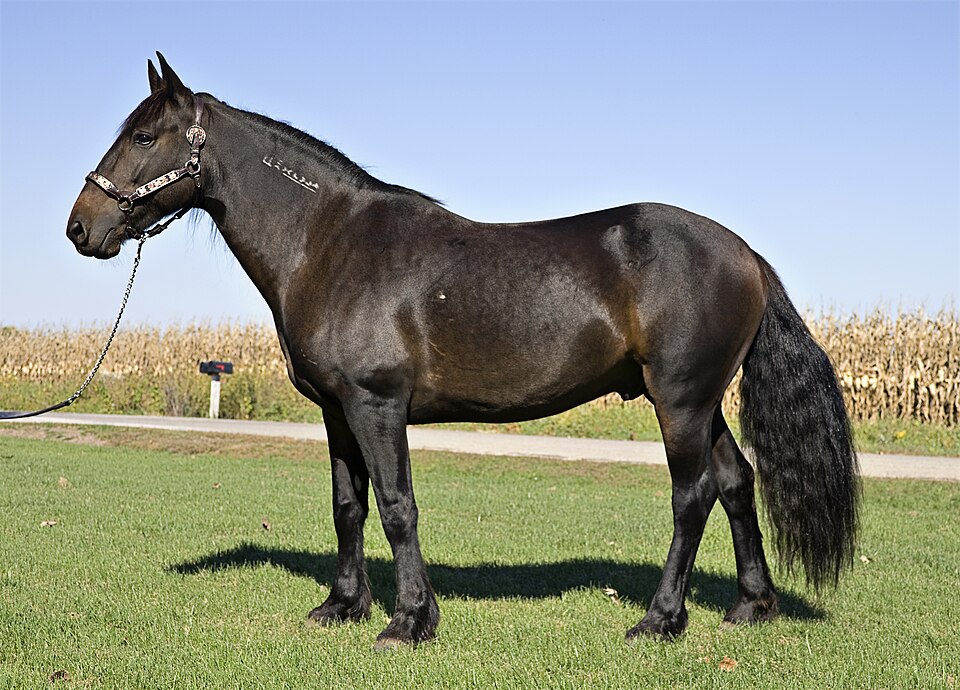
Mustang
Mustang names domestic-horse-derived populations that have lived and bred free-ranging in North America. Build and coat color vary among populations, including bay, black, gray and spotted appearances.
Read the guide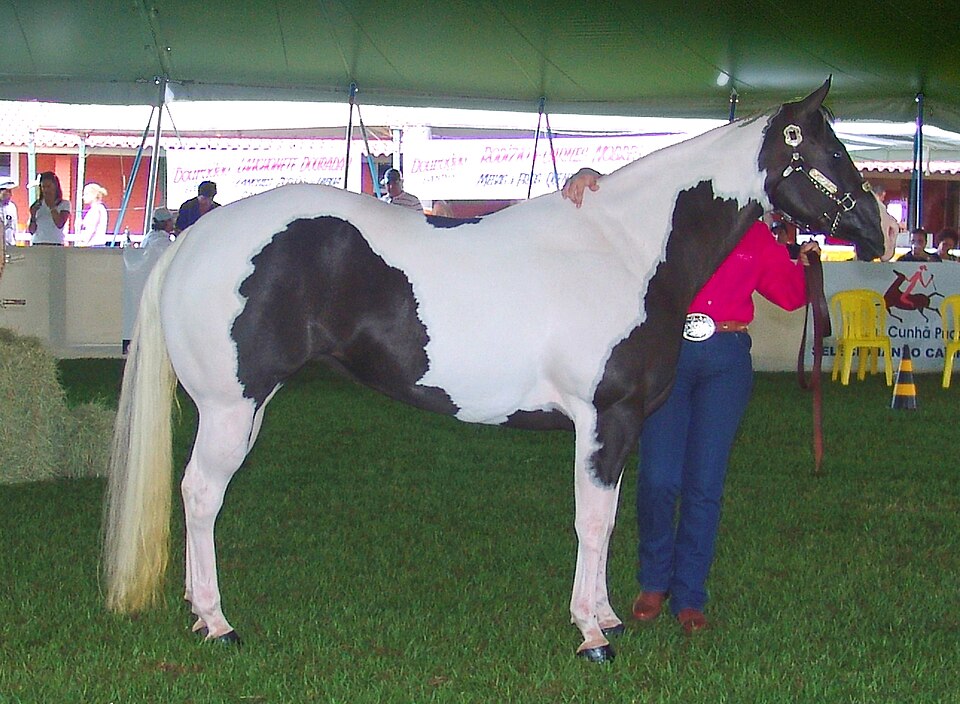
American Paint Horse
The American Paint Horse is a registered breed defined by both ancestry and coat-pattern criteria. Not every domestic horse with a patchy coat belongs to this breed. Large areas of white and another coat color form distinctive patterns that vary between individuals.
Read the guide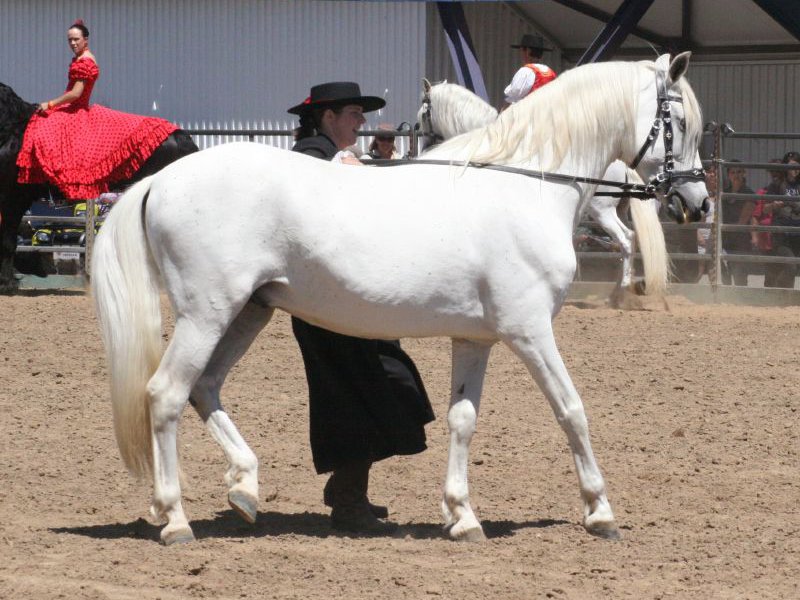
Andalusian
The Andalusian is a riding breed associated with horses of the Iberian Peninsula. Spain's Pura Raza Española registration criteria and the everyday name Andalusian need to be distinguished according to context. A substantial neck, abundant mane and balanced body are characteristic features. Gray is well known, but other coat colors also occur.
Read the guide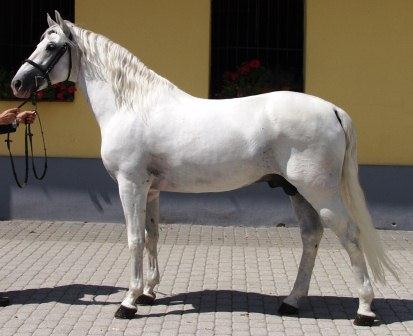
Lipizzan
The Lipizzan is associated with the Lipica stud and Europe's court riding traditions. It is also known through performances at Vienna's Spanish Riding School. Light gray coats are common in adults, while foals are often born dark and become lighter as they grow. Black or brown adults also occur.
Read the guide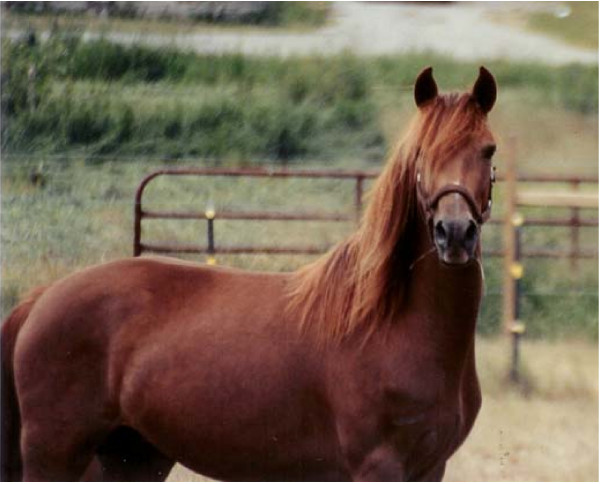
Morgan
The Morgan developed in the United States, with its pedigree history associated with the early stallion Figure. It has served various purposes, including riding and carriage driving. A relatively compact body, powerful neck and balanced legs are characteristic features. Its coat is not limited to one color.
Read the guide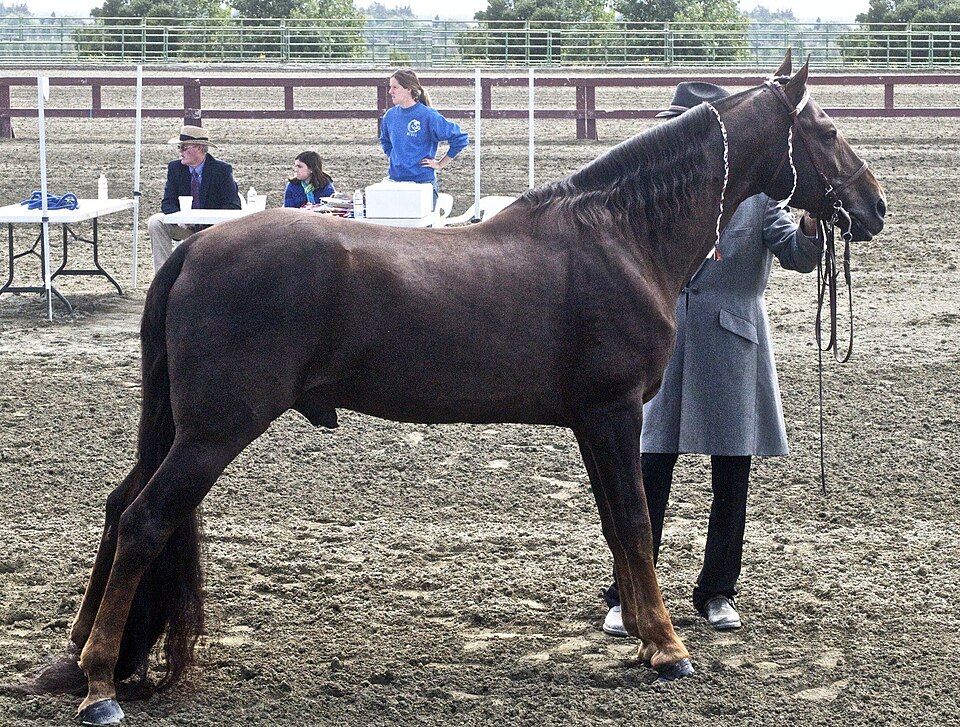
Tennessee Walking Horse
The Tennessee Walking Horse is an American riding breed developed around gait characteristics. Its name relates to a particular walking gait. Coat colors vary; the running walk is a more important distinguishing feature than body shape.
Read the guide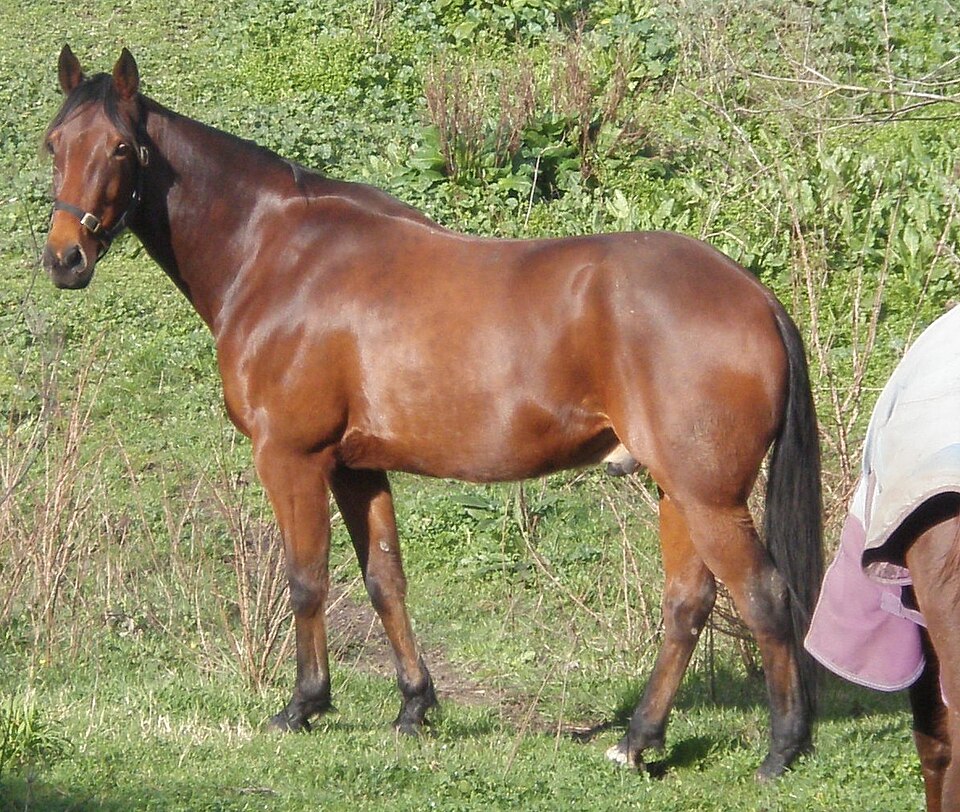
Standardbred
The Standardbred developed around performance records and pedigrees for harness racing. It is a separate breed from the Thoroughbred. Several solid coat colors occur, and the body has been selected for racing and pulling a vehicle. Appearance alone makes it difficult to distinguish trotters from pacers.
Read the guide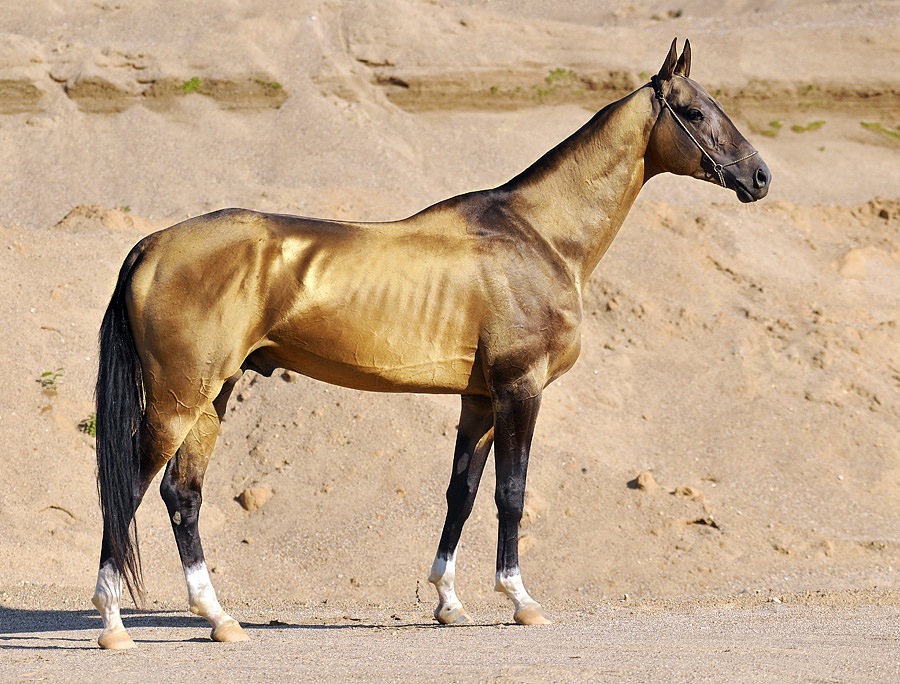
Akhal-Teke
The Akhal-Teke is a Central Asian horse breed closely associated with Turkmenistan. Modern pedigree records need to be distinguished from the history of older regional horses. A slender body, long neck and short, smooth coat are characteristic. Some colors show a metallic sheen, but not every individual is golden.
Read the guide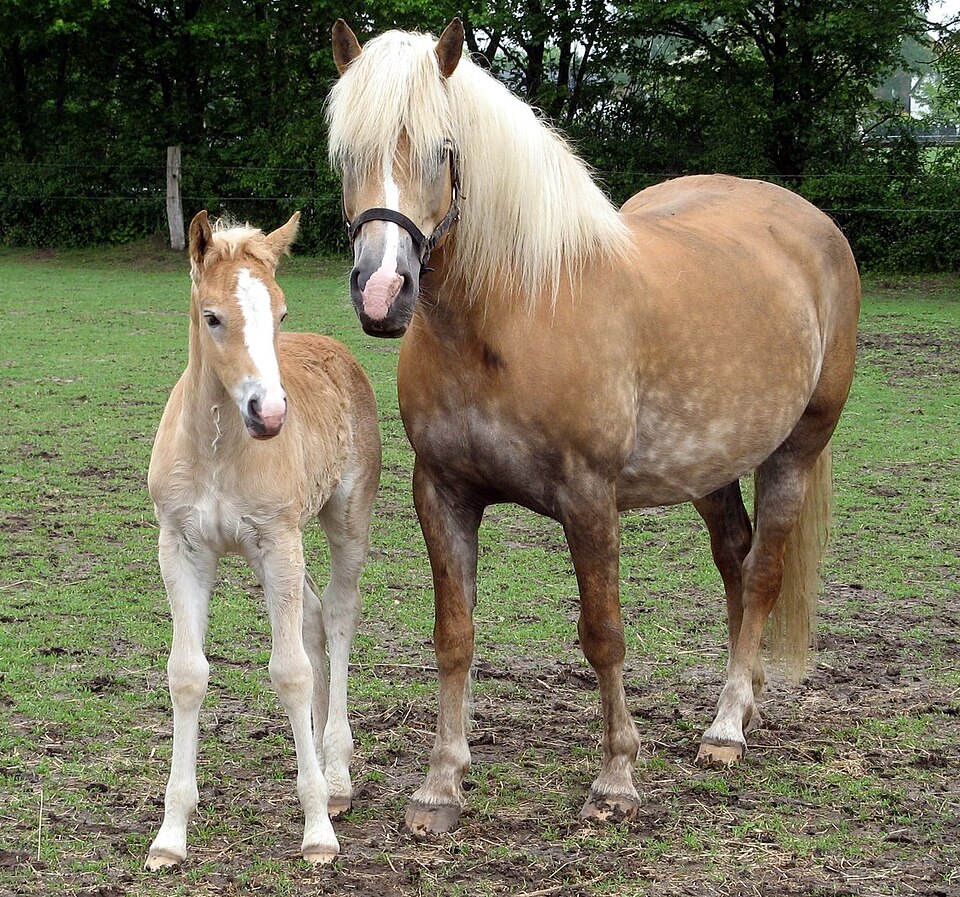
Haflinger
The Haflinger developed in the Tyrol region. Its small size and varied uses often lead to comparisons with larger riding horses. A chestnut coat with a light mane and tail is characteristic. Although relatively small, it has a solid body.
Read the guide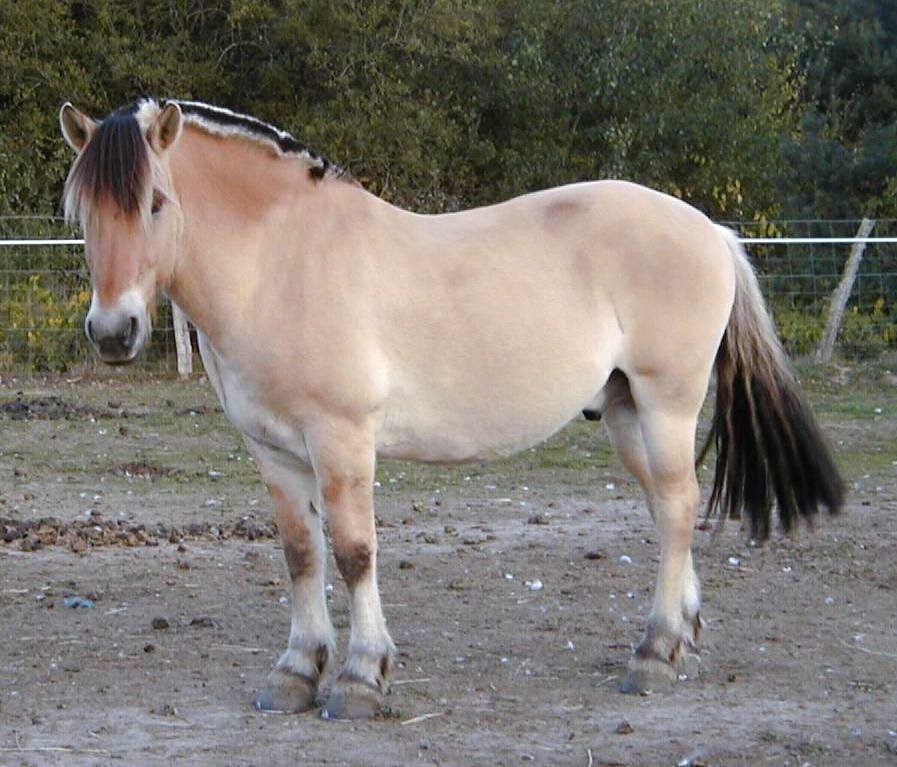
Norwegian Fjord
The Fjord horse developed in Norway. It has been used for farm work, riding and driving. Dun coat colors and a dark stripe along the back are characteristic. A dark band down the center of the mane stands out when the mane is cut short.
Read the guide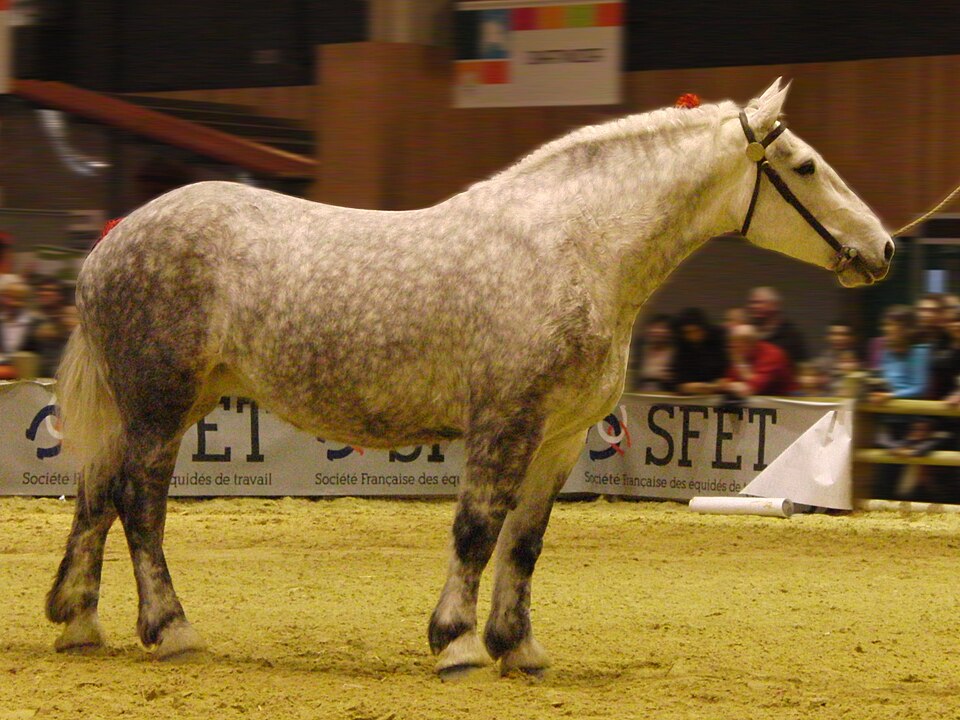
Percheron
The Percheron is a large draft horse developed in the Perche region of France. It was used in farming, transport and carriage work. A large, muscular body and relatively strong legs are characteristic; black and gray coats are well known.
Read the guide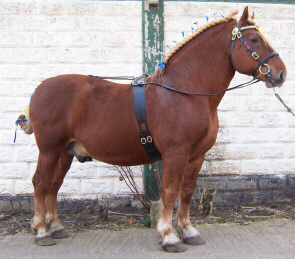
Suffolk Punch
The Suffolk Punch is an agricultural draft horse from Suffolk, England. It is one of the traditional livestock breeds managed by conservation organizations. A chestnut coat, deep body and powerful shoulders are characteristic. Its appearance can be compared with other draft horses that have extensive feathering around the lower legs.
Read the guide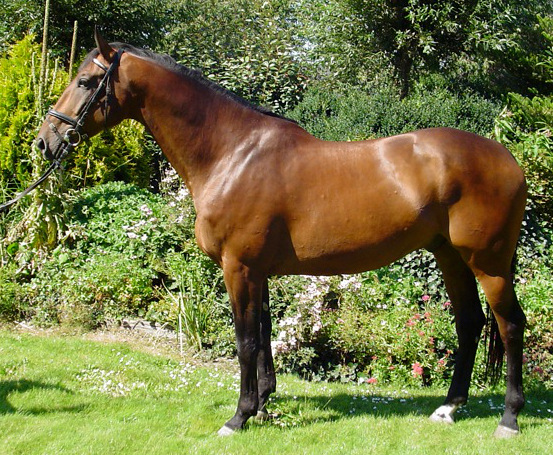
Dutch Warmblood
The Dutch Warmblood is a horse population selected in the Netherlands for sporting purposes. Warmblood is not a biological classification describing mammalian body temperature. Selection criteria for build differ by purpose, such as dressage or jumping. Coat color alone cannot identify the breed.
Read the guide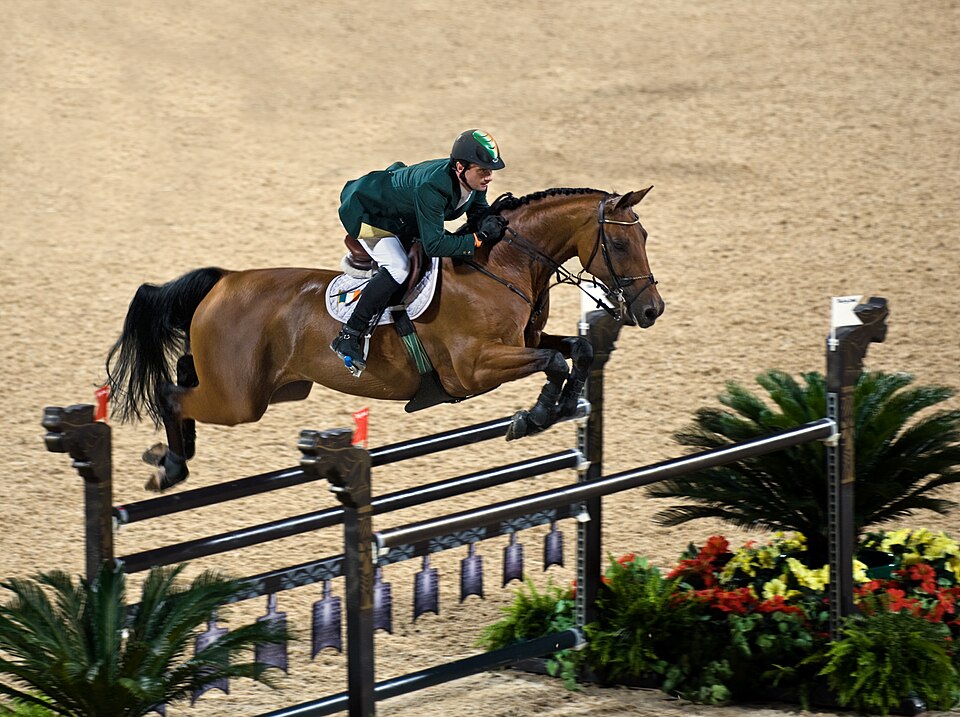
Hanoverian
The Hanoverian is a registered warmblood population developed in Germany's Hanover region. Modern selection for equestrian sport is important. Coat colors vary and the body is solidly built; balance between the head, neck and legs is considered in registration and assessment.
Read the guide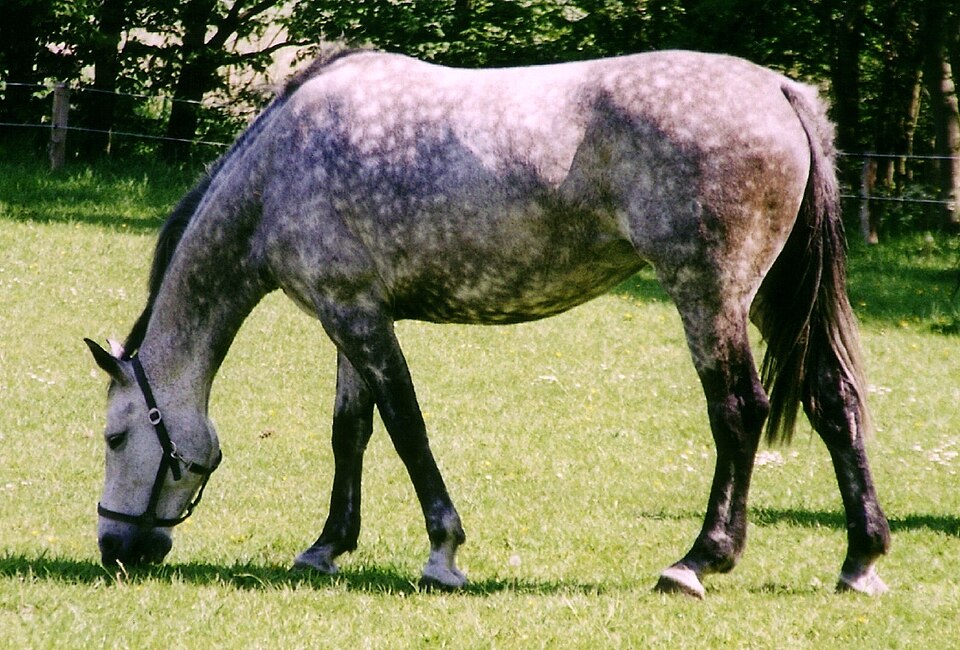
Holsteiner
The Holsteiner developed in northern Germany. It is a different animal from Holstein dairy cattle, which share a regional name. Selection emphasizes muscles and leg structure suited to sport, while coat color and size vary between individuals.
Read the guide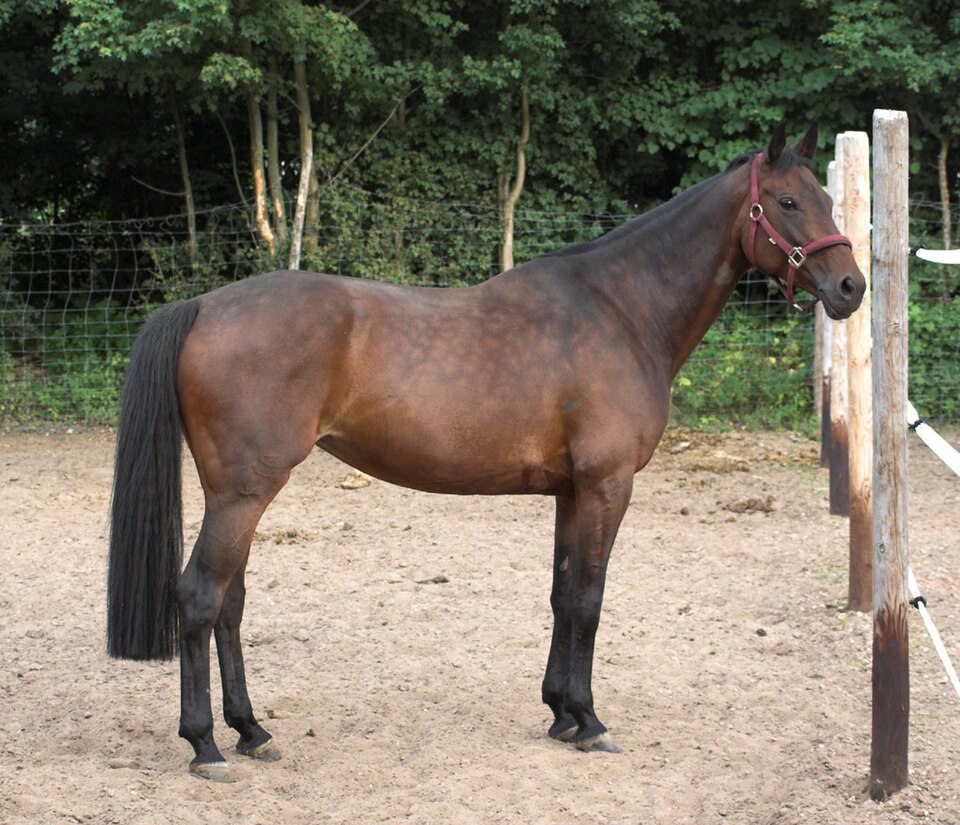
Oldenburg
The Oldenburg is a registered horse population developed in Germany, connecting a carriage-horse history with modern sport-horse breeding. Modern selection favors a body suited to sport, with diverse bloodlines and coat colors.
Read the guide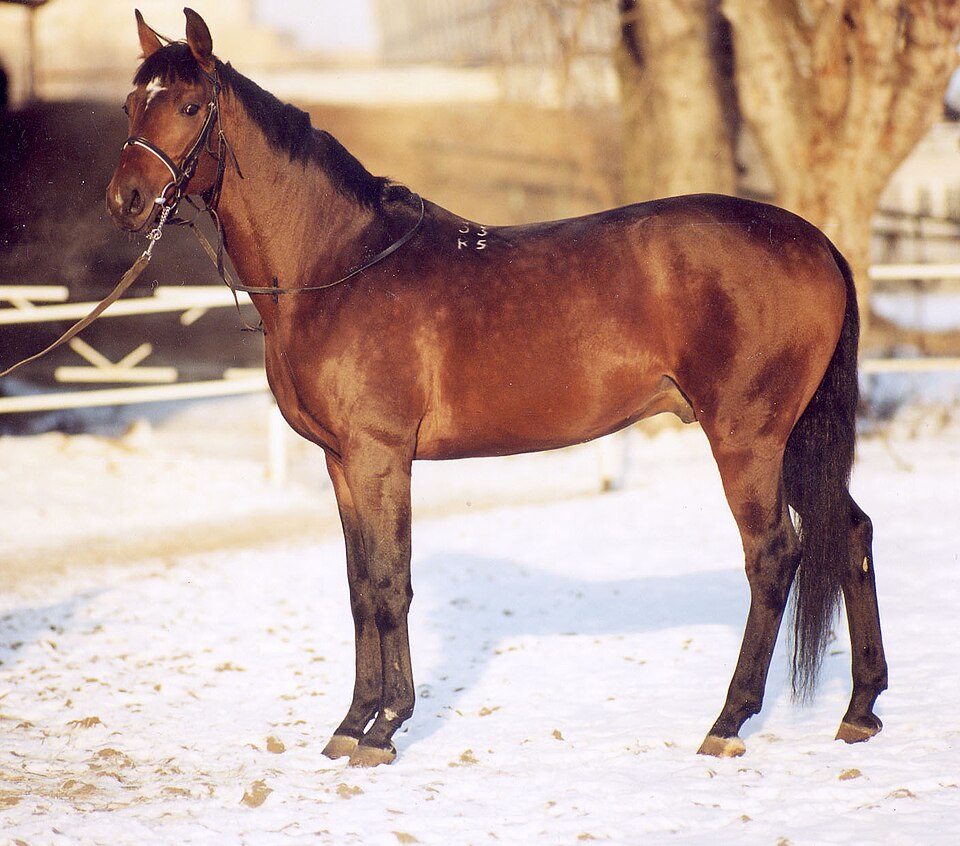
Trakehner
The Trakehner is a warmblood associated with the Trakehnen stud in former East Prussia. Its bloodlines survived war and migration and were preserved in several regions. A relatively refined head and balanced riding conformation are characteristic. Coat colors vary.
Read the guide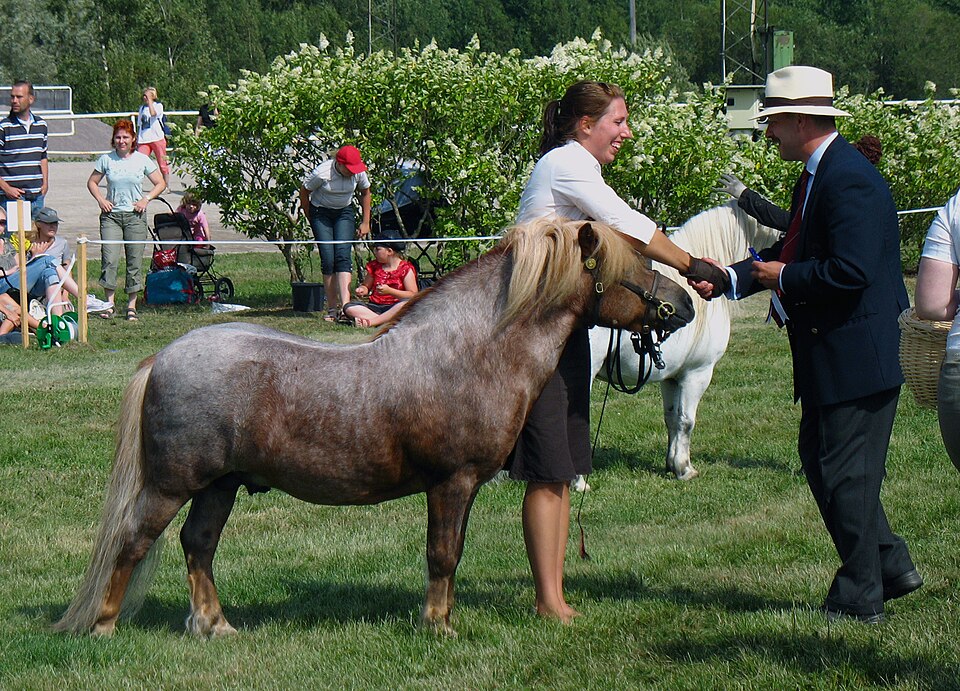
Shetland Pony
The Shetland Pony is a small horse developed in northern islands. Historically used for transport and work, it developed into different registered populations in several countries. Low height at the withers, a compact body and a thick coat are characteristic. Adults retain a small build and must be distinguished from foals.
Read the guide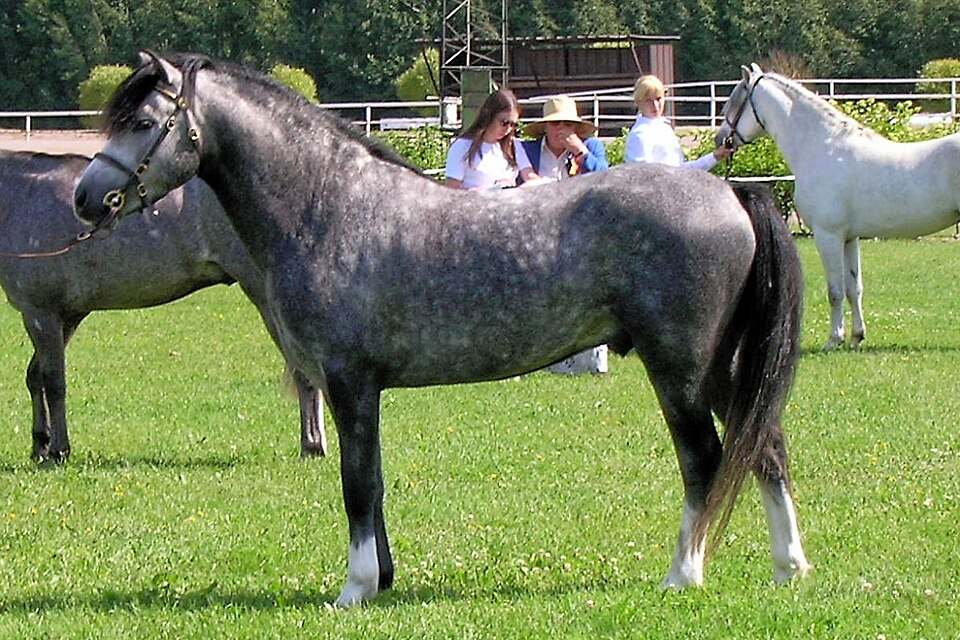
Welsh Pony
Welsh Ponies and Cobs are registered populations developed in Wales. Registries distinguish several sections by size and build. Build ranges widely, from small ponies to larger cobs. One fixed weight cannot apply to the entire population.
Read the guide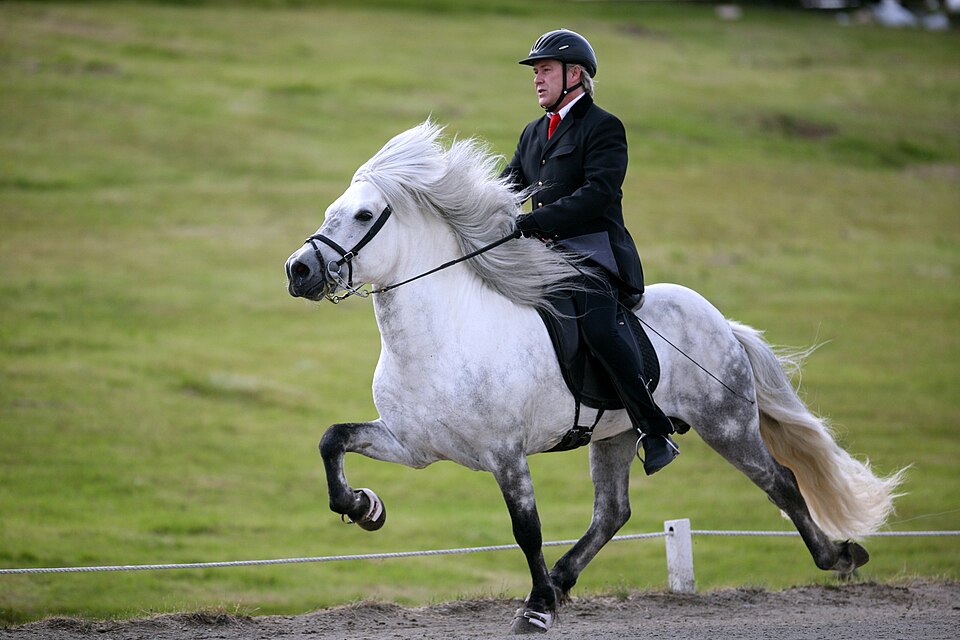
Icelandic Horse
The Icelandic Horse is a breed conserved and developed in Iceland. Despite its small size, the name horse is generally used rather than pony. A thick coat, abundant mane and various coat colors occur. Coat thickness varies seasonally.
Read the guide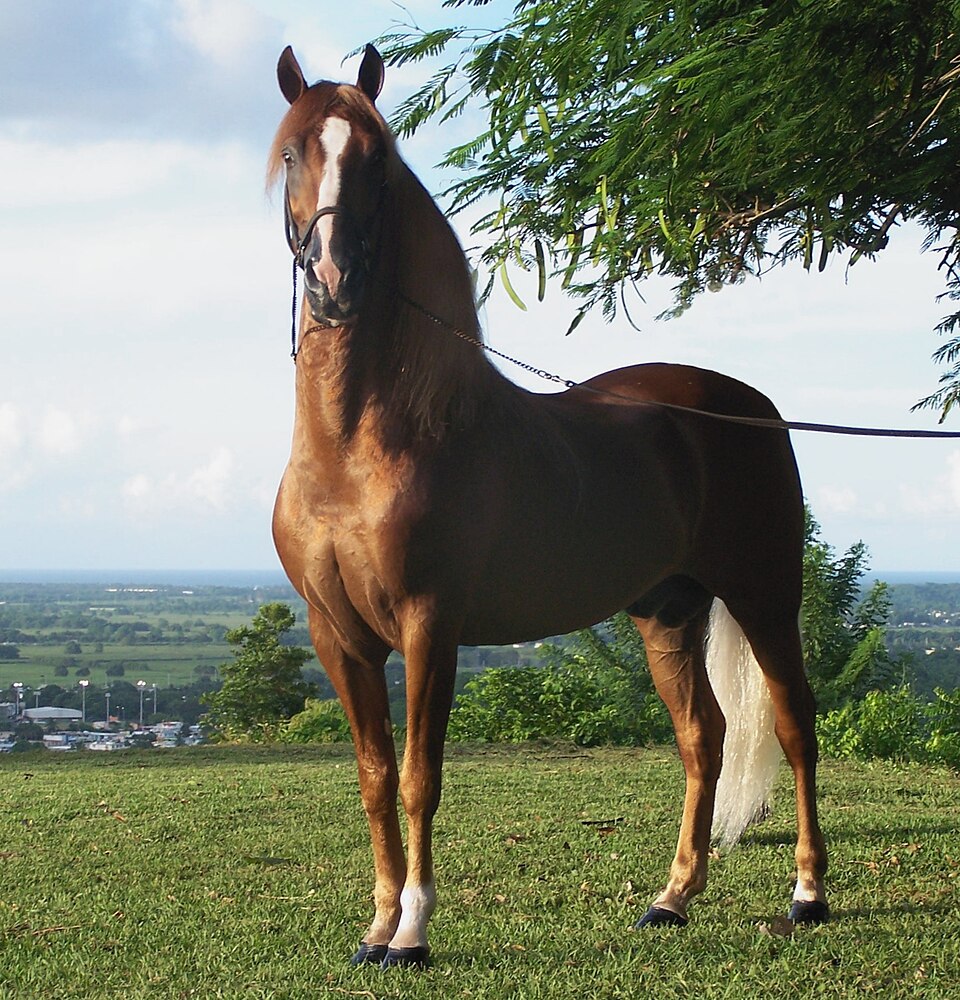
Paso Fino
The Paso Fino developed in Latin America from descendants of Spanish horses. Histories of Puerto Rican and Colombian lines are sometimes distinguished. Colors and sizes vary; the distinctive four-beat gait matters more than appearance.
Read the guide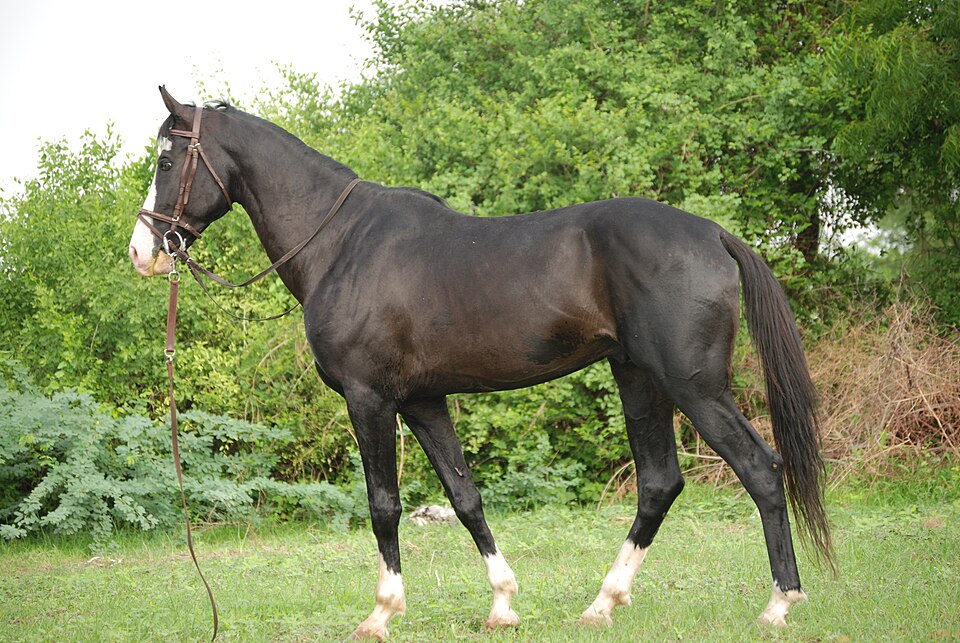
Marwari
The Marwari is associated with regional horses of Rajasthan, India. It has been used in local culture and riding traditions, and several accounts of its precise origins exist. Inward-curving ear tips that approach one another are a characteristic feature. Coat color and build vary between individuals.
Read the guide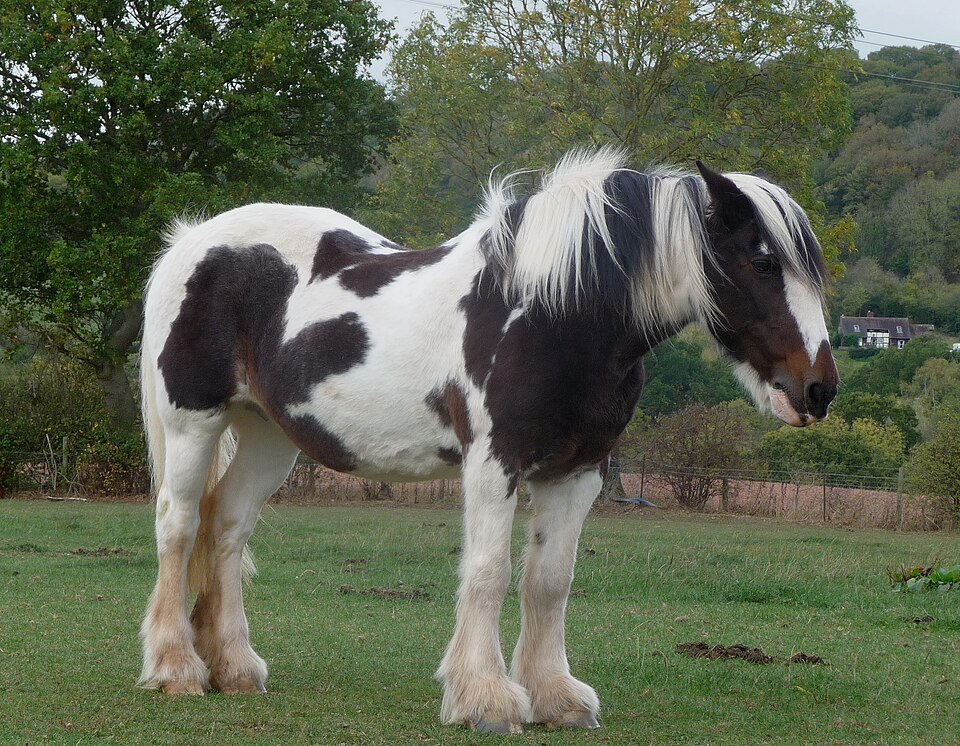
Pinto horse
Pinto describes a horse's pattern of large areas of white mixed with another coat color. The existence of registering organizations does not make it a single breed descending from one common ancestor. Different pattern names describe the positions and edges of white patches. Body size and mane shape also vary with the underlying breed.
Read the guide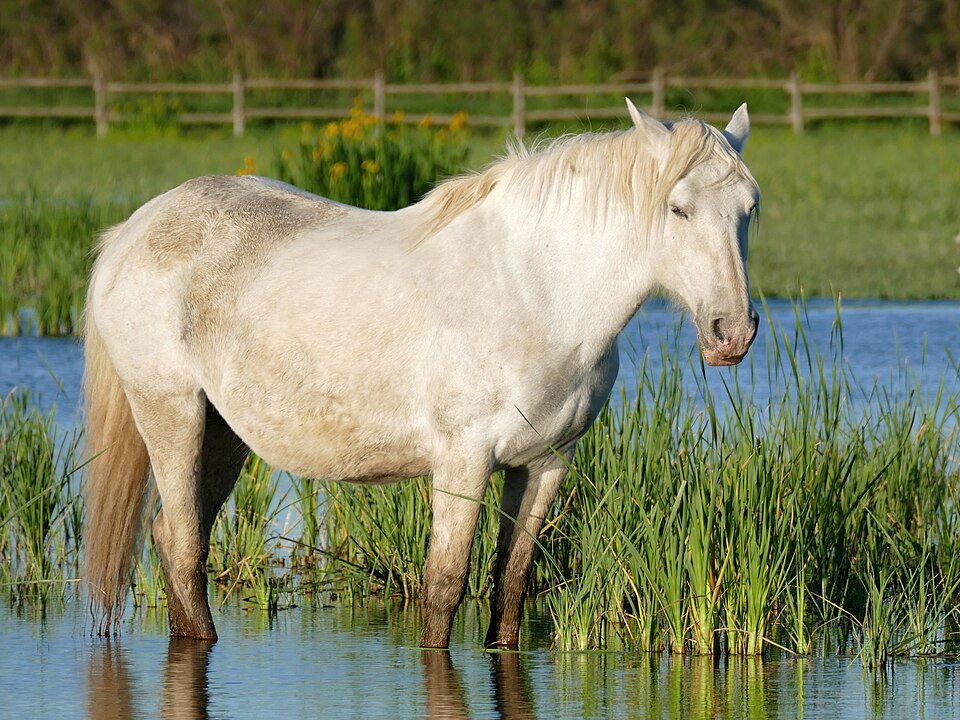
Camargue Horse
The Camargue horse is associated with the wetlands of the Rhône delta in southern France. It was used locally for riding while handling livestock. Adults are commonly gray, while foals are born dark. A compact body and conformation adapted to the regional environment are characteristic.
Read the guide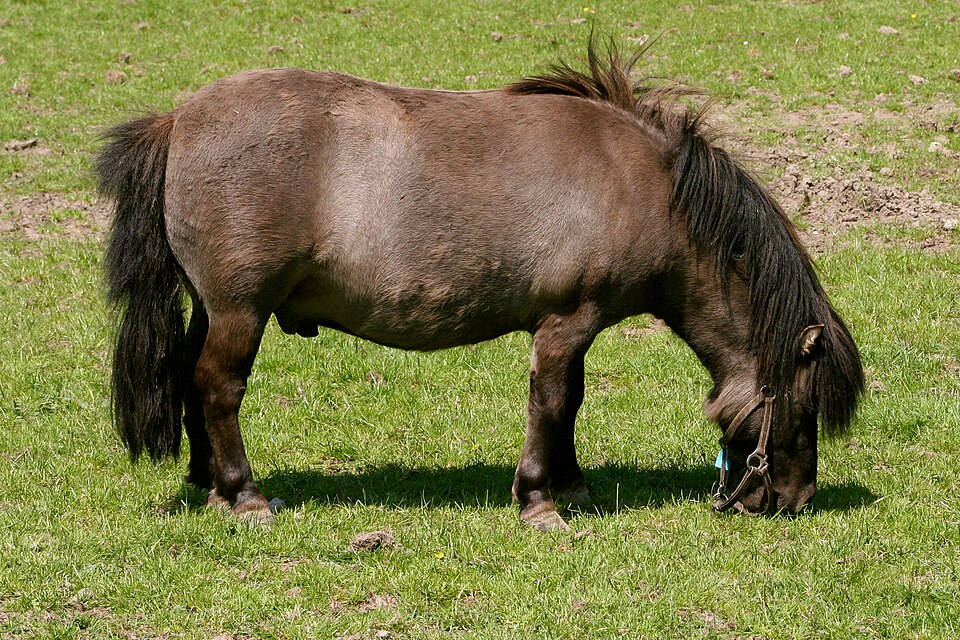
Falabella
The Falabella is a horse line developed in Argentina by selecting for small body size. Not every small horse is called a Falabella. Adults retain a very small height at the withers, with varied coat colors. Body proportions are not simply those of a large horse’s foal.
Read the guide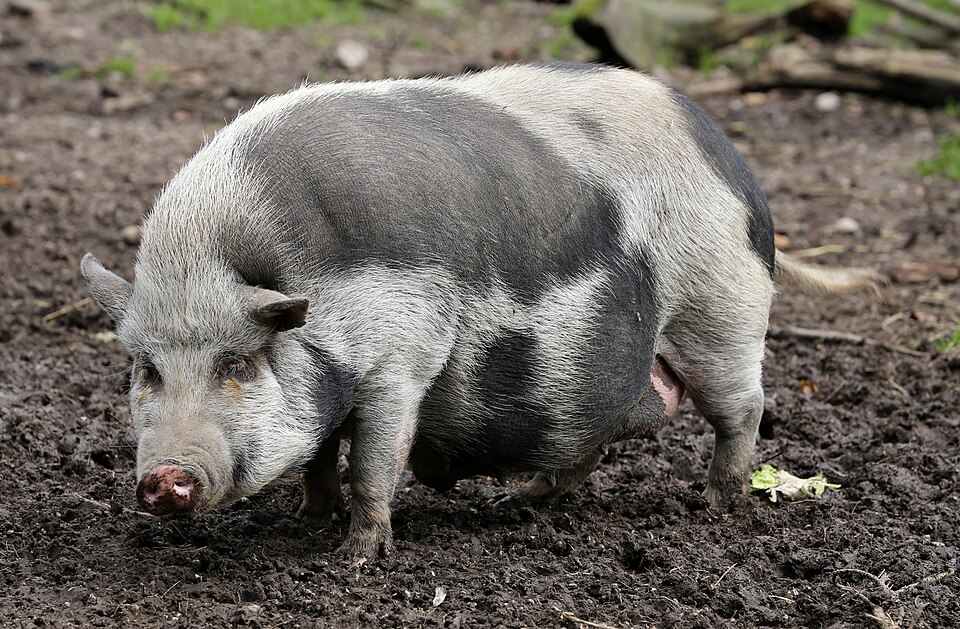
Miniature pig
Miniature pig is not an internationally uniform breed name referring to only one bloodline. Coat color, ear shape and proportions of the snout and body differ between lines.
Read the guide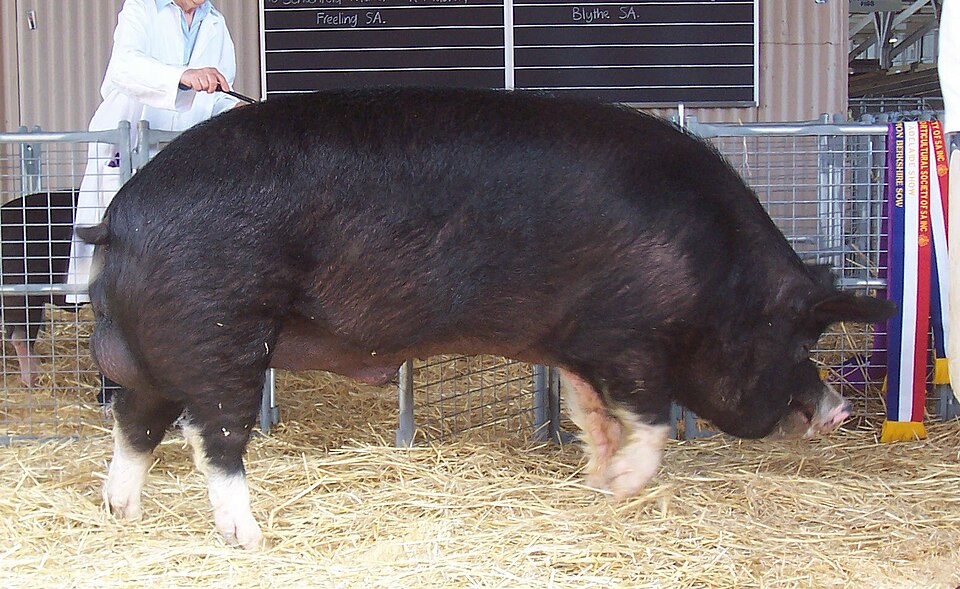
Berkshire
The Berkshire is a domestic pig breed developed in England's Berkshire region. A black body with white on the face, feet and tail tip, together with upright ears, is characteristic.
Read the guide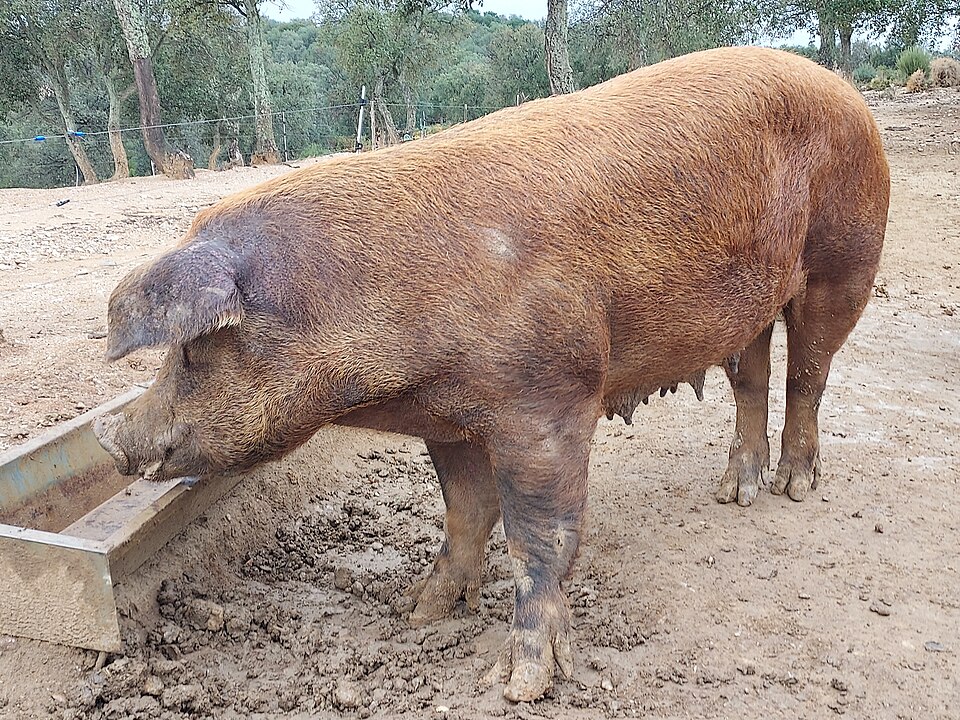
Duroc
The Duroc is a domestic pig breed developed from red pig lines in the United States. Coats range from light reddish brown to deep red-brown, and forward-drooping ears are characteristic.
Read the guide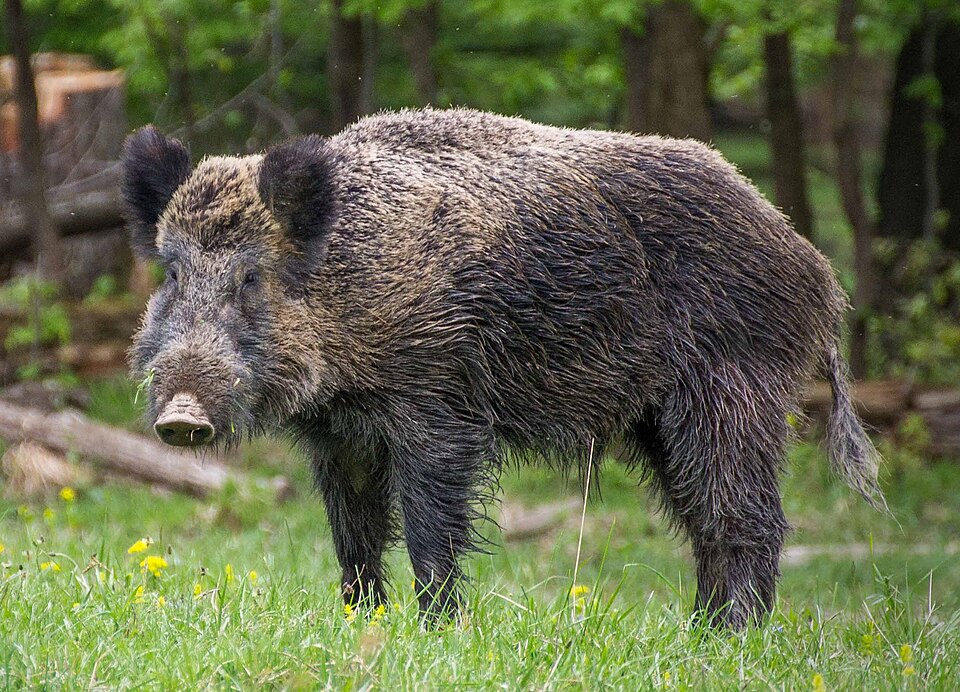
Wild boar
The wild boar is a wild species in the pig family, linked to the history of pig domestication. A long snout, coarse hair and a substantial neck and forequarters are characteristic.
Read the guide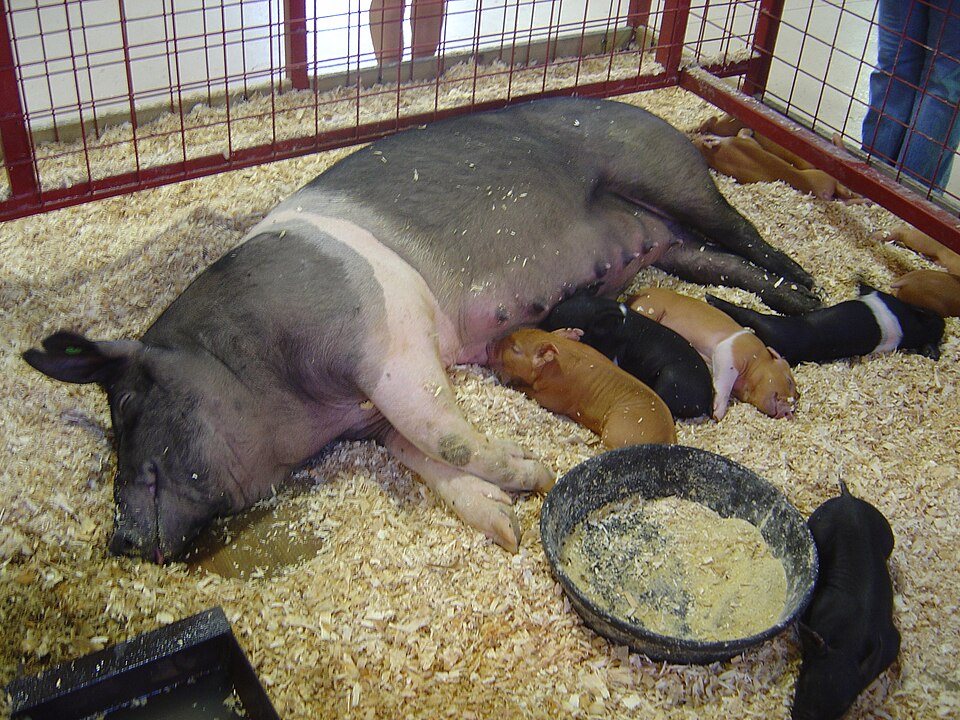
Hampshire
The Hampshire is a domestic pig breed registered and developed in the United States from lines introduced from Britain. A white belt across the shoulders and forelegs of a black body, with upright ears, is characteristic.
Read the guide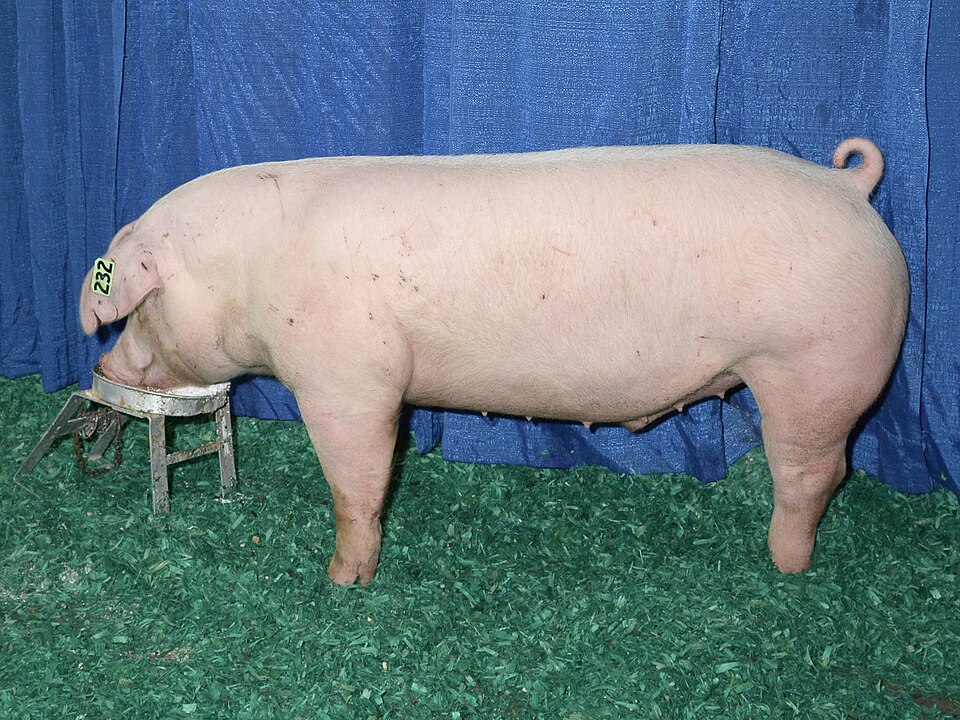
Landrace pig
Landrace is a domestic pig lineage with registered, selectively bred populations in several countries. Light skin, white hair, a long body and forward-drooping ears are characteristic.
Read the guide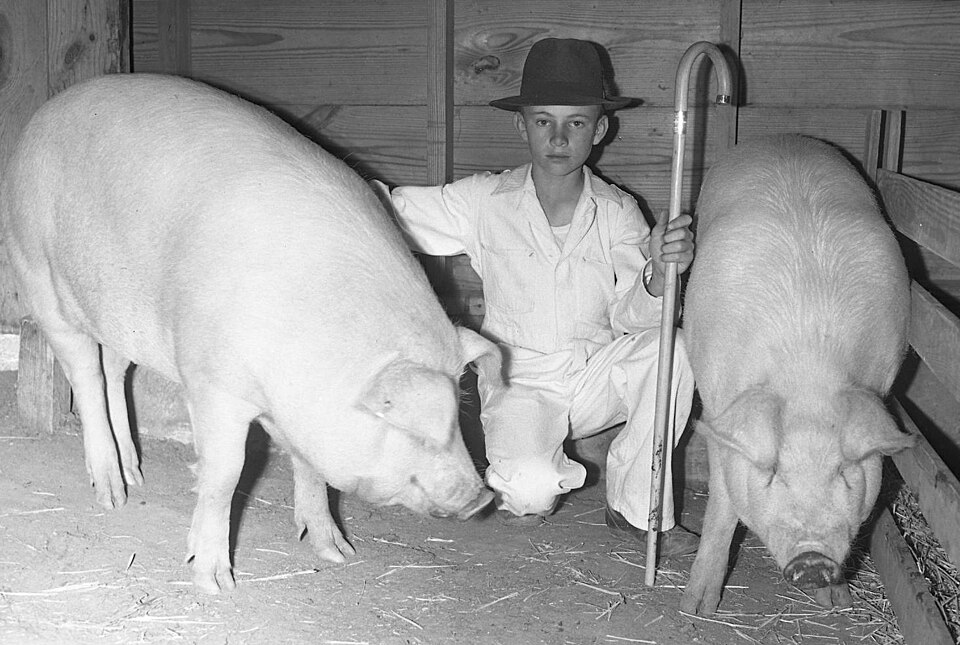
Chester White
The Chester White is a domestic pig breed developed in Pennsylvania, United States. It was selectively bred using several white pig lines. White hair and drooping ears are characteristic. Comparison with upright-eared Yorkshire lines helps reveal distinguishing features.
Read the guide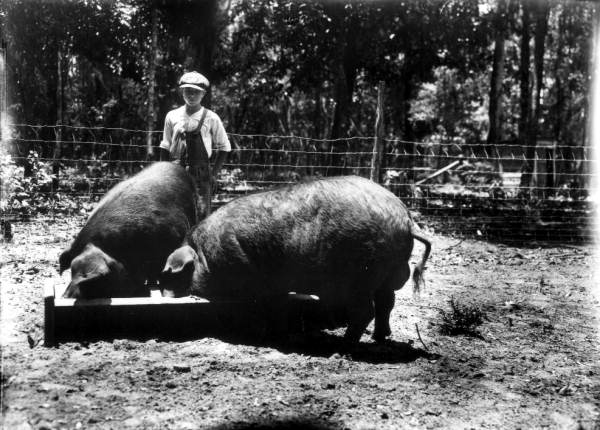
Poland China
The Poland China is a pig breed developed in Ohio, United States. Its name should not be taken to describe a single breed originating directly in Poland or China. A black body with white on the face, feet and tail tip, and drooping ears, is characteristic.
Read the guide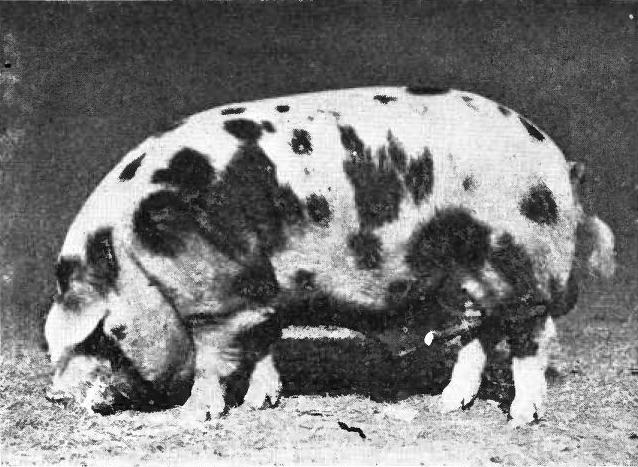
Spotted pig
The Spotted is an American spotted domestic pig breed. Its breeding history relates to several lines, including Poland China. Irregular black-and-white patches and drooping ears are characteristic.
Read the guide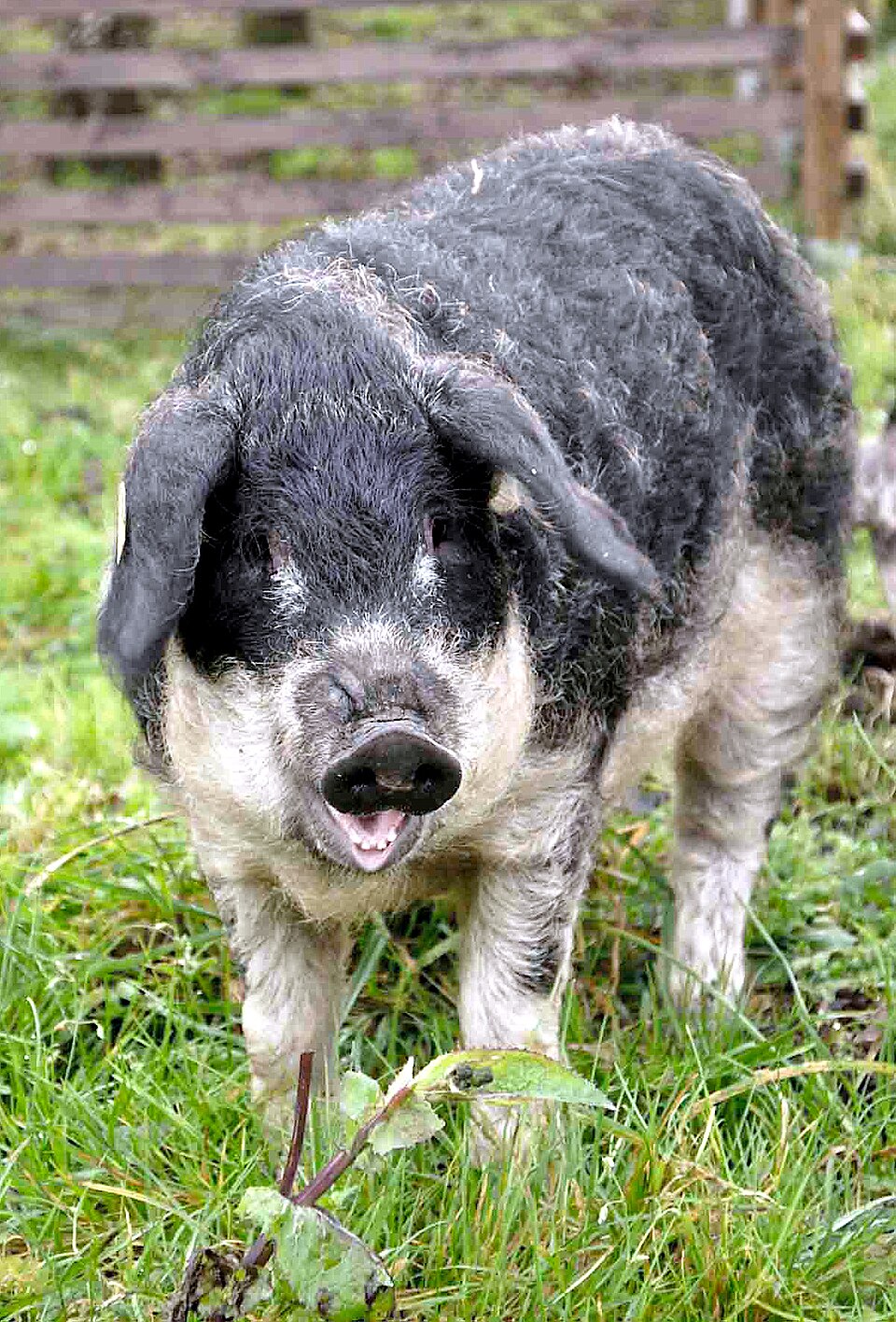
Mangalica
The Mangalica is a traditional domestic pig breed developed in Hungary. Its selection history differs from that of modern lean-meat breeds. Curly hair is characteristic, with lines of different coat colors and patterns. Despite a sheep-like appearance, it is a pig.
Read the guide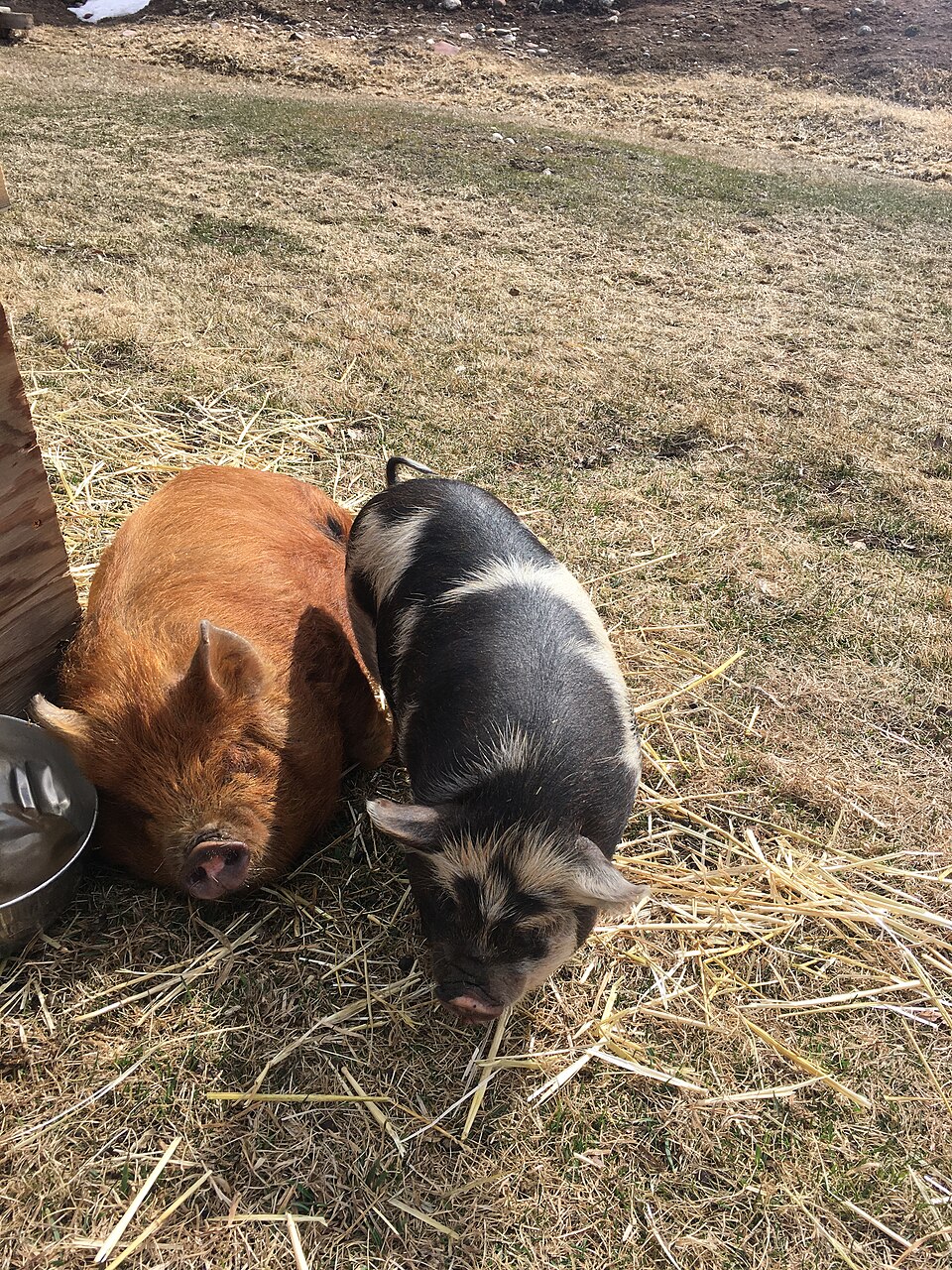
Kunekune
The Kunekune is a small-bodied domestic pig breed conserved in New Zealand. Its history is connected with Māori communities there. A short snout and varied coat colors occur, with some individuals having fleshy hanging projections beneath the jaw.
Read the guide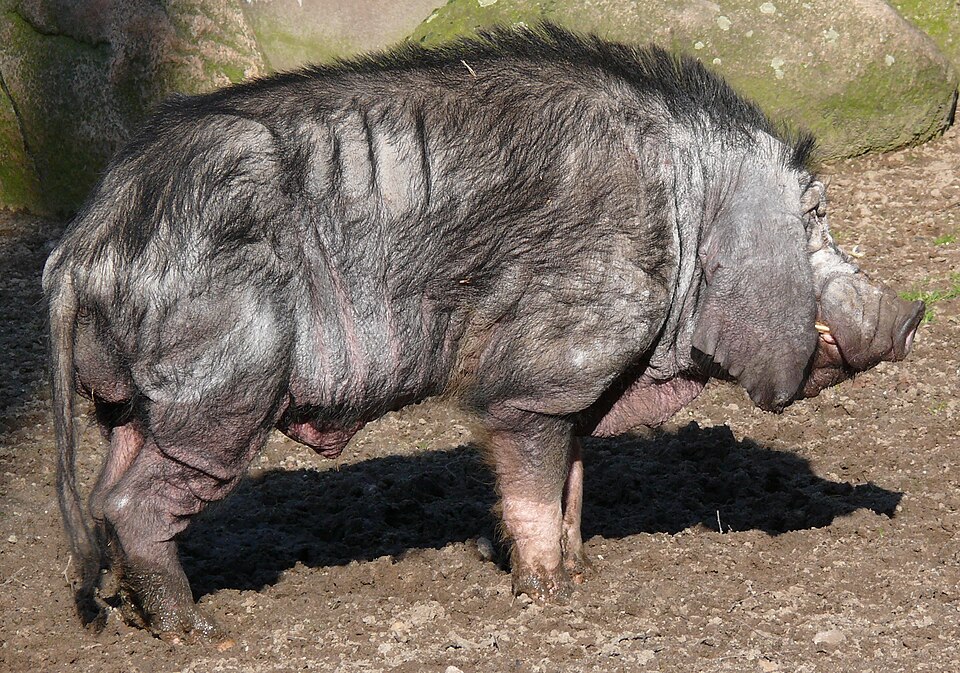
Meishan
The Meishan is a domestic pig breed associated with China's Taihu group. Its reproductive traits have led to research and use in other pig populations. Skin folds, large drooping ears and dark skin are conspicuous.
Read the guide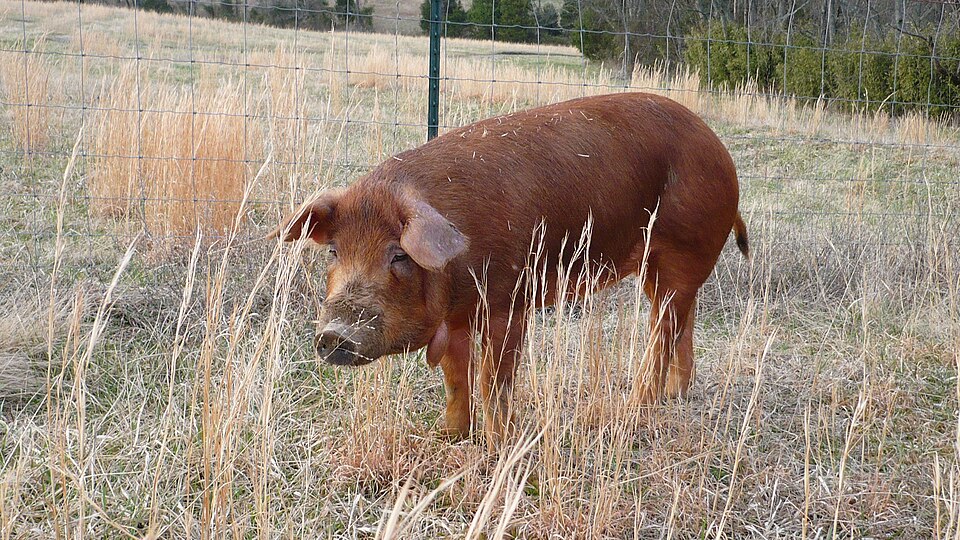
Red Wattle
The Red Wattle is a traditional domestic pig breed conserved in the United States. Its early origins are uncertain, so a single ancient origin should not be asserted. A red coat and a pair of hanging projections beneath the neck are characteristic. Wattle in the name refers to these projections.
Read the guide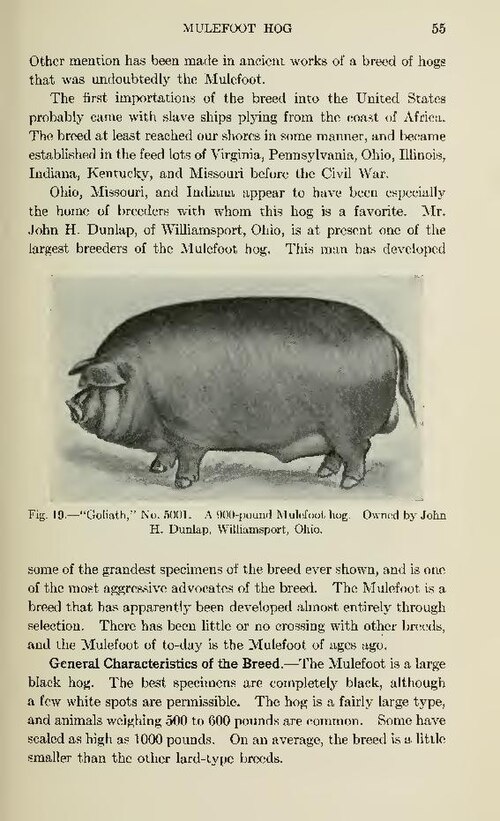
Mulefoot
The Mulefoot is a domestic pig breed conserved in the United States. Modern registration and pig-farming records are better known than its precise early origins. An undivided, fused-looking hoof is the principal distinguishing feature. Most have black coats and drooping ears.
Read the guide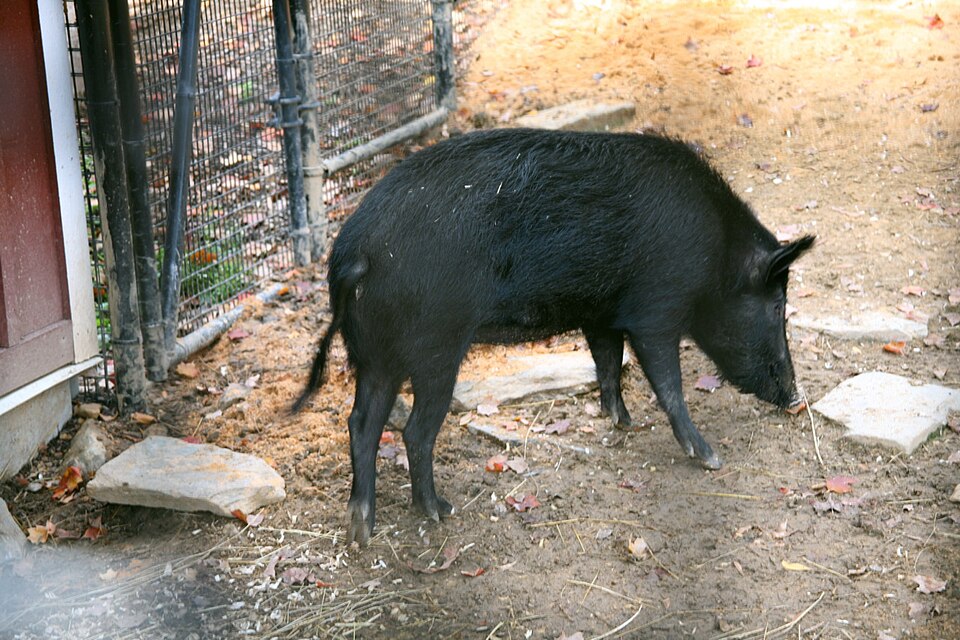
Ossabaw Island pig
Ossabaw Island pigs developed from domestic pig lines remaining on the island. They are known through research into adaptation to a limited island environment and livestock conservation. Size and coat color vary, with a selection history different from commercial meat pigs. Black and spotted appearances occur.
Read the guide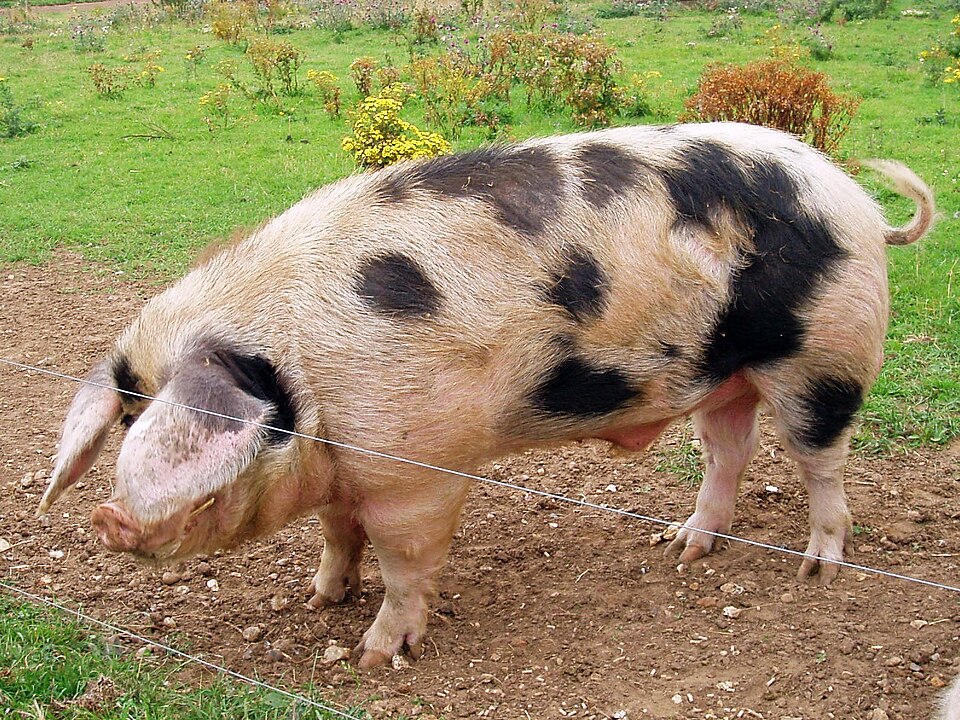
Gloucestershire Old Spots
The Gloucestershire Old Spots is a traditional British domestic pig breed. Its husbandry history is associated with farm environments such as orchards. Black spots on a white body and large drooping ears are characteristic. Spot positions differ individually.
Read the guide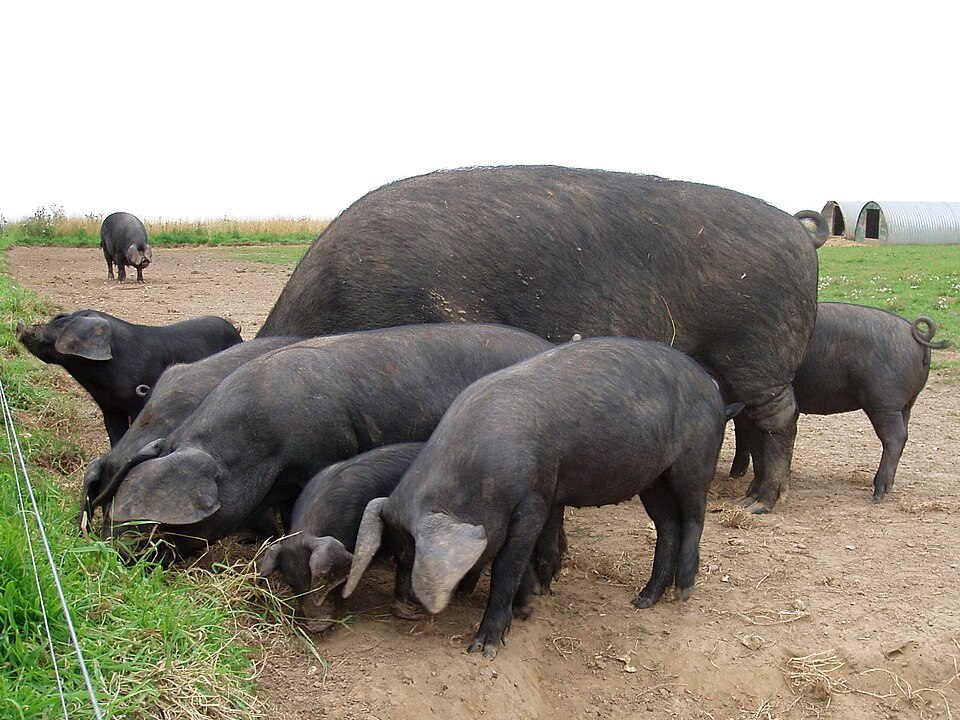
Large Black
The Large Black is a black domestic pig breed developed in Britain. It is conserved as traditional livestock and has a history connected to outdoor pig husbandry. The body and skin are black, and large drooping ears sometimes partly cover the eyes.
Read the guide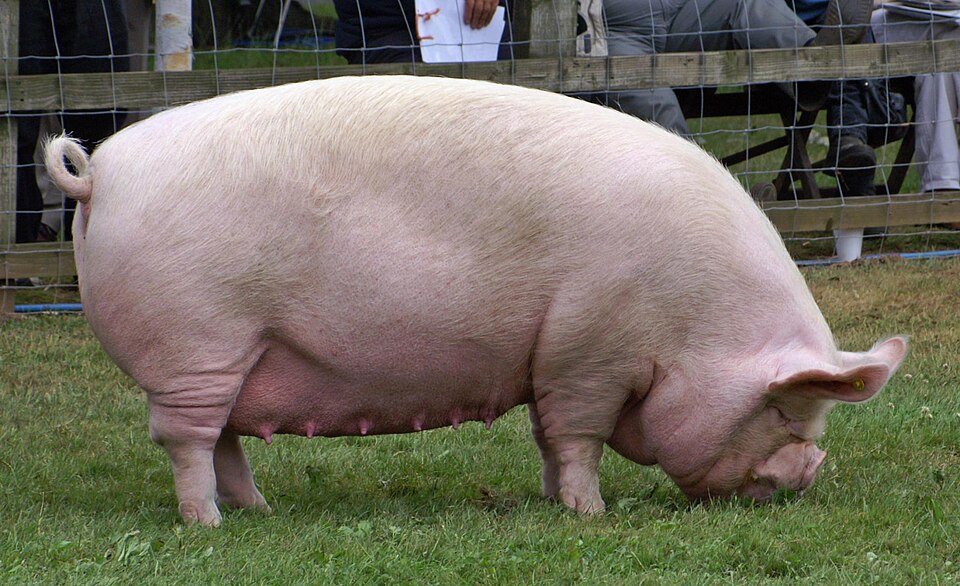
Middle White
The Middle White is a white domestic pig breed developed in Britain. It is a separate breed from the Large White. A short, upturned snout, white body and upright ears are characteristic.
Read the guide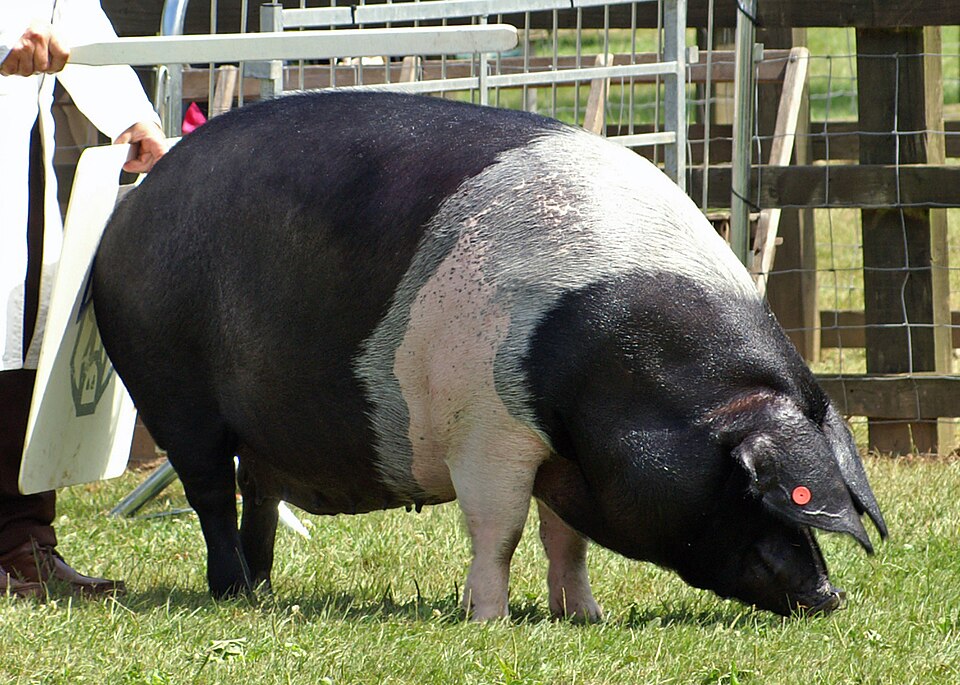
British Saddleback
The British Saddleback developed through combining Britain's Essex and Wessex Saddleback lines. A white belt crosses the shoulders and forelegs of the black body, and the ears droop.
Read the guide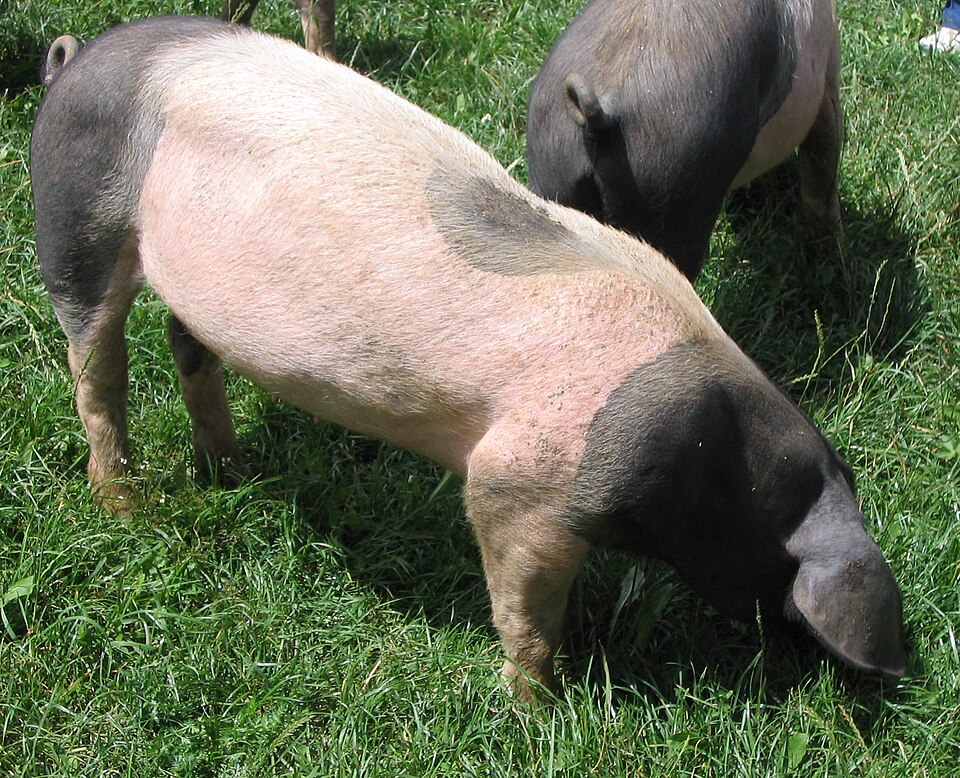
Swabian-Hall Pig
The Swabian-Hall is a traditional domestic pig breed from the Schwäbisch Hall region of Germany. It is connected with registration by regional breeding and conservation organizations. A typical pattern contrasts a black head and hindquarters with a light-colored middle.
Read the guide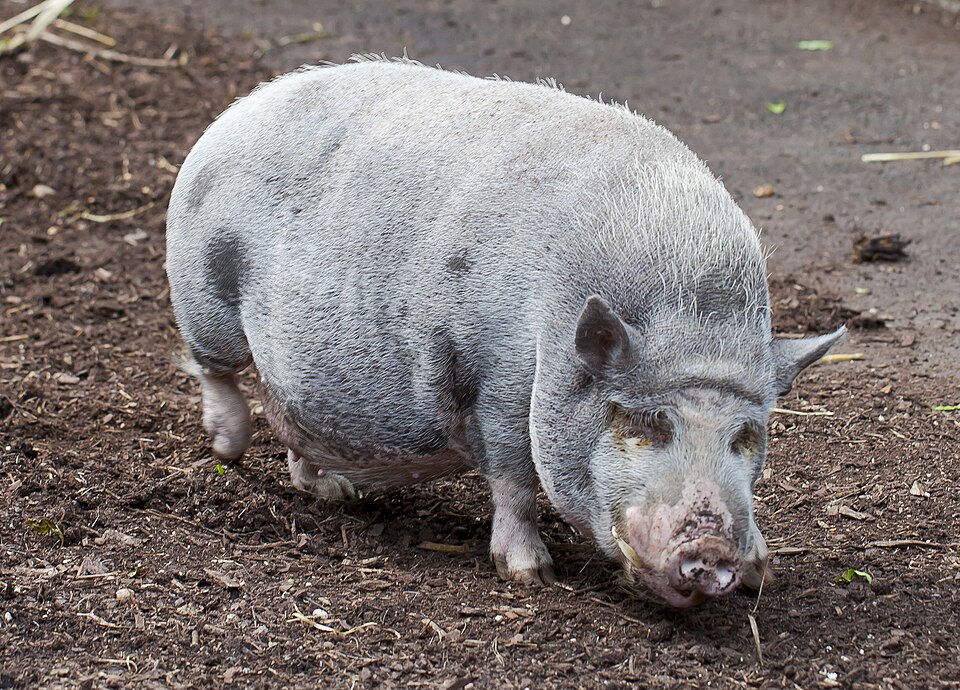
Turopolje
The Turopolje is a traditional Croatian domestic pig breed. Its history relates to husbandry in regional forests and damp environments. Dark spots on a light background and drooping ears are characteristic. Its conformation and breeding history differ from those of modern commercial pigs.
Read the guide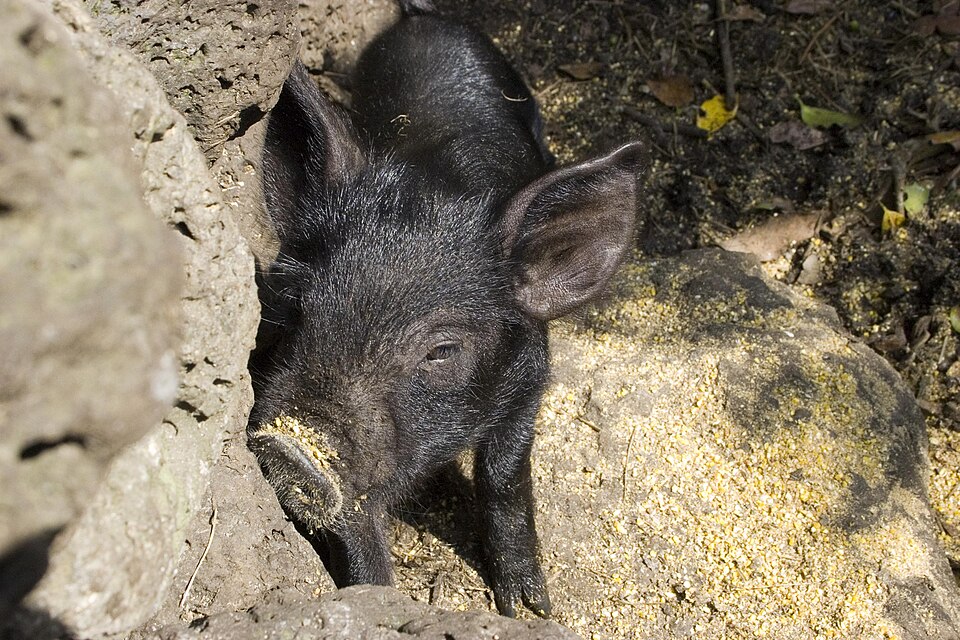
Jeju black pig
The Jeju native pig is a local genetic resource of domestic pigs conserved on Jeju. Do not equate its native bloodlines with every black-haired commercial crossbred pig. Black skin and hair are characteristic, with size and form differing from modern selectively bred pigs.
Read the guide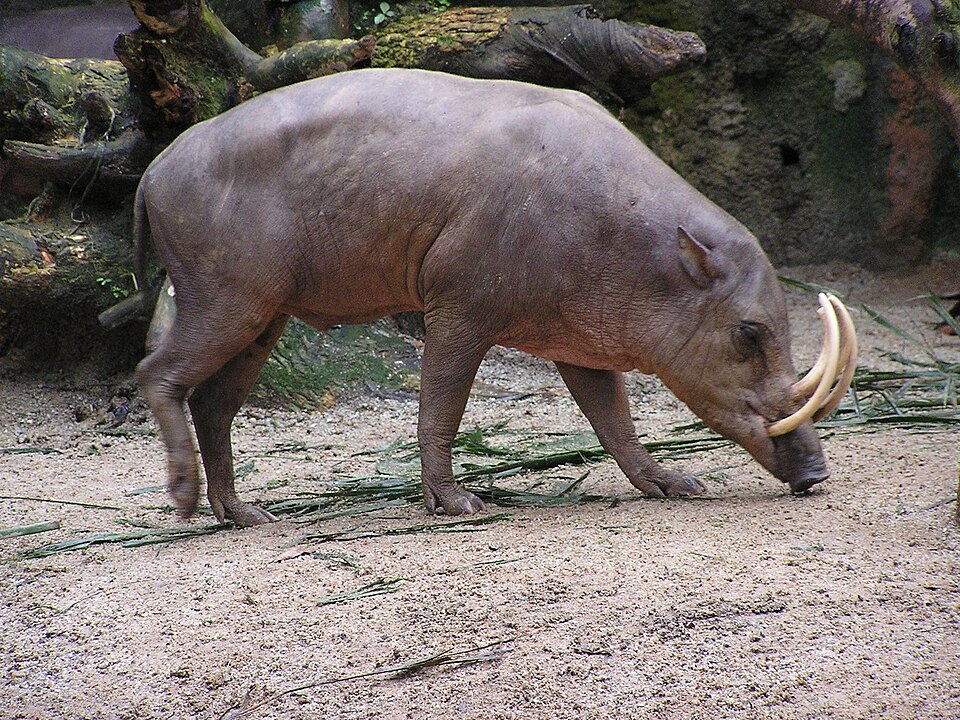
Babirusa
Babirusa refers to wild pigs of the genus Babyrousa on several Indonesian islands, with several species distinguished. Males have striking upper canine teeth that grow through the snout's skin, extend upward and curve backward.
Read the guide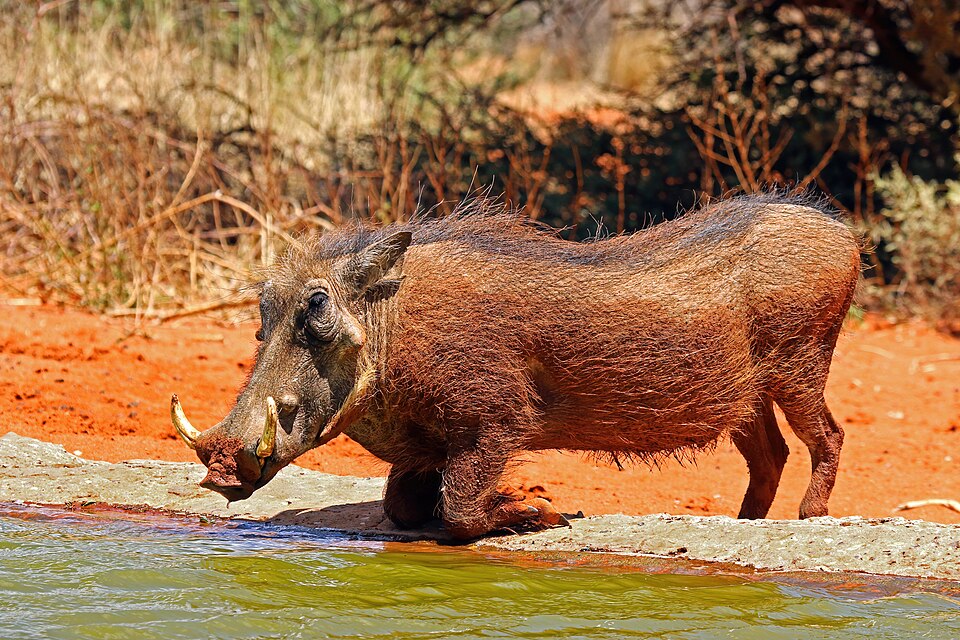
Common warthog
The common warthog is a wild member of the pig family living in African grasslands. It is not the same species as every other African wild pig. Facial projections, tusks and a mane along the body are characteristic. Despite the name, facial projections are not parasitic warts.
Read the guide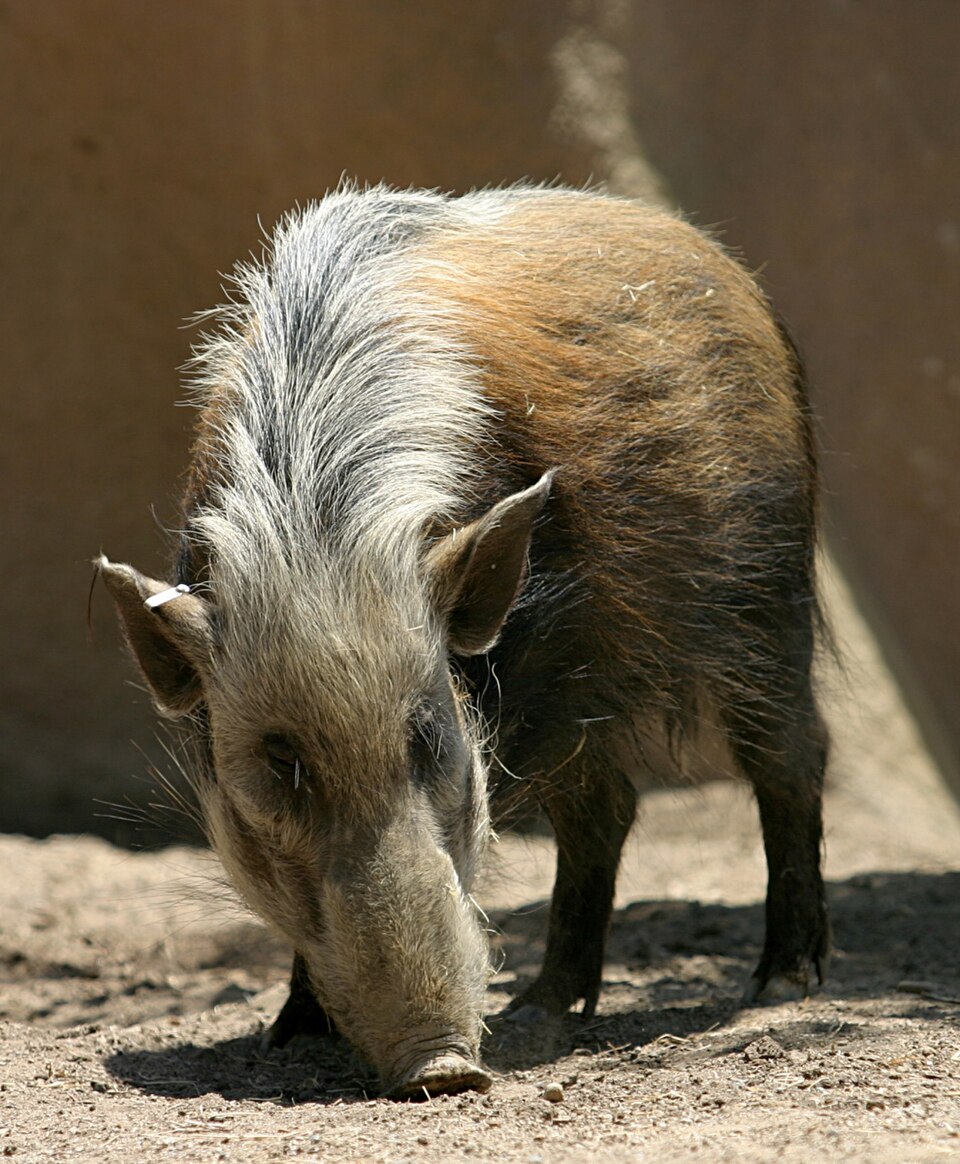
Bushpig
The bushpig is an African wild member of the pig family. It is related to the red river hog but recognized as a separate species. Coarse hair, a long snout and pale facial areas occur; coat color varies with age and region.
Read the guide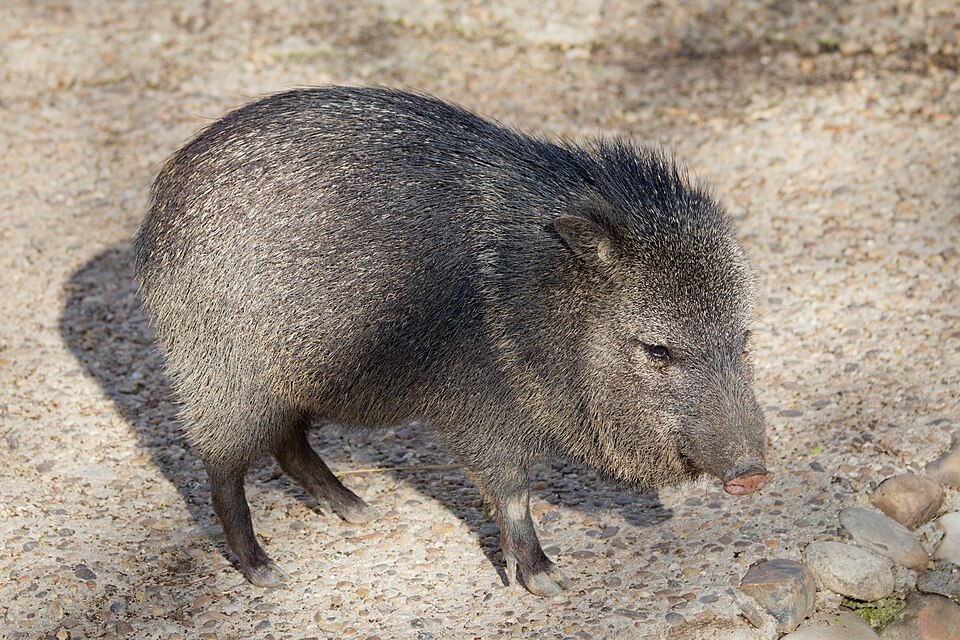
Collared peccary
The collared peccary belongs to the peccary family, not the pig family. It is a separate American lineage with a pig-like appearance; the scientific name Dicotyles tajacu is also used. Dark hair with a light band near the neck and shoulders gives the animal its name. The tail is shorter than a pig's.
Read the guide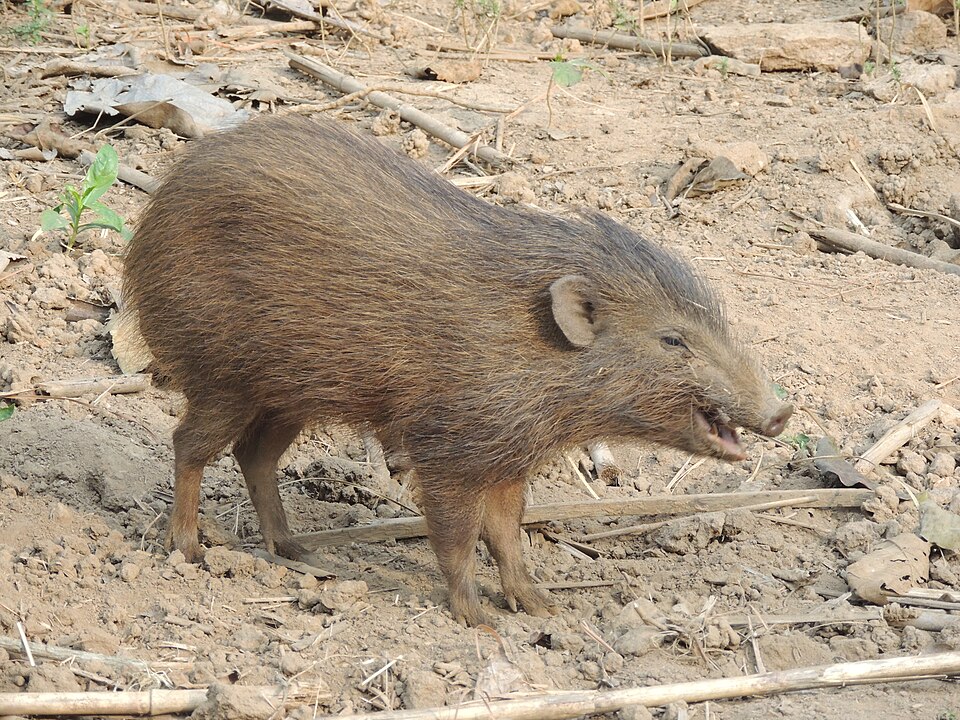
Pygmy hog
The pygmy hog is a small wild pig surviving in grasslands in Assam, India. Do not confuse a name such as pygmy black pig with a small domestic pig breed. A small body and dark hair make it inconspicuous among tall grasses. Its classification and ecology differ from those of a young domestic pig.
Read the guide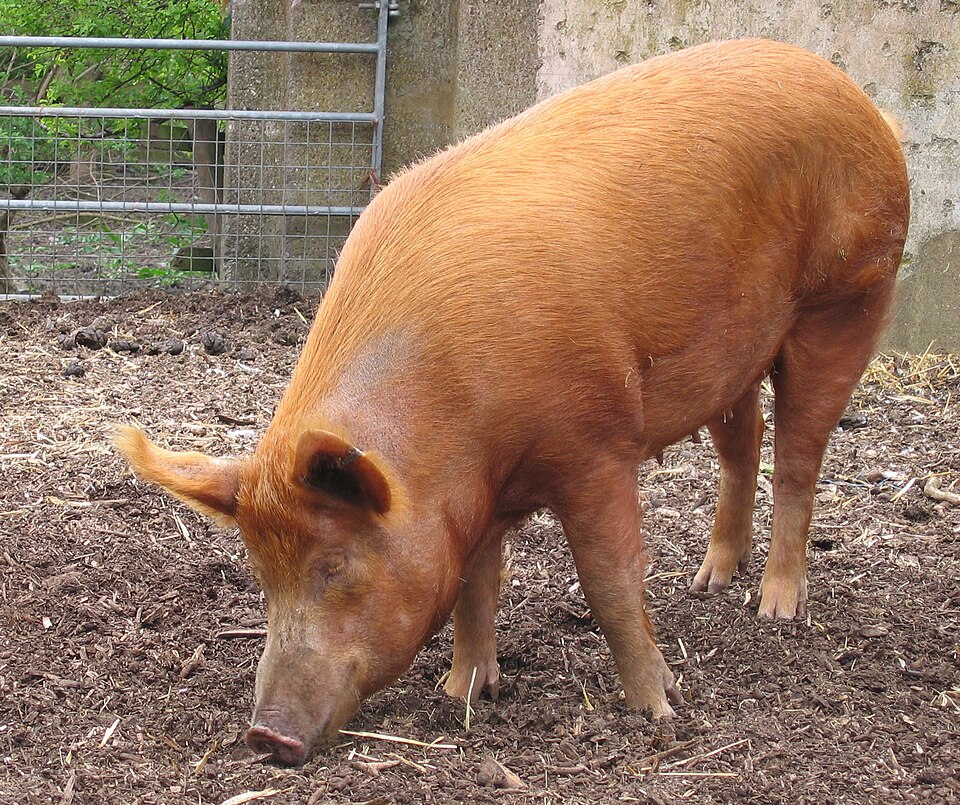
Tamworth pig
Tamworth Pig is another rendering of Tamworth, not a separate pig species. It is a traditional domestic pig breed developed in Britain. A reddish-brown coat, long snout and upright ears are characteristic. Ear shape allows comparison with the also-red Duroc.
Read the guide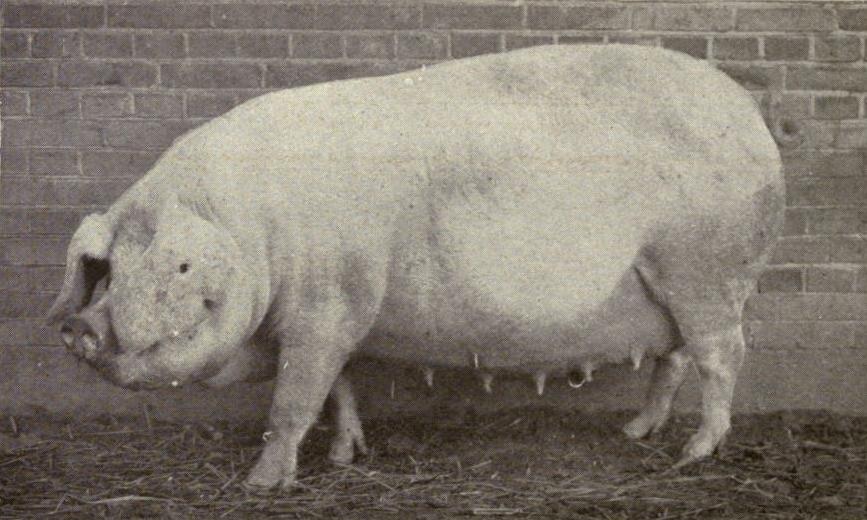
Danish Landrace
The Danish Landrace is a domestic pig line developed in Denmark. Do not group every country's registered Landrace population under identical standards. A white body, long trunk and forward-drooping ears are characteristic. Conformation varies with sex and growth stage.
Read the guide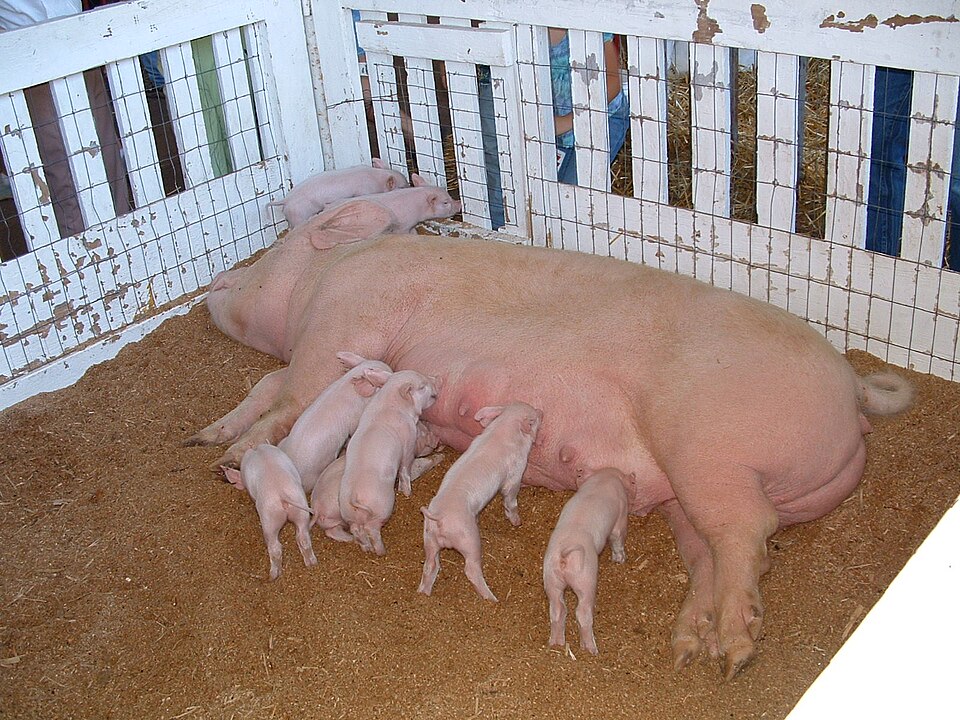
American Yorkshire
The American Yorkshire is a registered breed developed in the United States from British Large White ancestry. Distinguish regional registration names from foundation lines. A white body and upright ears are characteristic. Compare it with the white-bodied Landrace, which has drooping ears.
Read the guide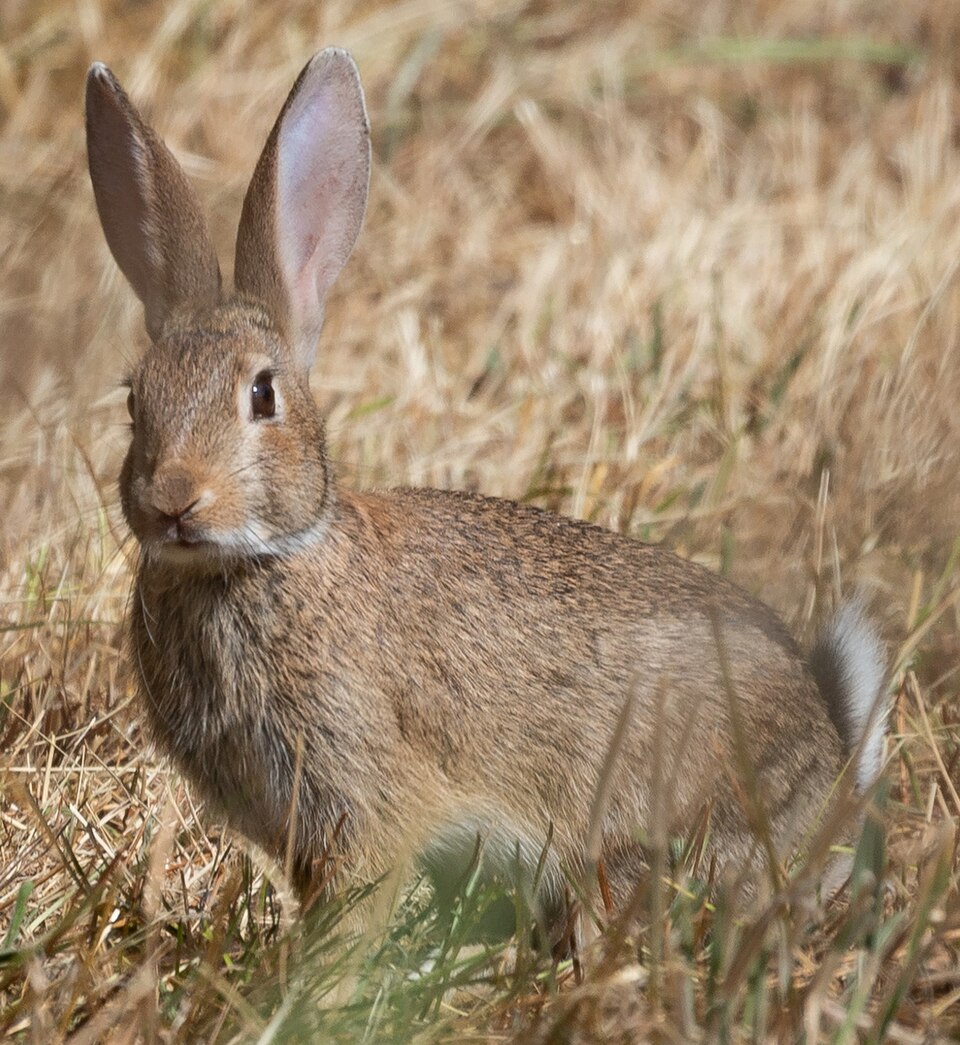
Rabbit
Domestic rabbit ecology rooted in burrows and social life. Pet rabbits and farm rabbits descend from domesticated European rabbits.
Read the guide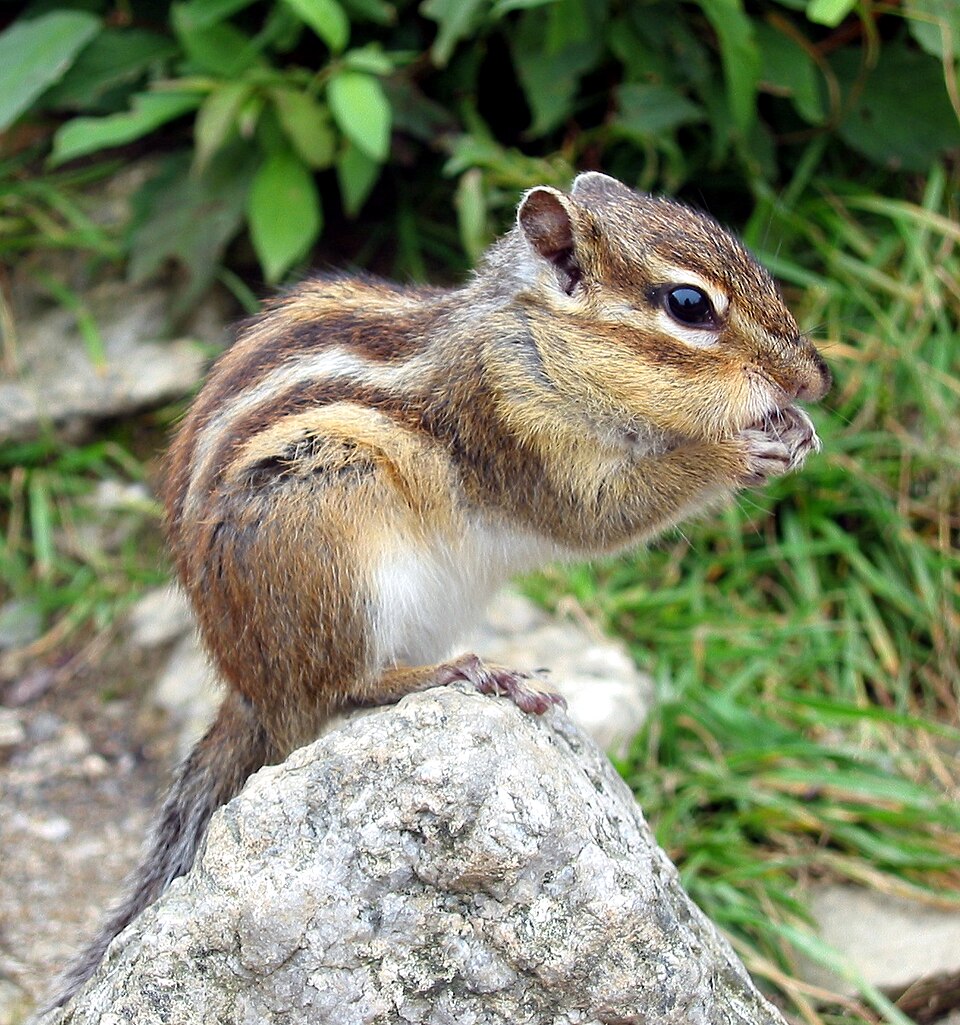
Siberian chipmunk
A chipmunk distinguished by back stripes and cheek pouches. This entry concerns the Siberian chipmunk found on the Korean Peninsula.
Read the guide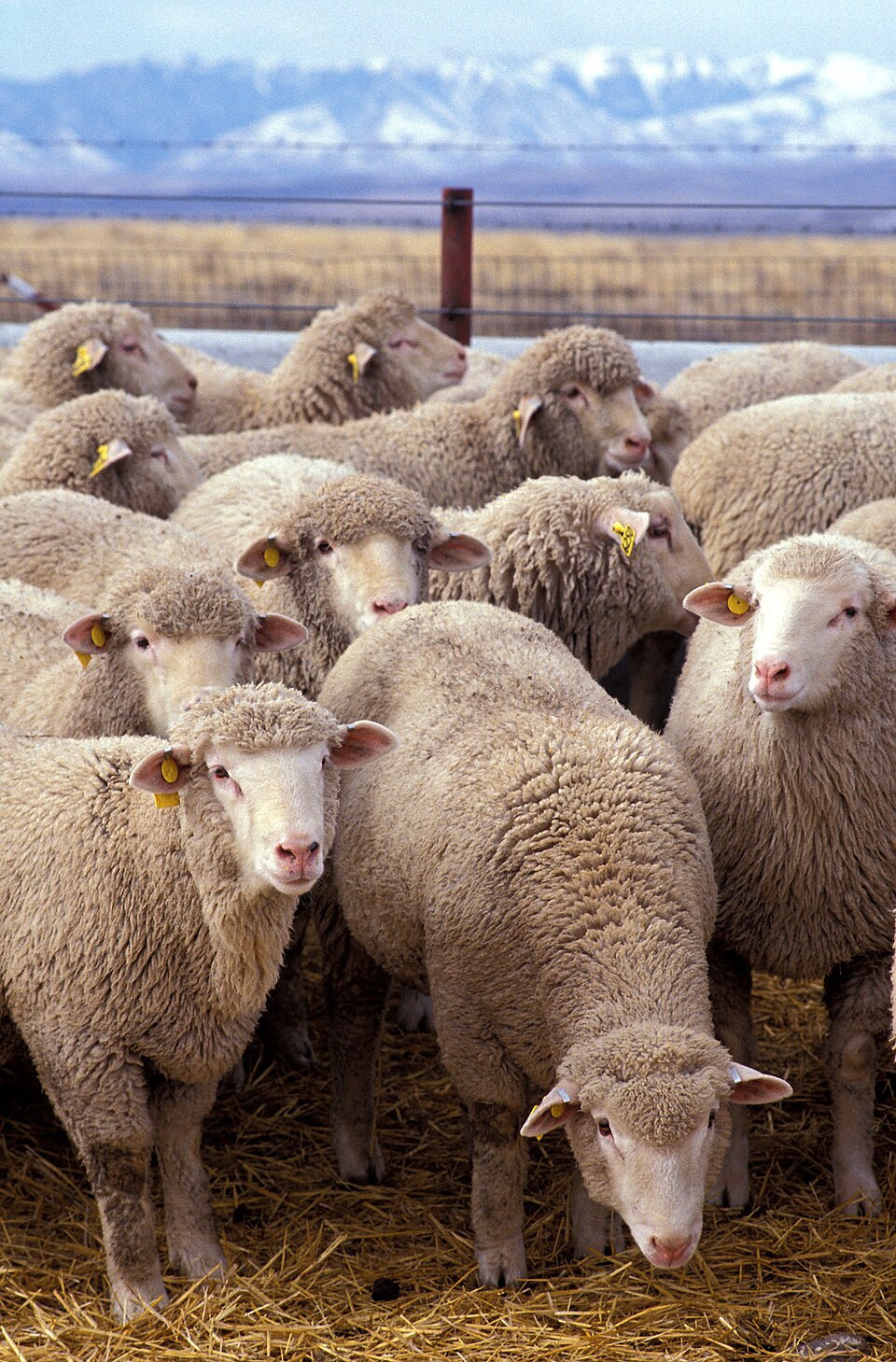
Domestic sheep
Social grazing animals understood through more than their wool. Long domestication and selective breeding have produced many sheep breeds used for meat, milk and fleece.
Read the guide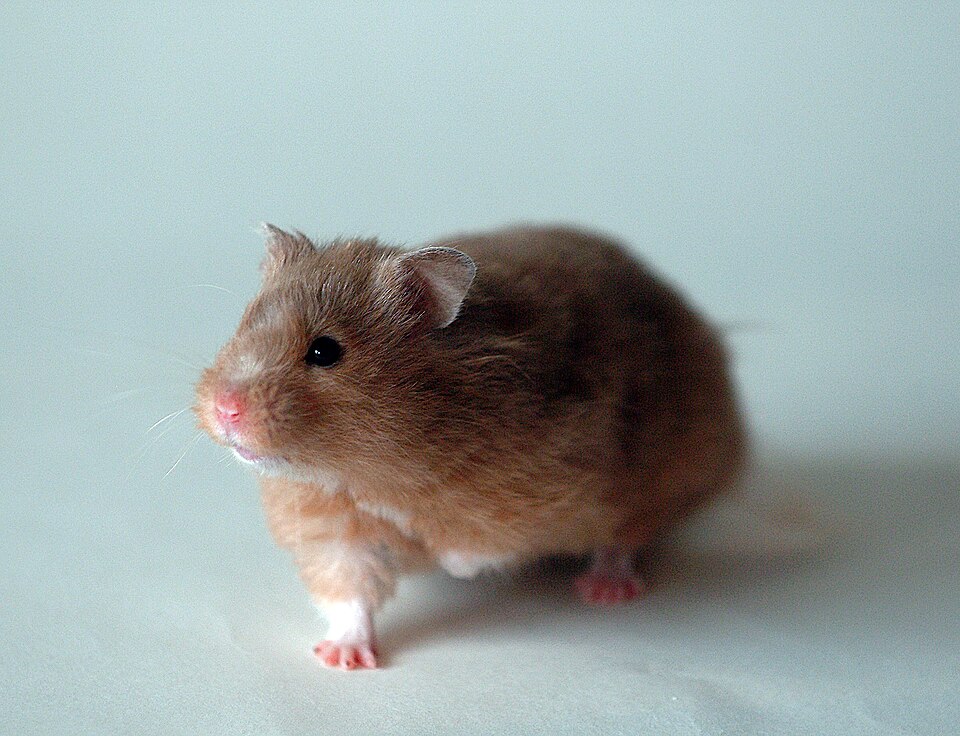
Golden hamster
A golden hamster with a short tail and cheek pouches. The name hamster includes the golden hamster and several dwarf hamster species.
Read the guide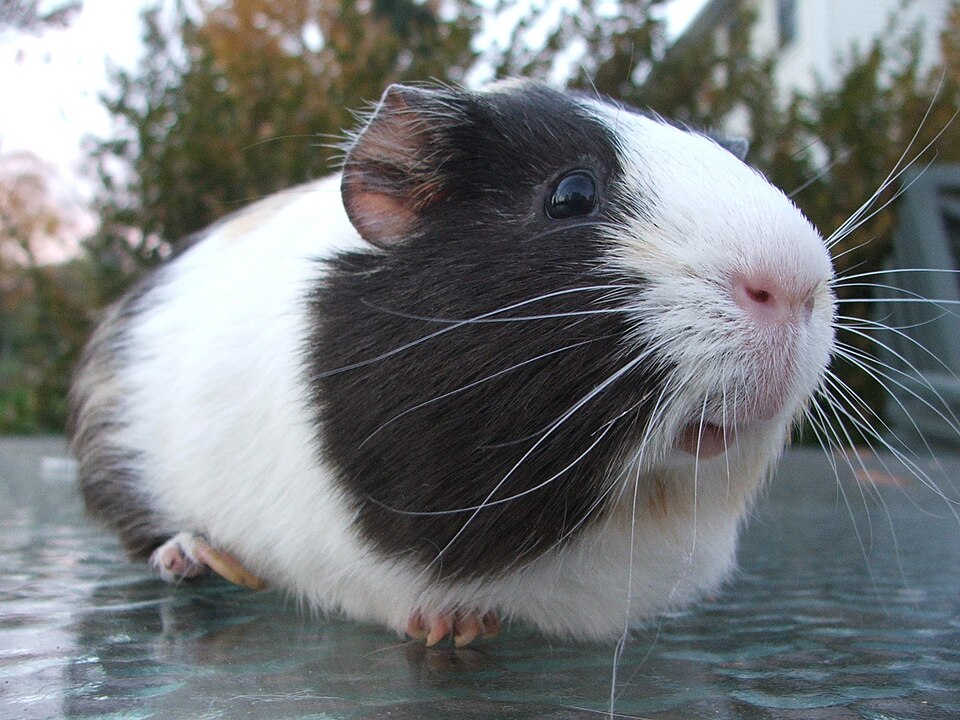
Guinea pig
A domestic grazing rodent that communicates through sounds. Despite its name, the guinea pig is a rodent domesticated in South America, not a pig from Guinea in Africa.
Read the guide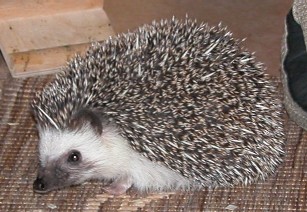
Four-toed hedgehog
A four-toed hedgehog with protective spines and nocturnal exploration. Hedgehogs include several species; Korean wild hedgehogs and African lines in the pet market are not the same.
Read the guide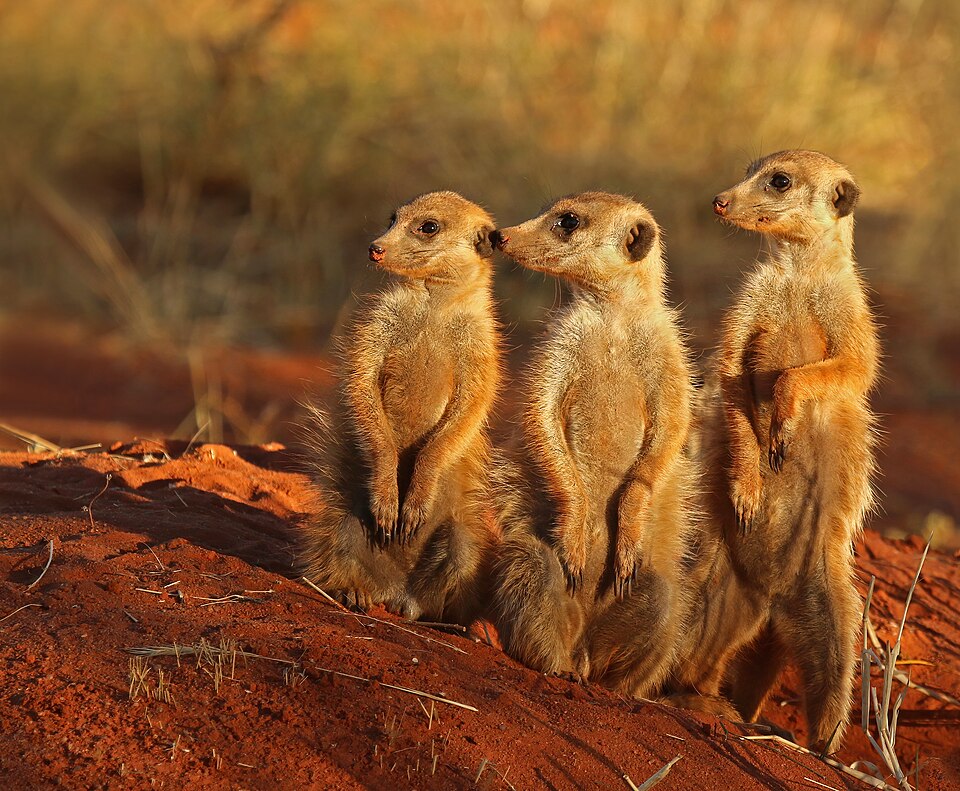
Meerkat
A meerkat using dry landscapes through burrows and cooperative living. The meerkat is a southern African mammal in the mongoose family, not a cat.
Read the guide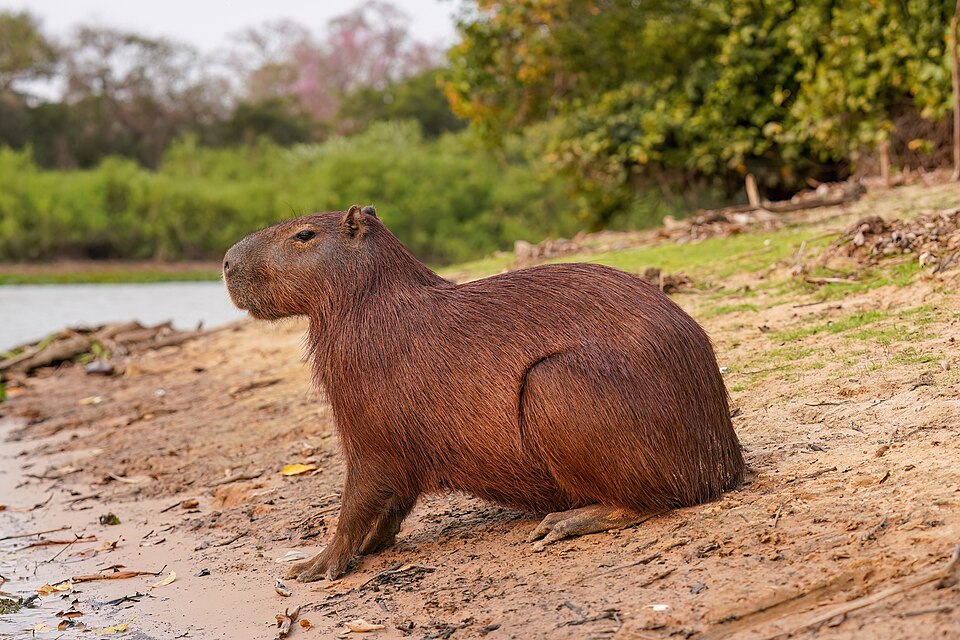
Capybara
A large social rodent moving between water and grassland. The capybara is a large South American rodent within the same broad lineage as guinea pigs.
Read the guide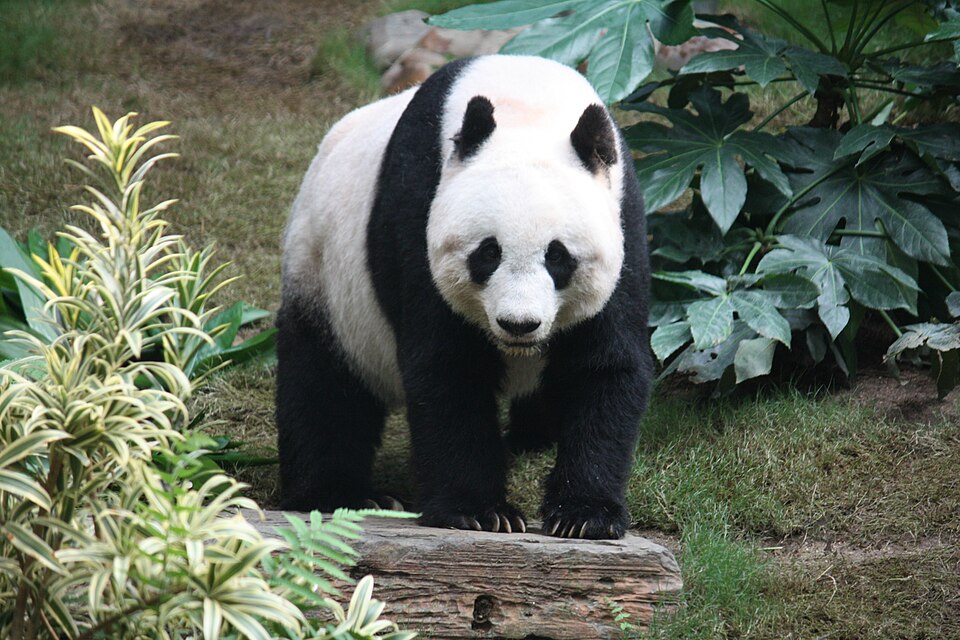
Giant Panda
A black-and-white bear adapted to bamboo forests. The giant panda belongs to the bear family and uses bamboo as its principal food in China's mountain forests.
Read the guide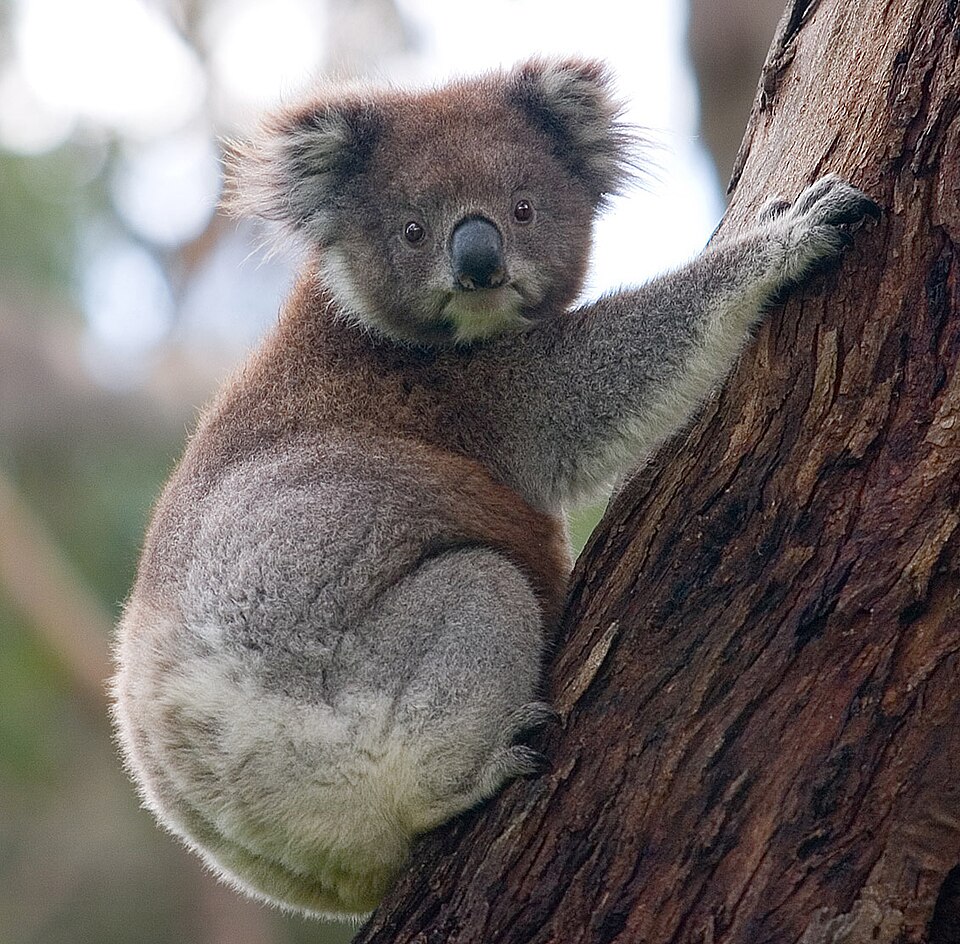
Koala
A marsupial that feeds on leaves in eucalyptus forests. The koala is a marsupial that raises its young in a pouch, not a bear.
Read the guide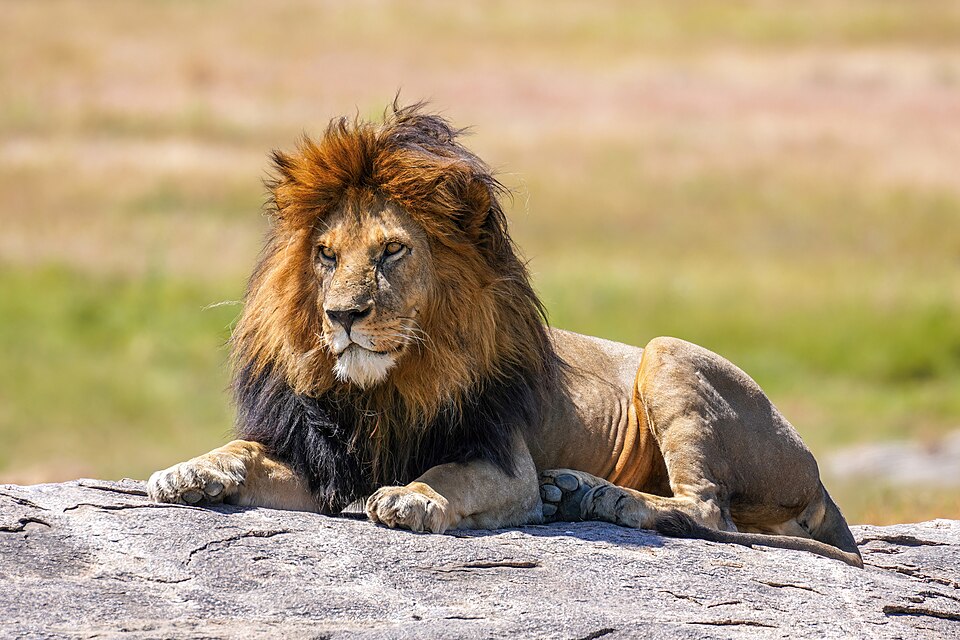
Lion
Understanding lions through pride relationships and open habitats. The lion is a large cat with wild populations remaining in various parts of Africa and a limited area of western India.
Read the guide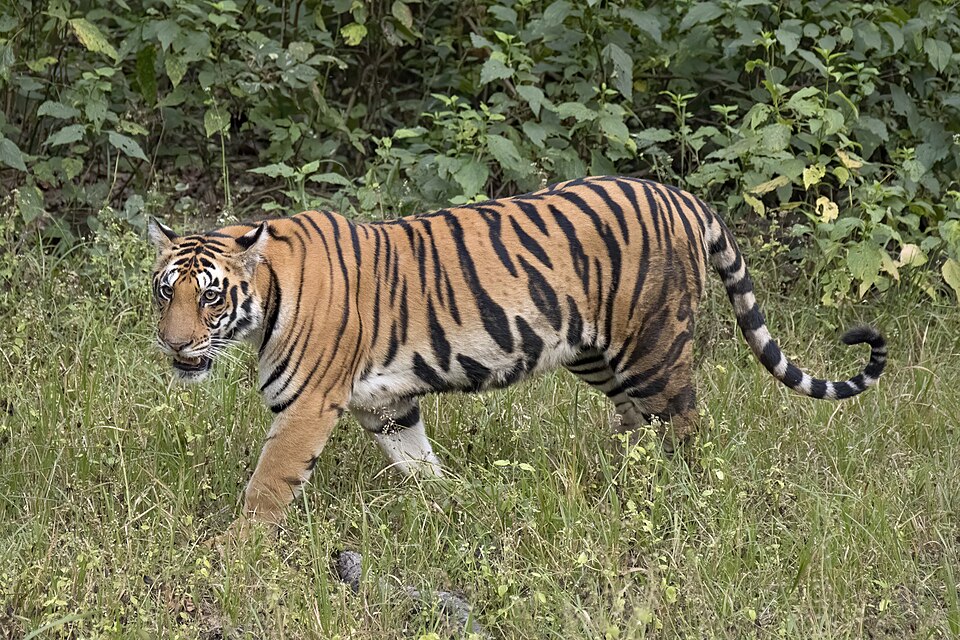
Tiger
Understanding stripes and solitary life within the tiger's habitat. The tiger is a large cat adapted to various Asian environments.
Read the guide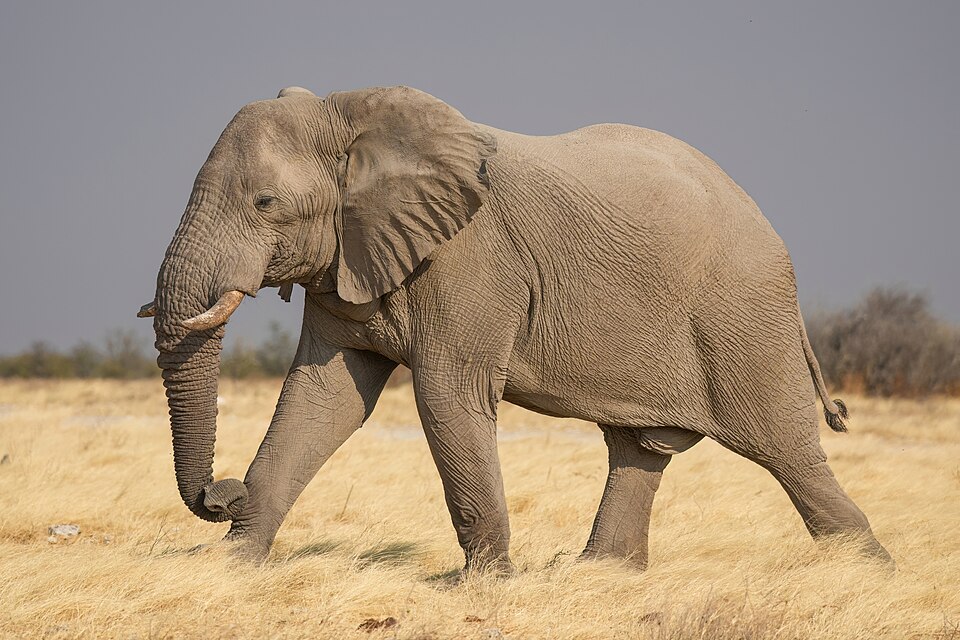
Elephant
The African savanna elephant explores its environment with large ears and a trunk. Elephants include Asian elephants and distinct African lineages.
Read the guide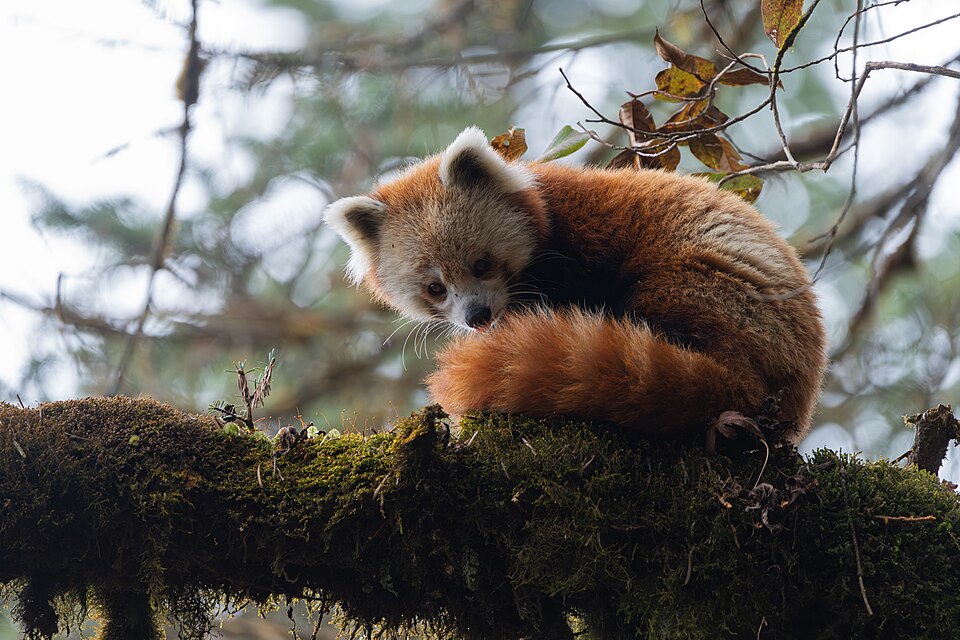
Red panda
Mountain forest life with red fur and a ringed tail. The red panda is a mammal in a separate family, not a baby giant panda or a small breed of giant panda.
Read the guide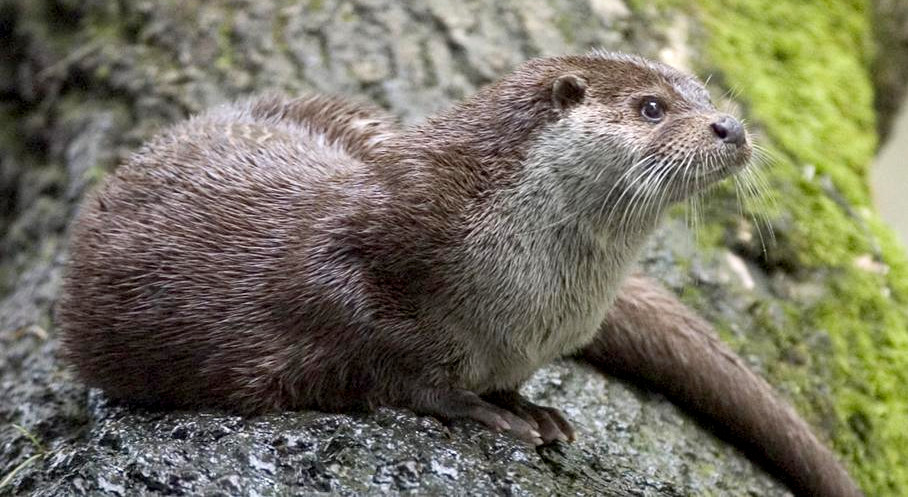
Eurasian Otter
An otter that needs both aquatic food and shelters on land. Here otter means Lutra lutra, a species also found in Korea.
Read the guide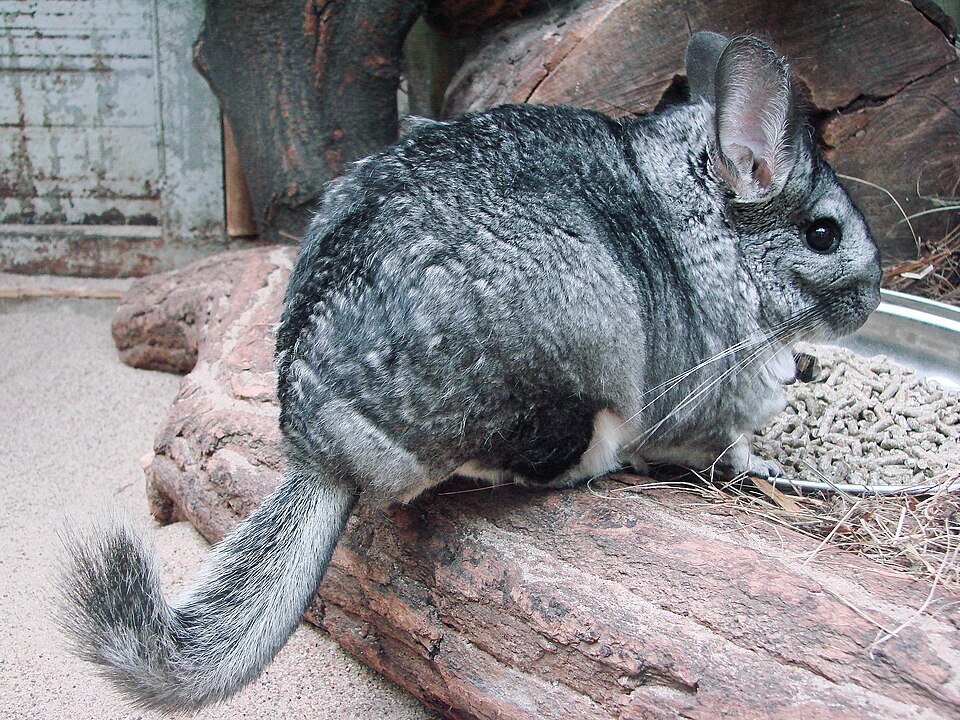
Long-tailed chinchilla
A long-tailed chinchilla with dense fur and a life among rock crevices. This page concerns the long-tailed chinchilla.
Read the guide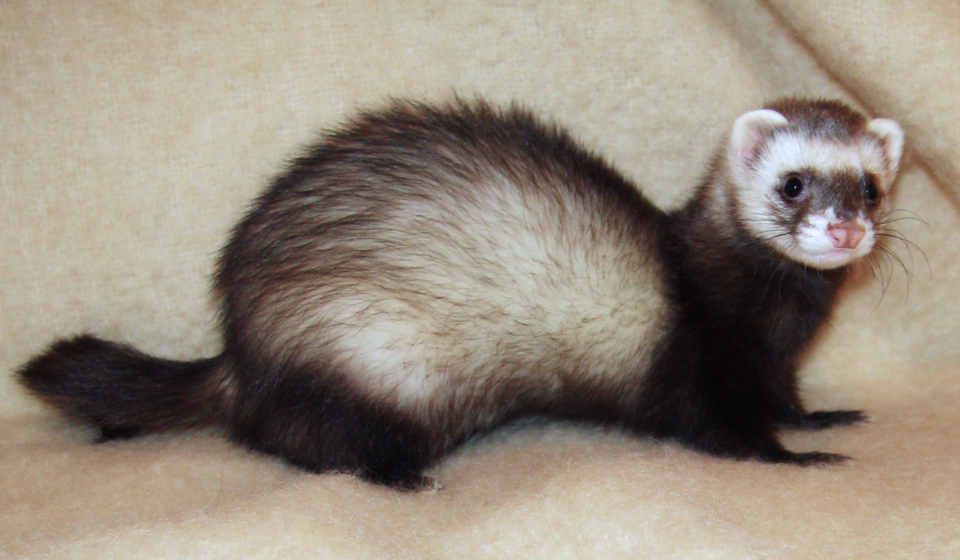
Domestic ferret
A domestic mustelid exploring narrow passages. The ferret is a human-domesticated mustelid closely related to the wild European polecat.
Read the guide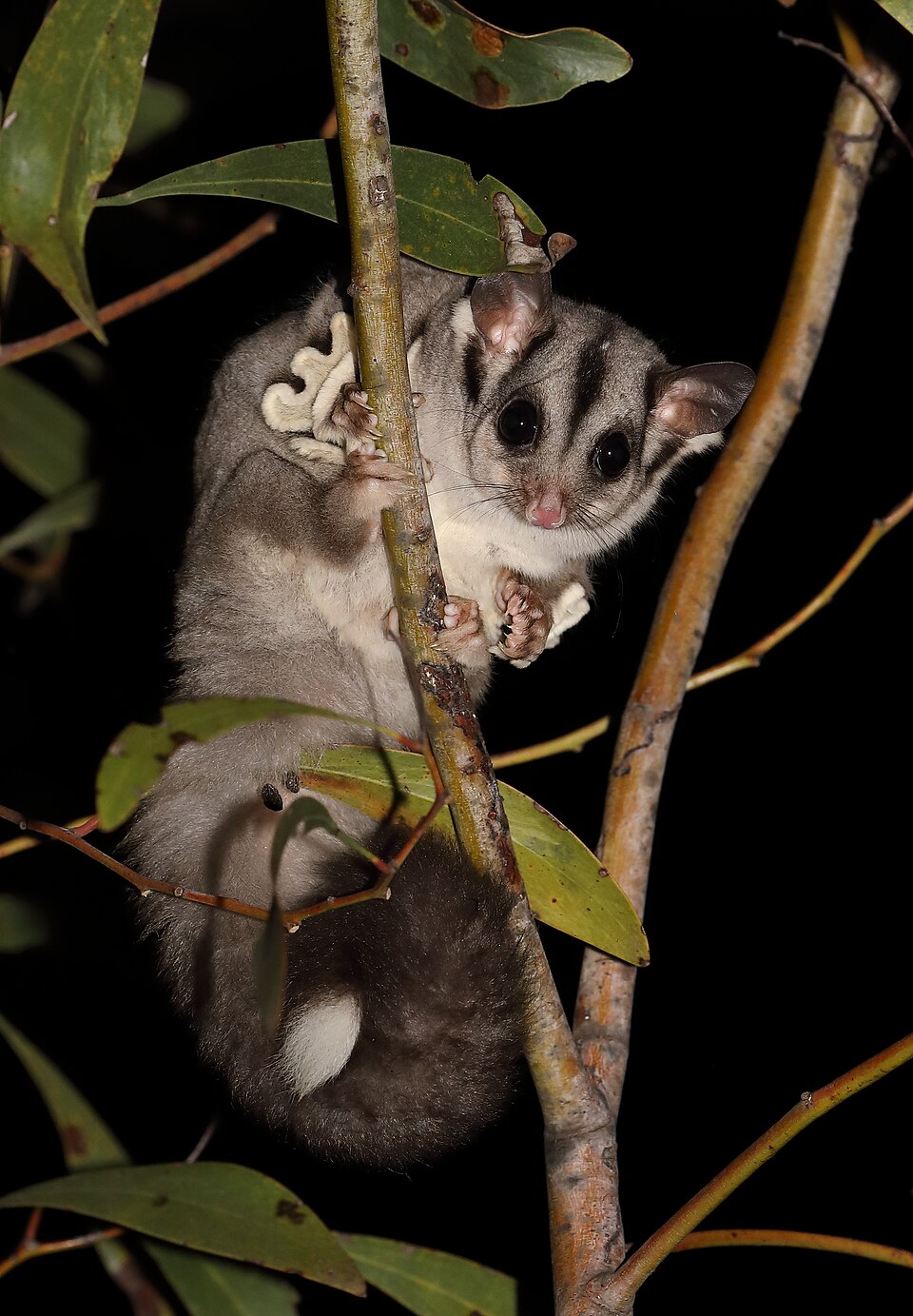
Sugar glider
A small marsupial gliding with a skin membrane rather than wings. The sugar glider resembles a rodent flying squirrel but belongs to the marsupials.
Read the guide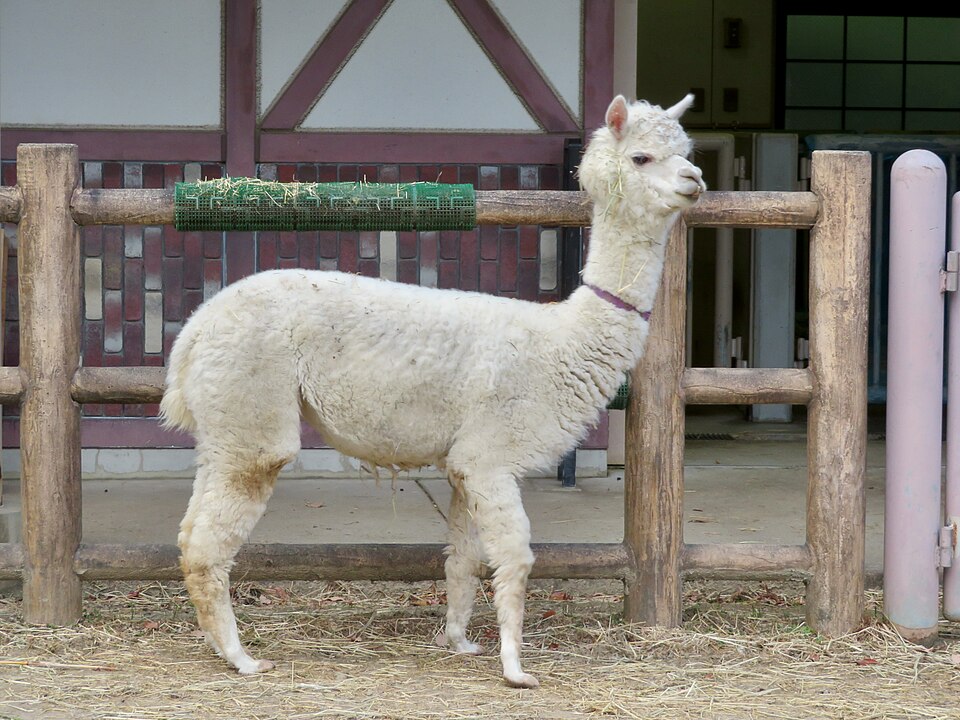
Alpaca
An alpaca with highland domestic life and varied fiber. The alpaca is a camelid domesticated in the South American Andes.
Read the guide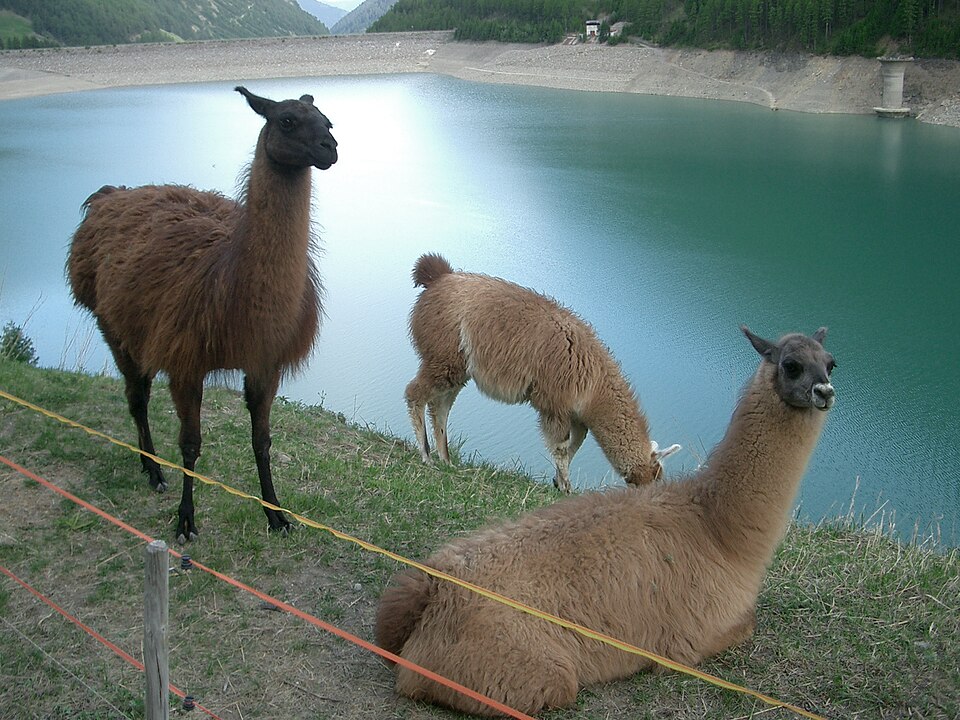
Llama
Andean livestock with a history of travel and carrying loads. The llama is a camelid domesticated in the South American Andes, historically connected with transport, fiber and varied everyday resources.
Read the guide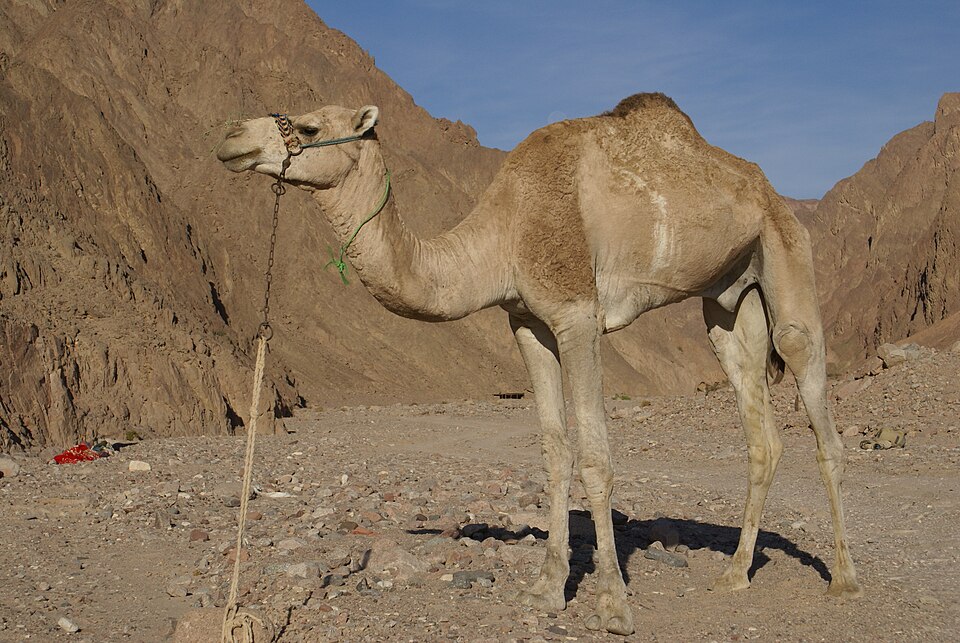
Dromedary camel
A dromedary storing fat in one hump. Camels include one-humped dromedaries and two-humped Bactrian lineages.
Read the guide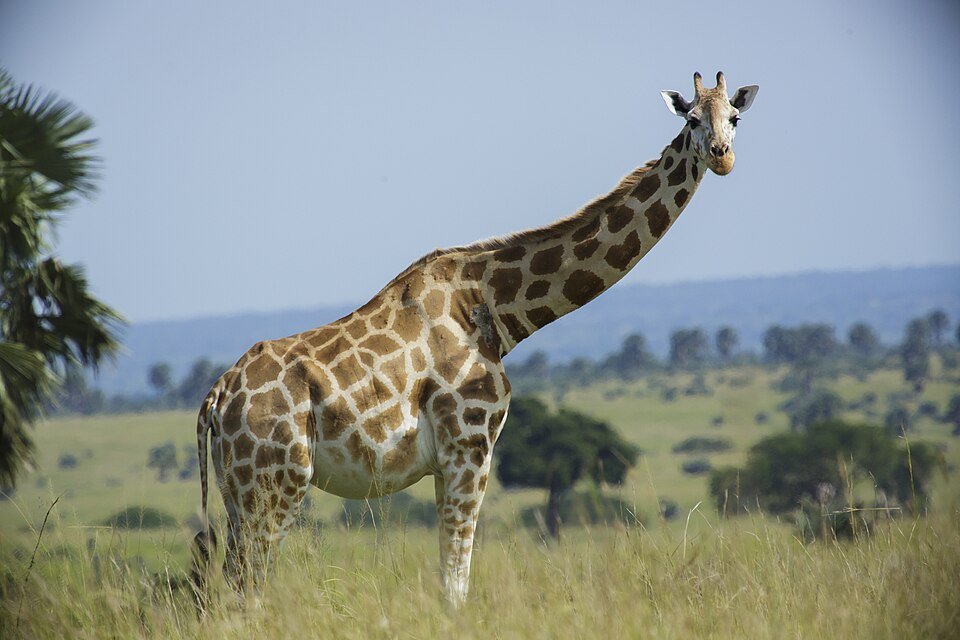
Northern giraffe
A giraffe connecting a long neck with feeding on high leaves. Giraffe classification includes sources treating giraffes as one broad species and research separating several species.
Read the guide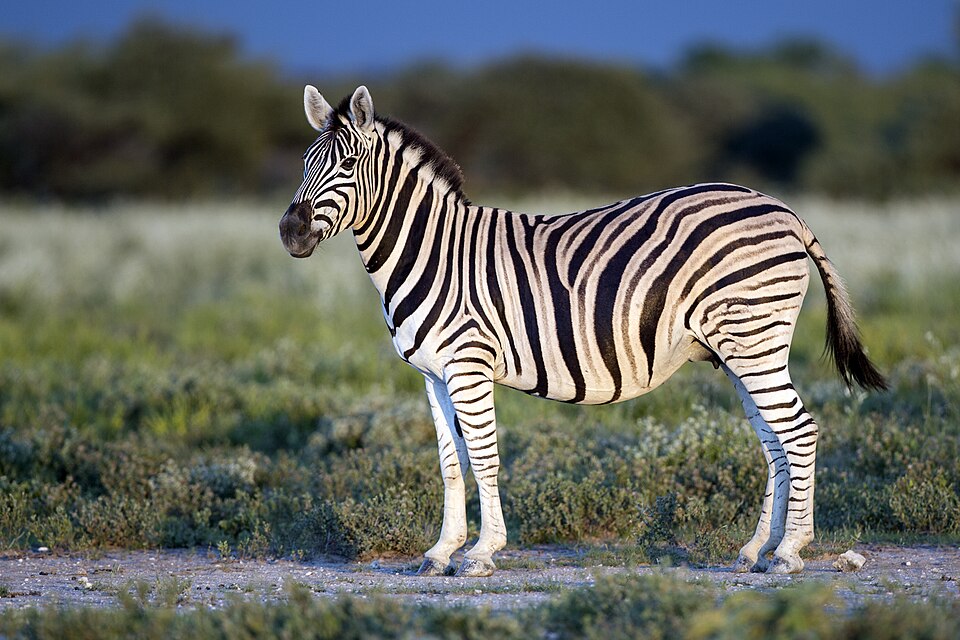
Plains zebra
The social life of plains zebras beyond their stripes. Zebras include separate species such as plains, mountain and Grevy's zebras.
Read the guide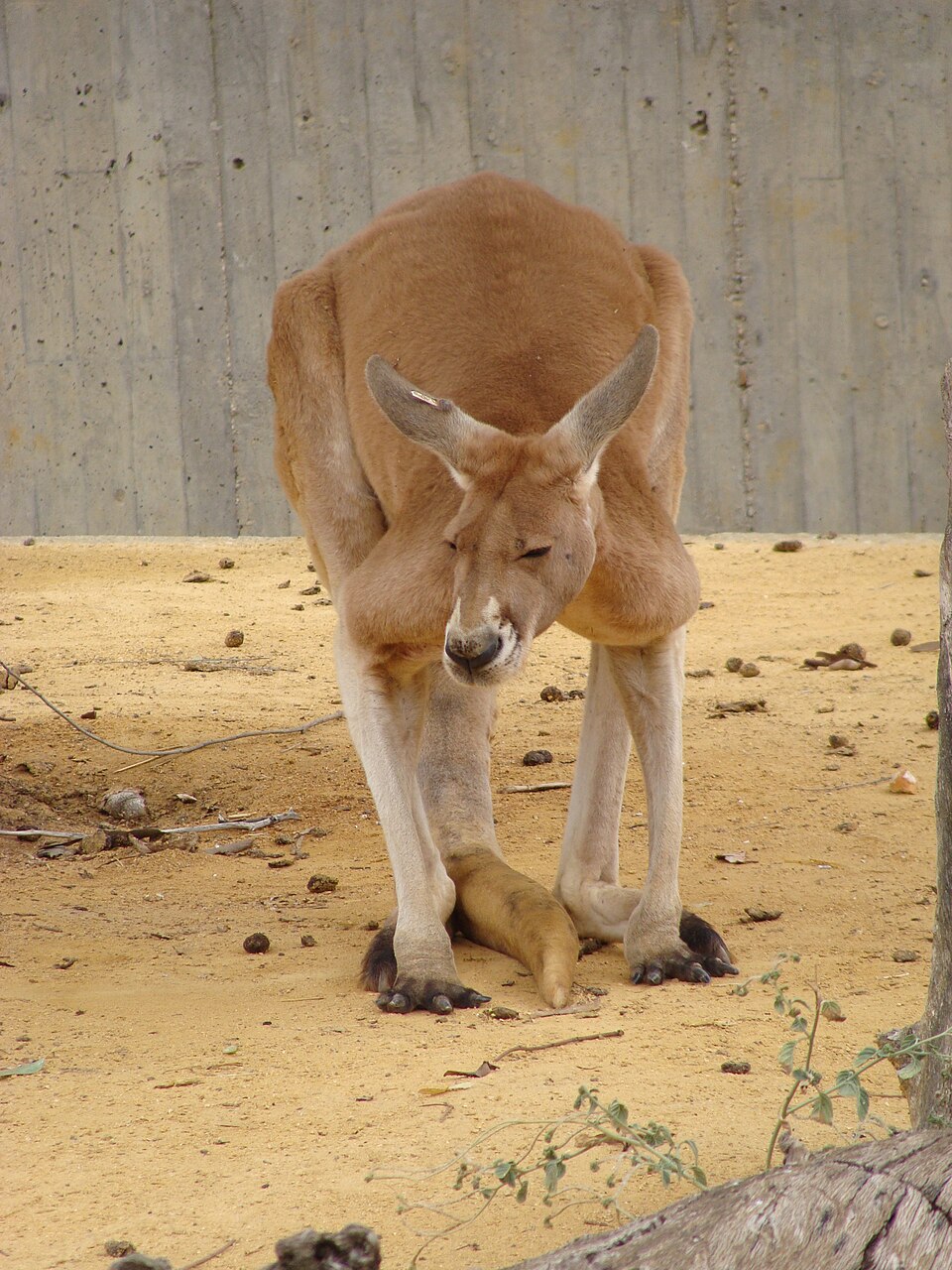
Red kangaroo
A red kangaroo's tail used in both hopping and slow walking. Kangaroo names several species; this page uses the red kangaroo as its example.
Read the guide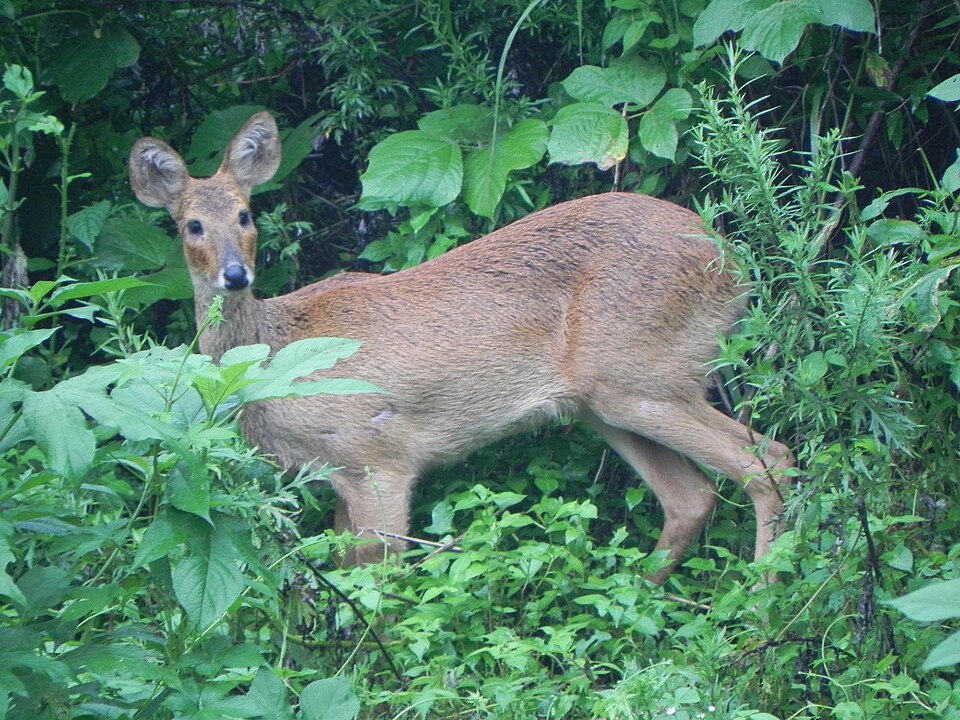
Water Deer
Explore water deer classification, grassy habitats and features that distinguish them from roe deer. Learn about the life of this herbivore with canine teeth and ways to observe it without disturbance.
Read the guide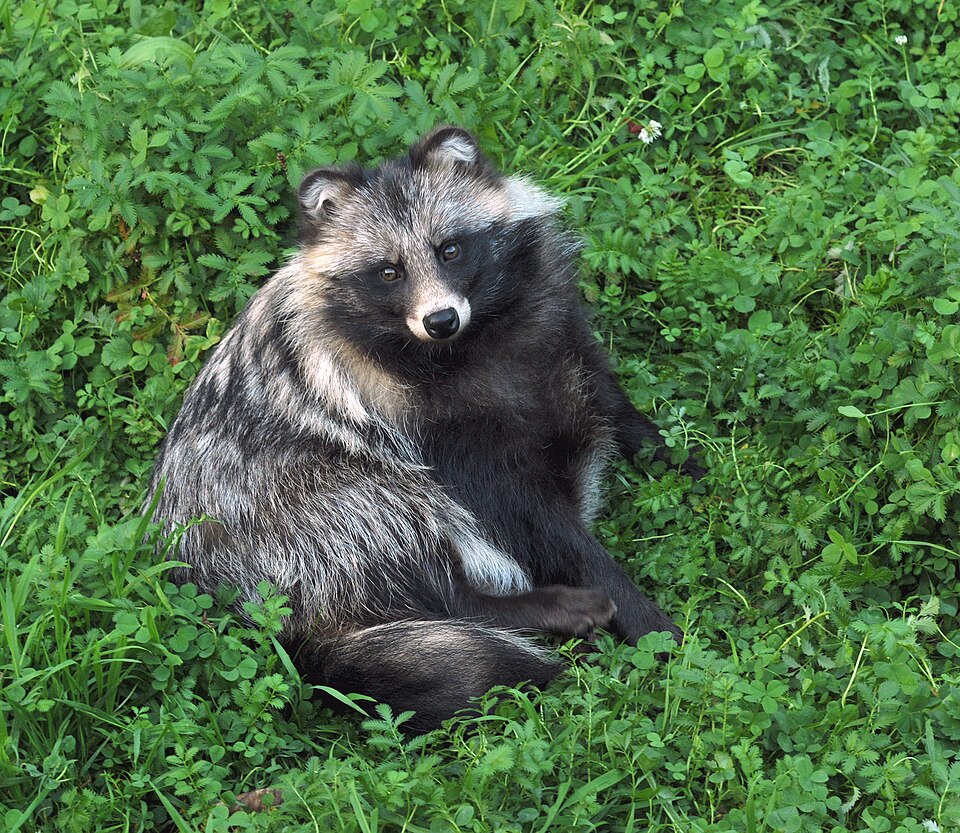
Common Raccoon Dog
The common raccoon dog is a member of the dog family, distinct from the raccoon. Explore its facial markings, body shape, varied foods and shelters, and principles for observing it near people.
Read the guide